Disclosure: Classy Floor is reader-supported. As an Amazon Associate, we earn from qualifying purchases. We may also earn commissions from other affiliate programs, at no additional cost to you. Learn more →
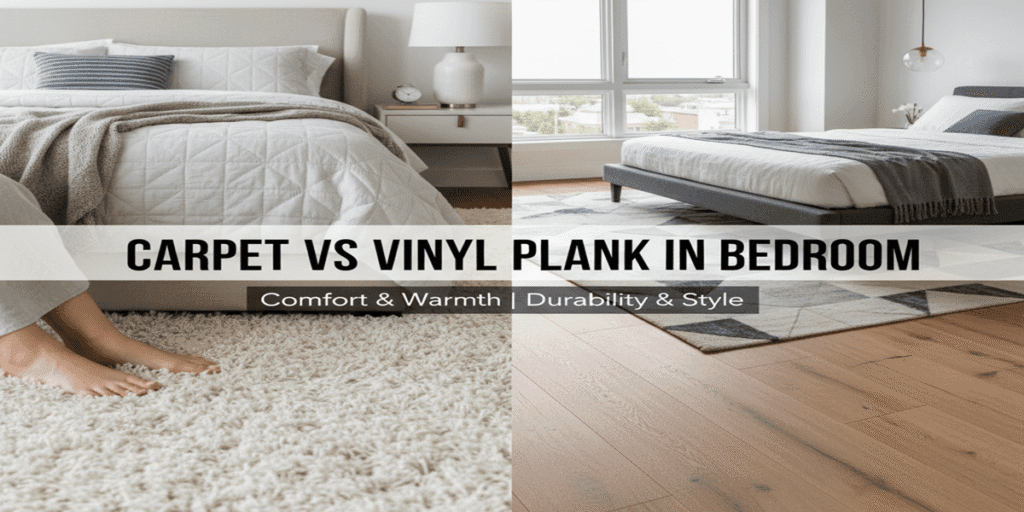
Do your feet crave warmth at 6 a.m., or do you want a floor that shrugs off spills? This guide compares carpet vs vinyl plank in bedroom choices so you pick the best flooring for bedrooms with confidence.
You get a fast answer for common goals: cozy sleep spaces, quiet bedroom flooring options, and low-fuss cleanup. I share picks for pet friendly bedroom flooring and allergy friendly bedroom flooring, give cost ranges, and note DIY vinyl plank installation vs professional carpet work.
Expect clear comparisons on warmth, softness, sound, and upkeep. We cover bedroom flooring cost per square foot, carpet lifespan by fiber, and vinyl plank thickness wear layer. You learn which labels matter, including GREENGUARD Gold vinyl plank and FloorScore certified LVP. You also see simple style tips like area rugs over vinyl plank for extra comfort.
Carpet vs vinyl plank for bedrooms: the quick answer (with use-case picks)
You want a warm, quiet room that is easy to keep clean. Here is the fast pick: choose carpet if you want softness and strong noise control; choose luxury vinyl plank (LVP) if you want easy cleaning, water resistance, and solid durability for a bedroom.
Carpet feels plush under bare feet and keeps toes warm on cold mornings. LVP looks like wood, resists spills, and works well for allergy friendly bedroom flooring and pet friendly bedroom flooring.
Who wins by bedroom priority
| Bedroom priority | Winner | Why it helps |
| Warmth underfoot | Carpet | Soft pile + pad add thermal comfort; supports best flooring for bedrooms in cold zones |
| Quiet sleep space | Carpet | Fibers absorb footfall and echo for quiet bedroom flooring options |
| Easy cleaning | LVP | Sweep and damp-mop; great for makeup or drink spills |
| Allergy control | LVP | Hard surface releases dust fast; pair with low VOC vinyl plank for bedrooms |
| Style continuity (wood look) | LVP | Wood visuals match halls and living areas; strong resale value bedroom flooring angle |
Use-case picks
- Want softness and warmth? Pick carpet with a quality pad. A higher carpet pad R-value bedroom setup boosts comfort.
- Want simple upkeep with kids or pets? Pick LVP with a practical wear layer. A basic mat near the bed catches grit.
Best for warmth & noise insulation in a bedroom
Carpet leads on warmth and sound. A dense pad plus medium pile calms footfall and late-night steps. You can add area rugs over vinyl plank if you want extra softness without giving up easy cleaning.
For upstairs rooms, LVP can still run quiet with the right underlayment. Look for a product with a stated vinyl plank underlayment IIC rating and consider attached-pad planks for better impact sound.
Best for allergies, easy cleaning, and pets
LVP is the simple pick here. Hard surfaces release dust fast and resist stains, and many lines carry GREENGUARD Gold vinyl plank or FloorScore certified LVP labels.
Carpet can work if you love plush feel. Choose the right fiber and vacuum on schedule; add a HEPA filter and spot-treat spills quickly.
Quick chooser table (room use, climate, household, budget → recommendation)
| Room use & context | Climate | Household | Budget focus | Pick |
| Guest bedroom, light traffic | Mild | Adults only | Low | Carpet (value grade + basic pad) |
| Primary bedroom, cold mornings | Cold | Light sleepers | Mid | Carpet (medium pile + quality pad) |
| Kids’ bedroom with snacks | Humid or spill-prone | Kids/Pets | Mid | LVP (12–20 mil wear layer) + area rug |
| Upstairs bedroom over living room | Any | Noise sensitive | Mid–High | LVP with acoustic underlayment (good IIC) |
| Rental or future resale plan | Any | Mixed | Mid | LVP wood look for continuity |
Durability snapshot
Typical ranges: LVP 10–25 years, residential carpet 5–15 years (quality and care set the outcome). Want more life from LVP? Choose a thicker vinyl plank thickness wear layer and protect high-traffic paths with small rugs.
One last check: do you want maximum cozy feel or maximum easy care? Pick the row that matches your life, and you have your answer.
Bedroom comfort: warmth underfoot, softness, and soundproofing
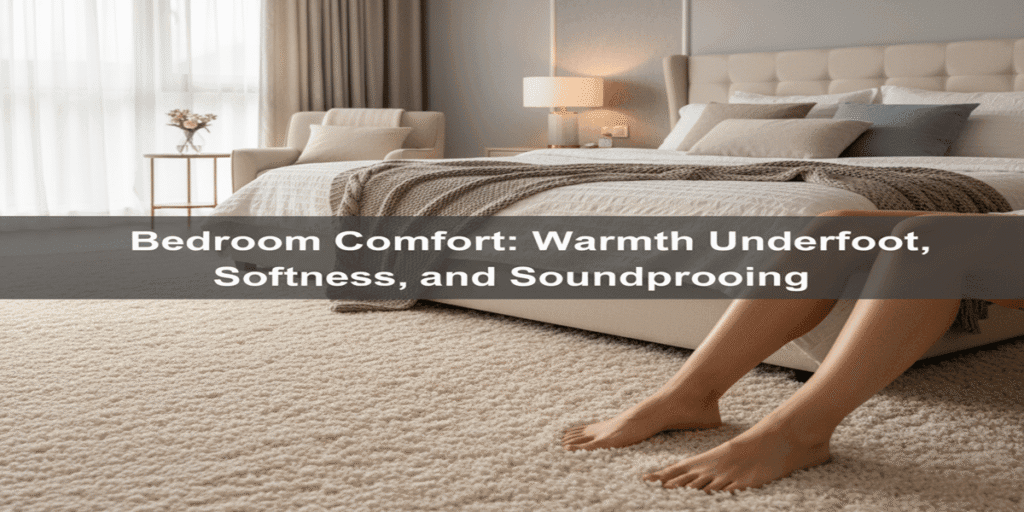
You want a calm, cozy room that supports sleep. This section explains how each surface feels, how much noise it stops, and how to dial in comfort with simple choices.
Which is warmer and softer for bare feet? (carpet pad & pile vs. rigid LVP cores)
Carpet feels plush and warm underfoot. A good pad boosts warmth in a bedroom; look for carpet pad R-value bedroom specs and a thickness that suits door clearance.
Vinyl plank feels firm and stable. Some sleepers add area rugs over vinyl plank to add warmth at the bedside. Ask yourself a quick question: is vinyl plank too cold for bedrooms in your climate?
Quick feel guide
| Feature | Carpet | Vinyl plank (LVP) |
| Underfoot feel | Soft, cushioned | Firm, even |
| Perceived warmth | High with quality pad | Medium; add rug for warmth |
| Quiet steps | Strong with pad | Good with underlayment |
| Best use case | Cozy retreat, quiet nights | Easy cleaning, allergies, pets |
Noise: footfall, echo, and upstairs sound – what IIC/STC mean in real life
Carpet reduces footfall noise and softens echoes from bare walls and furniture. Many readers call it one of the quiet bedroom flooring options.
LVP controls noise with the right base. A quality acoustic layer under the planks cuts tap sounds and helps late-night steps feel softer.
LVP acoustics: thickness, attached pad, and acoustic underlayment choices
LVP comfort improves with plank build and underlayment. Look for vinyl plank soundproof underlayment with a tested IIC rating and use planks with a decent vinyl plank thickness wear layer for stable feel.
- Plank thickness: 5–8 mm products feel calmer underfoot than thinner builds.
- Attached pad: EVA or IXPE pads add cushion and reduce click.
- Underlayment: Many HOA rules ask for an IIC 50–60+ target in multi-family homes; aim higher if your building is sensitive.
- Example ranges: Floating LVP with acoustic underlayment often tests around IIC 55–70 in lab settings.
Checklist: make your bedroom quieter
- Choose a thicker pad for carpet or an acoustic underlayment with LVP underlayment IIC rating.
- Add soft finishes: curtains, padded headboards, and a rug runner.
- Seal squeaks in subfloors before install.
- Place felt pads on furniture feet.
- Use door sweeps to reduce hallway noise.
Warmth tips that work
- For carpet, pick fiber and pad that match your comfort goal. Wool and dense nylon feel warm and springy.
- For LVP, pair FloorScore certified LVP or GREENGUARD Gold vinyl plank with a plush rug at the bedside. The combo keeps cleanup easy and lifts comfort.
Durability, maintenance & lifespan in low-traffic bedrooms
Short bedrooms see gentle wear. Traffic stays light, so surface damage slows. The right choice saves time and money over years.
How long will it last in a bedroom? (fiber type vs. years; LVP wear layers)
Carpet lifespan by fiber varies. Nylon often holds shape and looks good for 8–15 years in a bedroom. Polyester feels soft and can run 5–10 years. Triexta resists stains and often lands near 8–15 years. Wool offers premium feel and can reach 10–20 years with steady care.
Vinyl plank lifespan ties to the wear layer and core. A 12–20 mil wear layer suits most bedrooms and can last 10–20 years. A 20–28 mil wear layer targets long service and pets. Click-lock edges and a stable core add to durability. Do you want a quiet room with steady looks over time?
Key points:
- LVP resists scratches from chair legs and pet nails.
- Carpet hides minor scuffs but can mat in high walk paths near the bed.
- Area rugs over vinyl plank add extra protection and warmth.
Cleaning routines: vacuum & spot-treat vs. sweep/damp-mop
Simple routines keep both floors fresh and allergy friendly.
Carpet (low-traffic bedroom):
- Vacuum 1–2× per week with a HEPA filter.
- Spot-treat spills fast; blot, then use a fiber-safe cleaner.
- Deep clean every 12–18 months to lift dust and dander.
- Use a quality pad; a higher carpet pad R-value bedroom setup adds comfort and supports fibers.
Vinyl plank (LVP):
- Dry sweep or vacuum 1–2× per week.
- Damp-mop with an LVP-safe cleaner; avoid standing water.
- Protect edges with felt pads under nightstands.
- Pick an underlayment with a listed IIC rating for quiet bedroom flooring options.
Pet moments:
- Carpet: blot urine, apply enzyme cleaner, then rinse and blot again.
- LVP: wipe liquid right away; no stain risk if seams stay tight.
DIY or pro?
DIY vinyl plank installation suits a simple bedroom. Professional carpet installation cost buys power-stretching and clean seams. Which path saves more time for your schedule?
Bedroom maintenance at a glance
| Task | Carpet – what to do | Frequency | Time | LVP – what to do | Frequency | Time |
| Routine clean | Vacuum with HEPA | 1–2×/week | 5–10 min | Sweep or vacuum | 1–2×/week | 5–10 min |
| Spills | Blot → spot cleaner → blot | As needed | 5–15 min | Wipe → mild cleaner | As needed | 2–5 min |
| Deep clean | Hot water extraction | 12–18 months | 1–2 hrs (pro) | Damp-mop | Monthly | 10–15 min |
| Protection | Pad check; furniture pads | 6 months | 5 min | Felt pads; entry mat | 6 months | 5 min |
| Lifespan cues | Matting, dull traffic lanes | — | — | Edge gaps, deep scratches | — | — |
Longevity tips
- Rotate rugs and furniture yearly to spread wear.
- Use bedroom slippers to keep grit off fibers and planks.
- Pick FloorScore certified LVP or GREENGUARD Gold vinyl plank for low emissions.
- For upstairs rooms, choose vinyl plank soundproof underlayment with a clear IIC rating.
- For carpets, match nylon vs polyester carpet for bedrooms to your needs: nylon for resilience, polyester for soft feel.

Cost to install in a bedroom: materials, labor, and long-term value
Short answer: carpet often starts lower, and LVP can cost more up front but stretch value over time. Planning a 12×12 room? Use the ranges below to set a clear budget. Then see our carpet vs LVP pricing guide for installed costs, add-ons, and real-world examples.
Typical bedroom budgets (per sq. ft. and per 150–200 sq. ft. room)
Most projects price by square foot. A small room multiplies fast, so quick math helps you compare options with ease.
Per-sq-ft ranges
- Carpet materials: $1.50–$5.00
- Carpet pad: $0.50–$1.00 (carpet pad R-value matters for comfort)
- Professional carpet installation cost: $1.00–$2.50
- LVP materials: $2.00–$6.00 (check vinyl plank thickness wear layer for value)
- Underlayment: $0.30–$1.00
- LVP installation: $1.50–$3.50
12×12 room (144 sq. ft.) quick math
- Carpet total: ~$432–$1,224
- LVP total: ~$547–$1,512
What drives price up or down (quality tier, brand, pad/underlayment, subfloor prep)
Price tracks quality tier first. Carpet fiber and pad density shift costs fast; nylon vs polyester carpet for bedrooms sits at different price points. To stretch your budget further, check the best time to buy bedroom carpet so you hit seasonal promos and close-out deals. LVP cost tracks brand, wear layer, texture, and click system strength.
Labor swings next. DIY vinyl plank installation can lower labor for simple rectangles. Carpet stretching, seams, and tight closets raise pro time. Subfloor flatness, trim removal, and old floor haul-away add line items.
Need better sleep and less noise? Underlayment choice matters for quiet bedroom flooring options. Look for vinyl plank soundproof underlayment with a clear vinyl plank underlayment IIC rating for upstairs spaces.
Comparison Table: Carpet vs LVP cost breakdown
| Item | Carpet (Low–High) | LVP (Low–High) |
| Materials (per sq. ft.) | $1.50–$5.00 | $2.00–$6.00 |
| Pad / Underlayment (per sq. ft.) | $0.50–$1.00 | $0.30–$1.00 |
| Labor (per sq. ft.) | $1.00–$2.50 | $1.50–$3.50 |
| Estimated 12×12 total | $432–$1,224 | $547–$1,512 |
| Ongoing care | Low equipment cost (vacuum) | Low supplies (broom/mop) |
Long-term value tips
- Lifespan: carpet lifespan by fiber varies; LVP often stretches longer in bedrooms with light wear.
- Maintenance time: carpet needs vacuum and spot care; LVP takes a quick sweep and damp mop.
- Comfort add-ons: area rugs over vinyl plank add warmth for cold mornings without big spend.
- Labels that help air quality: GREENGUARD Gold vinyl plank and FloorScore certified LVP support low-VOC goals for low VOC vinyl plank for bedrooms.
Mini checklist
- Set a room size (example: 150–200 sq. ft.) and price by range.
- Pick a fiber or wear layer target.
- Add pad or underlayment line and any subfloor prep.
- Compare bids for bedroom flooring installation DIY vs professional to see real savings.
Want a quick decision rule? If a tight budget leads, carpet wins on entry price; if longevity and easy care lead, LVP delivers steady value over time.
Health, allergies & indoor air quality: carpet fibers vs LVP VOCs
Bedrooms need clean air and quiet rest. This section shows how carpet and vinyl plank affect allergies, VOCs, and everyday breathing comfort. Do you want the most allergy friendly bedroom flooring, or do you need a low VOC vinyl plank for bedrooms?
Allergy considerations in bedrooms (dust, dander, cleaning frequency)
Carpet traps dust and dander in its pile. This can help until you vacuum, but buildup returns if cleaning lags. LVP has a hard surface that releases debris with a quick sweep or damp mop.
Choose carpet fibers with care. Nylon resists matting, polyester sheds fewer fibers, and wool filters particles yet needs steady upkeep. Pair any choice with a HEPA vacuum and a simple routine.
Bedroom allergy care – quick routine
- Vacuum carpet 2–3× weekly with a sealed HEPA unit; spot-treat spills fast.
- Sweep or vacuum LVP 2× weekly; damp mop with a pH-neutral cleaner.
- Run an air purifier with HEPA + carbon at night.
- Wash bedding hot weekly; keep pets off the bed for fewer allergens.
Carpet fiber guide for allergy goals
| Fiber (carpet) | Feel in bedroom | Care load | Notes |
| Nylon | Soft-durable | Medium | Good for kids and pets; pair with HEPA vacuum. |
| Polyester | Soft-budget | Medium | Lower absorbency; watch for crushing in high spots. |
| Triexta | Plush-resilient | Medium | Strong stain resistance; steady vacuuming still wins. |
| Wool | Cozy-premium | Higher | Natural filter effect; schedule deep cleans to control dust. |
Tip for LVP: add area rugs over vinyl plank for warmth, then wash rugs often. This keeps the hard surface easy to clean and still cozy.
VOCs & certifications to look for (GREENGUARD Gold, FloorScore; low-VOC adhesives)
New floors can emit VOCs from cores, finishes, and adhesives. LVP shoppers should look for FloorScore certified LVP or GREENGUARD Gold vinyl plank to limit emissions. Many click-lock planks install without glue, which lowers odor in a closed bedroom.
Carpet buyers can ask for low-VOC carpet, pad, and seam tape. Ventilate well after install, then run an air purifier to speed off-gassing. Do you want a simple label check you can trust at the store?
Low-emissions label cheat sheet
| Item | What to check on the box | Why it helps |
| LVP planks | FloorScore® or GREENGUARD Gold | Independent emissions testing for indoor air. |
| Carpet | CRI Green Label Plus | Lower VOC carpet and adhesives. |
| Adhesives (if used) | Low-VOC or zero-VOC | Fewer odors during and after install. |
| Underlayment | Certified low-VOC | Cuts added emissions near sleeping level. |
Low-emissions bedroom setup (quick checklist)
- Air out packaging in a garage or balcony before install.
- Keep windows open for 48–72 hours post-install.
- Run HEPA + carbon filtration on high for the first week.
- Pick click-lock LVP or low-VOC glue if adhesive is required.
- Schedule the first deep clean at 3–6 months for carpet; replace filters monthly during the first season.
These steps help both carpet and LVP fit a healthy sleep space. They support pet friendly bedroom flooring goals and keep indoor air fresh for sensitive sleepers.
Moisture, climate & pets: how much does it matter in a bedroom?
Bedrooms see light splashes, pet accidents, and seasonal humidity. Risk stays low with fast cleanup and the right pad or underlayment. Many homes pick carpet for cozy feel and LVP for water resistance; your habits and climate steer the choice for pet friendly bedroom flooring.
Quick view: spills, stains, and humidity
| Scenario | Carpet flooring | Vinyl plank (LVP) |
| Nightstand spill | Blot fast; extract; dry pad | Wipe; dry seams |
| Pet accident | Enzyme treat; deep extract | Wipe; disinfect; check edges |
| High humidity season | Run dehumidifier; vacuum more | Float install with vapor barrier on slabs |
| Upstairs noise | Thick pad; higher carpet pad R-value bedroom helps warmth | Acoustic underlayment with vinyl plank underlayment IIC rating targets quieter steps |
| Cold mornings | Warm underfoot; add low-pile rug for allergies | Add area rug for warmth; check “is vinyl plank too cold for bedrooms?” in your climate |
Spills and pet accidents: cleanup speed and stain risk
Carpet hides sound and feels warm, yet liquids can reach the pad fast. Blot, apply an enzyme cleaner, extract with a wet vac, then dry with airflow.
LVP resists water at the surface, so most messes wipe up fast. Lift baseboards if liquid reaches edges and dry the perimeter. Need a plan for midnight spills?
Bedroom cleanup steps
- Carpet: Blot → enzyme → extract → dry pad.
- LVP: Wipe → disinfect safe for vinyl → dry seams/edges.
Climate & subfloor: concrete slab vs wood subfloors; underlayment choices for each
On concrete slabs, LVP with a built-in vapor barrier or separate film helps manage ground moisture. On wood subfloors, both carpet and LVP like flat, dry, squeak-free decking.
For quiet bedroom flooring options, LVP pairs with vinyl plank soundproof underlayment; check the vinyl plank underlayment IIC rating from the spec sheet. For carpet, a denser pad adds comfort and small thermal gains; note the carpet pad R-value bedroom line on the label.
Simple picks by condition
- Dry, cool rooms: Carpet for instant warmth; LVP plus area rug works well too.
- Humid rooms or slab-on-grade: LVP with vapor barrier; run a dehumidifier in peak season.
- Allergy-friendly setup: Low-pile carpet with HEPA routine or hard-surface LVP with HEPA dusting fits allergy friendly bedroom flooring.
Tip Box – Pair LVP with plush area rugs for warmth + easy cleaning
Area rugs over vinyl plank add comfort and style without losing easy maintenance. Use a non-staining rug pad approved for LVP, then size the rug to the bed so toes land on softness. Not sure when to go full carpet vs a rug? Compare area rug vs wall-to-wall carpet for bedroom comfort, cleaning, and cost. Prefer low-VOC labels for rugs and pads to match a cleaner bedroom.
Installation & DIY realities: time, tools, and warranty considerations
DIY potential: LVP floating installs vs. carpet stretching and seaming
Click-lock LVP suits a handy homeowner. Planks score, snap, and drop into place, which fits a weekend plan for a 12×12 room. DIY vinyl plank installation pairs well with a basic tool kit and a calm pace.
Carpet needs specialty tools and tight technique. Power stretching, seam sealing, and stair wraps raise the skill bar. Do you want a quick win, or do you want a plush finish that demands practice?
Time & Tools Snapshot
| Task | LVP floating floor | Carpet (stretch-in) |
| Typical time for 12×12 | 4–8 hours | 6–10 hours |
| Core tools | Utility knife, tapping block, spacers, pull bar, tapping block, oscillating saw for trims | Knee kicker, power stretcher, seam iron/tape, tack strips, carpet knife |
| Subfloor prep | Flat, clean, dry; underlayment choice by spec | Flat, secure, clean; pad + tack strips |
| Skill difficulty | Low–medium | Medium–high |
| Warranty risk | Gaps/buckling from poor flatness or no acclimation | Ripples/splits from poor stretch or bad seams |
Sound and comfort notes: A quality underlayment can lift a vinyl plank underlayment IIC rating for upstairs rooms. Many buyers layer area rugs over vinyl plank to add warmth and soften step noise.
When to hire a pro (stairs, large rooms, complex cuts)
Large bedrooms, angled closets, and hallway tie-ins reward a pro. Stairs and pattern-match carpet call for experience and steady hands. Do you mind renting a power stretcher and moving heavy rolls, or would a fixed bid feel better?
A pro crew speeds subfloor fixes and trims. Installers handle transition strips, base shoe, and door clearances in one visit. Quotes clarify professional carpet installation cost and any add-ons for removal and disposal.
Warranty considerations
Manufacturers set rules that protect coverage. Expect guidance on acclimation windows, expansion gaps, subfloor flatness, and approved adhesives or underlayments. Keep receipts, lot numbers, and photos of each step to back a claim.
Prep Checklist: Bedroom-ready subfloor in 60 minutes
- Sweep, vacuum, and degrease the floor.
- Tighten squeaks and set proud fasteners.
- Check flatness with a straightedge; spot fill or feather as needed.
- Run a quick moisture check per product spec.
- Map plank or carpet seams; plan transitions at doors.
- Pull baseboards or add shoe molding space for expansion.
- Stage materials for the room size; confirm pad or underlayment type.
- Ventilate the space; stack boxes or rolls per label for acclimation.
Upstairs and condo tips
- Review HOA sound rules and target an IIC spec printed for your underlayment.
- For bedrooms near nurseries or workspaces, pick quiet bedroom flooring options that balance feel and sound control.
- LVP underlayment for upstairs bedrooms IIC can pair with a plush area rug to mimic carpet warmth.
Small budget, smart choices
- A DIYer can lay click-lock planks and keep bedroom flooring cost per square foot predictable.
- A carpet upgrade with better pad can raise comfort without a full price jump.
- For long wear, check vinyl plank thickness wear layer and confirm a low VOC vinyl plank for bedrooms (GREENGUARD Gold vinyl plank or FloorScore certified LVP).
Quick recap for action
- Pick DIY for simple rooms and click-lock LVP.
- Pick pros for carpet stretch-in, stairs, and seams.
- Save documents for warranty, and keep spec sheets for any claim tied to bedroom flooring installation DIY vs professional.
You have not enough Humanizer words left. Upgrade your Surfer plan.
Design & resale: look, feel, and buyer expectations in bedrooms
Buyers scan bedrooms for calm, warmth, and a clean look. Your finish choice shapes first impressions and the resale value bedroom flooring can support. Which finish matches your style and your market?
Carpet reads soft and cozy. LVP delivers a wood-look that ties the bedroom to halls and living areas. Both can be the best flooring for bedrooms, but the mood differs.
Quick design aims vs material fit
| Design aim | Carpet | Vinyl plank (LVP) |
| Cozy, plush retreat | Strong fit (thicker pile + quality pad) | Add area rugs over vinyl plank |
| Visual continuity with main spaces | Moderate fit | Strong fit (same plank line/width) |
| Quiet bedroom flooring options | Strong with dense pad | Good with acoustic underlayment |
| Low-contrast, modern look | Heathered loop or cut-pile | Matte, wide planks, minimal graining |
| Easy photo-ready staging | Neutral, low-shed fibers | Neutral oak tones, few knots |
Style goals: cozy plush vs wood-look continuity
Pick carpet for warmth for cold bedrooms and a softer step at night. Use a higher-density pad to lift comfort and mute sound.
Choose LVP for a clean wood-look line through the home. Keep plank width consistent to avoid a patchwork feel and to support bedroom carpet vs vinyl comparisons during showings. If you’re still weighing laminate, this laminate vs carpet for bedrooms guide shows where laminate makes sense and where soft flooring wins.
Area rugs over vinyl plank add warmth near the bed. A neutral rug keeps the room bright and supports staging photos that buyers save and share.
Area rug cheat sheet (under bed)
- Queen bed: 8×10 under front two-thirds; nightstands sit off the rug.
- King bed: 9×12 under front two-thirds; leave 18–24 inches of rug reveal on the sides.
Matching the rest of the home & future resale conversations
Buyers like cohesion. If main spaces use LVP, matching that tone in bedrooms can help the home read larger and cleaner. Many buyers ask for low VOC vinyl plank for bedrooms; labels like GREENGUARD Gold vinyl plank or FloorScore certified LVP support that request.
If the home skews traditional, plush carpet in bedrooms can land well. Light, heathered colors show fewer tracks and work with most wall paints. This choice balances LVP vs carpet pros and cons for markets that still favor soft bedrooms.
Keep finish quality in line with price point. Entry homes sell with durable polyester carpet or entry-tier LVP. Move-up homes lean to thicker wear layers on LVP or nylon vs polyester carpet for bedrooms, which supports how long the floor looks fresh.
Buyer signals to listen for
- Pets or allergies → buyers ask about cleaning and low emissions.
- Kids or shift work → buyers ask about sound and darker tones.
- Quick move-in → buyers prefer floors ready for traffic on day one.
Staging tips are simple. Dress the bed, add two pillows in a calm palette, and let natural light hit the floor. Add one plant or a framed print; keep the floor visible to help the room feel larger.
Price talk comes up fast. Share a plain range for bedroom flooring cost per square foot and paint the picture: carpet brings plush comfort; LVP brings a consistent wood-look and easy care. Which impression will your local buyers value more?

Frequently Asked Questions
Is carpet or vinyl plank warmer and quieter in a bedroom?
Carpet feels warmer and softer, and a quality carpet pad R-value boosts that cozy feel. LVP can stay quiet with vinyl plank soundproof underlayment and a higher vinyl plank underlayment IIC rating. Add area rugs over vinyl plank for night-time hush and a soft first step.
Which is cheaper to install in a typical 12×12 bedroom?
Budgets vary by quality and region, but here’s a quick guide. Carpet: $4–$9 per sq ft installed; 144 sq ft $575–$1,300 (professional carpet installation cost). LVP: $4.50–$11 per sq ft installed; 144 sq ft $650–$1,600 (bedroom flooring cost per square foot).
What carpet fiber is best for bedrooms (nylon, polyester, triexta, wool)?
Nylon balances resilience and feel; polyester offers soft value; triexta gives strong stain resistance; wool delivers luxury and breathability. Expect different carpet lifespan by fiber: polyester shorter, nylon and triexta mid-to-long, wool longest with care. Want quiet bedroom flooring options with plush feel? Pair your pick with a dense pad.
Does vinyl plank hurt or help resale compared with carpet in bedrooms?
Wood-look LVP often helps resale value bedroom flooring by matching living areas and giving a clean, low-maintenance look. Neutral, high-quality carpet still works in secondary bedrooms. Local buyer taste matters, so sample both to align with nearby comps.
Is carpet bad for allergies compared with LVP?
Carpet traps dust and dander, so use a HEPA vacuum and frequent cleaning for allergy friendly bedroom flooring. LVP gives a wipe-clean surface; pick low VOC vinyl plank for bedrooms such as GREENGUARD Gold vinyl plank or FloorScore certified LVP. Keep bedrooms well-ventilated and manage humidity.
Can I make LVP feel as cozy as carpet in a bedroom?
Yes, choose an acoustic pad with a strong vinyl plank underlayment IIC rating, then layer a plush area rug. Thicker boards add stability; the vinyl plank thickness wear layer boosts durability. Love warm toes on winter mornings? Use large area rugs over vinyl plank to frame the bed and soften footsteps.
Conclusion
A calm bedroom starts underfoot. This guide compared carpet vs vinyl plank in bedroom setups with a clear lens on warmth, noise, cleaning, cost, lifespan, and air quality. You now see how a plush pad adds cozy comfort, how vinyl plank soundproof underlayment tames footfall, and how labels like GREENGUARD Gold vinyl plank signal low emissions.
Think about your top two goals. Do you want quiet bedroom flooring options for light sleepers, or do you want low-fuss care for pets and spills? Match that goal to a short list, order samples, and test them at night and early morning. Pair LVP with area rugs over vinyl plank if you want more softness without losing easy maintenance. I’d love your take. What did you choose for your bedroom, and why did it win your “best flooring for bedrooms” vote? Share your experience to help other readers.