Disclosure: Classy Floor is reader-supported. As an Amazon Associate, we earn from qualifying purchases. We may also earn commissions from other affiliate programs, at no additional cost to you. Learn more →
Synthetic vs natural carpet is a trade‑off between performance, price, and priorities. Synthetic fibers (nylon, polyester, triexta) usually win for high-traffic rooms, kids, and easy stain cleanup. Natural fibers (especially wool, plus sisal) shine for warmth, texture, and eco appeal. The best choice depends on traffic, spills, comfort, and climate.
Choosing carpet looks simple until you get into samples, warranties, and “stain-proof” claims that don’t match real life. This guide breaks down synthetic vs natural carpet fibers in a practical way, so you can choose what will feel good today and still look good years from now.
You’ll learn how each fiber behaves with foot traffic, pets, humidity, and cleaning, plus what indoor air quality certifications to look for and what the true cost of ownership can be once installation and maintenance are included.
Synthetic vs natural carpet at a glance
Most shoppers don’t need a “best carpet.” They need the best carpet for a specific room and lifestyle. Use this quick comparison as your starting point, then dial in the fiber and construction that fits your space.
| Factor | Synthetic carpet fibers (nylon, polyester, triexta, olefin) | Natural fiber carpets (wool, sisal, jute, seagrass) |
| Best fit | Busy households, rentals, commercial spaces, budget-driven projects | Comfort-first bedrooms, design-forward spaces, eco-minded homes |
| Durability | Often excellent, especially nylon | Wool is durable; plant fibers can be tough but less forgiving |
| Stain handling | Typically strong (especially triexta and many nylons) | Wool resists soiling but needs faster spot care; plant fibers dislike moisture |
| Feel underfoot | Ranges from firm to very soft | Wool is plush; plant fibers are more textured/firm |
| Sun/fade resistance | Often strong with solution-dyed options | Can fade more easily depending on fiber and dyes |
| Indoor air quality | Look for low-VOC carpet, pad, and adhesive certifications | Natural fibers can support lower-chemical choices, but backing/adhesives still matter |
| Price range | Usually lower to mid-range | Usually mid to premium, especially wool broadloom |
| Maintenance | Straightforward for most synthetics | Often more “rules-based,” especially sisal/jute/seagrass |
What counts as a synthetic carpet fiber?
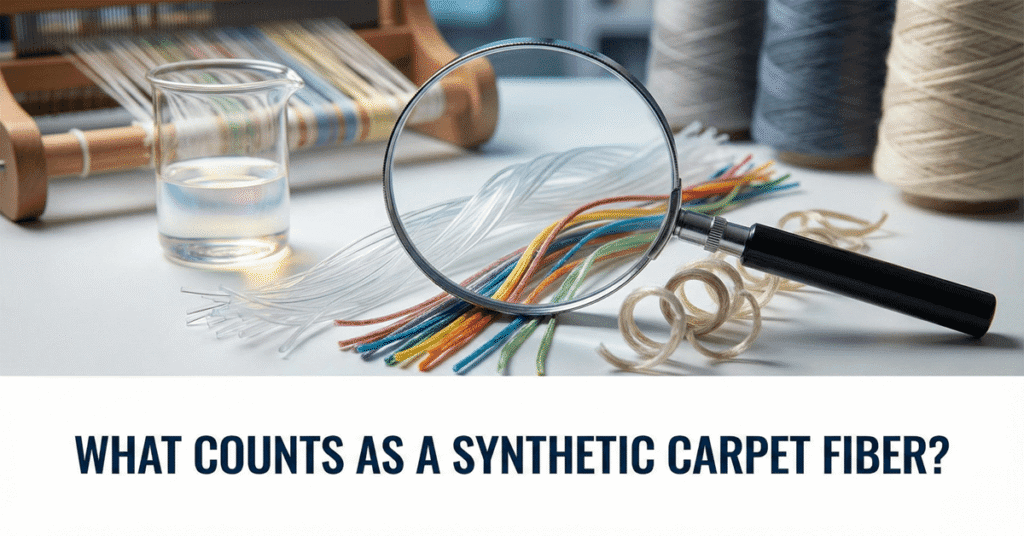
Synthetic carpets are made from man‑made polymers, and they dominate residential and commercial installs because they’re consistent, affordable, and easy to maintain. The four most common synthetic fibers you’ll see in showrooms are nylon, polyester, triexta, and polypropylene (often called olefin).
Nylon: the durability benchmark for busy rooms
If you want the safest bet for high traffic, nylon is often it. Flooring experts commonly point to nylon’s resilience, its ability to bounce back from crushing, as a key advantage for hallways, stairs, and family rooms.
For homes with kids, pets, or frequent entertaining, nylon’s practicality tends to show up over time. It holds its appearance better in the spots where you walk the same path every day, which is where lower-resilience fibers can start looking tired.
Polyester: soft and budget-friendly with strong color
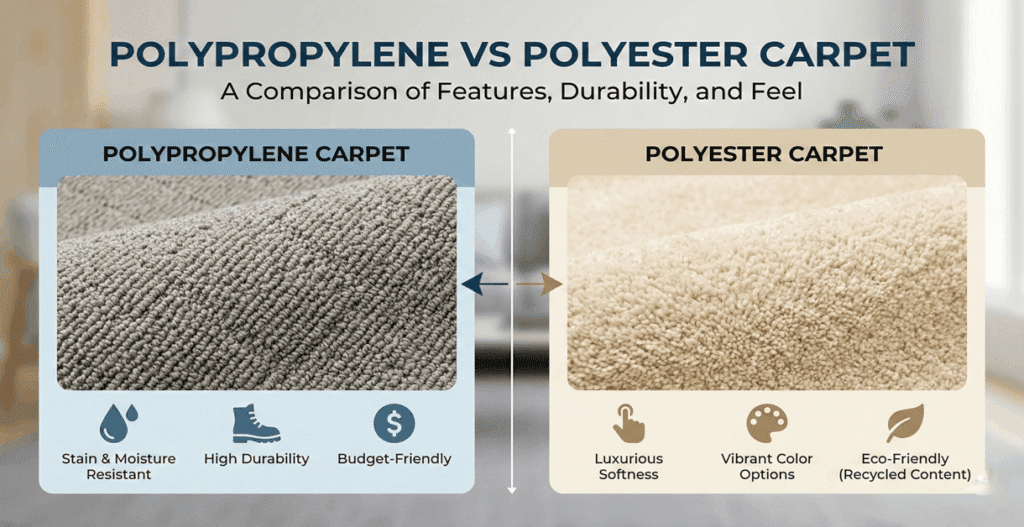
Polyester is popular because it feels soft and can look rich at a lower price point, especially when comparing nylon vs polyester performance in real-world traffic. It also tends to resist many common stains, making it appealing for bedrooms and guest rooms where traffic is lighter.
The trade-off is longevity in busy lanes. Polyester can age faster than other fibers in high-traffic areas, so it’s usually best when comfort and price matter more than extreme wear performance.
Triexta: inherent stain resistance and strong warranties
Triexta (polytrimethylene terephthalate) is a newer synthetic fiber with a reputation for stain resistance and softness. Many shoppers like triexta because the fiber itself is hydrophobic, meaning it naturally resists absorbing water-based spills and can be easier to clean without aggressive chemicals.
Depending on the brand, triexta may also include renewable, bio-based content (for example, some products replace a portion of petroleum with corn glucose) and can come with notably strong stain and texture warranties.
Polypropylene (olefin): moisture-friendly, value-focused performance
Olefin is often chosen for basements, sunrooms, and other areas where moisture resistance and stain handling matter more than “bounce back.” It holds up especially well to stains and can be a practical option for less formal spaces.
The main limitation is resilience. In very busy rooms, olefin may show crushing or matting sooner than nylon, so it’s better as a targeted solution than an all-house default.
What counts as a natural fiber carpet?
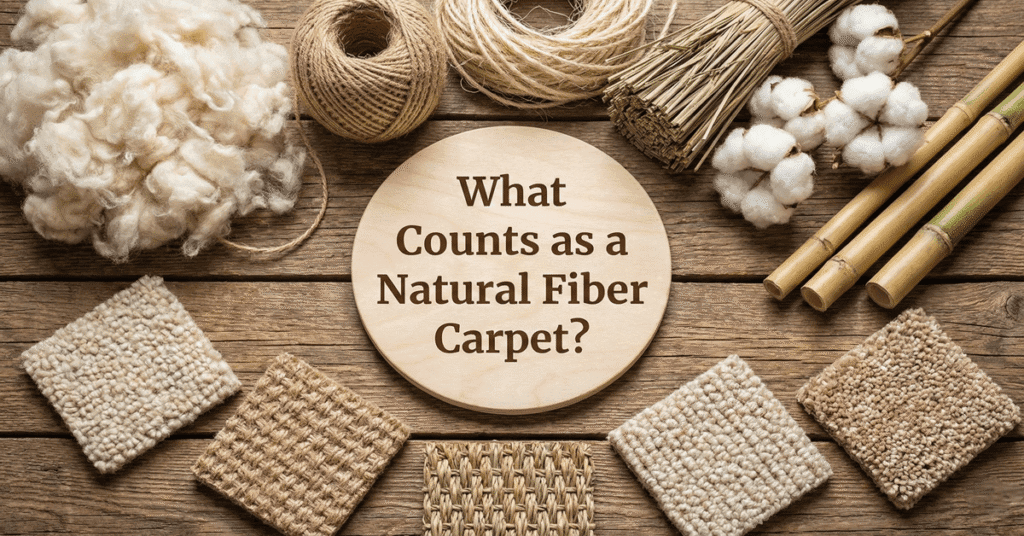
Natural fiber carpets come from plants or animals and are often chosen for texture, warmth, and sustainability. In broadloom (wall-to-wall) carpet, wool is the most common natural fiber; plant fibers like sisal and jute are frequently used as custom rugs, runners, or woven carpets in specific rooms.
Wool: premium comfort with natural performance
Wool is the “luxury baseline” because it feels warm, insulates well, and ages gracefully when you maintain it, which is why many homeowners compare wool versus synthetic carpet choices before investing. It can also be a smart choice for shoppers who want a natural material with strong performance rather than a delicate showpiece.
Wool’s indoor air quality story is also unique. Research cited by Woolmark describes wool carpet absorbing common indoor pollutants such as formaldehyde and certain oxides, which supports the idea that wool can contribute to a healthier-feeling indoor environment when paired with good ventilation and cleaning habits.
The honest downside is that wool isn’t carefree, and questions about wool carpet shedding over time and moisture sensitivity are common among first-time buyers. It can be more susceptible to water damage than many synthetics, and it’s a premium purchase, so it works best when you’re comfortable paying for feel, longevity, and natural aesthetics.
Sisal: textured, durable, and best kept dry
Sisal brings a clean, coastal, woven look that designers love, and it’s tough underfoot. But sisal has one major rule: keep it dry if you’re considering sisal for a runner or a room-size installation, plan for dry cleaning methods and quick spill response rather than wet extraction.
If you like sisal’s look but worry about real-life spills, it often performs best in low-risk areas (formal living rooms, offices with no food, or styled bedrooms) or as a custom rug where you can replace it without redoing an entire room.
Jute and seagrass: natural style with narrower use cases
Jute tends to feel softer than sisal, but it’s not a great match for wet cleaning or humid, spill-prone spaces. Seagrass is often marketed as more stain-resistant, but it can still struggle in environments where moisture and mold are concerns.
If you love the natural look, one practical approach is to use plant fibers as a removable rug over a hard surface, rather than committing to wall-to-wall installation. That preserves the aesthetic without forcing every room to live by natural-fiber rules.
Key decision factors that matter more than the label
Fiber type matters, but it’s not the only performance driver. Construction (twist, density, pile type), padding, and your cleaning habits can make a “good” fiber perform poorly, or make a mid-range carpet look great for years.
Durability and resilience in real traffic
Traffic isn’t just “how many people.” It’s where they walk, how often they pivot, and whether furniture sits in the same spot for years. Nylon is generally more resilient than triexta on an equivalent-quality basis, which is why many homeowners want to see triexta compared to nylon before choosing for busy rooms.
If you’re choosing carpet for stairs, look for dense construction and a lower or textured pile that hides footprints and resists crushing better than very plush styles.
Stain resistance and the kind of stains you actually get
Not all stains are equal. If your biggest risk is everyday water-based spills (juice, soda, muddy paw prints), triexta’s inherent hydrophobic behavior can be a real advantage.
If your spills are oil-based (lotions, cooking oils, makeup), no fiber is “magic.” Your best strategy is fast blotting, the right cleaner for the fiber, and choosing a carpet color and texture that won’t punish you for normal life.
Moisture and humidity
Moisture is where the synthetic vs natural choice becomes obvious. Wool and many plant fibers can be more sensitive to water damage, while fibers like olefin and certain nylons tend to handle light moisture better.
If you live in a humid climate or have rooms that run damp, prioritize moisture management first, HVAC, ventilation, and dehumidification, then choose the carpet fiber and pad that match that reality.
Indoor air quality and sensitivities
Indoor air quality concerns aren’t only about “natural vs synthetic,” and shoppers researching carpet options for allergy concerns should also evaluate backing, pad, and adhesive emissions.
They’re also about carpet backing, cushion, and adhesives. The Carpet and Rug Institute notes we spend a large share of our time indoors, which makes low-emission materials and good cleaning routines more meaningful than most people realize.
If you’re sensitive to odors or VOCs, the most helpful step is to choose carpet, pad, and adhesive that meet low-emission standards. CRI’s Green Label Plus program tests and certifies carpets, adhesives, and cushions for very low VOC emissions.
It’s also worth remembering that VOCs come from many household sources. The U.S. EPA lists building materials and furnishings, plus products like cleaners, disinfectants, and solvents, as common VOC sources, so your overall indoor environment matters as much as your flooring choice.
Sustainability and end-of-life
Natural fibers have a clear advantage in renewability and biodegradability. Synthetic fibers are not biodegradable, but “synthetic” doesn’t automatically mean “worst choice” if you zoom out to the full lifecycle.
Some synthetics include recycled content or have recycling pathways, especially certain nylon products. In California, for example, the state carpet stewardship program reported a 38.5% recycling rate for post-consumer carpet in 2024, showing measurable progress in diversion and recycling systems.
There’s also growing attention on microplastics in indoor environments. Research discussions on indoor dust note that synthetic polymer products, such as textiles and carpets, can be an important source of microplastics indoors as they wear. If this is a concern for you, choosing higher-quality carpet that sheds less, vacuuming consistently, and considering wool or other natural fibers in key rooms can be a reasonable, balanced approach.
Cost and total value: what you actually pay for
Carpet pricing only makes sense when you separate three buckets: the carpet itself, the cushion/pad, and installation materials, and the labor and prep work. Two carpets with the same sticker price can feel completely different once you add the right padding and correct installation, which is why choosing the right carpet pad matters as much as fiber type.
In the U.S., The Spruce estimates the average installed cost of carpet at about $6.35 per square foot, with a broad range from roughly $2.70 to $9.95 per square foot depending on materials and scope. Material costs vary by fiber type, with ranges like polyester ($1–$4/sq/sq ft.), nylon ($2–$6.25/sq ft.), olefin (about $1–$3.75/sq ft.), and wool ($4.25–$20.50/sq ft.).
Value also depends on replacement timing. In an average-traffic home, carpet often lasts in a 10–15 year replacement window, and high-traffic areas may wear faster. If you want the best long-term math, prioritize resilience, density, and a warranty that matches how you actually use the room.

Room-by-room recommendations
Most “wrong carpet choices” happen because people pick one fiber for the whole house. Instead, match the fiber to the job each room needs to do.
Bedrooms and guest rooms
Bedrooms usually need softness and warmth more than extreme durability. Wool can be a premium choice here, and polyester can be a smart value choice when you want a plush feel without paying for high-traffic performance.
If you’re sensitive to odors, focus on low-emission carpet, pad, and adhesive options, then keep the room well ventilated after installation.
Living rooms and family rooms
This is where you feel wear first. Nylon is a strong pick when you want resilience and appearance retention in the walk paths, while triexta can be excellent when spill resistance is a daily reality.
If you host often, pick a textured or patterned style that hides footprints and vacuum marks. It will look cleaner between deep cleans.
Stairs, hallways, and entry paths
Traffic concentrates here, and the carpet has to “bounce back.” Nylon is commonly favored for this reason, especially in dense, lower-pile constructions, making it one of the best flooring options for stairs in high-traffic homes.
Also, think about color and soil hiding. Mid-tone, heathered carpets tend to disguise grit and dust better than flat, solid colors.
Home offices and commercial spaces
In offices, chairs roll, people pivot, and coffee shows up more often than you think. Nylon (especially solution-dyed options) is typically a dependable choice, and low-VOC certifications matter if you’re spending long hours indoors.
If you’re building out a professional space, ask about warranties that cover texture retention and commercial wear. Those details often matter more than brand names.
Basements, sunrooms, and humid climates like Florida
If you’re shopping in places like Lakewood Ranch, Bradenton, Sarasota, or other Gulf Coast areas, the big issues are humidity, sand, and sun. In those conditions, moisture-friendly synthetics (like olefin in the right setting) or durable nylons can be a safer bet than plant fibers that dislike water.
If you love natural texture in a humid climate, consider natural fiber area rugs in controlled rooms rather than wall-to-wall installation. That gives you the look while keeping maintenance realistic.
Maintenance expectations and how to keep either option looking new
Carpet stays “nice” when you remove gritty soil early and treat spills fast, and drying carpet properly after cleaning plays a major role in preventing odors and moisture issues. That’s true for every fiber, and it’s the biggest difference between carpet that ages well and carpet that looks worn in two years.
The Carpet and Rug Institute emphasizes consistent vacuuming and periodic deep cleaning as core maintenance. It notes that consistent vacuuming can remove a very large share of dry soil and recommends professional cleaning on a regular cycle (often around every 12–18 months) to remove embedded soil.
For plant fibers like sisal, follow the fiber’s rules. Avoid wet cleaning methods, and use dry techniques designed for woven natural materials to prevent staining or water marks.
Shopping checklist: how to compare samples in 10 minutes
When you’re standing in a showroom with dozens of swatches, focus on questions that predict real performance. These seven checks will keep you from buying based on “feel” alone.
- What room is this for, and what’s the heaviest type of traffic it will see?
- How often do spills happen here, and are they mostly water-based or oily?
- Is the room humid, below grade, or prone to moisture problems?
- How does the carpet look when you rub it against the pile (crush and recovery)?
- What does the warranty cover: texture retention, stains, pets, and wear?
- Are the carpet, pad, and adhesive certified for low VOC emissions (such as Green Label Plus)?
- Can you commit to the maintenance the fiber requires (especially wool and plant fibers)?

Frequently Asked Questions
Is wool carpet good for allergies?
Wool is often chosen by people who want a natural fiber and a softer feel, but “allergy-friendly” depends heavily on cleaning and indoor-air-quality practices. Carpet can help trap particles outside the breathing zone, and consistent cleaning is the key to keeping them from building up.
Which carpet fiber is best for pets?
For most households, nylon and triexta are strong options because they handle traffic and everyday spills well. Triexta is known for its hydrophobicity and stain resistance, while nylon is often favored for its resilience and long-term appearance.
Does natural carpet stain more than synthetic?
Not always, but the margin for error is smaller. Wool can resist soiling and can be forgiving if you blot quickly, while many synthetics are designed to resist absorption and are easier to clean.
Can I install sisal wall-to-wall in a family home?
You can, but it’s usually a “design-first” choice that requires discipline. Sisal prefers dry cleaning methods and fast spill response, so it’s better for low-risk rooms than snack-heavy family rooms.
What does “solution-dyed” mean, and why should I care?
Solution-dyed fibers are colored earlier in manufacturing, which can improve colorfastness and help with stain performance. For sunny rooms or homes that see a lot of wear, it’s worth asking if the fiber is solution-dyed and what the warranty covers.
How do I choose a low-VOC carpet?
Look beyond the carpet’s fiber. Certifications like CRI Green Label Plus cover carpets, cushions, and adhesives and are designed to identify products with very low VOC emissions.
Conclusion
Synthetic and natural carpets both have legitimate advantages, and the “right” choice is usually room-specific. If you want maximum durability and easy maintenance, synthetics, especially nylon and triexta, tend to deliver the most consistent performance in busy homes. If comfort, texture, and natural materials matter most, wool (and selective use of plant fibers) can be a beautiful upgrade. Use the decision factors above, ask about certifications and warranties, and you’ll land on a synthetic vs natural carpet choice that fits your lifestyle instead of fighting it.