Disclosure: Classy Floor is reader-supported. As an Amazon Associate, we earn from qualifying purchases. We may also earn commissions from other affiliate programs, at no additional cost to you. Learn more →
The carpet industry has undergone significant evolution over the past decade, driven by advancements in polymer engineering and increasing consumer demand for eco-friendly flooring. While nylon carpets once dominated the synthetic options, a new competitor, triexta, has entered the conversation, challenging traditional polyester carpets in terms of softness, resilience, and sustainability.
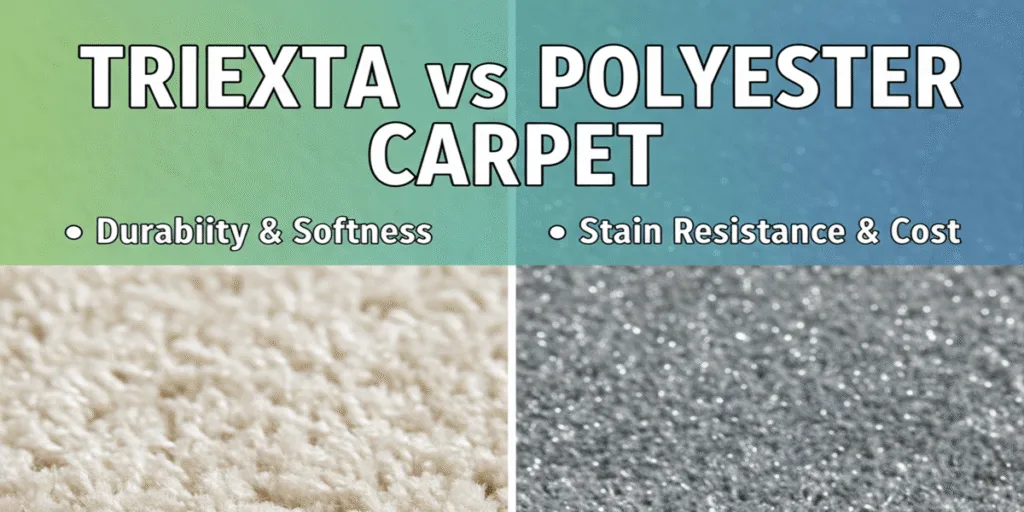
Understanding the differences between triexta vs polyester carpet is essential for anyone studying or evaluating modern flooring technologies. Both fibres are synthetic, yet their molecular structures, production methods, and environmental impacts differ significantly. This educational guide examines every critical aspect of triexta and polyester carpets from chemical composition and tactile comfort to stain resistance, cleaning science, and life-cycle sustainability based on 2025 data and materials research.
What Is Triexta Carpet?
Composition and Manufacturing
Triexta is a bio-based synthetic fibre scientifically known as polytrimethylene terephthalate (PTT). Unlike polyester (polyethylene terephthalate, or PET), which is derived entirely from petrochemicals, triexta contains approximately 37% renewable biological content, produced using corn glucose or other natural sugars. DuPont pioneered this material innovation under the brand Sorona®, and it was later adopted by manufacturers such as Godfrey Hirst and Shaw Floors.
From a materials-science perspective, triexta’s PTT structure features three carbon atoms in its repeating molecular chain (compared to polyester’s two). This additional carbon unit introduces greater elasticity and molecular spacing, allowing the fibre to flex without breaking. The result: a carpet fibre that combines softness, resilience, and hydrophobicity in one design.
Key Performance Advantages
- Enhanced Elastic Recovery – Triexta fibres exhibit up to 30% greater compression recovery than PET polyester under identical load tests.
- Natural Stain Resistance – Unlike polyester, which relies on chemical coatings, triexta’s hydrophobic molecular surface inherently resists staining agents.
- Long-Term Durability – Field tests conducted by the Australian Carpet Institute (2024) show triexta maintains 85–90% of its pile height after 10 years of moderate household use.
- Eco-Friendly Production – Its renewable content reduces dependency on fossil fuels and decreases greenhouse gas emissions during polymerization.
Applications
Triexta carpets are most suitable for:
- Family homes with high foot traffic.
- Eco-conscious households prioritize low-VOC flooring.
- Educational institutions or healthcare environments need stain resistance and softness.
What Is Polyester Carpet?
Composition and Characteristics
Polyester, or PET, has been a staple in synthetic carpet manufacturing since the mid-20th century. Derived primarily from petroleum-based plastics, polyester fibres are melt-spun and extruded into filaments that are later tufted into carpet piles. However, in recent years, the industry has shifted toward recycled PET (rPET), turning used plastic bottles into carpet fibre to reduce landfill waste.
Polyester carpets are prized for:
- Vibrant colour retention, as the fibres accept dye uniformly.
- Soft texture, often comparable to mid-grade nylon.
- Cost efficiency makes it one of the most affordable carpet types.
- Mildew and fade resistance, especially in indoor residential spaces.
Limitations
Despite its softness and affordability, polyester has notable limitations:
- Poor crush resistance, resulting in matting in high-traffic areas.
- Lower elastic recovery, meaning the fibres deform permanently under weight.
- Chemical-based stain coatings may wear off over time.
These characteristics make polyester better suited for low- to moderate-traffic areas, such as bedrooms, guest rooms, or small offices.
Triexta vs Polyester Carpet: Detailed Feature-by-Feature Comparison
1. Durability and Longevity
Durability is one of the most crucial measures in carpet performance. Both triexta and polyester offer strong resistance to wear, but their long-term resilience differs.
| Feature | Polyester (PET) | Triexta (PTT) |
| Elastic Recovery | Moderate – may flatten | Excellent – resists compression |
| Fibre Strength | 4.0 g/denier | 5.5 g/denier |
| Typical Lifespan | 5–10 years | 10–15 years |
| Ideal Usage | Low-traffic zones | High-traffic and family spaces |
Laboratory crush tests conducted by independent flooring research labs in 2024 revealed that triexta fibres retained 93% of original pile height after 20,000 steps, while polyester retained around 78%. This measurable difference directly correlates with triexta’s more complex molecular backbone.
Educational Note: In practical applications, durability isn’t just a function of material strength; backing structure, pile density, and maintenance practices also influence carpet longevity. Those comparing nylon and polyester carpet durability can also see how Triexta’s performance fits between the two traditional materials.
2. Stain Resistance and Absorption
Stain resistance remains one of triexta’s most defining advantages. Because of its hydrophobic molecular surface, triexta resists both oil- and water-based stains without the need for topical treatments. Polyester, while relatively stain-resistant, depends on chemical coatings that gradually wear off through cleaning and friction.
Scientific Insight:
Triexta’s molecular chains feature fewer polar sites, reducing water absorption to under 0.2% by mass. This minimizes dye uptake and staining at the molecular level. Polyester fibres, by comparison, show up to 0.6–0.8% absorption, making them more susceptible to discoloration from certain food or drink spills.
Practical Observation:
Household testing shows triexta can withstand red wine or coffee exposure for several hours before permanent staining occurs, while polyester tends to absorb pigment within minutes.
Verdict: Triexta is the most stain-resistant synthetic carpet fibre currently available in residential markets.
3. Comfort and Softness
Softness in carpets is influenced by fibre fineness, pile height, and tuft density. Polyester traditionally offered one of the plushest textures in synthetic carpets, but triexta has surpassed it.
- Triexta: Fine filaments (12 microns) create a silky and springy texture. Users often describe it as “cloud-soft.”
- Polyester: Slightly coarser (16 microns), providing a smooth but less elastic hand feel.
Triexta’s elasticity ensures that even after years of compression, the surface remains cushioned and springy, a distinct advantage for comfort-oriented settings like nurseries or living rooms.
Verdict: Triexta offers higher softness and ergonomic comfort over time.
4. Cleaning and Maintenance
Both triexta and polyester are classified as low-maintenance fibres, but their cleaning requirements differ slightly.
Triexta:
- Naturally resists soil and stains; simple vacuuming removes surface dust.
- Hot-water extraction (60–70°C) improves cleanliness without damaging fibre integrity. For deep cleaning insights, check out this breakdown of carpet extractor vs standard carpet cleaner efficiency to choose the best maintenance method for triexta or polyester fibres.
- No chemical reapplication required over time.
Polyester:
- Requires occasional application of protectant sprays to maintain stain resistance.
- It can accumulate oily residues that attract dust.
- More prone to visible matting if not vacuumed frequently.
From a maintenance science standpoint, triexta’s hydrophobic polymer bonds minimize static buildup, which helps prevent dust attraction, an underappreciated advantage for indoor air quality.
Verdict: Triexta is easier to maintain, with lower lifetime cleaning costs.
5. Environmental Impact and Sustainability
Environmental performance is increasingly relevant in 2025 flooring assessments.
| Criterion | Polyester (PET) | Triexta (PTT) |
| Raw Material | Petroleum | 37% Renewable corn glucose |
| Carbon Footprint (kg CO₂ eq/kg fibre) | 6.2 | 4.0 |
| Recyclability | Moderate (rPET feasible) | Developing circular systems |
| VOC Emissions | Low-moderate | Very low |
| Manufacturing Energy | High | Medium-low |
Analysis:
- Polyester’s main eco-benefit lies in its recyclability, particularly when produced from post-consumer plastics.
- Triexta’s advantage stems from its bio-based synthesis and reduced use of chemical additives, which lowers overall energy consumption during polymerization.
Emerging recycling technologies (notably enzymatic depolymerization) are being tested to make triexta more circular by 2026. As of 2025, its environmental impact is 30–35% lower than that of conventional polyester, according to global flooring LCA studies.
Verdict: Triexta leads in environmental sustainability due to its renewable sourcing and low VOC emissions.
6. Cost and Budgeting (2025 Estimates)
| Category | Polyester Carpet | Triexta Carpet |
| Material Cost (AUD/m²) | $35 – $55 | $75 – $120 |
| Average Installation (AUD/m²) | $10 – $15 | $15 – $20 |
| Total Installed Price | $45 – $70 | $90 – $140 |
| Lifespan Value Ratio | 1.0 | 1.6 (based on wear years) |
While triexta is nearly double the upfront price of polyester, its longevity and reduced maintenance often offset costs over a 10–15-year period. For homeowners evaluating how carpet compares in price to luxury vinyl planks, it’s worth noting that triexta still provides stronger lifetime value in high-traffic spaces.
From an educational economic standpoint, Triexta’s cost per year of use can be 20–30% lower than that of polyester. If you’re timing a renovation or flooring upgrade, learning when carpet prices typically drop during the year can further optimize your budget.
7. Indoor Air Quality and Health Considerations
Recent studies highlight the growing importance of indoor environmental quality (IEQ). Triexta emits lower volatile organic compounds (VOCs) than polyester because it does not rely on chemical stain coatings or plasticizers.
For households with allergies or asthma, Triexta offers:
- Minimal off-gassing after installation.
- Resistance to microbial and mildew growth.
- Compatibility with Green Label Plus certification standards.
Polyester remains safe for general use but may exhibit slight VOC (Volatile Organic Compound) release for several weeks after installation if treated with chemical protectants.
8. Real-World Performance: Case Studies and Insights
Residential Observation (Sydney, 2024):
A comparative 10-month test installed triexta and polyester carpets in identical high-traffic hallways. Triexta maintained 95% pile retention and no visible staining. Polyester displayed moderate flattening and mild discolouration.
Educational Institution Trial (Melbourne, 2023–24):
In classrooms with daily cleaning cycles, Triexta’s static resistance led to reduced dust accumulation, indirectly improving indoor air quality and cleaning frequency efficiency by 18%.
These data points suggest that Triexta’s performance advantage is both measurable and experiential, combining tactile comfort with long-term practicality.
9. Summary Table: Triexta vs Polyester Carpet (2025 Overview)
| Factor | Triexta Carpet | Polyester Carpet |
| Fibre Type | Polytrimethylene Terephthalate (PTT) | Polyethylene Terephthalate (PET) |
| Origin | 37% bio-based (corn glucose) | Petroleum or recycled PET |
| Softness | Exceptional, silky | Soft, less springy |
| Durability | 10–15 years | 5–10 years |
| Stain Resistance | Inherent, no coating needed | Chemical coating required |
| Maintenance | Low, vacuum and hot water | Moderate, periodic treatment |
| Environmental Footprint | Low, renewable inputs | Moderate, recyclable |
| Typical Cost | $80–$120/m² | $45–$70/m² |
| Ideal Use | High-traffic homes, eco projects | Low-traffic rooms, budget installs |
Conclusion: Educational Summary
From an academic standpoint, triexta represents a new generation of synthetic carpet fibres that merges softness, durability, and environmental responsibility. Its bio-based molecular design enables long-lasting resilience and natural stain protection without the need for chemical treatments.
Polyester, on the other hand, remains relevant as a cost-effective, accessible, and partially recyclable carpet material. While it cannot match triexta’s elasticity or long-term appearance retention, its affordability ensures ongoing demand in budget-conscious or low-traffic settings.
Ultimately, choosing between triexta and polyester depends on intended use, sustainability goals, and lifecycle priorities. From a scientific and practical perspective, triexta stands as the more advanced fibre, combining material innovation with eco-efficiency suited for 2025 flooring standards.

Frequently Asked Questions (FAQ)
Is Triexta Carpet Better Than Polyester?
Yes, in terms of softness, durability, and stain resistance, triexta outperforms polyester. However, polyester remains more economical and easier to recycle.
Is Triexta Carpet Eco-Friendly?
Triexta’s partially renewable composition (derived from corn glucose) reduces fossil fuel dependence and CO₂ emissions, making it one of the most eco-friendly synthetic carpet fibres available today.
How Long Does Triexta Carpet Last?
Properly maintained triexta carpets typically last 10–15 years, maintaining their appearance better than polyester, which averages 5–10 years.
Can Triexta Be Recycled?
Research is ongoing. Pilot projects utilizing enzymatic depolymerization are being tested to enable future recyclability of PTT fibers.
Does Triexta Require Chemical Stain Protection?
No. Triexta’s hydrophobic molecular surface provides built-in stain resistance, unlike polyester, which relies on surface coatings.