Disclosure: Classy Floor is reader-supported. As an Amazon Associate, we earn from qualifying purchases. We may also earn commissions from other affiliate programs, at no additional cost to you. Learn more →
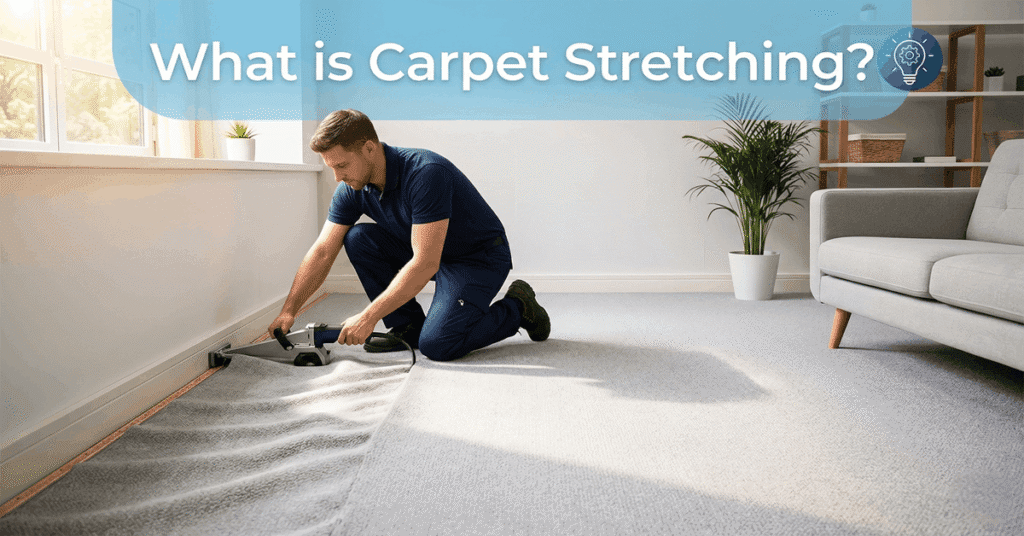
What is carpet stretching? Carpet stretching is the process of pulling loose wall-to-wall carpet tight again and fastening it back onto tack strips so ripples, wrinkles, and buckled carpet lie flat. Homeowners, tenants, and property managers usually face this problem after traffic, furniture movement, or a poor fit leaves the carpet uneven underfoot.
That matters if you are trying to judge whether carpet restretching will fix the floor or whether carpet repair vs replacement makes more sense. This article explains what does carpet stretching fix, how to spot loose carpet early, what the work involves, and how do you know if carpet needs stretching or replacing. It keeps a tight scope and points out limits such as moisture damage, torn backing, and carpet padding issues that stretching alone will not solve.
What Is Carpet Stretching and What Does It Actually Fix
Carpet stretching means pulling loose wall-to-wall carpet and carpet tiles back into proper tension and fastening the edges onto tack strips again. The goal is a flat surface with no ripples, wrinkles, bubbles, or lifted areas. In most rooms, the work focuses on the carpet backing, the room perimeter, and the fit across the full floor, not just one small spot, and it helps to understand choosing the right carpet padding before any repair.
A stretched carpet should sit smooth from wall to wall and feel firm underfoot. That result is different from cleaning, patching, or seam work. A clean carpet can still have buckled carpet. A patched carpet can still have loose carpet. Carpet stretching deals with fit and tension first.
Loose carpet often shows up as waves through the centre of the room, raised sections near furniture paths, or edges that no longer sit tight near the skirting line, especially in carpets that hold up in busy rooms. In those cases, carpet restretching can remove the uneven surface and reduce trip risk. The fix is physical. The carpet gets pulled tight again, trimmed where needed, and set back onto the tack strips.
| Problem | Does stretching help? | When another repair is needed |
| Carpet ripples across the room | Yes, in many cases | If the backing is damaged |
| Carpet wrinkles near traffic paths | Yes | If wear has thinned the carpet badly |
| Carpet bubbles after poor fitting | Yes | If the pad or subfloor has a separate fault |
| Loose carpet edges | Yes | If tack strips are damaged or missing |
| Open seam | No | Seam repair is the main fix |
| Torn carpet surface | No | Patching or replacement is the main fix |
| Stains or odour | No | Cleaning or replacement is the main fix |
Carpet stretching vs carpet repair vs carpet replacement
Carpet stretching is one type of carpet repair, though it is not the same as every repair job. Stretching corrects looseness and poor tension. Seam repair deals with split joins. Patching deals with burns, tears, or missing fibres. Replacement comes into the picture when the carpet has broad wear, torn backing, or damage that runs far past a fit issue.
A simple way to judge the difference is to ask what has failed. If the carpet shape has failed, stretching is often the answer, and it helps to remember that carpet construction affects performance, and the recognised carpet installation standards that underpin proper tension. If the surface has failed, patching or replacement fits better. If the join has failed, seam work fits better.
What carpet stretching can improve immediately
The biggest change is visual. Ripples, wrinkles, and bubbles often flatten out at once. The room looks neater, furniture sits better, and vacuuming becomes easier.
The second change is practical. A stretched carpet feels more secure underfoot. Loose sections that catch shoes, toys, or vacuum heads often stop causing trouble once the carpet is back under proper tension. For readers asking what does carpet stretching fix, the short answer is loose fit, uneven surface, and movement across the floor.
What carpet stretching cannot fix
Carpet stretching does not fix every carpet problem. It will not repair stains, pet damage, worn fibre, open seams, or a torn carpet backing. It will not correct a bad smell locked into the carpet or pad.
Stretching has limits with moisture damage too, and fiber choice changes how carpet wears when you are judging whether the carpet can hold tension again. A carpet that has shrunk, delaminated, or failed at the backing level may need a different repair path or full replacement. That distinction matters when someone asks, can carpet stretching remove wrinkles and ripples. It can, though only when the carpet structure still has enough integrity for the work to hold.
Why Carpets Loosen Over Time
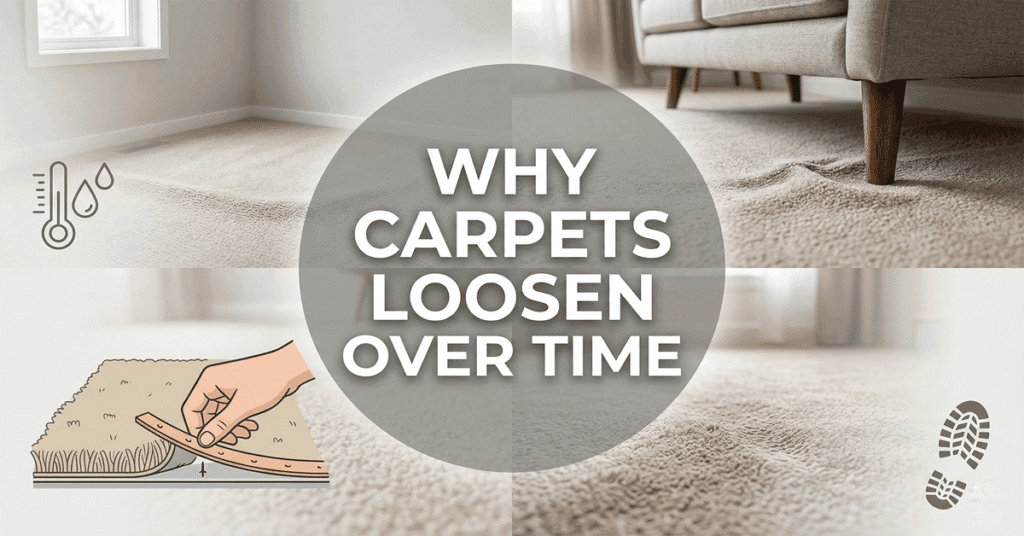
Carpet loosens over time when wall-to-wall carpet loses tension at the tack strips, the carpet backing shifts, or the carpet padding no longer supports the surface evenly. The most common triggers are a weak original fit, repeated foot traffic, furniture movement, humidity shifts, wet carpet, and backing failure, such as delamination. Loose carpet often starts as small carpet ripples or a soft spot underfoot, then turns into wider wrinkles or a buckled carpet if the cause stays in place.
Installation-related causes
A large share of loose carpet starts with the first fitting. A carpet that was not stretched tightly enough at installation can look fine at first, then develop ripples after normal use. Full-room tension matters. A quick pull with the wrong tool can leave the carpet attached at the edges but loose through the middle.
Tack strips and carpet padding matter here too. If tack strips do not grip well, the carpet can creep away from the room perimeter. If the padding is too soft, uneven, or poorly fitted, the carpet surface can shift more than it should. Poor seam placement can add stress in busy walkways, which makes wrinkled carpet show up sooner.
Wear, traffic, and furniture movement
Daily use slowly changes how carpet sits across the subfloor. Repeated traffic in halls, family rooms, and door paths presses the pile and padding in the same lines again and again. Over time, that repeated pressure can let loose carpet form in low-tension areas.
Furniture creates a different pattern. Heavy items can pin one part of the carpet in place and leave the next area free to move. Dragging sofas, beds, or desks across the room can pull the carpet backing away from tack strips or strain seams. A homeowner may notice carpet bubbles after moving furniture, yet the real issue often started much earlier with weak tension or worn padding.
Humidity, wet carpet, and backing problems
Moisture changes carpet more than many people expect. Humidity can cause parts of the carpet and backing to expand, then contract as the room dries out. That cycle can leave ripples across the floor, mainly in rooms with poor airflow or after a period of damp conditions.
Wet carpet brings a bigger risk. Excess water from spills, leaks, or over-wetting during cleaning can weaken the bond in the carpet backing. Delamination means the backing layers begin to separate. At that point, carpet restretching may not hold well, even if the surface looks flat for a short time. Industry guidance usually treats moisture damage and backing failure as a separate issue from normal loosening, including the water damage restoration standard used by professionals.
| Cause | What the carpet looks like | Is stretching likely to work? |
| Poor original installation | Ripples across open areas, loose feel underfoot | Yes, in many cases |
| Heavy foot traffic | Wrinkles in walkways, uneven surface | Often, if backing is sound |
| Furniture dragging | Localised bubbles, pulled edges, seam stress | Often, if damage is limited |
| Humidity shifts | Waves or buckling that appear after damp periods | Sometimes, if backing is stable |
| Wet carpet or leaks | Distorted areas, musty patches, recurring ripples | Less likely |
| Delamination | Loose surface, poor hold, shape changes return fast | No, replacement is often the better route |
A quick room check can separate normal loosening from a deeper fault. If the carpet backing feels sound, the surface is otherwise in good condition, and the problem is tension-related, stretching may still be the right fix. If moisture, subfloor trouble, or delamination is present, the next step needs a closer look at the visible signs.
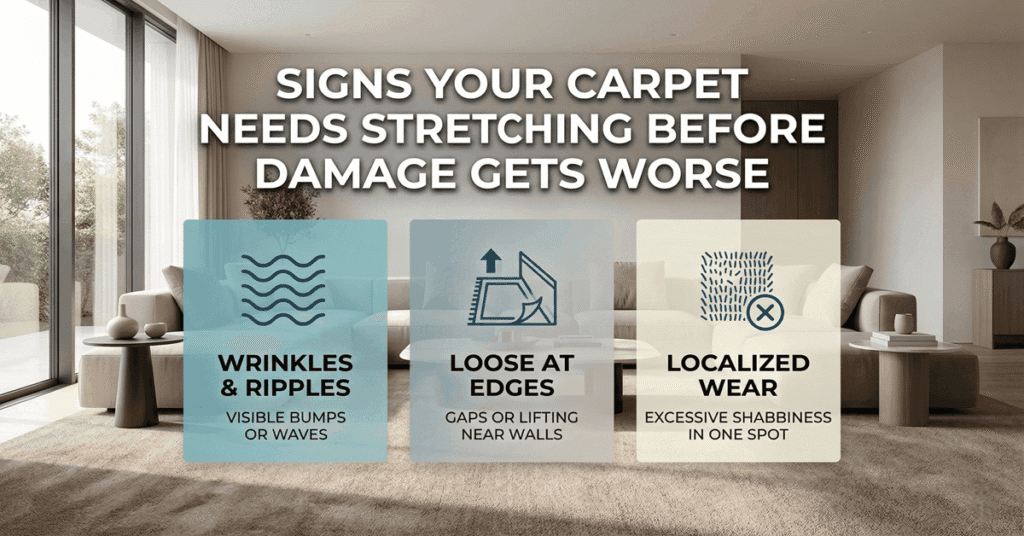
Signs Your Carpet Needs Stretching Before Damage Gets Worse
Loose wall-to-wall carpet usually shows clear warning signs before major wear sets in. Ripples, wrinkles, bubbles, loose edges near tack strips, and movement across the carpet backing are the main clues. A carpet that shifts underfoot or looks raised in one part of the room often needs carpet stretching, not just cleaning or a quick surface fix.
Early warning signs homeowners often ignore
Small changes often appear first in open walking paths and around furniture legs. A slight wave in the carpet may seem minor at first, yet that loose section can rub harder against foot traffic and wear down faster. The same pattern shows up after furniture is dragged across the room, after a recent installation with a poor fit, or after the carpet has lifted away from the perimeter.
Use this room-by-room inspection checklist to spot trouble early:
- Look across the room from a low angle for ripples or raised lines
- Press your foot over any bubble to see whether the carpet shifts
- Check loose carpet edges near walls, thresholds, and doorways
- Watch for wrinkles that return after smoothing by hand
- Notice spots where furniture legs no longer sit level
- Feel for movement between the carpet and carpet padding
A useful rule is simple: flat carpet should feel firm and stable. If a wrinkle keeps coming back, the issue is usually deeper than surface pressure. That is one of the clearest answers to can carpet stretching remove wrinkles and ripples: yes, when the carpet is sound and the looseness is the real problem.
When loose carpet becomes a safety issue
A buckled carpet can turn from an appearance issue into a trip hazard fast, which is why it helps to understand trip hazards from raised flooring. Raised sections in a hallway, near stairs, or at a doorway catch shoes, chair legs, and vacuum heads. Older adults, children, and anyone carrying laundry or boxes face a higher risk in those spots.
Damage grows in a simple chain. Foot traffic presses down on the same raised area, the carpet backing flexes again and again, and the wrinkle starts to crease. Industry guidance usually treats that pattern as a sign to act early, since a loose carpet that stays in place for months may wear out sooner than the rest of the room.
When the problem may not be stretching at all
Some symptoms look like loose carpet even when another fault is driving the problem. Wet carpet after heavy cleaning can create temporary bubbling, especially when steam cleaning, versus extraction, leaves too much moisture behind. Worn carpet padding can make the floor feel uneven even when the carpet itself still has decent tension. Delamination in the backing can produce waves that stretching will not hold for long.
This is the key checkpoint for anyone asking how do you know if carpet needs stretching or replacing. If the carpet has severe wear, repeated wet exposure, torn backing, or clear subfloor movement, carpet restretching may not solve the root issue. In those cases, the next step is to judge the carpet’s condition before any repair work starts.
How Carpet Stretching Works
Carpet stretching works by releasing a loose wall-to-wall carpet from the tack strips, pulling the carpet tight across the room with a power stretcher, then fastening the edges back in place. A proper job deals with carpet ripples, wrinkles, loose carpet edges, and buckled carpet by restoring tension through the carpet backing rather than just pushing surface waves flat. The goal is a smooth fit from wall to wall, with clean edges, stable seams, and no raised sections underfoot.
Tools used in carpet stretching
A professional carpet stretcher uses a small group of tools, and each one has a distinct job. The key point is simple: a knee kicker can help place carpet at the edge, though a power stretcher does the heavy work in full-room carpet restretching. That distinction matters if someone asks, can a knee kicker stretch a whole room properly. In most rooms, the answer is no.
| Tool | Main job | Best use |
| Power stretcher | Pulls carpet across the room | Full-room tension and ripple removal |
| Knee kicker | Nudges carpet into position near edges | Final edge placement |
| Tucker | Pushes carpet neatly into the gap near the wall | Clean finishing along perimeter |
| Cutter | Trims excess carpet at the edge | Accurate final fit |
| Seam tools | Protect or reset joined areas | Rooms with seams or patched sections |
Power stretcher
A power stretcher spans much of the room and applies controlled tension across the carpet. That reach is what removes ripples in the middle of the floor, where hand pressure or a knee kicker cannot hold enough pull.
Knee kicker
A knee kicker helps move the carpet into place near the wall and onto the tack strips. It is a positioning tool, not a full-room stretching tool, so relying on it alone can leave loose carpet in the centre of the room.
Tucker, cutter, and seam tools
A tucker presses the carpet edge into the space between the carpet and the skirting area. A cutter trims the excess for a neat line. Seam tools protect joined sections so the installer does not pull a seam apart during the stretch.
The step-by-step process professionals follow
Most professional jobs follow the same sequence. First comes inspection of the carpet, carpet padding, seams, and tack strips. Next comes moving furniture and releasing part of the carpet from the perimeter. After that, the power stretcher pulls the carpet tight in controlled passes across the room. Once the surface lies flat, the installer reattaches the carpet to the tack strips, trims the edge, tucks the perimeter, and checks for any remaining bubbles or loose spots.
That workflow sounds simple on paper, though the finish depends on even tension and careful handling of the carpet backing. Industry guidance usually treats wet carpet, damaged padding, and weak seams as limits that need checking before the stretching starts.
Why full-room tension matters
Full-room tension is what separates a lasting fix from a short-lived one. A carpet can look flatter for a few days after a quick edge pull, yet ripples often return when the middle of the floor never got proper tension.
Room-wide pull matters most in larger spaces, older installations, and areas with heavy foot traffic. Good carpet stretching spreads tension across the full width and length of the carpet, which helps the tack strips hold the carpet in place and keeps the surface smooth after the job is done.
When Carpet Stretching Is Worth It and When It Is Not
Carpet stretching is worth it when wall-to-wall carpet has ripples, wrinkles, or loose edges, yet the carpet backing, carpet padding, seams, and tack strips are still in workable shape. Carpet stretching is not worth it when the floor covering has deep wear, torn backing, major staining, water damage, or broad failure across the room. The main choice is simple: fix a sound carpet that has lost tension, or stop spending on a carpet that is near the end of its service life.
A lot of loose carpet looks worse than it really is. A room with buckled carpet after furniture movement or an installation problem can often respond well to carpet restretching. In that case, the goal is to pull the carpet tight again, secure it at the perimeter, and remove the trip hazard without replacing the whole floor.
Best-case scenarios for carpet stretching
The best cases are carpets with surface ripples and a solid base. A newer carpet with loose carpet edges, minor waves in open areas, or slack near a doorway often has plenty of life left after stretching. A carpet with clean seams and stable carpet padding usually gives the best result.
Stretching can make sense in cases like these:
- ripples after poor original installation
- buckled carpet from furniture dragging
- wrinkles in one or two rooms, not the full home
- loose edges near tack strips
- carpet that still looks sound apart from the looseness
In these cases, carpet repair vs replacement usually leans toward repair. The floor can look flat again, feel safer underfoot, and keep serving well for years.
Red flags that point to replacement instead
Some carpets are too far gone for stretching to offer real value. A carpet with worn traffic lanes, frayed seams, or visible backing damage may flatten for a short period, yet the core problem remains. The same goes for carpet that has taken on water damage or has signs of delamination.
Watch for these red flags:
- torn or brittle carpet backing
- broad staining that goes past the face fibres
- bad odour after moisture exposure
- padding that feels crushed, uneven, or unstable
- damage spread across many rooms
- carpet near the end of its normal life
A homeowner asking how do you know if carpet needs stretching or replacing should look at the whole condition of the room, not just the ripples. A flat surface does not matter much if the carpet body is failing.
Repair vs replace decision framework
Use this quick framework to judge the next step:
| Condition | Stretching usually makes sense | Replacement usually makes sense |
| Ripples or wrinkles | Yes, if the carpet body is sound | No, if ripples come with backing failure |
| Carpet age | Better for newer to mid-life carpet | Better for very old carpet |
| Damage area | Better for one room or isolated spots | Better for wide damage across rooms |
| Backing and seams | Better for stable backing and intact seams | Better for torn backing or weak seams |
| Padding and subfloor feel | Better for firm, even support | Better for crushed padding or deeper floor issues |
Industry guidance usually treats stretching as a corrective repair, not a cure for every carpet problem. That point matters most with moisture, backing damage, and broad wear. In those cases, replacement is often the cleaner decision, both in appearance and in long-term value.
A good rule is this: stretch carpet that is loose, not carpet that is failing. The next choice often comes down to who should do the work and what level of risk comes with the repair.
DIY or Professional Carpet Stretching
DIY carpet stretching can work in a small room with light ripples, sound carpet backing, secure tack strips, and no seam trouble. A full-room job needs even tension across the wall-to-wall carpet, which is why the choice often comes down to tool access, room size, and the risk of harming edges, seams, or carpet padding.
| Situation | DIY may suit | Professional stretching suits |
| Small loose area | Yes, if the carpet is otherwise sound | Yes |
| Whole room with broad wrinkles | Rarely | Yes |
| Loose edges near one wall | Sometimes | Yes |
| Seam nearby | Risky | Yes |
| Older carpet with weak backing | Poor fit | Yes |
When a DIY approach may be reasonable
A DIY attempt makes the most sense in a spare room, closet, or other low-traffic space where the buckled carpet is limited and easy to see. The carpet should still grip the tack strips, the loose carpet edges should be minor, and the floor should show no sign of moisture damage or padding failure.
Tool choice matters. A knee kicker can help with a small adjustment near an edge, though a knee kicker does not replace a power stretcher for full-room tension. If the room has several carpet ripples across the centre, DIY carpet stretching usually falls short and can leave the surface flat in one area and slack in another.
When to call a professional carpet stretcher
A professional carpet stretcher is the better choice for large rooms, long wrinkles, loose carpet that shifts underfoot, or any room with seams, stairs, or awkward shapes. Power stretcher setup, edge trimming, and re-securing the carpet onto tack strips take practice, and mistakes can leave the carpet uneven or can pull stress into the backing.
This choice is often the safer one after a poor installation, furniture drag across the room, or repeat ripples that came back after a quick fix. If you are asking can you stretch carpet yourself, the better question is whether the carpet needs full-room tension or just a light edge correction. Full-room work nearly always points to a pro.
Questions to ask before hiring
Before hiring, ask direct questions that show whether the contractor understands carpet restretching rather than general carpet repair.
- Will the job use a power stretcher or only a knee kicker?
- Is the carpet backing in good enough shape for stretching?
- Are the tack strips still secure around the room?
- Will the quote cover trimming, re-securing, and cleanup?
- If the carpet has seams or loose edges, how will those areas be handled?
- If the carpet padding or subfloor is part of the problem, what is the next step?
Good answers are specific and room-based. Vague answers, very low quotes, or a plan built around a knee kicker alone are warning signs. A sound hire should be able to explain when carpet stretching will fix the problem and when carpet repair vs replacement is the smarter call.

Frequently Asked Questions
Is carpet stretching the same as replacing carpet?
No. Carpet stretching keeps the existing wall-to-wall carpet and pulls it tight again so wrinkles, ripples, or buckled areas lie flat. Replacement removes the old carpet and installs a new one. Stretching suits carpet with sound backing, usable carpet padding, and limited wear. A badly worn carpet, torn backing, or broad damage points toward replacement instead.
Can carpet stretching remove wrinkles permanently?
Carpet stretching can remove wrinkles for the long term when the carpet backing is in good shape and the carpet is re-secured properly to the tack strips. A quick surface fix often fails. Wrinkles can return after poor installation, weak tension across the room, moisture trouble, or ongoing furniture drag, so the result depends on the carpet condition and the quality of the stretch.
How do you know if carpet needs stretching or replacing?
Look at the full condition of the carpet, not only the ripples. Stretching is usually the better fix for loose carpet, raised areas, or loose edges when the pile, backing, seams, and carpet padding still have life left. Replacement makes more sense when the carpet has heavy wear, torn backing, major stains, or damage that goes beyond wrinkled carpet fix work.
Does carpet stretching fix bubbles and ripples after moving furniture?
Yes, carpet stretching often fixes bubbles and carpet ripples caused by furniture movement, mainly when the carpet shifted out of tension and the tack strips still hold well. The key question is whether the movement only loosened the carpet or exposed an older installation problem. If the ripple pattern runs across the room, a full re-stretch usually works better than a small edge adjustment.
Can a knee kicker stretch a whole room properly?
A knee kicker is not the right tool for full-room carpet stretching. A knee kicker can help with small edge adjustments or minor positioning near a wall, though broad room tension usually needs a power stretcher. Using a knee kicker alone on a large wrinkled area can leave parts of the carpet flat near the wall and loose through the centre.
Will carpet stretching work after water damage or steam cleaning?
Sometimes, though not in every case. Carpet stretching may help after over-wetting from steam cleaning if the carpet dried fully and the backing stayed sound. Water damage is a different issue. Moisture can weaken the backing, affect carpet padding, or create problems below the carpet, and those conditions can limit how much a stretch can fix, so watch for signs of mould under carpet.
Conclusion
Carpet stretching is a repair choice for loose wall-to-wall carpet, carpet ripples, and wrinkled areas that can often be corrected without full replacement. The main decision comes down to carpet condition: sound backing, secure tack strips, and usable carpet padding usually support a stretch, whereas torn backing, heavy wear, or moisture damage point elsewhere.
That distinction matters for safety, appearance, and service life. A flat carpet surface reduces trip hazards and helps the room look right again, yet carpet stretching is not a cure for every flooring problem. Loose edges, buckling, and shifting underfoot can improve, though severe damage or deeper floor issues need a different fix.
If you started with the question what is carpet stretching, the practical next step is simple: check the carpet backing, padding, seams, and loose areas before deciding on repair or replacement. A clear look at those parts will tell you whether a stretch is the right move now.