Disclosure: Classy Floor is reader-supported. As an Amazon Associate, we earn from qualifying purchases. We may also earn commissions from other affiliate programs, at no additional cost to you. Learn more →
Your stairs handle more foot traffic than any other surface in your home, and the way you carpet them shapes safety, comfort, and style. When homeowners compare bullnose vs waterfall carpet on stairs, they are choosing between a snug, wrapped stair nosing and a clean, straight drop of carpet over each tread and riser. This clear comparison sets the stage for smart choices about budget, maintenance, and long term wear.
This guide explains how each stair carpet style looks, feels, and performs in real homes, from busy family hallways to statement entry staircases. You will see how stair nosing profiles, carpet pile height, stair runners, and padding all influence grip, noise, and lifespan on high traffic steps. By the end, you will know which installation method fits your staircase layout, design goals, and comfort needs, so every trip up and down feels secure and finished.
Bullnose vs waterfall carpet on stairs at a glance
Bullnose and waterfall are the two main ways to install carpet on stairs, and each style changes the shape, edge, and feel of every step. In a bullnose, sometimes called Hollywood or cap-and-band, the carpet wraps tight around the stair nosing and follows both tread and riser; in a waterfall install, one piece of carpet runs across the tread and drops straight down the riser. This quick overview gives a plain answer to the question “which is better, bullnose or waterfall carpet on stairs?” by linking looks, safety, and cost to real stair use.
If you’re already thinking about a project for your own stairs, you can compare popular premade bullnose stair treads and stair runners that work with both bullnose and waterfall installs while you read.
Quick comparison table: key differences
This comparison table sets bullnose and waterfall side by side so you can scan key points in seconds.
| Factor | Bullnose (Hollywood / cap-and-band) | Waterfall installation |
| Look | Fitted, shaped edge on each step | Smooth, relaxed drop from tread to riser |
| Edge and nosing | Carpet wraps under the front nosing | Carpet bends over the edge in one curve |
| Carpet usage | More pieces cut, more waste | Less carpet, fewer cuts |
| Labour and skill | Higher skill, slower install | Faster install, easier for basic DIY |
| Feel underfoot | Firm, defined edge, strong grip | Softer bend at the nosing, more cushion at front |
| Best fit | Feature staircases, formal entries | Rentals, basements, quick refresh projects |
From this table you can see a simple pattern: bullnose suits owners who want a dressed stair with crisp edges, and waterfall suits owners who value speed, softer lines, and a lower average quote.
When bullnose wins vs when waterfall wins
Bullnose carpet on stairs works well where style and edge grip sit high on the wish list. It pairs with low pile nylon, wool blends, or patterned stair runners, and it frames each tread in a way that looks close to built-in upholstery.
Choose bullnose if:
- You want a formal or “finished” staircase in a hall or foyer.
- Children, pets, or guests use the stairs many times a day.
- You plan to hire a professional installer and keep the design for years.
- Your stairs run straight or turn with wide, gentle steps.
Waterfall carpet on stairs fits homes that need quick coverage and a soft walk, especially on secondary or rental stairs. A continuous drop from tread to riser suits plush carpets and many curved or pie-shaped steps, since the method needs fewer seams and tricky cuts.
Choose waterfall if:
- You like a simple, flowing look.
- You want a method that works well for basic DIY skills.
- You aim to keep project costs low on a high traffic stair.
- You expect to refresh the carpet again within a shorter time frame.
If you’re leaning toward one style already, it helps to see real options side by side. You can browse low-pile stair carpet that suits crisp bullnose wraps and plush stair runners that flow nicely in a waterfall install to match what you’ve just read with products that fit your staircase.

How bullnose and waterfall stair carpet installations work
Bullnose and waterfall stair carpet installations share the same stair parts, tread, riser, nosing, and stringer, but treat the step edge in different ways. Bullnose wraps carpet under the stair nosing for a tight, contoured profile, and waterfall lets the carpet run from tread to riser in one smooth drop. Both styles rely on firm tack strips, stair-grade padding, and careful stretching so the carpet stays flat, safe, and comfortable under daily use.
Understanding stair anatomy: tread, riser, and nosing
Each step has a tread where your foot lands, a riser that forms the vertical face, and a nosing that projects slightly past the riser. Installers fix tack strips near the back of the tread and at the base of the riser, then add a thin, dense pad so the carpet has support without a soft rolling edge. Boxed stairs keep these parts between two walls or stringers, while open or curved stairs ask for more care to follow the shape and keep neat lines.
Bullnose (Hollywood/cap-and-band) installation explained
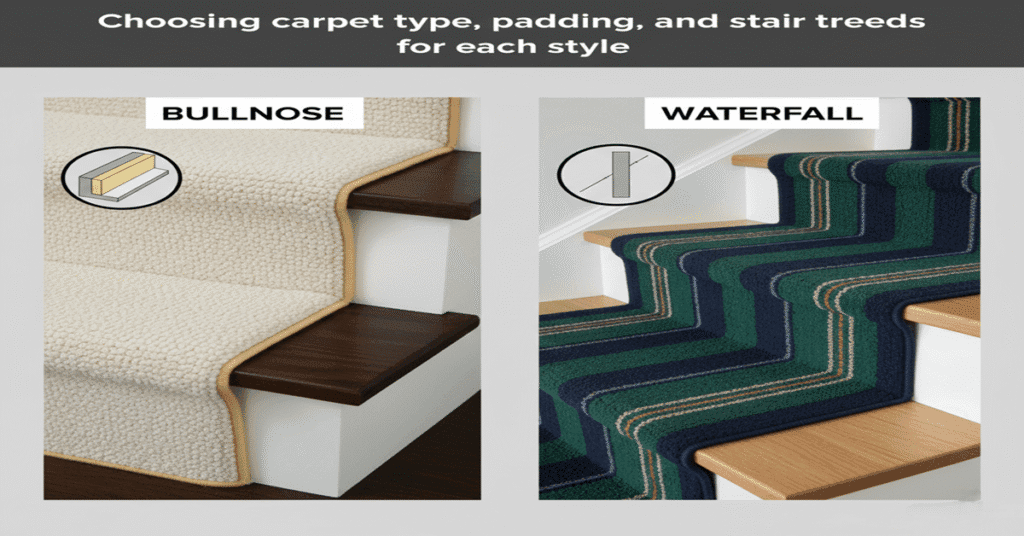
A bullnose or Hollywood install wraps carpet tightly around each stair nosing so tread and riser look fully upholstered. The carpet hooks on a tack strip near the back of the tread, stretches forward with a knee kicker, folds under the nosing, and fastens under the edge and along the riser. This method suits short, dense pile that bends cleanly, and many installers use it on entry stairs or feature staircases where sharp, dressy edges matter.
Waterfall stair carpet installation explained
A waterfall stair install lets the carpet sweep from the back of the tread, over the nosing, and down the riser in one flowing piece. The carpet bends over the edge instead of tucking under it, so shaping takes less time and the front of the step feels softer underfoot. This style pairs well with thicker or cushioned carpets and often appears on secondary, rental, or basement stairs where comfort and speed matter more than a tight wrapped edge.
Where stair runners and premade bullnose treads fit in
Stair runners and premade bullnose treads sit between bare wood steps and full wall-to-wall carpet and can follow either bullnose or waterfall styling. A stair runner is a strip of carpet centred on the stairs, fixed with a Hollywood wrap or a waterfall drop and sometimes finished with stair rods. Premade bullnose stair treads are single padded units with a wrapped front edge that stick to each step with tape or hook-and-loop strips, which suits rentals, pet friendly homes, and anyone who wants extra grip without a full stair project.
If that sounds like your situation, you can compare stair carpet runners in different widths and patterns, premade bullnose stair treads with padded backing, tape and hook-and-loop strips designed for stair treads, and optional decorative stair rods to build a kit that matches your stairs.
Appearance, comfort, and safety: how each style feels underfoot
Bullnose and waterfall carpet on stairs change more than the look of a staircase; they shape edge definition, grip, noise, and day-to-day comfort underfoot. Bullnose stairs wrap the carpet tightly around the stair nosing for a sculpted profile, while waterfall stairs let the carpet fall in a smooth line from tread to riser. This contrast in shape influences how formal your staircase feels, how safe it feels to climb, and how well it hides wear on high-traffic steps.
Visual style: formal bullnose vs relaxed waterfall
Bullnose stair carpet gives each tread a clear outline, with the carpet pulled over the nosing and tucked underneath, so the step reads as a crisp block of texture. Waterfall carpet on stairs flows in one continuous curtain, which softens the stair profile and draws the eye along the run rather than to each step. Both work with modern and traditional interiors; the difference sits in how structured or relaxed you want the staircase to look.
Many homeowners pair bullnose with patterned stair runners or contrast binding, since the wrapped nosing shows off the design on every step. Waterfall suits simple, solid carpets or subtle textures where the focus rests on the whole flight, not on individual treads. If you picture your stairs as a feature in the entry, ask yourself whether you want each step framed or a calm, flowing line of carpet.
Safety for kids, elderly people, and pets
Safety on carpeted stairs depends on grip, edge security, and how predictable each step feels. Bullnose installations hug the stair nosing, which creates a defined front edge and helps reduce loose folds that can catch a toe, paw, or cane. Waterfall carpet on stairs can feel soft underfoot, yet it needs firm fastening at the tread edge so the drop to the riser stays tight.
For households with young children, older adults, or pets that race up and down, low-pile, dense carpet adds traction and keeps the surface level. Extra attention to tack strips, staples, and adhesives on each tread and riser gives both bullnose and waterfall stairs stable footing. If you want to dig deeper, you can also look at national guidance on slip-resistant flooring and fall prevention to see how stair coverings tie into broader safety standards.
A simple safety check list can help:
- Step on the nosing and riser edges to check for movement.
- Look for ripples or bubbles at the bend.
- Test how shoes, bare feet, and pet paws grip the carpet.
If you want to boost grip even further, especially for kids, seniors, or pets, you can add non-slip stair treads that sit over existing carpet or wood or discreet anti-slip tape made for stair edges to reinforce the front edge of each step.
Comfort, noise reduction, and feel underfoot
Comfort and noise control come from the combination of carpet pile, padding, and how that carpet wraps the stair structure. Bullnose stairs feel cushioned over the nosing, since the carpet and pad fold around the edge and can soften that contact point. Waterfall stairs spread that softness over the riser face, so the front edge feels simple and flat, with most of the give under the ball of the foot.
Both styles cut down on sound compared with bare wood stairs, which helps in townhouses and multi-story family homes. A dense stair pad, slightly thinner than pad in living areas, supports the carpet and reduces the drum effect on hollow treads. For extra comfort, some owners pair a bullnose runner with hardwood edges on each side, which keeps a warm feel in the center and a solid step for wider feet.
Aesthetics over time: how wear shows on each style
Wear on stairs tends to show first at the nosing and in the center of each tread, so the way carpet bends and wraps matters. On bullnose stairs, the wrapped edge takes repeated impact, so the pile along that curve can flatten sooner, yet the tight fit keeps the overall shape tidy for longer. On waterfall stairs, the bend at the tread front and the riser face may show flattening as a vertical band that you see when you stand at the bottom of the staircase.
To keep both styles looking fresh, many installers suggest:
- A dense, stain-resistant fiber such as nylon, wool blend, or solution-dyed polyester.
- Patterns or heathered colors that hide footprints and small marks.
- Regular vacuuming from bottom to top to lift pile along the nosing.
If you picture your stairs five years ahead, think about where your family steps most and which style hides that traffic better in your home.
Cost, installation options, and DIY vs professional fit
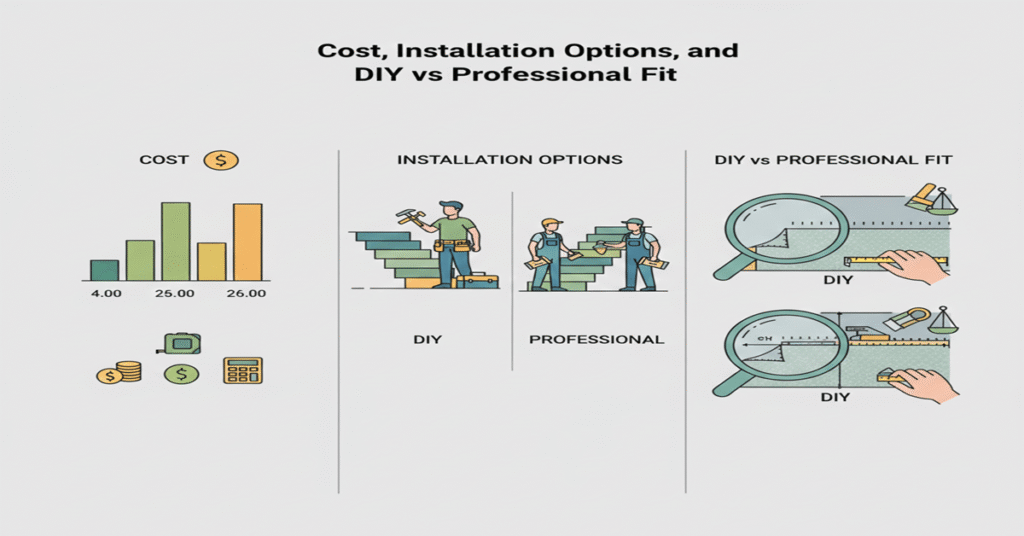
Cost for bullnose vs waterfall carpet on stairs reflects material use, labor time, and the shape of your staircase. Bullnose installations often sit at the higher end, since they need more carpet and careful wrapping around each stair nosing, while waterfall installs usually take less carpet and less time.
For many homes, the question is not just “Which look do I like?” but “What level of investment fits this staircase?” You can stretch that budget further by planning the project around the best time of year to schedule a stair-carpet install, when sales and promotions are more common.
Material and labor cost ranges for each method
Material cost for stair carpet comes from the price per square foot, waste from cuts, and the type of pad under the carpet. Bullnose stairs tend to use extra material for each tread because the installer cuts and wraps individual sections around the nosing, so waste can rise slightly. Waterfall stairs use longer runs of carpet, which helps keep waste down and reduces the number of seams.
A simple way to see the difference is to compare a straight 12-step staircase with mid-range carpet:
| Item | Waterfall stairs (typical) | Bullnose stairs (typical) |
| Carpet usage | Lower | Higher |
| Material cost band (relative) | $$ | $$$ |
| Labor time per stair | Shorter | Longer |
| Total installed price band | $$ | $$$–$$$$ |
Local labor rates, old floor removal, and prep work on the treads all influence the final number, so quotes from two or three installers give the clearest picture.
Factors that drive stair carpet pricing
Several details on your stairs have a strong effect on price, no matter which installation you choose. A straight, boxed staircase with closed sides costs less to carpet than one with open stringers, turned balusters, or multiple landings. Curved stairs, pie-shaped steps, and patterned runners that require pattern matching take more layout time and can add both material use and labor.
Other cost drivers include:
- Carpet type: wool and premium nylon cost more than basic polyester.
- Padding: stair-rated, high-density pad costs more than standard pad.
- Prep work: repairing squeaky treads or uneven risers before carpet goes down.
If you want a fast update on a starter home or rental, a simple waterfall runner with a sturdy synthetic fiber often brings the best balance of price and performance.
DIY vs pro installation: which projects are realistic?
DIY vs pro installation: which projects are realistic?
DIY installers usually find waterfall carpet on stairs more approachable, since it calls for fewer cuts and a simpler stretch from tread to riser. Bullnose carpet on stairs demands careful wrapping at each nosing, a clean line under the lip, and even tension across the tread, which makes small mistakes easier to spot.
Both methods still use tools such as a knee kicker, stair tool, stapler, and tack strips, so safety gear and clear instructions matter. For DIYers, it’s worth looking at stair carpet installation kits that bundle the main tools together so you’re not hunting for each item separately.
A DIY project can make sense for:
- A straight basement staircase with budget carpet.
- Removable bullnose stair treads with adhesive backs.
- Short runs of steps where a small flaw is less visible.
For simple projects, removable stair treads with adhesive backs can give you extra grip and warmth without committing to a full installation.
Professional installation pays off on:
- Main entry staircases that visitors see right away.
- Curved or open staircases with complex edges.
- Homes where safety for kids, pets, or older adults sits at the top of the list.
A simple rule many homeowners follow: if the stairs sit in a main living area or have tricky shapes, pro fitting for bullnose or waterfall carpet often gives better long-term value.
Matching stair style and floor plan: which works on your stairs
The layout of your staircase shapes the best choice between bullnose and waterfall carpet, since tread width, riser height, and landings all affect how carpet falls and wraps. Straight, L-shaped, U-shaped, and curved stairs each handle tension, pattern direction, and edge detail in different ways. A good match between stair type and carpet style keeps the installation secure, tidy, and easy on the eye.
Straight, L-shaped, and U-shaped boxed stairs
Straight boxed stairs with closed sides suit both bullnose and waterfall carpet, so style preference and budget take the lead here. An L-shaped or U-shaped staircase adds one or more landings, yet these landings still pair well with either style when the carpet lines and pile direction stay consistent from run to run.
Homeowners who like a formal look often choose bullnose on straight stairs, then carry the same carpet across landings for a continuous line. Waterfall works well in tight hallways or smaller homes, since the simple drop from tread to riser keeps the staircase calm and avoids visual clutter. Ask yourself where your eye rests as you come up from the entry or main hall, then pick the style that supports that view.
Curved, pie-shaped, and non-standard stairs
Curved staircases and pie-shaped steps place more pressure on the front edge and the inside of each turn. Waterfall carpet handles curves with fewer seams, since the installer can shape longer runs to follow the arc of the stair. Bullnose on curved steps calls for more cuts and experienced fitting, as each nosing often needs its own pattern alignment and wrap.
Homes with tight winders, split levels, or loft ladders also present small, irregular surfaces. On these stairs, a waterfall runner or individual bullnose treads can give grip and softness without a full, complex install. For many families, the choice comes down to this question: do you want a showpiece curved staircase with sculpted bullnose edges, or a simple, safe curve that uses a clean waterfall line?
Open risers, floating stairs, and stairs with decorative nosing
Open riser and floating stairs bring light through the staircase, so any carpet covers part of that visual feature. A full bullnose wrap on every tread can hide pretty wood edges, while a narrow stair runner or removable treads let some of the structure stay visible. Waterfall styles rarely appear on true open risers, yet short runners and treads still copy that straight fall from front edge to back.
Stairs with decorative nosing, stained hardwood treads, or painted stringers often pair best with runners. A runner with bound edges and either a bullnose wrap or slim front drop lets the nosing finish show at each side. This mix of hard surface and carpet gives grip in the center and keeps the design detail you paid for on the edges.
Full carpet vs stair runner vs removable treads
Full carpet on stairs wraps or drops over the entire tread width, which suits busy family homes that need quiet steps and steady warmth underfoot. Stair runners leave wood or laminate exposed on each side, which works well for entry staircases where you want both style and sound control in the center path. Removable bullnose stair treads act like small rugs on each step, often with rubber or tape backing for grip.
Here is a quick comparison to help:
| Option | Best fit use case | Look and maintenance |
| Full carpet, bullnose | Family stairs, high comfort, low noise | Soft, wrapped profile, strong coverage |
| Full carpet, waterfall | Budget updates, simple straight stairs | Smooth line, easy layout |
| Stair runner (bullnose) | Feature stairs, wood edges on show | Framed steps, strong design element |
| Removable stair treads | Rentals, pet routes, quick refresh | Easy to replace, visible gaps between treads |
Once you know your stair type and how those stairs sit in the floor plan, the choice between bullnose vs waterfall carpet on stairs starts to feel clear and practical.
Choosing carpet type, padding, and stair treads for each style
The right carpet type, padding, and stair tread design help bullnose and waterfall installations stay secure, quiet, and comfortable. Low-pile nylon, wool, and loop carpets grip stair nosing well, while dense padding keeps each tread firm under foot.
This section explains how each element supports long wear on high-traffic steps and helps you match materials to your chosen style. If you’re leaning toward a specific brand, it also helps to compare which Mohawk carpet line gives the best balance of durability and comfort before you commit.
Best carpet constructions for stair safety and durability
Low-pile loop, cut pile, and frieze carpets give steady traction on stair treads, risers, and nosings because the fibers resist crushing and fray less in tight bends. Thick plush carpet can bunch at a bullnose wrap, so it fits better with waterfall installations where the carpet drops cleanly from tread to riser.
If you want the most stable profile, ask yourself whether your staircase needs crisp pattern alignment, a soft texture for kids, or a strong synthetic fiber that hides wear. For even more guidance, look at how low-pile or high-pile carpet on stairs affects grip, comfort, and long-term appearance.
Wool and nylon hold shape and color for years, which helps both bullnose and waterfall styles look consistent on each step. Polyester feels soft and budget-friendly but may flatten faster on the nosing of busy stairs. Loop carpets such as Berber stay firm around the nose, though very large loops can catch pets’ nails, so a tight loop or small textured pattern works best.
Padding choices and stair-specific underlay tips
Dense, thinner padding supports each step without creating a soft edge that can cause slip. Many installers use a firm pad under the tread and a slightly trimmed pad at the nosing to keep a bullnose wrap smooth. Waterfall installations work well with a single continuous pad, although dense foam or rubber padding gives the most support for a clean drop from tread to riser. If you are comparing pad options, choosing between a 6 lb and 8 lb carpet pad can make a noticeable difference in how firm and supportive your stairs feel.
A good stair pad stays under 7/16 inch thick and feels firm when pressed, which helps the carpet hug the edge instead of rounding it out. If noise is a concern, rubber padding absorbs sound better than urethane. Homes with pets or kids often benefit from moisture-resistant pads that protect the step beneath the runner or full carpet.
Bullnose stair treads and modular solutions
Bullnose stair treads come as removable pieces that wrap the nosing and sit on each tread with adhesive backing or heavy-duty tape. These modular treads fit homes that need quick installation, rental flexibility, or added traction on wood stairs. If you prefer the look of a runner, you can pair those treads with a narrow central panel for a mix of style and safety.
When shopping for premade treads, check the tread depth, width, and nose radius to match your stairs. Many brands list exact measurements, which helps the wrap sit tight across every step. These options work well for families who want grip, color, and sound reduction without a full installation project.
Maintenance, durability, and replacement timelines
Stair carpet lasts longer when the fibers, padding, and installation method match the traffic level of your home. On most staircases, well-installed bullnose and waterfall carpet lasts five to ten years before showing flattening on the nosing or deep wear on the riser. This section explains how to clean, repair, and refresh your stairs so they stay safe and comfortable.
How long stair carpet typically lasts
Stair carpet wears faster than room carpet because every step presses directly into the nosing. A quality nylon or wool carpet on a staircase often lasts beyond ten years, while polyester may show wear sooner under daily use. If you watch for thinning spots along the nose or dark lines on the riser, you can plan repairs before the carpet becomes loose.
Bullnose installations may hold shape longer on the edge because the wrap supports the bend around the nose. Waterfall carpet can show early wear along the bend where the tread meets the riser, but dense padding helps reduce that pressure point. Many installers recommend checking stair carpet yearly to gauge when a refresh might help.
Cleaning, stain prevention, and spot repair
Vacuuming once or twice a week keeps grit from grinding into the fibers and creating early wear marks on the nosing. Spot cleaning small stains with a carpet-safe spray designed for stair and runner use prevents discoloration along the riser where dirt often collects.
If a step begins to ripple or lift, a simple restretch or staple correction can fix the problem before it spreads. For anyone concerned about allergies or dust, it’s worth reading federal guidance on carpets and indoor air quality to see how regular maintenance affects the air your family breathes.
Homes with pets benefit from a hand brush or small stair-safe beater bar or vacuum attachment to lift fur from each tread. Long runners may shift slightly with use, so adding fresh runner tape or rods can help keep the carpet centered. With regular care, both waterfall and bullnose styles stay stable and clean through heavy traffic.
Signs it’s time to replace stair carpet or change methods
If the carpet backing shows on the nosing or riser, the fibers have reached the end of their life. Loose edges, rounded nosings, or visible wrinkles point to worn padding or an aging installation. At this point, replacing the carpet gives a fresh, safe surface and reduces slip risk on busy steps. It’s also worth thinking about how aging carpet can affect indoor air quality, especially on stairs that see constant traffic and trap dust.
Many homeowners switch styles during replacement. If your waterfall stairs show heavy wear at the bend, a bullnose wrap may distribute pressure more evenly. If your bullnose wrap feels too firm or formal for your space, a clean waterfall drop may match your design better.
How to choose: real-world scenarios and step-by-step decision checklist
Choosing between bullnose and waterfall styles becomes easier when you match the installation method to your staircase layout, budget, and daily traffic. A simple checklist helps you decide based on comfort, grip, carpet type, and the look you want on each tread and riser. Use the scenarios below to picture how each style works in real homes.
5 common scenarios and the best stair carpet style for each
- Busy family with kids and pets: Bullnose wraps give strong grip on the edge and resist shifting when pets run upstairs.
- Rental property or fast update: Waterfall installations work well because they cost less and install fast on straight staircases.
- Statement entry staircase: Bullnose wraps create sharp definition on each step and handle patterned carpet more cleanly.
- Narrow or steep basement stairs: Waterfall minimizes bulk on the nose and creates a smoother rise on tight staircases.
- Older homeowners focused on safety: Bullnose offers a firm edge that helps prevent foot slips during ascent or descent.
These examples help you see real differences between the two styles. If your stairs have landings, curves, or open risers, your installer can guide which style fits the structure best.
Step-by-step decision checklist
Use this checklist before buying carpet or booking an installer:
- Check your staircase type: Straight, L-shaped, or curved stairs react differently to wraps and drops.
- Set your budget range: Bullnose uses more material and labor, while waterfall trims cost for most homes.
- Evaluate safety needs: Kids, pets, and seniors benefit from a firm nosing and dense padding.
- Pick carpet type: Low-pile wool, nylon, or loop fibers stay stable on steps and resist crushing.
- Choose full carpet, runner, or modular treads: Each option changes the look and feel of the stairs.
- Select bullnose or waterfall based on the above: Your staircase shape and carpet type guide the final choice.
- Get quotes from at least two installers: Different pros may spot structural details that influence the best method.
This checklist brings together everything you need to move confidently toward a bullnose or waterfall stair installation that fits your home’s look and daily use.

Frequently Asked Questions
Is bullnose or waterfall carpet better for stairs overall?
For most homes, bullnose carpet on stairs offers a more secure edge and neat look, while waterfall carpet gives a simple, budget friendly finish. If you want tight wrapping around the stair nosing, strong edge definition, and a high end feel, bullnose tends to win. If you care more about quick installation and lower material use, a waterfall stair runner or full waterfall install can suit your stairs.
Which stair carpet style is safest for kids, seniors, and pets?
For safety on stairs with kids, seniors, and pets, bullnose carpet with a wrapped stair nosing often gives the most secure edge and clear step profile. The tight fit around the tread helps reduce loose edges that catch toes or paws, and low pile, dense carpet with quality padding improves grip. Waterfall carpet can still feel safe on straight, even stairs, yet you need careful stretching and frequent checks for ripples.
Does bullnose carpet always cost more than waterfall on stairs?
Bullnose carpet almost always costs more than waterfall on stairs, since it needs extra carpet to wrap each tread and more time from the installer. Expect higher labor for careful cutting, stapling under the stair nosing, and pattern matching on runners. For tight budgets, a waterfall installation or waterfall stair runner can hit a lower price point while still improving safety and noise control.
Can I switch my existing waterfall stair carpet to bullnose without rebuilding the stairs?
You can often switch a waterfall stair carpet to bullnose without rebuilding the stairs, as long as each tread has enough nosing to wrap and the structure stays sound. An installer may remove the old carpet, adjust tack strips, and cut new pieces that wrap under each nose. Severely worn treads, damaged nosing, or open riser designs may need repair or carpentry first.
What type of carpet is best for bullnose vs waterfall stair installations?
For both bullnose and waterfall stair installations, the best carpet type uses low to medium pile, high density fibers such as nylon, wool, or solution dyed blends. Loop pile and textured styles hold shape on the stair nosing, while very thick plush can crush fast and fight a tight bullnose wrap. High traffic homes often get the best value from stain resistant, cut pile or loop carpet in neutral colors that hide soil on treads and risers.
Can you use a waterfall runner on curved or open stairs?
You can use a waterfall runner on curved or open stairs, and many designers like the smooth line it creates over pie shaped treads and landings. The key lies in careful templating, extra width for turns, and secure fixing on each tread so the carpet does not shift near the open edge. For very open staircases, some homeowners add stair rods or slim binding on the runner edge for style and a hint of extra stability.
How long should stair carpet last before I replace it or change styles?
Stair carpet on bullnose or waterfall installations often lasts around 5 to 10 years, with busy families and pets sitting nearer the lower end of that range. You may see flattening on the stair nosing, dark traffic lines, or loose edges after constant use, especially on the bottom steps. Plan a replacement or a style change when cleaning no longer revives the pile, the pad feels thin, or safety starts to drop.
Conclusion
Bullnose and waterfall stair carpet offer two clear paths for how your treads, risers, and stair nosing look, feel, and wear over time. By now, the trade-offs in bullnose vs waterfall carpet on stairs are clear: bullnose wraps the nosing for a tailored edge, and waterfall lets the carpet fall in a smooth line from tread to riser. Your choice sits on simple factors such as budget, staircase shape, carpet fiber, and how much you value a tight, upholstered finish over a quick, clean install.
A well planned stair makeover blends safety, comfort, and style, whether you pick a full install, a centered stair runner, or modular bullnose treads. The next step is small but concrete: look at your own staircase, note traffic levels, and gather quotes from at least two local installers who work with stairs every week. If you still feel unsure, save photos and use them to get tailored advice from a flooring showroom or designer.
As you plan, it can also help to browse real products to see what fits your stairs and budget. You can explore bullnose stair treads in different colors and textures, stair runners for both bullnose and waterfall layouts, and non-slip stair treads for extra safety to visualise your final staircase before you commit.