Disclosure: Classy Floor is reader-supported. As an Amazon Associate, we earn from qualifying purchases. We may also earn commissions from other affiliate programs, at no additional cost to you. Learn more →
Installing luxury vinyl plank (LVP) flooring is one of the most popular DIY flooring projects today. It’s durable, water-resistant, and far more forgiving than hardwood, but that doesn’t mean it’s mistake-proof. In fact, most vinyl plank flooring failures come from small installation mistakes, not from the product itself.
The most common mistakes when installing vinyl plank flooring include poor subfloor preparation, skipping acclimation, ignoring expansion gaps, and using the wrong underlayment. These errors can lead to buckling, gaps between planks, squeaking floors, visible seams, and even voided warranties.
This in-depth guide breaks down 15 of the most common vinyl plank flooring installation mistakes, explains why they cause problems, and shows you exactly how to avoid them. Whether you’re installing SPC, WPC, click-lock, or glue-down vinyl plank, this article will help you get professional-quality results that last.
Before You Start: Prep Mistakes That Ruin Vinyl Plank Floors
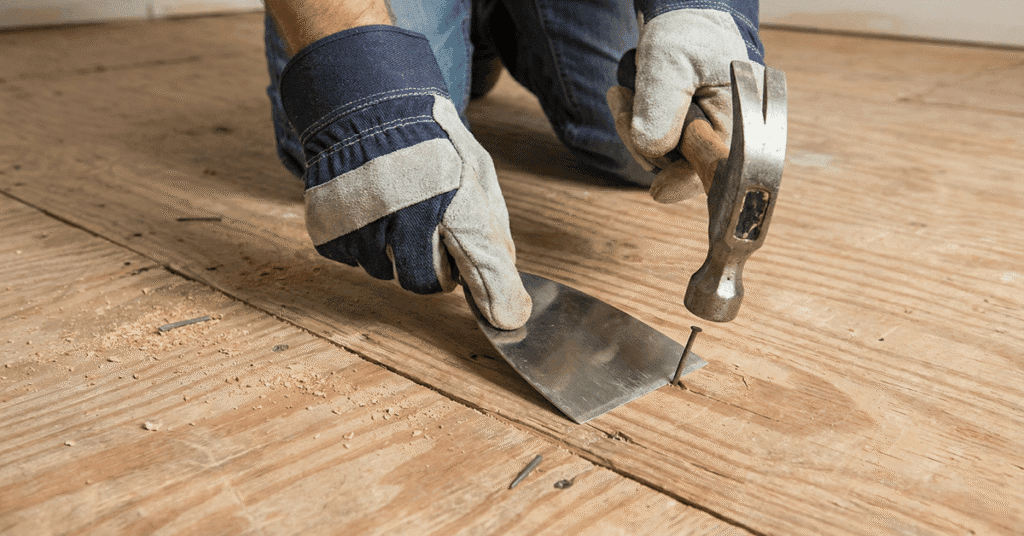
1. Not Checking and Fixing Fasteners in the Subfloor
Raised nails and loose screws are one of the most overlooked causes of squeaks and bumps under vinyl plank flooring. Click-lock LVP follows the shape of the subfloor beneath it, so even a slightly proud fastener can telegraph through over time. If you’re still deciding between surfaces, browse our vinyl flooring guides and comparisons to avoid costly mistakes.
How to avoid it:
- Run a flat bar or scraper across the subfloor
- Drive nails flush or below the surface
- Replace stripped or spinning screws
A solid, quiet subfloor is the foundation of a successful LVP installation.
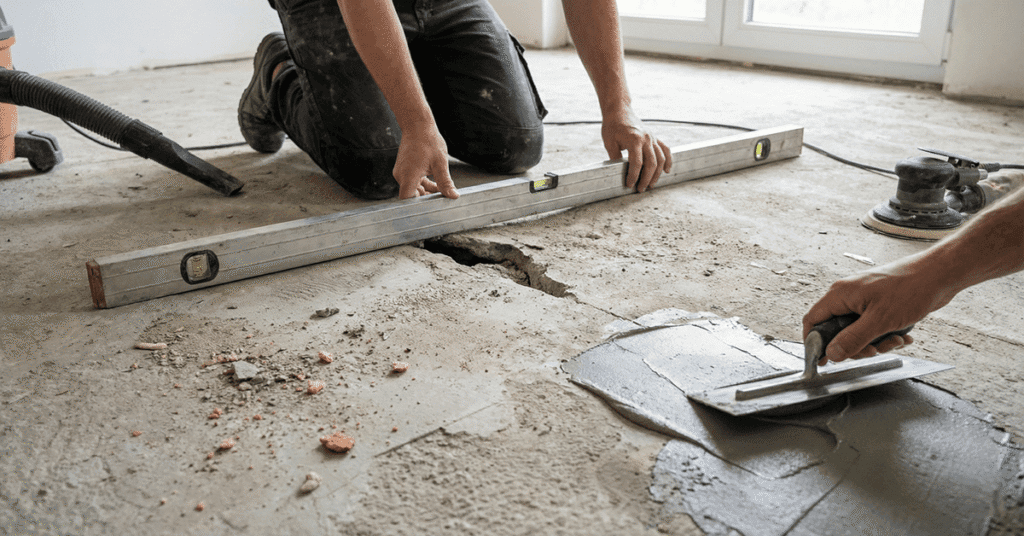
2. Skipping Subfloor Leveling and Cleaning
Uneven or dirty subfloors cause flexing, joint separation, and early locking-system failure. Most manufacturers allow no more than 3/16 inch of variation over 10 feet.
Common subfloors include plywood, OSB, concrete slabs, and gypcrete, all of which must be flat, clean, and structurally sound.
Fix it properly:
- Sand or grind down high spots
- Fill low areas with a floor patch or self-leveling compound
- Vacuum thoroughly before installing underlayment or planks
And if you’re prepping nearby hard surfaces too, here are safe ways to clean tile with carpet machines without damaging grout or finish.
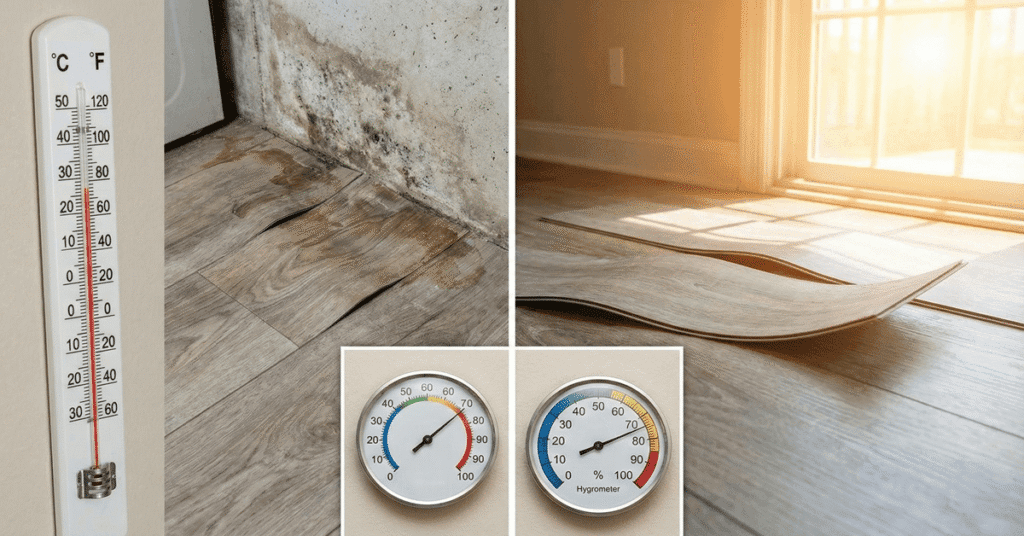
3. Ignoring Moisture, Temperature, and Room Suitability
Luxury vinyl plank flooring is water-resistant, not waterproof from below. Installing LVP over a damp concrete slab or in rooms with extreme temperature swings can cause vinyl plank flooring to lift, mold growth, and adhesive failure.
Avoid moisture-related installation mistakes by:
- Testing concrete moisture levels
- Using a vapor barrier where required
- Maintaining manufacturer-approved temperature and humidity ranges
Basements, sunrooms, and radiant-heat floors require special attention.
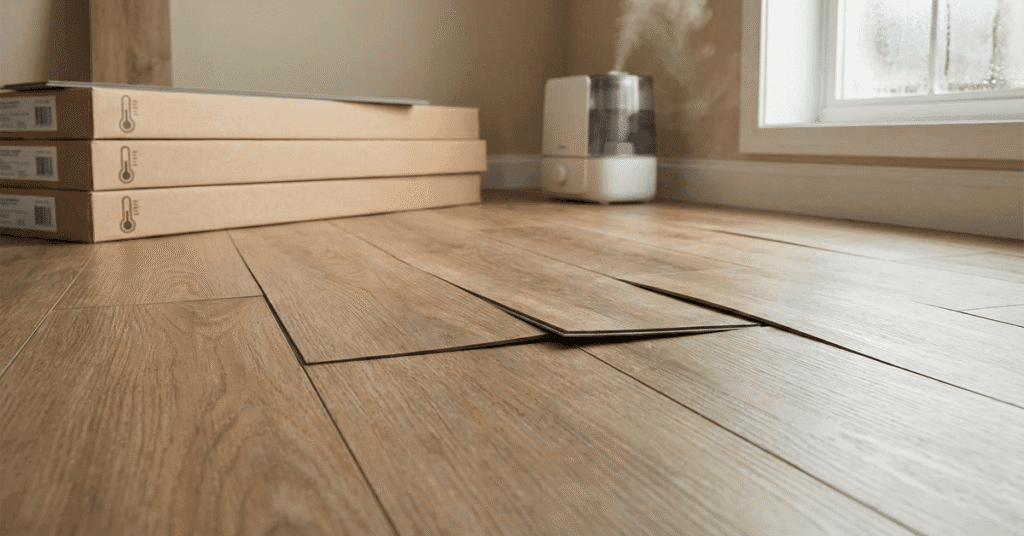
4. Skipping Acclimation for Luxury Vinyl Plank
One of the most common vinyl plank flooring installation mistakes is skipping acclimation. Even rigid core SPC and WPC vinyl planks expand and contract with temperature changes.
Installing cold planks in a warm room often leads to buckling or tenting later.
Best practice:
- Store unopened boxes flat in the installation room
- Acclimate for 24–72 hours (per manufacturer instructions)
- Keep HVAC running under normal living conditions
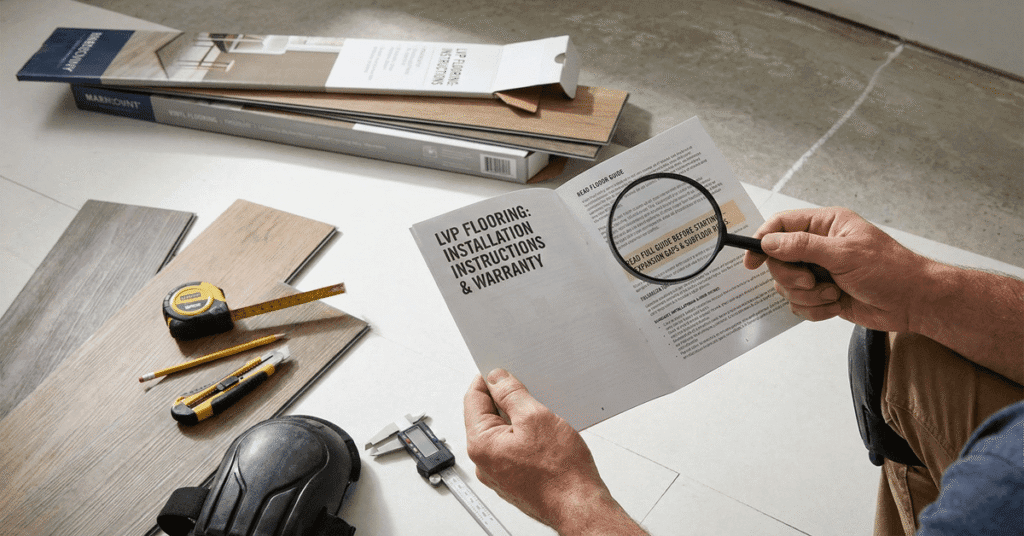
5. Not Reading the Installation Instructions and Warranty
Every LVP product has unique rules. Ignoring them is one of the fastest ways to void your warranty. And if you’re weighing budgets before you buy, here’s a quick breakdown of cost differences between carpet and LVP.
Before installation, verify:
- Approved subfloor types
- Expansion gap requirements
- Underlayment rules
- Maximum run lengths
- Whether installation under cabinets is allowed
If you’re still comparing materials, see the total installed cost of vinyl vs carpet before choosing.
Layout and Pattern Mistakes
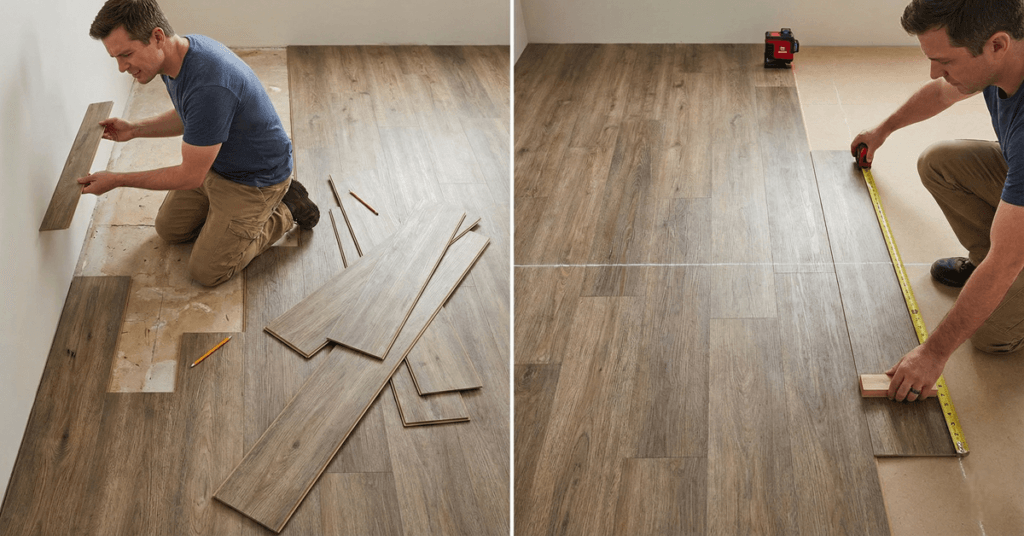
6. Guessing the Layout Instead of Planning It
Starting in a corner without planning often results in narrow end pieces, crooked rows, and awkward seam placement.
Smart layout planning includes:
- Measuring room length and plank size
- Avoiding planks under 8 inches
- Snapping a straight reference line for the first row
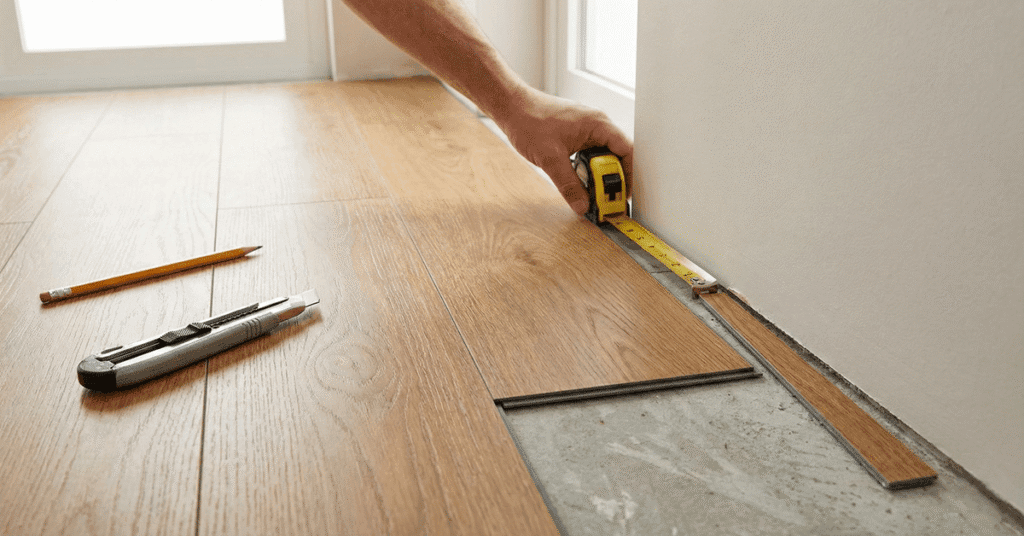
7. Ending Rows With Tiny Slivers of Plank
Short end pieces not only look bad but are more likely to unlock over time.
Solution:
- Adjust the starting plank length
- Balance both ends of the row
- Apply the same logic to the room width

8. Repeating Plank Patterns and Creating H-Patterns
Many vinyl plank floors only have a handful of printed designs. Installing planks straight from one box can cause obvious pattern repetition.
Prevent visual mistakes by:
- Mixing planks from multiple boxes
- Staggering seams according to manufacturer’s minimums
- Avoiding stair-step or H-pattern layouts
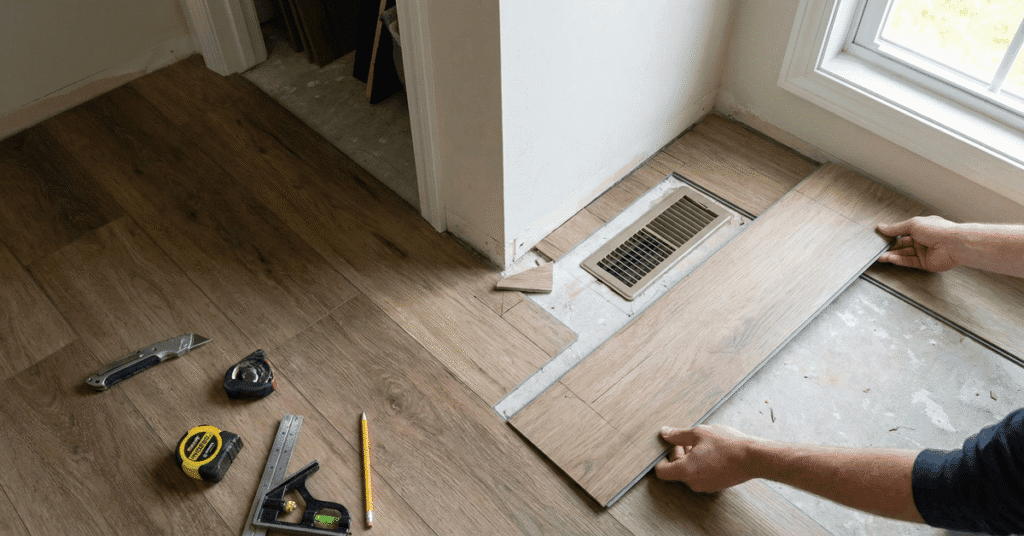
9. Forgetting About Corners, Closets, and Floor Vents
Poor planning around vents and bump-outs leads to fragile cuts and weak seams.
Plan ahead:
- Mark vents and doorways before starting
- Keep cutouts away from plank joints
- Use solid boards around high-stress areas
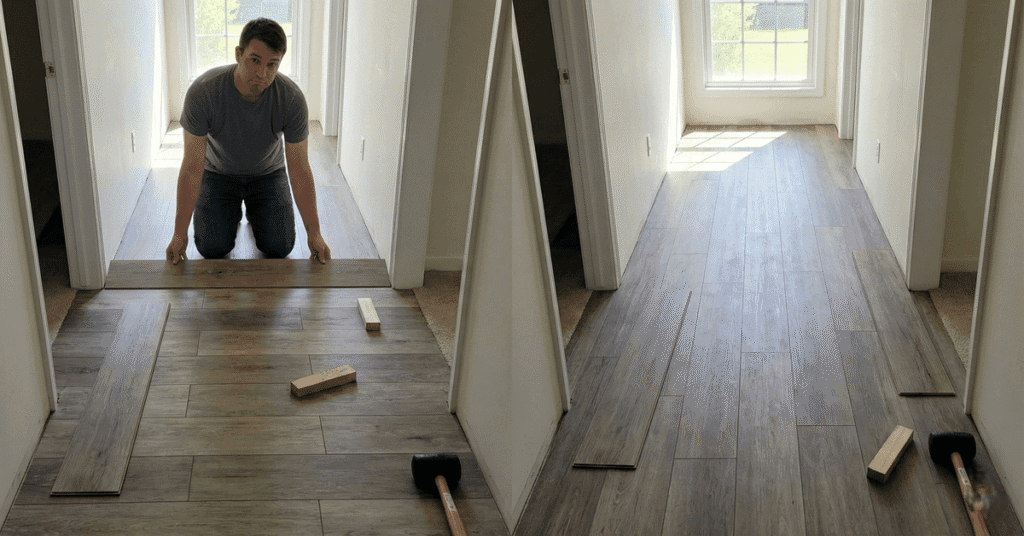
10. Laying Planks in the Wrong Direction
While there’s no universal rule, plank direction affects room flow and appearance.
Most spaces look best when planks:
- Flow consistently through hallways and adjacent rooms (If you’re installing in sleeping spaces, this guide on the best flooring choice for bedrooms can help you pick the right feel and warmth level.)
- Run parallel to the longest wall
- Follow the main light source
Edge, Trim, and Underlayment Mistakes
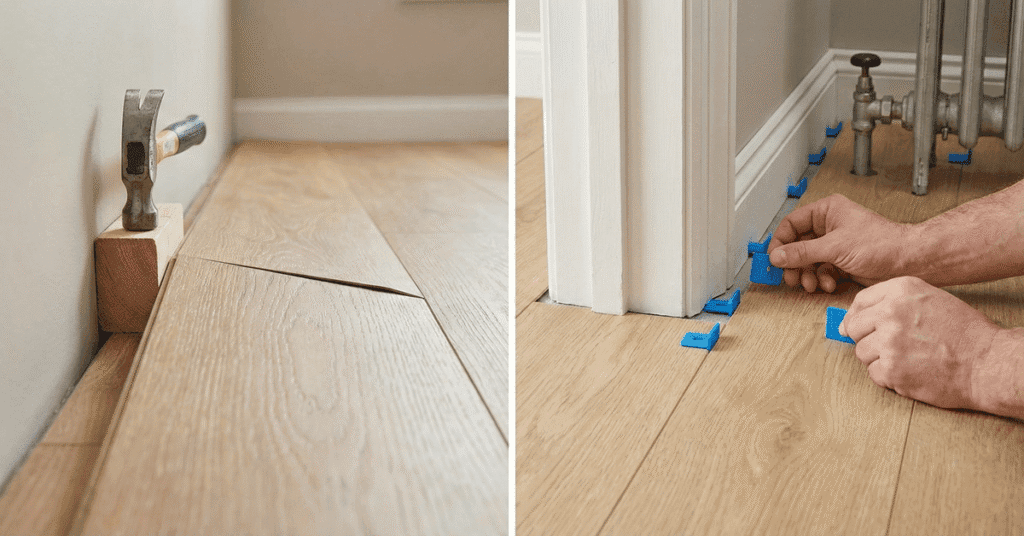
11. Forgetting Expansion Gaps Around Walls and Fixed Objects
Vinyl plank flooring expands and contracts. Without expansion gaps, the floor can buckle or lift.
Most manufacturers require a ¼-inch expansion gap around:
- Walls
- Columns and pipes
- Cabinets and islands (if allowed)

12. Leaving Baseboards and Door Trim Untouched
Scribing planks around door casings creates visible gaps and a DIY appearance.
Professional method:
- Remove baseboards before installation
- Undercut door jambs with a flush-cut saw
- Slide planks underneath for a clean finish

13. Using the Wrong Underlayment (or Doubling It)
Some vinyl plank flooring includes a built-in underlayment. Adding more padding can make the floor too soft and damage the locking system. If you want a softer feel, it’s usually better to add softness without wall-to-wall carpet by using the right area rug approach instead of extra underlayment.
Check before installing:
- Whether underlayment is required, optional, or forbidden
- Approved thickness and materials
- Vapor barrier requirements for concrete
Cutting, Tools, and Installation Technique Mistakes

14. Using the Wrong Tools or Dull Blades
Poor tools cause chipped edges, wasted planks, and uneven seams.
Recommended tools for vinyl plank flooring:
- Sharp utility knife for scoring and snapping
- Fine-tooth saw for cross-cuts
- Jigsaw or oscillating tool for vents and curves

15. Forcing Joints and Placing Seams Over Weak Spots
Click-lock systems are precise. Forcing joints damages locking profiles and leads to permanent gaps.
Avoid this by:
- Following the correct locking sequence
- Using tapping blocks only when recommended
- Avoiding seams over subfloor joints and patched areas
Mistakes That Commonly Void Vinyl Plank Flooring Warranties
Many warranties are denied due to:
- Missing expansion gaps
- Unapproved underlayment
- Excessive moisture
- Installing under heavy cabinets
- Ignoring acclimation requirements
Always document moisture tests and keep installation instructions.
Installation Mistakes by LVP Type (SPC vs WPC vs Glue-Down)
SPC Vinyl Plank Mistakes
- Requires extremely flat subfloors
- Prone to joint failure over uneven surfaces
WPC Vinyl Plank Mistakes
- Too much cushioning under heavy furniture
- Compression causing joint separation
Glue-Down Vinyl Plank Mistakes
- Incorrect adhesive trowel size
- Installing outside adhesive open time
When Vinyl Plank Installation Mistakes Require Professional Repair
Call a professional if you see:
- Buckling across multiple rooms
- Widespread seam separation
- Moisture damage under planks
- Crushed locking systems
Some issues require full plank replacement or subfloor correction.
Conclusion: Avoid the Most Common Mistakes When Installing Vinyl Plank Flooring
Avoiding the most common mistakes when installing vinyl plank flooring comes down to prep, planning, and patience. Proper subfloor preparation, acclimation, correct layout, and following manufacturer instructions will prevent buckling, gapping, squeaks, and warranty issues. Take your time, double-check every step, and test techniques in a closet or scrap area first.
A well-installed LVP floor doesn’t just look good on day one; it performs for years. If you’re debating other options, you may also want to compare vinyl to engineered wood for comfort, resale value, and moisture tolerance.

Frequently Asked Questions
Do I really need to acclimate luxury vinyl plank flooring?
Yes. Skipping acclimation is a major cause of vinyl plank flooring buckling and gaps.
How big should expansion gaps be for LVP?
Most manufacturers recommend ¼ inch, but always follow your product’s instructions.
Can vinyl plank flooring be installed over tile or concrete?
Often, yes, as long as the surface is flat, clean, and moisture limits are met. If you’re still comparing surfaces, review these tile vs carpet pros and cons before committing.
Do I need underlayment under vinyl plank flooring?
It depends on the product. Some have built-in padding and prohibit additional underlayment.
Should vinyl plank flooring go under kitchen cabinets?
Many click-lock floors should not. Always check manufacturer guidelines.