Disclosure: Classy Floor is reader-supported. As an Amazon Associate, we earn from qualifying purchases. We may also earn commissions from other affiliate programs, at no additional cost to you. Learn more →
How often should carpet be replaced? For most homes, the answer comes down to carpet lifespan in each room, the level of wear, and what is happening beneath the surface. A bedroom carpet can stay serviceable far longer than carpet on stairs, in a hallway, or in a busy living room, particularly if carpet padding or underlay has started to fail.
This matters when you are trying to judge if old carpet still has useful life left, if professional carpet cleaning is enough, or if signs carpet needs replacing point to a bigger issue such as pet stains, trapped odours, or moisture damage. Many people search how long does carpet last in high-traffic areas, yet age alone rarely gives a reliable answer. This guide keeps the focus on real condition, room use, and the difference between surface wear and deeper problems, so you can make a sound call without replacing carpet too soon.
How Often Should Carpet Be Replaced in Different Rooms?
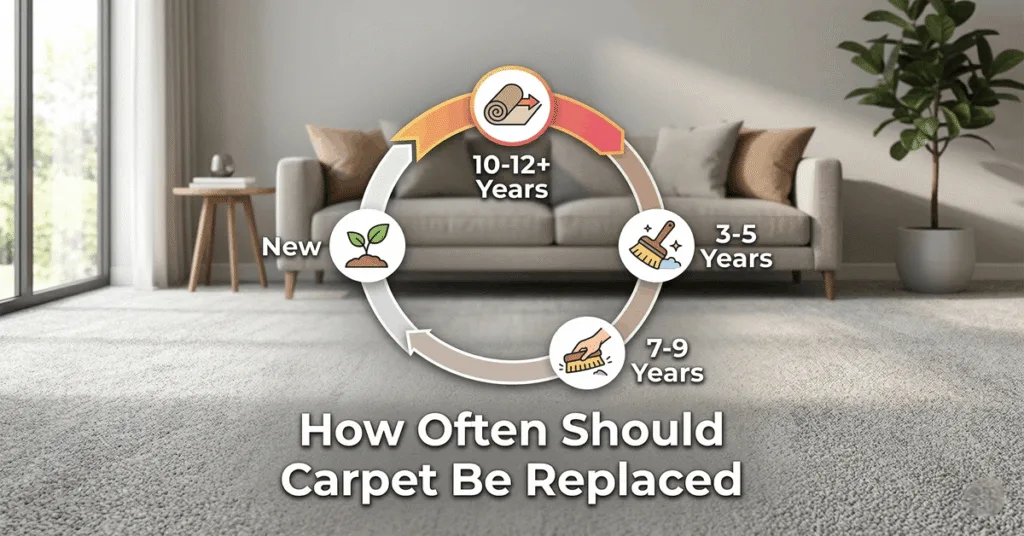
Carpet replacement is not on one fixed schedule across a whole house. A bedroom carpet may stay in good shape for far longer than carpet on stairs, in a hallway, or in a busy living room. Foot traffic, pet stains, moisture damage, carpet padding, and underlay all affect how soon wear turns from cosmetic to permanent.
A practical rule is to judge carpet lifespan by room use first, then by condition. In quiet rooms, the pile can hold up for years with regular care. In carpet choices for heavy foot traffic, the same carpet can flatten, thin, or show visible backing much sooner, even when the rest of the home still looks fine.
| Room or Area | Typical Replacement Window | What Usually Drives Earlier Replacement |
| Main bedroom | 8 to 15 years | Flattened pile, stains, fading, worn padding |
| Guest bedroom | 10 to 15 years | Ageing, storage furniture marks, low-level wear |
| Living room | 6 to 10 years | Daily foot traffic, pets, repeated cleaning, matting |
| Family room | 5 to 8 years | Heavy use, spills, children, furniture movement |
| Hallway | 4 to 7 years | Traffic lanes, fibre crush, visible thinning |
| Stairs | 4 to 7 years | Concentrated wear, loose edges, safety concerns |
| Rental property carpet | 3 to 7 years | Turnover, mixed care standards, heavy use |
These time ranges are guides, not rules. A well-installed nylon carpet with solid underlay may outlast a cheaper option in the same room. If you want to compare polyester with polypropylene, a polyester carpet in a pet-heavy household may need replacement sooner, even in a space that would usually count as moderate traffic.
Low-traffic rooms vs high-traffic areas
Low-traffic rooms usually age slowly. In a guest bedroom or formal room, dirt load stays lower, the pile keeps more of its shape, and deep wear may take years to show. In those settings, old carpet can still be serviceable if seams are sound and the underlay has not broken down.
High-traffic areas wear in a different pattern. Hallways, stairs, and family rooms take repeated pressure in the same spots, so traffic lanes show first. That is why people often ask how often should carpet be replaced in a house, then find the real answer varies by room rather than by one date for the whole property.
Stairs deserve extra attention. Carpet on stairs can look acceptable from a distance, yet the tread area may already be thinning. Once grip, structure, or edge stability starts to go, replacement moves from a visual choice to a practical one.
How pets, children, and daily wear change carpet lifespan
Pets and children can shorten carpet lifespan even in rooms that are not classed as high traffic. Pet stains may soak through the surface into carpet padding. Repeated accidents can leave odours that return after cleaning, which often points to a deeper issue below the face fibres.
Children tend to increase spill frequency, friction, and repeated spot cleaning. Over time, that can leave patchy colour, rough texture, or compressed pile in play areas. Living room carpet and family room carpet often age faster for this reason, even with consistent cleaning.
Daily habits matter too. Grit carried in from outside acts like a fine abrasive underfoot. Moving chairs, dragging furniture, or vacuuming too little can wear down the fibres long before the carpet reaches its expected age. For anyone asking how long does carpet last in high-traffic areas, room use matters just as much as the original material.
A quick room-by-room check usually gives a clearer answer than the carpet’s age alone. Look at the hallway, stairs, living room, and bedrooms separately, then compare visible wear, comfort underfoot, odour, and how well the carpet still recovers after cleaning.
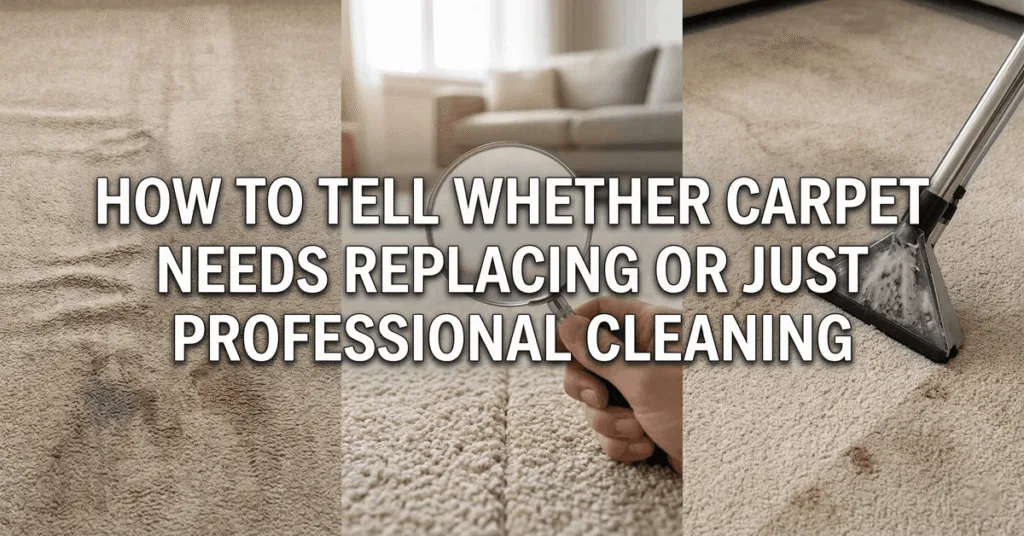
How to Tell Whether Carpet Needs Replacing or Just Professional Cleaning
The clearest way to judge carpet is to separate surface problems from structural failure. Professional carpet cleaning can improve soil, mild odours, and some flattened pile. If you are weighing steam cleaning versus a carpet cleaner, replacement is usually the better call when the carpet backing shows through, seams are opening, wrinkles keep returning, pet stains have soaked into the carpet padding, or the underlay has lost support.
A good inspection starts with the worst areas, not the cleanest corner of the room. Check stairs, hallways, doorways, and the main path through a living room or bedroom. Press your hand across the pile, look for thinning, and pay attention to any musty smell, recurring stain, or soft hollow feel underfoot. Those details say far more than age on its own.
| Issue | Cleaning may help | Replacement is usually better |
| Surface dirt and dull appearance | Yes, if the pile is still intact | No, unless wear is severe |
| Isolated stain | Often, if it has not reached the pad | Yes, if the stain keeps returning |
| Mild odour | Often, if the source is recent | Yes, if odour remains after treatment |
| Flattened pile | Sometimes, if fibres are only compressed | Yes, if traffic lanes are threadbare |
| Wrinkles or ripples | Stretching may help for a period | Yes, if looseness returns or seams fail |
| Visible backing or bald spots | No | Yes |
| Damp smell or moisture damage | Rarely | Yes, especially if the pad or subfloor is affected |
Signs cleaning may still be enough
Cleaning still makes sense when the main issue sits on the surface. That often includes general grime, one or two localised marks, a stale smell after heavy use, or pile that looks tired yet still springs back in places. In those cases, professional carpet cleaning may restore appearance and buy more time.
Look closely at stain edges. A surface spill often has a defined shape and no odour once treated properly. A deeper problem tends to spread back after drying, mostly with pet stains, since moisture can sit in the underlay and work back into the carpet fibres. That is one of the clearest answers to when should you replace carpet instead of cleaning it.
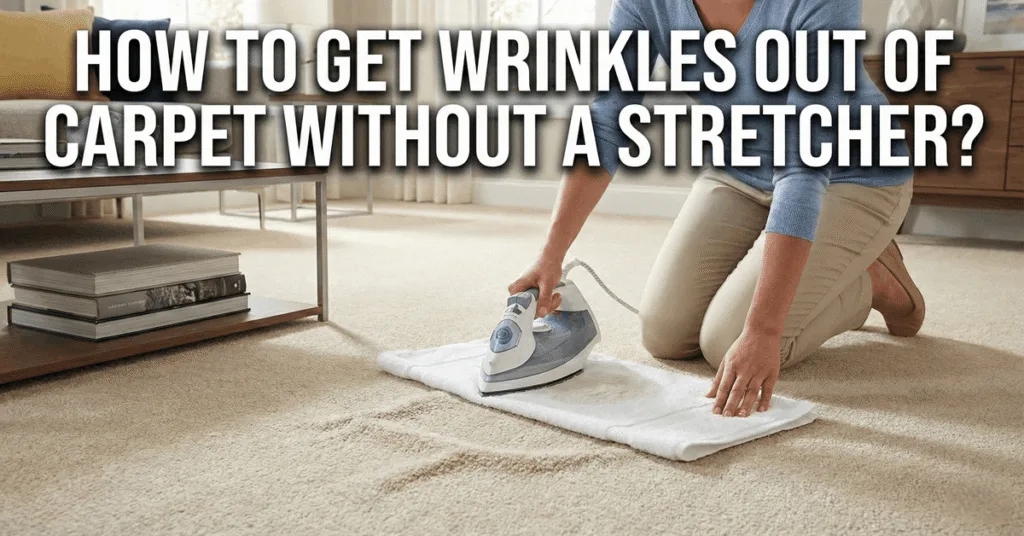
Minor ripples do not always mean the whole carpet has reached the end of its life. Loose fitting, furniture drag, or humidity shifts can sometimes be corrected with stretching. If you are unsure how carpet stretching works, the key point is condition after repair. If the carpet still feels dense, the seams are sound, and the padding supports your step, cleaning or repair may be enough for now.
Signs replacement is usually the better choice
Replacement is usually the stronger option once wear is built into the carpet itself. Threadbare traffic lanes, frayed seams, split edges on stairs, bald patches, and fibres that stay crushed after cleaning point to physical breakdown, not a cleaning problem. The same applies when the carpet feels uneven or the underlay has turned flat and spongy.
Recurring odour is another strong sign. When pet accidents, moisture damage, or long-term soiling reach the carpet padding, the smell often remains even after good treatment. In practice, the exact result can vary with the source and how long it sat there, yet repeated odour after cleaning is a strong clue that the issue sits below the surface.
One more warning sign is repeated stain return. A mark that disappears, then comes back in the same spot, often signals residue or contamination deeper in the carpet or pad. If you are asking how to tell if carpet needs replacing, that pattern matters far more than colour fade or a dated look. The real test is whether the carpet still performs as a clean, stable surface under daily use.
What Shortens or Extends Carpet Life the Most?
Carpet life is shaped by a small group of factors that have a bigger effect than age on its own: fibre, pile style, carpet padding, installation quality, foot traffic, sunlight, moisture, and routine care. Choosing the right carpet underlay matters just as much as the surface fibre. A wool carpet in a quiet bedroom can hold up well for years, yet a polyester carpet in a hallway or on stairs may show wear far sooner. In real homes, early failure usually comes from grit in the pile, weak underlay, poor fitting, heavy traffic lanes, or repeated dampness rather than simple age.
A useful way to judge carpet lifespan is to look at what the carpet faces every week. Fine dust and grit act like abrasives underfoot. Strong sunlight can fade colour and dry out fibres over time. Moisture from spills, pet stains, or a damp subfloor can damage the carpet backing, affect the seams, and shorten the life of both the carpet and the padding underneath.
| Factor | Tends to shorten carpet life | Tends to extend carpet life |
| Fibre | Lower-wear fibre in busy rooms | Durable fibre matched to room use |
| Pile style | Plush pile in heavy traffic | Style suited to footfall and use |
| Padding / underlay | Thin or worn support layer | Good support under the carpet |
| Installation | Loose fit, weak seams, poor stretching | Proper fitting with stable seams |
| Traffic | Hallways, stairs, family rooms | Low-traffic rooms such as spare bedrooms |
| Moisture | Repeated spills, pet accidents, damp base | Quick drying and prompt clean-up |
| Care | Infrequent vacuuming, delayed stain treatment | Steady vacuuming and periodic deep cleaning |
Carpet fibre, pile style, and padding quality
Nylon carpet is often chosen for high-traffic carpet areas since it handles repeated footfall better than many softer options. Polyester carpet can look good and feel soft, yet it may flatten sooner in a living room, hallway, or on stairs. Wool carpet has strong natural resilience, though room use, moisture exposure, and care still matter.
Pile style changes wear patterns too. Loop pile carpet can hide traffic marks well, though it may snag in homes with pets. Cut pile carpet often feels softer, yet traffic lanes can become obvious sooner in busy spaces. Carpet padding and underlay matter just as much as the visible surface. Once the support layer compresses or breaks down, the carpet above can wrinkle, feel uneven, and wear faster under normal use.
Maintenance habits that genuinely make a difference
Routine care has the biggest effect when it removes grit before that grit cuts into the pile. Regular vacuuming in high-traffic areas helps preserve texture, colour, and shape. Quick treatment of spills reduces the chance of stains sinking into the carpet padding, where odours can linger and return after cleaning.
Professional carpet cleaning can extend carpet lifespan when it is done at sensible intervals and the carpet is dried properly afterward. Good maintenance will not rescue threadbare traffic lanes, damaged seams, or a failing underlay, though it can slow the wear that leads to those problems. Rotation of furniture, entrance mats near doors, and fast attention to pet stains all help preserve the pile and reduce deep contamination.
Even a well-made carpet wears out early if the room use and the carpet type are a poor match. If you are comparing tufted and woven carpet construction, that is why room function, material choice, and care routine need to be judged together rather than in isolation.
When Old Carpet Becomes a Health, Hygiene, or Safety Problem
Old carpet becomes a real problem when dirt, odours, wear, and damage are no longer sitting on the surface alone. Once pet stains soak through the carpet into the padding or underlay, or when moisture reaches the subfloor, the issue shifts from appearance to hygiene and household safety. Loose seams, buckling, and worn stair carpet raise a separate concern: they make trips and slips more likely.
A carpet that looks tired is not always unsafe. The bigger concern is persistent contamination or physical failure. Repeated odours after cleaning, stains that keep returning, visible backing, and soft spots underfoot often point to damage below the fibres. In practice, the exact condition varies by room, foot traffic, past spills, and how long the problem has been left in place.
Moisture, pet accidents, and trapped debris are the main hygiene triggers, and CDC mould clean-up steps are a useful reference when dampness is involved. When urine or dirty water reaches the carpet padding, smells often come back even after surface treatment. That is one reason old carpet can keep affecting indoor air quality in a bedroom, hallway, or living room long after the visible mark has faded. If you are unsure about the signs of mould under carpet, EPA advice on mould and moisture control can help, and the carpet, underlay, and subfloor may all need checking rather than treating the top layer alone.
Safety issues show up in a different way. Ripples, wrinkles, lifting edges, and failing seams create an uneven surface, which is a larger concern on stairs and in high-traffic routes. Carpet buckling may look minor at first, yet a loose section on a landing or stair tread is harder to ignore than ordinary wear in a spare room.
Use this quick caution checklist when judging whether the carpet has moved past a cleaning problem and into a hygiene or safety problem:
- Odours return soon after cleaning
- Pet stains keep reappearing in the same spot
- The carpet feels damp, spongy, or uneven underfoot
- Backing shows through in traffic lanes
- Seams are splitting or edges are lifting
- Ripples or buckling appear on stairs, hallways, or doorways
- There are signs of moisture or mould beneath the carpet
None of this means every old carpet is a health risk. A dry, low-traffic bedroom carpet with cosmetic wear is very different from stair carpet with loose seams or carpet padding holding old pet damage. The safest reading is this: when the problem sits below the surface, or when the carpet no longer lies flat and secure, replacement usually becomes the cleaner and safer option.

How to Decide if Replacing Carpet Now Is Worth It
Replacing carpet now makes sense when the room has daily wear that cleaning, patching, or stretching will not fix, and the ongoing spend on maintenance keeps rising. The strongest call usually comes from a mix of factors: the carpet age, the room use, visible traffic lanes, loose seams, odours that return after cleaning, and signs that the carpet padding or underlay has broken down. In a busy living room, hallway, or on stairs, worn carpet can stop being a cosmetic issue and turn into a comfort, hygiene, or safety problem.
A useful way to judge the decision is to look at what the room needs from the carpet now, not what the carpet cost years ago. A bedroom with light use can often stay in place longer, even with some flattening. A hallway or stair carpet with thinning pile, ripples, or pet stains trapped below the surface is in a very different position. If you are asking when should you replace carpet instead of cleaning it, the answer often comes down to whether the problem sits on the surface or in the backing, pad, or subfloor area.
Use this quick decision check:
| Situation | Better next step |
| Surface dirt, mild flattening, isolated marks | Professional carpet cleaning |
| Ripples, minor slack areas, no major wear | Stretching or repair |
| Visible backing, threadbare lanes, split seams | Replacement |
| Repeated odours, pet damage reaching the pad | Replacement |
| One small damaged area in an otherwise sound carpet | Local repair |
| Old carpet with failing underlay and poor comfort | Replacement |
When replacement is the more cost-effective option
Replacement is often the better value when you are paying again and again for results that do not last. That can happen with recurring carpet stains, repeated deodorising, patch repairs in high-traffic carpet, or continued stretching on carpet that has already lost shape and support. At that stage, the spend is no longer protecting the carpet’s lifespan in any meaningful way.
The room’s job matters too. In a rental property, a main family room, or on stairs, worn carpet affects appearance, comfort, and day-to-day use more than it would in a spare bedroom. A buyer or tenant will notice crushed pile, loose edges, and trapped odours straight away. If the underlay has flattened or started to crumble, fitting fresh carpet over the same base rarely gives a good result.
Replacement can be the smarter move when two or more of these are true:
- The carpet looks worn soon after cleaning
- Odours return from pet stains or moisture damage
- Seams, edges, or traffic lanes keep getting worse
- The room gets heavy daily use
- The underlay feels thin, uneven, or unsupportive
When repair, stretching, or cleaning may buy more time
Not every old carpet needs to come out straight away. Professional carpet cleaning can still help when the main issue is surface soil, a few isolated marks, or dull-looking pile that has not worn through. Stretching can solve buckling or ripples when the carpet itself still has solid structure. A local repair may work for one burn mark, one torn spot, or a small seam issue in a room that is otherwise in good shape.
This route makes more sense in low-traffic rooms, in newer carpet, or when the padding still feels firm and even underfoot. It can buy useful time before full replacement, especially in a bedroom or guest room where wear is modest. The key is to judge the whole system, not just the visible surface. Once the backing, carpet padding, or underlay has started to fail, short-term fixes rarely hold up for long.
A simple rule works well here: keep the carpet if the issue is limited, fixable, and not returning; replace it when the faults are spreading, recurring, or affecting the way the room feels and functions.
If You Are Replacing Carpet, What Should You Plan For Next?
A carpet replacement works best when you look past the surface layer and plan for the full floor build-up. New carpet can look good on day one, yet comfort, wear, odour control, and long-term performance often come down to the underlay, the subfloor, and whether the room is getting a carpet that suits its real traffic level. If the old carpet failed early, this planning stage is where you stop the same problem from returning.
Before any fitting starts, check what caused the old carpet to wear out. A hallway or stairs may have failed from heavy footfall, a bedroom may still have a sound surface with weak padding underneath, and a room with pet stains or moisture damage may need more than a simple swap. In practice, a fresh carpet laid over a damp, uneven, or contaminated base will rarely feel right for long, and OSHA mould control and clean-up guidance reinforces why moisture sources need fixing before you rebuild the floor.
Check the underlay and subfloor before fitting new carpet
Underlay deserves close attention at replacement time. Flattened or crumbling underlay can make even a good carpet feel thin, wear faster, and show traffic marks sooner. If odours keep returning, the source may sit in the padding or lower down, not in the carpet pile alone.
The subfloor matters just as much. Timber and concrete can both hold signs of past leaks, trapped moisture, pet accidents, adhesive residue, or uneven patches that affect the final fit. Ripples, loose seams, or premature wear sometimes start with poor preparation under the carpet rather than with the carpet itself.
A simple pre-fit check helps avoid wasted spend:
- Remove the old carpet and inspect the underlay for flattening, crumbling, staining, or trapped odour
- Check the subfloor for damp patches, soft spots, cracks, rough areas, or uneven sections
- Deal with moisture damage before any new fitting
- Replace worn underlay rather than reusing it to cut costs
- Ask the fitter to flag any base-floor issues that could affect wear or comfort
This stage matters most in rooms where the old carpet had pet stains, repeated spills, wrinkles, or threadbare traffic lanes. If the base is clean, dry, and level, the new carpet has a far better chance of lasting as expected.
Choose the next carpet for the way the room is actually used
The next choice should match the room, not just the colour or feel in the showroom. A carpet for stairs, hallways, and busy living room floors needs more resilience than one used in a spare bedroom. If you are weighing broadloom versus carpet tiles, that choice can also affect how easy future repairs and replacements are. Homes with children or pets usually need a surface and underlay that cope with regular use, cleaning, and occasional mess without losing shape too quickly.
Fibre type, pile style, and padding all play a part in carpet lifespan. Nylon carpet is often chosen for hard-wearing spaces, polyester carpet can suit lighter-use rooms, and wool carpet may appeal where comfort and appearance matter most. Loop pile carpet and cut pile carpet wear differently, so the right choice depends on the room’s daily demands, not on one universal rule.
A useful way to narrow the choice is to ask three practical questions: How much foot traffic does the room get? Is moisture or staining a likely issue? Does comfort matter more than resistance to wear? That keeps the decision tied to real use, which is usually the main reason one carpet lasts and another breaks down early.
A short checklist at this point can save trouble later: match the carpet to the traffic level, replace tired underlay, check the subfloor, and treat any odour or moisture source before fitting. That gives the new carpet a sound base and a better shot at lasting well in the room it is meant for.

Frequently Asked Questions
How often should carpet be replaced in a bedroom?
A bedroom carpet often lasts longer than carpet in a hallway, on stairs, or in a family room. In many homes, replacement becomes worth considering when the pile stays flat, the underlay feels thin, stains keep returning, or the surface no longer feels clean after proper care. A spare room may stay in good shape for years, yet a main bedroom with daily use can wear much faster.
How often should carpet be replaced in high-traffic areas like stairs and hallways?
Stairs and hallways usually need replacement sooner than low-traffic rooms. These areas take repeated footfall in the same path, which leads to matted fibres, visible wear, loose seams, and a tired look that cleaning cannot fully fix. When the backing shows, the carpet shifts underfoot, or the pile has worn away in clear lanes, replacement is usually the sensible step.
Can professional carpet cleaning make old carpet last longer?
Professional carpet cleaning can extend carpet lifespan when the main issue is surface soil, flattened pile, or light odour. It can freshen the fibres and improve appearance, yet it will not reverse worn backing, broken seams, ripples, or padding that has started to fail. For anyone asking when should you replace carpet instead of cleaning it, the key test is whether the problem sits on the surface or deeper in the carpet and underlay.
Is it better to replace carpet or just replace the underlay?
Replacing underlay on its own can help when the carpet surface is still in good condition and the main problem is reduced comfort or support underfoot. That said, this only makes sense when the carpet has no major wear, no strong pet odours, and no damage along seams or edges. If both the carpet and carpet padding are worn, doing both together is usually the cleaner fix.
How do I know if pet odours are in the carpet or the padding underneath?
Pet odours that return soon after cleaning often point to contamination below the carpet surface. A smell that grows stronger in warm weather, after damp conditions, or in the same spot again and again can suggest that the underlay has absorbed the problem. In that case, cleaning the top layer may give only short relief, and replacement may need to include the padding rather than the carpet alone.
Should landlords replace carpet between tenants?
Landlords do not need to replace carpet after every tenancy if the carpet is still clean, safe, and fit for normal use. Replacement becomes more reasonable when there are permanent stains, strong odours, loose areas, worn traffic lanes, or damage on stairs and edges. A quick check of the carpet, underlay, and any pet-related damage usually gives a clearer answer than age alone.
Conclusion
Carpet replacement is best judged by condition, room use, and signs of failure underfoot, not by age alone. A bedroom can stay serviceable far longer than stairs, a hallway, or a busy living room, and the real tipping point often shows up through matted fibres, recurring stains, trapped odours, loose seams, or worn carpet padding. A clean surface does not always mean the carpet and underlay are still sound.
The sensible next step is to inspect the hardest-worn areas first, then decide whether cleaning, repair, or full replacement matches what you find. If the carpet still feels stable and the issue sits on the surface, more life may be possible. If wear runs deep or the padding has broken down, the answer to how often should carpet be replaced becomes much clearer.