Disclosure: Classy Floor is reader-supported. As an Amazon Associate, we earn from qualifying purchases. We may also earn commissions from other affiliate programs, at no additional cost to you. Learn more →
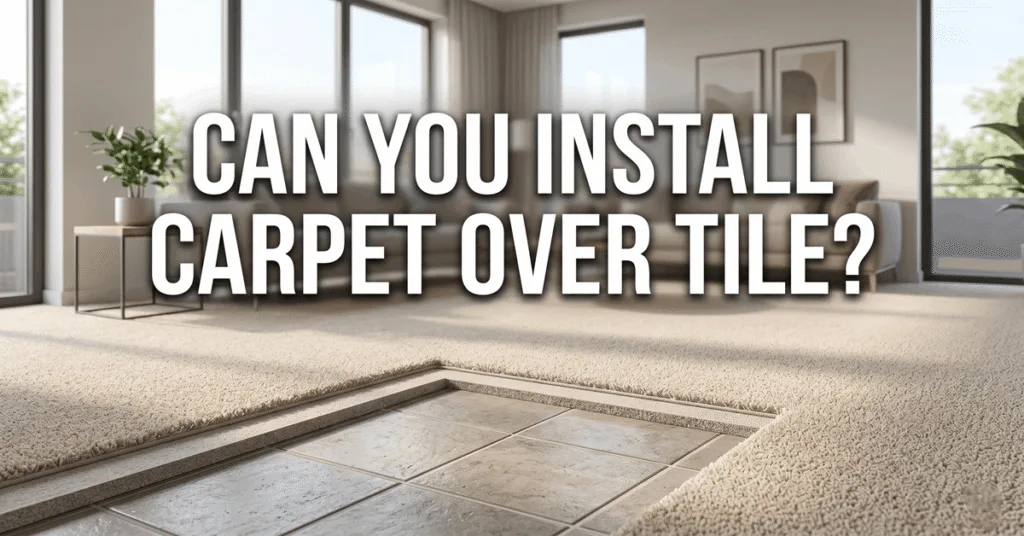
Can You Install Carpet Over Tile? Yes, you can install carpet over tile as long as the tiles are firmly bonded, the surface is level, and the room is dry. Carpet and underlay will raise your floor height by approximately 1–1.5 inches, so door clearance must be checked before installation begins.
You’re staring at cold, hard tile floors and wondering if there’s a faster, cheaper way to make your room feel warmer and more comfortable, without ripping everything up and starting from scratch.
The good news? Yes, you can install carpet over tile. And thousands of homeowners do it every year to save money, reduce renovation time, and transform a room without a full-scale demo project.
But here’s the catch: doing it wrong leads to rippling carpet, trapped moisture, mold growth, and doors that won’t close. This guide covers everything you need to know, from whether your tile qualifies, to a step-by-step installation walkthrough, to the mistakes that cost people hundreds of dollars to fix.
Let’s get into it.
Is It Actually Possible to Install Carpet Over Tile?
The short answer: yes — with conditions.
Carpet can be installed directly over an existing tile floor in most residential settings. The tile acts as a firm, stable subfloor substitute, and when the surface is properly prepared, the finished result is indistinguishable from carpet laid over any other base.
Here’s what makes the difference between a successful installation and a frustrating one:
It works well when:
- The tiles are firmly bonded to the subfloor with no hollow spots
- The surface is level and free of major cracks or chips
- The room is above-grade and dry (no moisture issues)
- Door clearances can accommodate the added floor height
It becomes a problem when:
- Tiles are cracked, loose, or shifting underfoot
- The room has consistent moisture exposure (bathrooms, basements)
- Door thresholds are already tight, adding carpet and underlay typically raises your floor height by 1 to 1.5 inches
- You have an underfloor heating system (carpet significantly reduces heat transfer efficiency)
Professional installers and confident DIYers tackle this project regularly — it just requires honest assessment of your tile’s condition before you begin.
When Should You (and Shouldn’t You) Install Carpet Over Tile?
Knowing when this project makes sense is just as important as knowing how to do it. Getting this decision right upfront will save you time, money, and a significant headache down the line.
Good Situations for Installing Carpet Over Tile
You’re working with a tight renovation budget. Professional tile removal alone costs between $2 and $5 per square foot. On a 300 sq ft room, that’s $600–$1,500 just to clear the floor before carpet even enters the picture. Skipping removal keeps that money in your pocket, especially once you compare overall carpet installation costs.
The tiles are in solid, stable condition. If your tiles pass the tap test, more on that in the prep section, and there’s no visible cracking or movement, they’re a perfectly serviceable base for carpet under residential carpet installation standards.
It’s a temporary or transitional install. Rental properties, home staging, and short-term refreshes are ideal use cases. Tack strip installations over tile are relatively clean to remove later without damaging the tile underneath.
You want warmth and noise reduction fast. Carpet over tile dramatically changes how a room feels. The insulation effect is especially noticeable in tiled rooms that sit above unheated spaces, like a garage or crawlspace.
When You Should NOT Install Carpet Over Tile
Bathrooms, laundry rooms, or any wet area. Carpet traps moisture, and moisture trapped between carpet and tile creates the perfect breeding ground for mold and mildew. According to moisture control guidance from the EPA, carpet should never be installed in areas with regular water exposure.
Basements with humidity or moisture issues. Even if the basement looks dry, concrete-backed tile can wick moisture upward. Always run a moisture test before proceeding (covered in the prep section below).
Rooms with cracked, chipped, or hollow tiles. One loose tile under carpet is all it takes. Over time, foot traffic causes the carpet to ripple, wear unevenly, and deteriorate far faster than it should.
When doors are already barely clearing the floor. Measure your door clearance before committing. If there’s less than 1.5 inches of clearance between the bottom of your door and the tile surface, you’ll likely need to trim the door, or choose a very low-profile carpet and underlay combination.
The bottom line: If your tiles are solid, the room is dry, and you have adequate door clearance, you’re in good shape to move forward. If any of those three conditions aren’t met, address them first, or reconsider the approach.

What You’ll Need – Tools and Materials Checklist
Before you start, gather everything on this list. Running out mid-install is one of the most common reasons DIY carpet jobs end up looking rushed and uneven.
Tools
- Tape measure — for accurate room dimensions and carpet cutting
- Utility knife with extra blades — blades dull quickly cutting carpet; always have spares
- Knee kicker — essential for hooking carpet onto tack strips without stretching unevenly
- Power stretcher — recommended for rooms wider than 15 feet for a truly taut, professional finish
- Staple gun or adhesive applicator — for securing the underlay to the tile surface
- Seam iron and seam tape — required if joining two pieces of carpet
- Bolster chisel or tucking tool — for tucking carpet edges behind tack strips
- Safety glasses and knee pads — don’t skip these; knee work on tile is brutal without protection
Materials
- Carpet — choose a pile height that suits the space; lower pile works better over tile because it reduces the total floor height gain
- Low-profile carpet underlay (6–8mm recommended) — this is important: because tile already adds height compared to a standard timber subfloor, using thick padding compounds the door clearance problem. A firm, low-profile underlay gives you cushioning and insulation without excessive buildup
- Tack strips — use adhesive-backed strips designed for hard floors, since you can’t nail into tile
- Transition strips/threshold bars — required at every doorway; choose the correct profile for your height difference
- Carpet adhesive or double-sided tape — for glue-down installs or temporary applications
With your tools assembled and materials on hand, you’re ready for the most important part of the whole project: preparing the surface properly before the carpet goes down.
How to Prepare Your Tile Floor Before Laying Carpet
This is the step most DIYers rush, and it’s exactly why their carpet starts rippling or wearing unevenly within a year. Spend the time here and the rest of the installation goes smoothly.
Step 1 — Inspect and Repair the Tile Surface
Walk the entire floor and press down firmly on each tile with your foot. Any tile that moves, flexes, or makes a hollow sound when tapped with a coin needs attention before you proceed.
Loose tiles should be re-adhered using appropriate tile adhesive. Cracked tiles need to be replaced, carpet over a cracked tile will develop a visible ridge or weak spot that wears through quickly. Fill any deep grout lines with a floor-leveling compound; deep recesses can telegraph through the carpet and cause rippling.
Step 2 — Clean the Tile Thoroughly
Don’t assume a tile floor that looks clean is ready for carpet. Years of foot traffic leave behind oil residue, wax buildup, and cleaning product film, all of which compromise adhesion.
Clean the entire floor with a degreasing cleaner and allow it to dry completely. Pay special attention to areas near the kitchen, entry points, and anywhere cleaning products have been used regularly.
Pro Tip: Even if the tiles look spotless, always degrease before laying carpet. Oil residue that’s invisible to the eye can cause adhesive tape and tack strip adhesive to fail within months.
Step 3 — Check for Level and Fill Low Spots
Lay a long straightedge (or a 4-foot spirit level) across the floor in multiple directions. Any gap greater than 3mm beneath the straightedge is a low spot that needs filling.
Use a self-leveling compound to fill dips and uneven areas. Once cured, these compounds create a smooth, flat surface that prevents carpet from developing visible bumps or wearing unevenly in high-traffic zones.
Step 4 — Perform a Moisture Test
This step is non-negotiable if you’re in a ground-floor room, a basement, or any space that gets temperature fluctuations.
Tape a 12-inch square of plastic sheeting directly to the tile, sealing all four edges completely. Leave it for 24–48 hours. If moisture or condensation appears on the underside of the plastic when you pull it up, the floor has an active moisture issue. Do not proceed with carpet installation until the source is identified and resolved.
Laying carpet over a moisture-affected tile floor is one of the leading causes of mold growth beneath carpet, a problem that’s expensive to remediate and potentially hazardous to health.
Once your prep is done and everything checks out, you’re ready for installation.
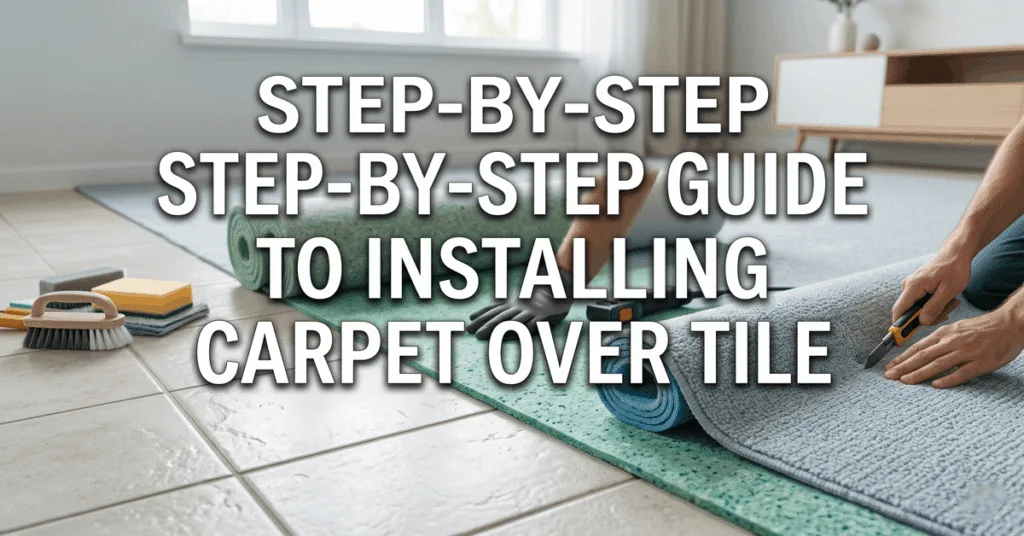
Step-by-Step Guide to Installing Carpet Over Tile
This is the core of the project. Follow each step in order — skipping ahead creates problems that are frustrating to backtrack and fix.
Step 1 — Measure and Cut the Carpet
Measure the length and width of your room at their widest points. Add 3–4 inches to each dimension,this surplus allows for trimming errors and ensures you have enough to work with around obstacles.
Mark your cutting lines on the back of the carpet using chalk or a marker. Cut with a sharp utility knife held at a consistent angle. For corners and doorway cutouts, score lightly first and check your fit before making the final cut.
Step 2 — Install Tack Strips Around the Perimeter
Tack strips are the narrow wooden strips with angled metal teeth that grip and hold your carpet in place. Run them around the entire perimeter of the room, positioned approximately 10mm from the wall.
Critical point for tile floors: Do not attempt to nail tack strips into tile, you’ll crack the tiles and the strips won’t hold. Instead, use adhesive-backed tack strips specifically designed for hard floor surfaces, or secure standard strips with construction adhesive. Allow adhesive to cure fully before proceeding.
Position the strips with the teeth angled toward the wall, facing upward.
Step 3 — Lay the Carpet Underlay
Roll the underlay out across the floor, cutting it to fit neatly within the perimeter of the tack strips. The underlay should butt up against the tack strips but not overlap them.
Tape all seams between underlay sections using heavy-duty joining tape. Secure the underlay to the tile surface using carpet adhesive or a compatible double-sided tape, this prevents it from shifting during the carpet stretching phase.
Step 4 — Position and Lay the Carpet
Roll the carpet out over the underlay with the excess running up all four walls. Start by hooking one edge of the carpet firmly onto the tack strips along one wall.
Work across the room using a knee kicker: position the padded end approximately 5cm from the opposite wall, strike the kicker with your knee, and hook the carpet onto the tack strips as you go. For rooms wider than 15 feet, use a power stretcher instead, it provides far more tension and prevents the carpet from relaxing and developing wrinkles over time.
Work systematically from one wall to the opposite, then repeat for the remaining two walls.
Step 5 — Trim and Tuck the Edges
Once the carpet is stretched and hooked on all four sides, use a sharp utility knife to trim the excess along each wall, leaving approximately 10mm of carpet to tuck.
Use a bolster chisel or dedicated carpet tucking tool to press this remaining edge firmly between the tack strip and the wall. Done correctly, this creates a clean, finished edge that stays locked in place without any visible gap.
Step 6 — Install Transition Strips at Every Doorway
This step is non-negotiable, both for safety and for a professional-looking result.
At each doorway, measure the height difference between your new carpet surface and the adjacent floor. Choose the appropriate transition strip profile:
- T-bar: For when both floors are at the same height
- Reducer strip: For when carpet is higher than the adjacent flooring
- Overlap trim: For carpet edges that meet a hard floor at a step
Secure the strip according to the manufacturer’s instructions, most snap into a track that’s glued or screwed into the floor. Transition strips prevent the carpet edge from fraying, eliminate a trip hazard, and give the whole installation a finished, deliberate look.
With the transition strips in place, your installation is complete. Step back, check for any visible wrinkles or loose edges, and run your hand firmly along all four walls to confirm the tuck is holding.
Common Mistakes to Avoid When Carpeting Over Tile
Even experienced DIYers make these mistakes. Knowing them in advance is the difference between a result you’re proud of and one you’re quietly embarrassed by six months later.
1. Skipping the moisture test.
This is the single most consequential shortcut. Moisture beneath carpet creates mold that’s invisible until it’s become a serious health and structural problem. The test takes 24 hours and costs nothing, skip it at your peril.
2. Using underlay that’s too thick.
Standard underlay for carpeting over timber subfloors is typically 10–12mm. Over tile, the extra subfloor height means you should use 6–8mm maximum. Anything thicker and you’re fighting your doors from day one.
3. Not fixing loose or cracked tiles first.
Even one unstable tile causes problems. The carpet telegraphs movement from below, creating a visible ripple that worsens with every pass of foot traffic.
4. Forgetting to check door clearance.
Measure twice, install once. Calculate the combined thickness of your carpet and underlay, and check every door in the room before you commit to materials.
5. Skipping transition strips.
Unfinished carpet edges at doorways fray, curl, and become trip hazards quickly. Transition strips take 15 minutes to install and make the entire project look professionally done.
6. Using full-adhesive glue-down instead of tack strips.
Tack strip installations are clean to remove in the future without damaging your tile. Glue-down carpet is a nightmare to lift — adhesive bonds to both the carpet backing and the tile face, and removal often damages both surfaces.
7. Ignoring deep grout lines.
Pronounced grout lines eventually telegraph through carpet as faint ridge lines, especially in high-traffic areas. Fill them with leveling compound before laying underlay.
How Long Will Carpet Last Over Tile?
One of the most common concerns homeowners have is whether carpet laid over tile will wear out faster than carpet laid over a timber subfloor.
The honest answer: not if the tile base is solid and the room is dry.
Carpet durability is primarily affected by three factors, foot traffic, maintenance, and the stability and flatness of the surface beneath it. A firmly bonded, level tile floor is an excellent base that can support a full carpet lifespan of 10–15 years.
Where problems arise is when the underlying conditions aren’t right: a cracked tile that flexes with foot traffic, moisture that slowly degrades the carpet backing, or thick underlay that compresses unevenly over time and creates surface irregularities.
| Condition | Expected Carpet Lifespan |
| Solid tile, dry room, quality low-profile underlay | 10–15 years |
| Solid tile, moderate humidity | 6–10 years |
| Cracked or uneven tile | 3–5 years |
| Any moisture-prone area | Not recommended |
Regular vacuuming, prompt stain treatment, and professional deep cleaning every 12–18 months will keep carpet looking its best regardless of what’s underneath it.
Cost Breakdown — Carpet Over Tile vs. Removing Tile First
For most homeowners, the decision to carpet over tile rather than remove it first comes down to one thing: cost.
Here’s what the numbers typically look like:
| Approach | Estimated Cost (per sq ft) |
| Carpet installed over existing tile | $3–$7 |
| Professional tile removal + new carpet | $6–$12 |
| DIY carpet installation over tile | $1.50–$4 |
Professional tile removal adds $2–$5 per square foot to your project, that’s $600–$1,500 on an average 300 sq ft room before a single roll of carpet is purchased. For homeowners on a budget, carpeting over tile is a genuinely smart financial decision, not just a shortcut.
The cost advantage is even more pronounced if:
- Your tile was installed over a concrete slab (more difficult and labour-intensive to remove)
- You’re renting and plan to restore the original floor later
- You want a temporary solution while saving for a full renovation
One important note: if your tiles are damaged or the floor is significantly uneven, factor in repair costs before deciding. A floor that requires $400 in tile repairs before carpeting may close the gap in cost with a full removal.
Pricing sourced from current industry benchmarks. Always get local quotes, as costs vary by region, material, and site conditions.
Conclusion
So, can you install carpet over tile? Absolutely. When the conditions are right, it’s one of the smartest, most cost-effective flooring upgrades a homeowner can make.
Here are the three non-negotiables to carry with you:
- Your tiles must be solid. Every tile firmly bonded, no cracks, no hollow spots.
- The room must be dry. Always run the moisture test. No exceptions.
- Prep comes first. Clean, level, and inspect the surface before a single tack strip goes down.
Get those three things right, follow the installation steps above, and you’ll have a warm, comfortable, professional-looking floor that lasts for years.
Ready to take the next step? Browse our guides on choosing the right carpet type for your room and how to select the best underlay for your specific subfloor — or reach out to a flooring professional at ClassyFloor.com if you’d like a hand assessing your space before you begin.

Frequently Asked Questions
Do I need to remove tile before laying carpet?
In most cases, no. If your tiles are firmly bonded, the surface is level, and the room is dry, carpet can be installed directly over them. Removal is only necessary if tiles are cracked, loose, or if moisture is present.
What underlay should I use over tile?
Choose a firm, low-profile underlay between 6–8mm thick. This minimises floor height gain while still providing adequate cushioning and thermal insulation. Avoid thick, soft underlays designed for timber subfloors, they compress unevenly over tile and raise the floor too much.
Will carpet over tile cause mold problems?
It can, if moisture is present. Carpet traps moisture between its backing and the tile, creating ideal conditions for mold growth. Always run a 24-hour plastic sheeting moisture test before installation, and never carpet bathrooms, laundry rooms, or basements with known humidity issues.
Can I install carpet over cracked tiles?
No. Cracked or loose tiles must be repaired or replaced before carpet goes down. Carpet over an unstable surface will ripple, wear prematurely, and the underlying damage will worsen over time from foot traffic.
How much can I save by carpeting over tile instead of removing it?
Typically $2–$5 per square foot, the cost of professional tile removal. On a standard 300 sq ft room, that’s a saving of $600–$1,500 before you’ve spent a cent on carpet or installation.