Disclosure: Classy Floor is reader-supported. As an Amazon Associate, we earn from qualifying purchases. We may also earn commissions from other affiliate programs, at no additional cost to you. Learn more →
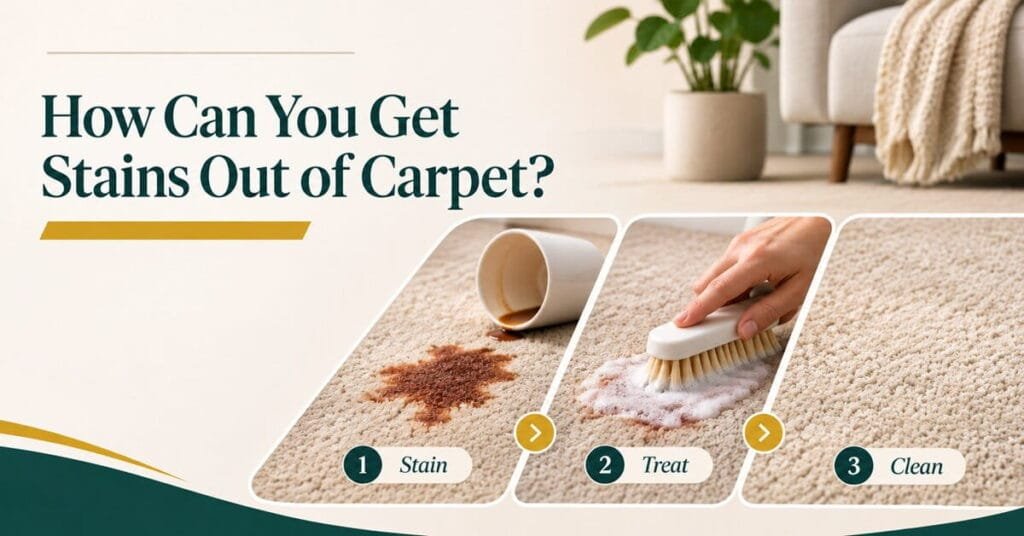
A spilled cup of coffee, muddy shoes, or a pet accident can leave a mark that seems impossible to remove. How can you get stains out of carpet without damaging the fibers? Start by removing excess material, blotting instead of rubbing, identifying the stain, and choosing a cleaner that suits your carpet.
The right treatment depends on both the spill and the carpet material. A cleaning method that works on nylon may not be safe for wool. The goal is to lift the stain without pushing it deeper, damaging the pile, or leaving sticky residue behind.
What Is the Quickest Way to Get Stains Out of Carpet?
For most fresh spills, follow these steps:
- Remove excess material: Scoop up food or solid debris with a spoon. Let wet mud dry before vacuuming loose dirt.
- Blot the spill: Press a clean, white, absorbent cloth or plain white paper towel onto the stain. Lift and repeat with a clean section.
- Identify the stain: Coffee, grease, blood, and pet urine require different treatments.
- Check the carpet instructions: Read the manufacturer’s care guide before applying a cleaning product.
- Test a suitable cleaner: Try it in an inconspicuous area and stop if the carpet color transfers or the texture changes.
- Treat gently: Apply a small amount of cleaner to a white cloth and work from the outside of the stain toward the center.
- Rinse and dry: Follow the product instructions to remove residue, blot away moisture, and let the carpet dry completely.
This is the safest starting point for anyone wondering how do you get stains out of the carpet without spreading the mess.
The Carpet and Rug Institute (CRI) recommends using a white absorbent cloth, avoiding scrubbing, testing cleaners first, and following product directions. Its general spot-cleaning guidance provides a useful starting point for everyday spills.

What Types of Stains Can Affect Carpet?
Identifying the stain helps you choose the right treatment. Two marks that look similar may contain completely different substances.
| Stain Category | Common Examples | Cleaning Consideration |
| Water-soluble | Soda, juice, some food spills | A compatible water-based cleaner may help |
| Tannin and dye | Coffee, tea, red wine, berries | Colored residue may require specialized treatment |
| Oil-based | Cooking oil, grease, makeup | Requires a cleaner designed for oily residue |
| Protein and organic | Blood, milk, egg, vomit, pet urine | Needs careful, stain-specific treatment |
| Dry particulate | Mud, dirt, tracked-in soil | Remove loose material before adding moisture |
These categories are useful guides, not universal formulas. A food spill can contain several staining ingredients, so always consider the specific substance and carpet material.
What Should You Check Before Cleaning a Carpet Stain?
Identify the Carpet Fiber
Carpet fibers react differently to moisture, heat, solvents, and cleaning products.
Nylon, polyester, olefin, and triexta are synthetic fibers, but their dyes, finishes, and stain-resistant treatments can still vary. Wool requires extra care because harsh chemicals and unsuitable products may damage its fibers.
Check the manufacturer’s instructions first. If you cannot confirm that a cleaner is suitable, contact the manufacturer or a qualified carpet cleaner. You can also review carpet-care recommendations from Shaw Floors for guidance on product compatibility and maintenance.
Consider the Carpet Pile, Backing, and Padding
A spill does not always stay on the visible surface. Liquid can travel through the carpet pile and reach the backing or padding underneath.
That matters because cleaning the surface may not remove everything trapped below it. Excessive moisture can also affect the carpet backing and adhesive.
Loop-pile and cut-pile carpets may respond differently to scraping or brushing. Use a gentle touch and avoid pulling at the yarn.
Gather the Right Cleaning Supplies
Keep these basic items nearby:
- Clean white microfiber cloths or plain white paper towels
- A spoon or dull scraper
- A carpet-compatible spot cleaner
- Clean water
- Protective gloves when recommended by the product label
Avoid colored towels because their dye may transfer to damp carpet.

How to Get Stains Out of Carpet Step by Step
Step 1: Remove Excess Material
Lift food, pet waste, or other solids with a spoon. Work from the outside toward the center so you do not spread the mess.
If mud is wet, let it dry before vacuuming loose particles. Adding water too early can turn a small patch into a larger muddy stain.
Step 2: Blot Instead of Rubbing
Press a dry white cloth onto the spill. Lift it, move to a clean section, and repeat.
Do not scrub back and forth. Scrubbing can push the stain deeper, spread it across the pile, and rough up the carpet fibers.
One detail homeowners often overlook is the cloth itself. A printed paper towel or brightly colored rag can transfer dye to wet carpet, creating another problem while you try to remove the first stain.
Step 3: Choose a Carpet-Compatible Cleaner
Use a cleaner approved by the carpet manufacturer or one carrying the CRI Seal of Approval.
Match the product to the stain and read its label for fiber restrictions, application amounts, dwell time, and rinsing instructions.
For example, a pet stain remover may be designed to address organic residue and odors, while an oil-specific spot remover targets greasy marks. An enzyme-based cleaner may help with certain organic stains, but only use it when the label confirms that it is suitable for your carpet.
The CRI’s stain-specific Spot Solver can help you find appropriate guidance for hundreds of common household spills.
Step 4: Apply a Small Amount
Unless the product instructions say otherwise, apply the cleaner to a white cloth rather than pouring it directly onto the carpet.
Blot from the outside edge toward the center. Follow the recommended dwell time, and never mix the cleaner with vinegar, bleach, ammonia, or another cleaning product.
Step 5: Remove Cleaning Residue
If the product label calls for rinsing, use a small amount of clean water and blot it back out. Repeat only as directed.
Here’s the thing: using more cleaner does not necessarily produce better results. Excess detergent can leave a sticky film that attracts soil. A spot may look clean at first, then appear dirty again because residue remains in the pile.
Step 6: Blot Dry and Let the Carpet Dry Completely
Press dry towels over the spot to absorb moisture. Replace them as they become damp. Keep people and pets off the area until it dries.
A fan can help move air across the carpet, but do not cover a damp patch with furniture or a rug.
For larger wet-cleaning jobs, follow a proper method for drying a damp carpet thoroughly. Persistent moisture can affect the backing and padding. Learn more about moisture problems that can lead to mold under carpet.
How to Remove Different Types of Carpet Stains
Coffee, Tea, and Red Wine
Blot the spill promptly with a white cloth. Use a carpet-safe product labeled for beverage or tannin stains, then rinse if the label instructs you to do so.
Coffee, tea, and red wine can leave colored residue. Avoid rubbing or applying a strong cleaner without testing it first.
Red food dyes can be particularly difficult to remove because some dyes resemble the colorants used in carpet fibers. Older spills and natural-fiber carpets may need professional treatment.
Chocolate and Food Stains
Remove solid chocolate, food, or sauce with a spoon before treating the remaining mark. Avoid spreading melted chocolate or greasy food across the pile.
Blot the remaining residue with a compatible carpet spot cleaner. Follow the label and rinse if instructed.
For sticky food spills, patience matters. Repeated gentle blotting is usually safer than aggressive brushing.
Dirt and Mud
Let wet mud dry before vacuuming. Once you remove loose soil, blot any remaining mark with a cleaner approved for the carpet.
This is a practical approach to how to get dirt stains out of carpet without grinding soil into the pile.
Grease and Oil
Lift solid residue with a spoon and blot excess oil with a dry cloth. Water alone may not remove grease.
If you are trying to work out how to get an oil stain out of carpet, choose a spot remover specifically labeled for oily stains and follow its directions.
Avoid pouring household solvents directly onto carpet or using a hot iron without manufacturer approval. Heat and solvents can affect carpet dyes, backing, and adhesives.
Blood and Vomit
Blood and vomit require additional care because they may contain biological contaminants.
For a small blood spot, wear appropriate protective gloves, blot carefully, and use a compatible cleaning method. The CRI provides specific guidance for treating blood stains.
Large spills, unknown contamination, or material that has soaked into the padding should not be treated as an ordinary household stain. Contact a qualified professional who can follow appropriate cleanup procedures.
Vomit can also contain food dyes and acidic material that may discolor carpet. Remove loose solids only when it is safe to do so, and avoid direct contact with the spill.
The IICRC’s consumer carpet-care guidance explains why some biological stains require specialist attention.
Pet Urine and Other Pet Messes
Blot fresh urine with plain white paper towels as soon as possible. Remove as much moisture as you can without scrubbing.
The CRI recommends avoiding steam cleaners on urine spots because heat can set the stain and odor. A wet vacuum and cool-water rinse can help remove moisture.
Use a carpet-compatible pet stain and odor cleaner according to its label. An enzyme-based treatment may help with organic residue, but it cannot guarantee complete removal.
Pet urine can affect carpet dyes and may reach the cushion underneath. According to the CRI’s technical bulletin on pet urine and carpet, some urine-related discoloration may become permanent, particularly when the spill remains unnoticed for a long time.
Ink, Paint, and Candle Wax
These spills need extra caution because their ingredients vary.
For ink and paint, identify the product if possible before choosing a treatment. Avoid rubbing alcohol, nail polish remover, or paint solvents unless the carpet manufacturer specifically approves them.
For candle wax, let the wax harden and carefully lift away what you can with a dull edge. Avoid pulling carpet fibers or applying heat without checking the manufacturer’s instructions.
When the spill is unfamiliar or the carpet is delicate, professional advice is safer than experimenting with household chemicals.
How to Get Old Stains Out of Carpet
Old stains take more patience because the spill may have dried, bonded to the fibers, or reached the backing.
If you are trying to learn how to get old stains out of carpet, first identify the likely source and check whether someone has already applied another cleaner.
Vacuum loose dry material, then test a compatible stain remover in an inconspicuous area. Apply a small amount to a white cloth and blot gently. Follow the label’s recommended dwell time and rinse only as directed.
Repeat only if the product instructions allow it and the carpet shows no sign of damage.
Some stains permanently change the carpet’s dye. In those cases, cleaning cannot restore the original color. Professional dye correction or carpet patching may be the only options.
Why Do Carpet Stains Keep Coming Back?
A stain that returns after drying may be a sign of wicking.
During drying, moisture can move from the backing or lower part of the pile toward the surface, carrying dissolved soil with it. Cleaning-product residue can also attract fresh dirt.
The Institute of Inspection, Cleaning and Restoration Certification (IICRC) describes this as the upward movement of soil and residue during drying.
If a spot repeatedly returns, avoid adding more cleaner each time. A professional may need to extract soil and moisture from deeper in the carpet.
For larger cleaning jobs, it also helps to understand how a household carpet cleaner differs from an extractor.
How to Get Water Stains Out of Carpet
A ring or mark left after a spill may not come from water alone. Minerals, detergent residue, or soil brought to the surface during drying can create a visible edge.
Before trying how to get water stains out of carpet, work out whether you are seeing a mineral mark, a cleaning ring, or recurring soil.
Blot any remaining moisture. If the carpet manufacturer permits it, use a small amount of clean water and blot again. Avoid adding vinegar or another cleaner without checking the fiber and the cause of the mark.
If you are researching how to remove water stains from carpet, remember that a mark that returns after drying may indicate wicking or residue rather than a new water spill.
Common Carpet Stain Removal Mistakes to Avoid
- Rubbing the spot: This can spread the stain and damage the pile.
- Using too much cleaner: Excess product can leave residue and attract soil.
- Skipping a spot test: A cleaner may cause dye transfer or fiber damage.
- Mixing household chemicals: Never mix bleach with ammonia or another cleaner. The CDC’s bleach safety guidance warns that mixing cleaning products can release dangerous vapors.
- Using bleach on carpet: Bleach can permanently remove color from many carpet fibers and may affect the backing. Do not use it unless the manufacturer explicitly approves a specific treatment.
- Leaving the area wet: Excess moisture can reach the backing and padding and may lead to odor or other damage.
When Should You Call a Professional Carpet Cleaner?
Contact a qualified carpet cleaner if a stain:
- Covers a large area or has soaked into the padding.
- Keeps returning after careful cleaning.
- Resists treatment with a compatible spot cleaner.
- Comes from an unknown chemical or dye.
- Affects delicate wool or another specialty carpet.
- Causes a noticeable change in the carpet’s texture or color.
Ask which cleaning method and products the technician plans to use, whether they suit your carpet, and how they will remove rinse water.
For deeper cleaning, compare hot-water extraction and steam-cleaning methods. The right approach depends on the carpet, the stain, and how deeply the spill has traveled.

Frequently Asked Questions
What is the best way to get a stain out of carpet?
Remove excess material, blot with a clean white cloth, and use a cleaner approved for the specific stain and carpet fiber. Follow the product instructions, remove residue when directed, and let the carpet dry completely.
How do you get old stains out of carpet?
Vacuum loose material, identify the stain, and test a compatible spot remover in a hidden area. Apply it as directed and blot gently. Some old stains permanently affect carpet dye and may require professional treatment.
Can you get stains out of carpet with vinegar?
Vinegar may help with certain stains, but it is not a universal carpet cleaner. Some CRI stain-specific methods use diluted white vinegar. Check the manufacturer’s instructions, test a hidden area, and never mix vinegar with bleach or other cleaners.
Why do carpet stains come back after cleaning?
Wicking can carry soil from the backing or lower pile to the surface as the carpet dries. Cleaning-product residue can also attract fresh dirt. Remove moisture thoroughly and seek professional advice if the mark keeps returning.
Can you use a steam cleaner on every carpet stain?
No. Steam cleaning may be unsuitable for some carpet fibers and stains. The CRI specifically advises against using steam cleaners on pet urine spots because heat can set the stain and odor.
Should you use the same cleaner on wool and synthetic carpet?
No. Wool, nylon, polyester, olefin, and triexta can have different care requirements and dye sensitivities. Choose a cleaner labeled for the specific fiber and follow the manufacturer’s instructions.
Conclusion
The best way to get stains out of carpet is to match the treatment to the spill and the carpet, not to reach for the strongest cleaner. Remove solids, blot liquids, test a compatible product, rinse away residue when directed, and let the area dry fully.
If a stain keeps returning, reaches the padding, or changes the carpet’s color, stop experimenting and contact a qualified cleaner. A careful first response can prevent a small spill from becoming a much bigger repair.