Disclosure: Classy Floor is reader-supported. As an Amazon Associate, we earn from qualifying purchases. We may also earn commissions from other affiliate programs, at no additional cost to you. Learn more →
Is carpet cheaper than flooring in 2026? For many U.S. homes, the answer is yes on day one, since installed carpet often costs around $2 to $8 per square foot, pad and labor included, and most hard surfaces start higher. Hardwood, laminate, and luxury vinyl plank (LVP) usually cost more upfront, even before extras like tear-out and subfloor prep show up on the quote.
This choice matters when your budget has limits, your move-out date is unclear, or you are updating rooms that buyers judge fast. This guide compares carpet vs hardwood, laminate, and vinyl plank with the same yardstick: installed cost per square foot, lifespan, cleaning effort, and resale impact. If you are asking, “Is carpet cheaper than flooring overall?” you will leave with a simple way to judge cost per year, room by room, without guessing.
Is carpet cheaper than flooring overall?
Carpet is usually the lowest upfront-price option when “flooring” means hardwood, laminate, vinyl plank, or tile. Most U.S. cost guides place carpet installation around $2–$8 per square foot with labor and a basic pad, then show higher ranges for hard surfaces.
Here is the quick pricing picture people see most often in 2026 quotes:
- Carpet: about $2–$8 per sq ft installed, often including basic pad
- Hardwood: commonly $6–$23+ per sq ft installed, with many mid-range projects landing in the low teens
- Laminate: often $4–$14 per sq ft installed
- Luxury vinyl plank (LVP): often $4–$16 per sq ft installed
The catch is the timeline. Carpet has a shorter service life in busy homes, and deep cleaning costs add up over the years. Hard floors can run for decades, so the cost spreads out across a longer span. If you plan to stay a long time, “cheapest” can change once you look at replacements, repairs, and resale expectations.
A simple way to think about it is cost per year. A floor that costs more upfront can still be the better value if it lasts twice as long and needs fewer major cleanups.
A quick cost-per-year example (simple math)
Let’s keep the numbers easy. Say a carpet install is $5 per sq ft, and you replace it at 10 years in a normal, lived-in home. That is $0.50 per sq ft per year before deep cleaning, stains, and pad issues.
Now take a hard surface at $8 per sq ft that runs 20 years. That is $0.40 per sq ft per year. The result is not a promise about every home. It is a way to compare options using time, not just the first invoice.
What pushes your quote up fast
Even with the same room size, the total price can shift from these common add-ons:
- Tear-out and disposal: removing old carpet or old flooring
- Padding quality: basic pad vs upgraded pad (see carpet padding options)
- Stairs and seams: stairs take time; small cut-up rooms need more seams
- Subfloor prep: leveling, patching, moisture fixes
- Furniture moving: some crews include it; many charge for it
These details often decide why two quotes differ in the same city.
Carpet vs hardwood: cost and value
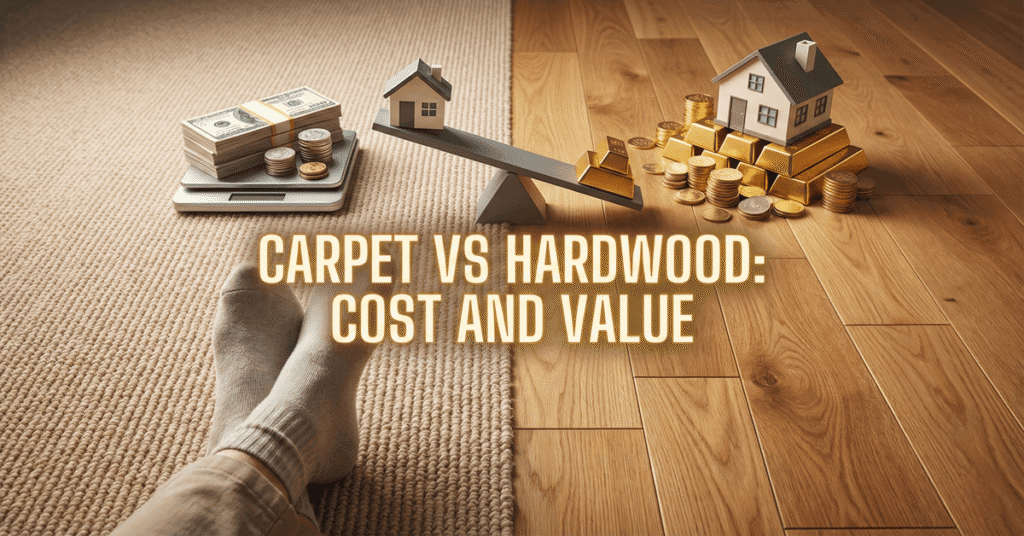
Carpet vs hardwood is the classic trade-off between low upfront price and long-term durability. If engineered wood is on your shortlist, carpet versus engineered hardwood can be a helpful comparison. Carpet is cheaper to install in most U.S. markets. Hardwood costs more at the start, but pays back through longevity and resale appeal.
Upfront price
- Carpet: about $2–$8 per sq ft installed
- Hardwood: often $6–$23 per sq ft installed, with many mid-range jobs around $12–$15
Hardwood pricing rises with species, grade, plank width, and job complexity. Installation can include acclimation steps and more skilled labor. Carpet is quicker to install in many rooms, so labor costs can be lower.
Lifespan and maintenance
Carpet often lasts 5–15 years, depending on fiber, traffic, pets, and cleaning habits. If you are weighing fibers, nylon compared to polyester can help you match durability to your household. Nylon can hold up well, yet stains and wear lines still show up in busy paths. A quality pad can help the feel and slow crushing.
Hardwood can last 20–100+ years in many homes since wood can be refinished instead of replaced when the surface wears. That does not mean hardwood is carefree. It can scratch, dent, and react to water if spills sit too long.
Resale impact
Hardwood is widely viewed as an upgrade, especially in main living areas. Many buyers expect hard flooring in living rooms and dining rooms. Wall-to-wall carpet in those spaces can feel like a future project to them, even when the carpet is new.
Takeaway: Carpet wins on the first bill. Hardwood often wins on the long game: lifespan plus buyer appeal.
Carpet vs laminate and vinyl plank
Laminate and LVP sit between carpet and hardwood on cost and performance. These are common choices when hardwood is out of budget, yet you still want a hard-floor look and easier cleanup.
Carpet vs laminate
- Carpet: $2–$8 per sq ft installed
- Laminate: $4–$14 per sq ft installed
Carpet usually costs less to install. Laminate often lasts longer in hallways and living rooms, since it resists wear patterns that show fast on carpet. Laminate still needs care around water. A spill that seeps into seams can swell boards, so kitchens and baths call for caution.
Carpet vs LVP (luxury vinyl plank)
- Carpet: $2–$8 per sq ft installed
- LVP: $4–$16 per sq ft installed
Carpet stays cheaper upfront in many bedrooms. If you want a closer carpet versus LVP pricing comparison, LVP often wins in busy, spill-prone spaces, since many product lines offer strong water resistance and wipe-clean maintenance. Lifespans around 15–20+ years are common for decent-quality LVP in normal household use, with better wear layers holding up longer.
Big picture decision rule
Carpet can be a cost-effective choice for short stays, rentals, and quick refreshes. Laminate or LVP can beat carpet on cost-per-year when you plan to live in the home for a decade or more, or when the space gets heavy daily traffic.

When carpet actually makes more sense
Carpet makes sense when comfort, quiet, and low installation cost matter most. Bedrooms, nurseries, and low-traffic guest rooms are the classic examples. A soft surface feels warmer underfoot, reduces footstep noise, and can make a room feel finished fast on a tight budget.
Carpet can be a smart move for a quick sale refresh, too. A neutral, mid-grade carpet with a decent pad can clean up listing photos at a lower cost than new hard flooring across the whole home.
One practical note: main living areas can be tricky. Some buyers subtract mentally for future hard-floor upgrades, even if the carpet looks new. That reaction varies by market and by the home’s price range.
When hard flooring is the better investment
Hard flooring is often the better pick when you care about durability, simple cleanup, or resale presentation. Living rooms, dining rooms, hallways, and open-concept spaces are where hard surfaces tend to look best and wear best over time.
Kitchens, bathrooms, entries, and basements typically favor vinyl plank or tile, since water and tracked-in grit are part of daily life in those areas, and the carpet and tile trade-offs are usually clearest in these wet, high-traffic zones. Hard floors also benefit pet- and allergy-sensitive homes, as dust and dander are easier to remove from a flat surface than from wall-to-wall carpet, which can harbor common asthma triggers. If you still prefer carpet in certain rooms, consider allergy-friendly carpet choices.
Stairs can be a special case. Carpet can improve traction and soften noise on stairs. Hardwood treads look sharp, yet they can be louder and can feel slippery without a runner. If stairs are part of your job, ask installers to price stairs as a separate line item. Stair labor can shift totals more than people expect.
Bottom line: Is carpet cheaper than flooring?
For U.S. homes in 2026, carpet is cheaper than most hard flooring options on the upfront installed price. Typical installed prices of $2–$8 per square foot often undercut hardwood, laminate, and LVP, which typically range from $4 to $23 per square foot as material and quality vary.
Long-term value can point the other direction. Carpet tends to require more frequent replacement, and deep cleaning costs can add up, especially in busy homes with pets or children. Hard flooring often lasts longer and can help resale appeal in the main living spaces.
A balanced plan works well for many households: carpet in bedrooms for comfort and savings, then hard flooring, often LVP or hardwood, in living areas for durability and buyer appeal. If you ask, “Is carpet cheaper than flooring?” treat carpet as the upfront budget winner and hard floors as the long-game play.

Frequently Asked Questions
Is carpet always the cheapest flooring option?
For professional installation in most U.S. markets, standard carpet is often the lowest-cost option per square foot. Very basic sheet vinyl or entry-level LVP can land close in small, simple rooms, yet whole-home projects still tend to favor carpet as the lowest installed price.
How much more does hardwood cost than carpet?
Carpet commonly runs $2–$8 per sq ft installed, and hardwood often ranges from about $6–$23 per sq ft installed, depending on species and finish. That means hardwood can cost two to three times more upfront in the same room, even though it can last far longer.
What’s the best budget-friendly mix for resale?
A popular approach is new, neutral carpet in bedrooms and durable hard flooring (LVP or hardwood) in living areas, kitchens, and hallways. This mix keeps costs under control and aligns with what many buyers expect in main spaces.
Is carpet still popular in U.S. homes in 2026?
Yes. Carpet remains common in bedrooms, basements, and upstairs areas where comfort and noise control matter. Hard flooring tends to dominate living rooms, kitchens, and entryways, where wear and cleanup are daily concerns.
How often should carpet be replaced?
Many households replace carpet every 8–12 years. High-traffic spaces, pets, stains, or low-grade carpet can shorten that timeline. Well-maintained, higher-grade carpet with routine professional cleaning can last closer to 12–15 years.
Is carpet cheaper to install than DIY flooring?
Usually, yes. DIY laminate or DIY LVP can cut labor costs, yet pro-installed carpet often stays cheaper overall. Carpet DIY is less common since stretching, seam work, and stair installs call for specialized tools and practice.
What’s the cheapest flooring for rental properties?
Many property managers use neutral, mid-grade carpet in bedrooms and affordable LVP in common areas. Carpet helps keep turnover costs lower, and LVP handles tenant wear better in kitchens and living rooms, which can reduce long-term maintenance.
Conclusion
Carpet, hardwood, laminate, and luxury vinyl plank each bring a different mix of installed cost, lifespan, cleaning effort, and resale perception, and those factors decide the real value far more than a single price range. If you are also considering indoor air quality at home, this can help you compare materials beyond price. A smart plan starts with room function, expected foot traffic, and how long you plan to stay, then uses cost-per-year thinking to compare replacement cycles in plain numbers.
If you want a simple approach, place carpet where comfort and quiet matter most, then use hard flooring in the spaces that take daily wear and spills. For many U.S. households in 2026, that mix makes it easier to answer the core question, is carpet cheaper than flooring, with a choice you can live with for years.