Disclosure: Classy Floor is reader-supported. As an Amazon Associate, we earn from qualifying purchases. We may also earn commissions from other affiliate programs, at no additional cost to you. Learn more →
Choosing between a 6lb vs 8lb carpet pad looks simple, yet it shapes comfort, durability, and even noise in your home. Carpet pad density, carpet padding thickness, and the type of rebond carpet cushion under your feet decide how soft the floor feels in a bedroom, how well it holds up in a hallway, and which option becomes the best carpet pad for stairs and high traffic areas. This article sets out clear answers so you know where a 6 lb rebond carpet pad fits and where an 8 lb rebond carpet pad makes more sense.
Homeowners, renters, and DIY remodelers use this choice to stretch carpet life, protect warranties, and improve insulation and sound control in real rooms like basements, living rooms, and kids’ bedrooms. You will see a room by room view of carpet padding types and materials, how a carpet pad with moisture barrier helps on a concrete slab, and how density links to carpet warranty padding guidelines. By the end, you can match each space to the right pad without guesswork.
6 lb vs 8 lb carpet pad: comparison at a glance
A 6 lb vs 8 lb carpet pad comparison comes down to carpet pad density, comfort, and how each pad handles foot traffic over time. A 6 lb rebond carpet pad feels softer underfoot and often suits low traffic bedroom carpet pad needs, while an 8 lb rebond carpet pad feels firmer, supports high traffic carpet padding in living rooms, hallways, and stairs, and can help carpet hold its shape longer. For many homes, the 6 lb vs 8 lb carpet pad for living room choice sits right at the point where comfort and durability meet.
This quick overview gives you a fast way to match each density to real rooms and budgets without reading a technical manual first. You will see how cost, feel, carpet padding thickness, and room use link together so you can scan once and spot the right direction for your home.
Key differences between 6 lb and 8 lb carpet pad
The key differences between 6 lb and 8 lb carpet pad sit in density, firmness, and long-term wear. A 6 lb pad uses slightly less foam per cubic foot, so it compresses more and feels cushier, while 8 lb pad density packs more foam into the same space and gives stronger support under carpet in busy areas.
Think about how you use each room. Do you want a soft, plush bedroom that feels cozy at night, or do you need firm support under a living room that sees kids, pets, and frequent guests? The table below gives a simple side-by-side look at how each density behaves.
| Feature | 6 lb rebond carpet pad | 8 lb rebond carpet pad |
| Feel underfoot | Softer, springy, more “cushion” | Firmer, more supportive |
| Best traffic level | Low to moderate traffic | Moderate to high traffic |
| Typical rooms | Bedrooms, guest rooms, light-use playrooms | Living rooms, halls, stairs, home offices |
| Carpet pad density behavior | Compresses faster under heavy daily use | Resists crushing and wear for a longer period |
| Carpet pad cost per square foot | Usually lower | Slightly higher, still a small share of total floor cost |
| Best carpet pad for stairs | Not ideal in busy staircases | Often listed as best carpet pad density for stairs and hallways |
| Sound and warmth | Good softness and warmth | Good warmth with a more solid feel |
| Price | Check Latest Price | Check Latest Price |
Pros and cons of 6 lb carpet pad
A 6 lb carpet pad gives a plush feel under many cut-pile carpets and works well as a low traffic bedroom carpet pad where comfort matters more than maximum toughness. It can keep costs down when you cover a whole floor and still meet many carpet warranty padding guidelines for standard residential use.
Pros of 6 lb carpet pad:
- Soft feel that pairs well with thick plush carpet in sleeping areas
- Lower carpet pad cost per square foot, useful for tight budgets
- Often acceptable for FHA Class II carpet cushion standards in basic residential projects
- Good fit for rooms with light to moderate use and no rolling office chairs
If your priority is bedroom comfort on a budget, compare a standard 6 lb rebond carpet pad with a plush memory foam carpet pad to see which fits your room and price range best.
Cons of 6 lb carpet pad:
- Compresses faster in high traffic carpet padding zones such as family rooms and main halls
- Not the best carpet pad for stairs, landings, or busy entry areas
- May shorten carpet life in homes with large dogs, kids, or frequent guests
- Some loop and Berber carpet padding requirements favor firmer pads, so 6 lb might not qualify
Pros and cons of 8 lb carpet pad
An 8 lb carpet pad trades a little softness for better support, making it a strong pick for high-traffic carpet padding in living rooms, stairs, and hallways. Many installers treat 8 lb rebond carpet pad as a “step up” choice that helps carpet resist crushing and keeps surface fibers standing taller over years of use.
Pros of 8 lb carpet pad:
- Firm support that suits the best carpet pad density for stairs and hallways
- Often extends carpet life in busy areas such as living rooms and family rooms
- Works well with many Berber carpet padding requirements, where firmer support reduces ripple risk
- Good choice for carpet padding recommendations for high-traffic families with kids and pets
For busy homes, it’s worth looking at 8 lb carpet pads rated for stairs and hallways, and 8 lb pads designed for Berber or loop carpet, so you can match the pad to your exact traffic and carpet style.
Cons of 8 lb carpet pad:
- Feels a bit firmer, which some people find less “cloud-like” in bedrooms
- Slightly higher carpet pad cost per square foot than 6 lb options
- In very quiet rooms, some homeowners want a softer feel than a firm pad provides
- Very heavy furniture on top of a very firm pad can make carpet feel less forgiving in small spaces
With this quick comparison in mind, the next step is to understand how carpet pad density links with carpet padding thickness and materials such as rebond foam, rubber, and memory foam.

Understand carpet pad density, thickness, and materials
Carpet pad density, carpet padding thickness, and carpet padding types and materials work together to decide how a floor feels, how long carpet lasts, and how well the room handles noise and temperature. Density tells you how much material sits in each cubic foot of pad, thickness shows how tall that cushion stands, and the material mix, such as rebond carpet cushion, memory foam carpet pad, or rubber carpet underlayment, defines performance in each room. Once you see how these three points connect, the 6 lb vs 8 lb carpet pad choice becomes far easier to judge.
Many homeowners hear “6 lb” or “8 lb” during a quote and never see a clear explanation of what those numbers actually mean. This section gives that missing context so you can read a spec sheet or product label with confidence and match it to real spaces, from a quiet bedroom to a damp basement or home office with rolling chairs.
What carpet pad density ratings really mean
Carpet pad density ratings, such as 6 lb or 8 lb, describe how many pounds of foam sit in one cubic foot of pad. Higher density, like an 8 lb rebond carpet pad, packs more material into that volume, which delivers stronger support and slower wear, while a 6 lb rebond carpet pad feels softer and compresses more under pressure.
Think of density as the “muscle” of the pad rather than its height. Two pads can share the same carpet padding thickness, yet the denser pad will feel firmer and keep carpet from crushing as quickly in busy spaces. That is why many carpet warranty padding guidelines list a minimum density rating, often along with a maximum thickness, so installers use a pad that supports the carpet backing instead of letting it sag.
How thickness, density, and material work together
Thickness, density, and material create a three-part system under every carpet. Thickness brings plush feel and a sense of warmth, density controls support and how long that feel lasts, and material type shapes add-ons such as a carpet pad with moisture barrier, soundproof carpet underlay features, or a hypoallergenic low-VOC carpet pad for allergy-sensitive homes.
Many residential projects sit in a common thickness range, such as 3/8″ to 7/16″, paired with a 6 lb or 8 lb density. Thicker pads can feel soft at first yet may allow extra flex that leads to wrinkles, especially with loop or Berber carpets that already need firm backing. Thinner but denser pads can suit stairs or high traffic spaces, where extra support matters more than a deep “sink in” feel.
A simple way to think about this mix is to picture rooms in layers. A quiet bedroom may use a mid-thickness 6 lb pad for comfort, while stairs and hallways may use a slightly thinner 8 lb pad for grip and shape. Basements and slab floors may add a moisture barrier film or separate underlayment layer on top of the density and thickness choice.
Common carpet pad materials and where 6 lb vs 8 lb fits
Common carpet pad materials include rebond carpet cushion, memory foam carpet pad, rubber carpet underlayment, and felt or fiber pads, each with its own strengths. Rebond foam, made from bonded foam pieces, appears most often in 6 lb and 8 lb densities and suits a wide range of rooms and budgets. Rubber pad can work well under stairs or in home offices with rolling chairs, while memory foam can boost comfort in quiet bedrooms if it meets carpet warranty padding guidelines.
Here is a quick look at typical carpet padding types and materials and how 6 lb vs 8 lb often fits:
| Material type | Typical density range | Common thickness range | Feel and use case | Where 6 lb fits | Where 8 lb fits |
| Rebond carpet cushion | About 6 lb to 8 lb | About 3/8″ to 7/16″ | Versatile, budget-friendly, used in many homes | Bedrooms, guest rooms, light-use sitting rooms | Living rooms, halls, stairs, high traffic family areas |
| Memory foam carpet pad | Medium to higher density | Often 7/16″ or similar | Very soft feel, good for comfort focus | Soft master bedroom or TV room | Select high traffic rooms if specs support density and wear |
| Rubber carpet underlayment | Higher density | Usually thinner | Strong support, good for stairs and home offices | Less common at 6 lb | Stairs, landings, offices with rolling chairs |
| Felt / fiber pad | Varies | Often thinner, firm | Often used under Berber and some commercial carpets | Some loop carpets with low traffic | Loop or Berber in busy spaces, entry or hallway |
| Specialty pads (barrier, R) | Varies | Varies | May include carpet cushion R-value focus or built-in barrier | Basement carpet padding options with 6 lb core | Carpet pad with moisture barrier for basement and slab floors |
Some specialty pads focus on carpet cushion R-value for warmth over cold slabs or on soundproof carpet underlay performance in upstairs rooms and apartments. Others highlight FHA Class II carpet cushion labels for projects that follow federal housing standards. When you read a label, look for both the density number and the material type so you can see whether a 6 lb or 8 lb core sits under any extra features such as a film barrier or an attached scrim.
With density, thickness, and material now clear, you can judge where a softer 6 lb pad makes sense and where a firmer 8 lb pad supports stairs, halls, and basements that need strength, damp control, and long service life.

How 6 lb vs 8 lb carpet pad impacts comfort, durability, and performance
The difference between a 6 lb carpet pad and an 8 lb carpet pad shows up in comfort, support, wear patterns, noise control, and insulation. A 6 lb rebond carpet cushion feels softer underfoot, while an 8 lb rebond carpet pad gives stronger support in high-traffic rooms. This density shift affects carpet padding thickness choices, carpet cushion R-value, and long-term performance in busy areas.
Underfoot feel: softness vs firmness
A 6 lb pad creates a cushioned feel that works well in bedrooms, guest rooms, and spaces with light foot traffic. The foam compresses with less pressure, which brings a soft, relaxed step. An 8 lb pad gives a firmer base that supports the carpet pile and helps each step feel stable on stairs and hallways. This firmer feel supports loop styles like Berber that often need strong backing.
Wear, resilience, and traffic levels
An 8 lb pad holds its shape longer because the foam resists crushing. This helps the carpet look fresh in living rooms, hallways, and family rooms where traffic repeats in the same lines each day. A 6 lb pad still performs well in lighter areas, but you may see wear sooner in busy spaces. Many carpet padding recommendations for high traffic families point to higher density for this reason.
Noise reduction, insulation, and temperature control
Both densities help with sound and warmth, but an 8 lb pad often provides slightly better noise control because the foam is more stable. That extra support helps reduce floor echo in rooms with kids or pets. R-value varies by material and thickness, so a 6 lb pad and an 8 lb pad can share similar insulation when thickness matches. A memory foam carpet pad or rubber carpet underlayment may boost quiet more than density alone.
Indoor air quality and allergy concerns
Some pads come with low-VOC labels. A hypoallergenic low-VOC carpet pad can reduce odors and help sensitive users breathe easier. Density does not change air quality on its own, but many higher-end 8 lb pads use cleaner materials and stronger bonding. For a broader look at how carpets affect indoor air quality, you can see how dust, allergens, and moisture build-up are linked to health issues in everyday homes.
If you’re worried about allergies or musty smells, take a look at the health risks of old carpet to decide whether you should replace both the carpet and the pad.
A quick recap: 6 lb feels soft and budget friendly, and 8 lb brings strength for busy rooms and stairs. This provides clear guidance for matching each room to the appropriate density.
Room-by-room: where 6 lb vs 8 lb carpet pad works best
Each room creates different demands, so matching carpet pad density to space is the easiest way to extend carpet life. Bedrooms often benefit from a softer feel, while hallways and stairs need strong support. A room by room guide to carpet padding also helps meet carpet warranty padding guidelines that list density, thickness, and pad type.
Bedrooms and guest rooms: comfort first
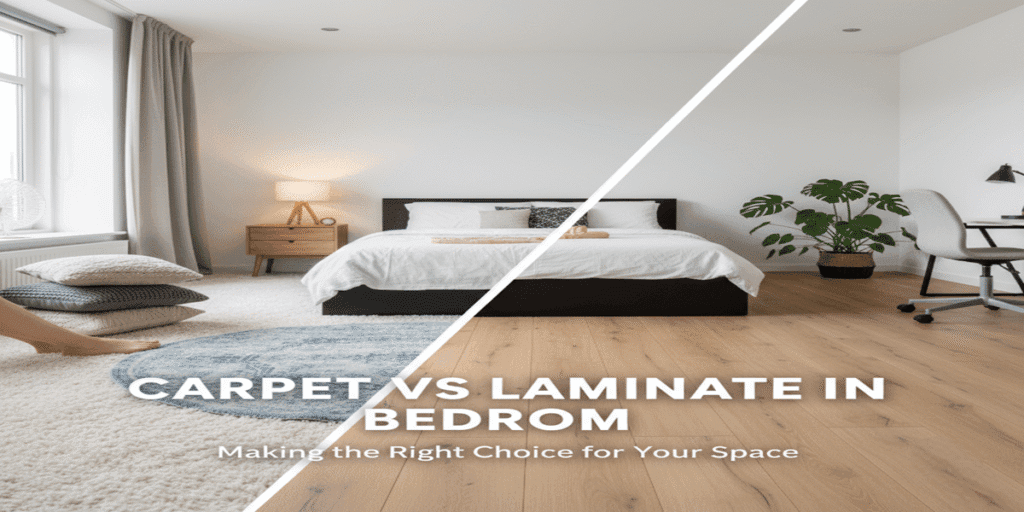
A 6 lb pad acts as a low traffic bedroom carpet pad. It feels soft, stays quiet, and keeps the carpet cozy under bare feet. This density pairs well with plush or textured carpets where the goal centers on comfort more than impact resistance. A child’s room with constant play may still benefit from an 8 lb pad for extra support. If you’re still deciding on the surface itself, our breakdown of carpet vs vinyl plank in bedrooms shows how each option feels and performs over different types of padding.
For most sleeping areas, start your shortlist with a 6 lb bedroom carpet pad, and for kids’ rooms or multipurpose spaces, compare it with an 8 lb carpet pad for high traffic rooms.
Living rooms, family rooms, and hallways: steady traffic
An 8 lb pad serves as dependable high traffic carpet padding in the busiest parts of the home. These rooms see daily movement, rolling toys, pets, and repeated patterns that can crush looser padding. Many consumers ask, “Is 8 lb carpet padding better than 6 lb?” for these spaces, and the simple answer is yes. The firmer base slows wear and protects the backing.
Stairs and landings: maximum control
Stairs benefit most from a dense pad, and the best carpet pad for stairs often falls in the 8 lb range. A firm pad reduces movement at stair edges and keeps each step tight against the tread. Loop styles like Berber also match well with strong support, meeting Berber carpet padding requirements in many guides.
If you’re updating a staircase, look for 8 lb stair-rated carpet padding and, for loop styles, firm padding designed for Berber on stairs to keep edges tight and safe over time.
Basements and concrete slabs: moisture and temperature shifts
Basements often pair well with a carpet pad with moisture barrier. Either density works, though an 8 lb pad tends to feel more stable on a concrete slab. Basement carpet padding options often include rubber carpet underlayment or frothed foam for moisture control. Warmer rooms benefit from padding with a solid R-value, no matter the density. If your home has a history of dampness, it’s smart to check for signs your carpet has mold before you install a new pad.
To narrow things down quickly, search for carpet pad with moisture barrier for basements or rubber carpet underlayment for concrete slabs and filter by density, thickness, and R-value.
Home offices, rentals, and mixed-use spaces
A rolling chair creates steady pressure, so an 8 lb pad handles this load with less crushing. Rentals also benefit from higher density because carpets last longer between turnovers. For mixed layouts, some homeowners ask, “Can you mix 6 lb and 8 lb carpet pad in one house?” Yes. Many installers place softer pads in bedrooms and firmer pads in traffic zones.
A simple pattern emerges: soft zones lean toward 6 lb, busy zones lean toward 8 lb. This helps each room reach the right blend of comfort, sound control, lifespan, and support.
Cost, warranty, and long-term value of 6 lb vs 8 lb carpet pad
The cost gap between 6 lb and 8 lb carpet pad is small, yet the long-term value can shift based on traffic levels and carpet type. A 6 lb rebond carpet cushion often starts at a lower carpet pad cost per square foot, while an 8 lb rebond carpet pad brings extra strength for busy rooms and stairs. This section compares price, warranty rules, and lifespan so you know which density supports your flooring for the longest time.
A 6 lb pad usually fits light or moderate homes where comfort matters more than firmness. Many homeowners choose it for low traffic bedroom carpet pad needs or guest rooms where wear stays low. An 8 lb pad fits living rooms, hallways, and stair runs because high traffic carpet padding needs stronger density to stop crushing and protect fiber shape.
Price comparison: 6 lb vs 8 lb carpet pad
A 6 lb pad often lands at the lowest price in the residential range, while an 8 lb pad costs a bit more per square foot. Even with that bump, the total difference in a normal room stays small because padding is a tiny slice of the full carpet bill. This makes “upgrading” to an 8 lb density an easy choice for rooms with kids, pets, or rolling chairs.
Price Example (Typical Ranges):
- 6 lb pad: Lower price range
- 8 lb pad: Slightly higher range
- Memory foam carpet pad or rubber carpet underlayment: Highest range
A small cost increase can bring longer carpet life, fewer wrinkles, and better support for traffic lanes.
Warranty and building code requirements
Many brands use formal carpet warranty padding guidelines that set minimum density and carpet padding thickness. Most standard plush carpets accept 6 lb or 8 lb pads, though looped styles like Berber may call for firmer support to meet Berber carpet padding requirements. Some pads with the FHA Class II carpet cushion label meet common code rules for multi-family installs.
A key question for any room is simple: Does the pad match the carpet maker’s chart? Matching those specs keeps coverage active and avoids early wear in corners, seams, and transitions.
Lifespan, replacement cycles, and ROI
An 8 lb pad holds its shape longer in busy rooms because higher carpet pad density resists pressure better. That longer lifespan brings more return on each dollar spent since the carpet stays smoother and firmer over time. A 6 lb pad can still last many years in quiet spaces like guest bedrooms where pressure stays low.
If you want fewer replacements in high-use zones, the denser pad usually wins. This is why many carpet padding recommendations for high traffic families lean toward 8 lb density. It reduces denting, extends fiber life, and keeps the carpet looking fresh longer.

How to choose between 6 lb and 8 lb carpet pad in 5 clear steps
Choosing the right density takes five quick checks: traffic, carpet style, thickness, moisture needs, and budget. These steps help you decide where a 6 lb pad fits and where an 8 lb density keeps your carpet smoother and stronger. This guide works in any home, whether you want softer bedrooms or higher support for stairs.
Step 1: Define each room’s traffic and usage
Start by looking at foot traffic. Quiet rooms like guest spaces or offices without rolling chairs can use softer 6 lb foam. Busy spaces like family rooms, hallways, or stairwells benefit from 8 lb density so the carpet avoids flattening.
Ask yourself: Will this room see kids running, pets moving, or daily use? The higher the activity, the stronger the pad needs to be.
Step 2: Match pad density to carpet type and room use
Cut-pile carpets in bedrooms often feel great on a 6 lb base. Tight looped carpets, including Berber, often sit cleaner and more even on 8 lb. This match supports the backing, stops ripples, and protects seam edges.
For stairs and hallways, many installers choose the best carpet pad density, typically 8 lb at a moderate thickness.
Step 3: Check thickness, moisture, and subfloor
Most homes use a thickness between 3/8 inch and 7/16 inch. Thicker pads feel soft, yet some carpets need a slimmer base to stop movement. In basements or slab spaces, a carpet pad with moisture barrier helps limit vapor transfer and keeps the surface warm, fitting well with basement carpet padding options.
If you use radiant heat or concrete, a firm 8 lb pad with a barrier often brings better insulation and a safer carpet cushion R-value.
Step 4: Confirm warranty and installer recommendations
Each carpet brand posts a simple chart for padding density and thickness. Match your pad to that chart, and you avoid warranty problems. Installers see traffic patterns daily, so a quick check with them adds clarity for rooms that sit between choices.
Step 5: Compare bids and choose value, not just price
Price differences between 6 lb and 8 lb stay small in most rooms. Look at durability, room purpose, and expected lifespan before picking the lowest bid. If the question is how long does 8 lb carpet padding last compared with lighter foam, the denser pad usually stays stronger for more years, which offsets the upfront cost. You can stretch your budget even further by choosing the best time to buy carpet and padding before you commit to your installation date.
When you’re ready to shop, it helps to open a filtered list of carpet padding options that match 6 lb and 8 lb density and compare thickness, warranties, and reviews side by side.
Common mistakes and myths about carpet padding density
Many carpet problems start with the wrong pad density, thickness, or material. These common mistakes help explain early wear, crushed pathways, or loose carpet on stairs. A quick look at these myths keeps your carpet smoother and stronger for longer.
Mistake 1: Thinking thicker padding brings better comfort
Thicker is not always better. Extra thickness can create movement under looped carpet, which leads to ripples and early wear. Many carpets stay stable with moderate thickness paired with the right density.
Mistake 2: Ignoring density and focusing only on carpet quality
A high-quality carpet still needs the right base. Light foam can sag under heavy use, even if the carpet itself is premium. This is why density sits at the center of carpet padding types and materials.
Mistake 3: Using the same pad in every room
Bedrooms with low pressure can use softer 6 lb pads, but stairs and hallways need firmer material to stop edge damage. Each room has its own needs, which is why many homeowners ask if they can you mix 6 lb and 8 lb carpet pad in one house. The answer is yes, and it often leads to better results.
Mistake 4: Overpaying for very high density in light-use rooms
A 10 lb or rubber carpet underlayment brings strong support, yet this can feel too firm for bedrooms or playrooms. In quiet spaces, a simple 6 lb pad feels softer and works well for long spans with light use.
Mistake 5: Skipping moisture and air-quality questions
Basements and slab floors often need a carpet pad with moisture barrier to reduce vapor and support insulation. Homes with allergies may benefit from a hypoallergenic low-VOC carpet pad to keep odors and dust lower. These small upgrades make a big difference in comfort and care. It’s also important to dry carpet properly after cleaning so moisture doesn’t get trapped in the pad and lead to future mold problems.

Frequently Asked Questions
Is 8 lb carpet padding really better than 6 lb?
8 lb carpet padding has higher carpet pad density, so it gives firmer support, better shape, and longer wear in busy spaces. Many installers pick 8 lb as high traffic carpet padding for family rooms, hallways, and stairs, while 6 lb works well in softer, quieter rooms.
For a 6 lb vs 8 lb carpet pad for living room choice, a busy family space with kids or pets often suits 8 lb, and a formal sitting room with light use can feel great with 6 lb.
Is 6 lb carpet pad good enough for most homes?
A quality 6 lb carpet pad is good enough for many homes, especially when used as a low traffic bedroom carpet pad or under guest room carpet. It still supports the backing, adds comfort, and can match many carpet warranty padding guidelines when paired with the right carpet.
Homeowners often pick 6 lb rebond carpet cushion under plush carpet in bedrooms, nurseries, or home offices, where foot traffic stays low and a soft feel matters more than maximum firmness.
What thickness carpet pad should I use with 6 lb or 8 lb density?
Most residential setups use carpet padding thickness between 3/8 inch and 7/16 inch for both 6 lb and 8 lb pad density. Thicker pads near 7/16 inch feel softer underfoot, and thinner pads near 3/8 inch with 8 lb density give more support in busy rooms.
For what thickness carpet pad for 8 lb density, many pros like 3/8 inch under hallways, stairs, and high traffic carpet padding zones. Bedrooms and media rooms often feel better with a slightly thicker 7/16 inch pad at 6 lb or 8 lb, checked against carpet warranty padding guidelines.
Which is better for stairs and hallways: 6 lb or 8 lb carpet pad?
The best carpet pad density for stairs and hallways is usually 8 lb, paired with a thinner pad around 3/8 inch. This mix gives firm support at the stair nose, keeps the carpet tight, and helps reduce crushing in these constant use areas.
Many pros call 8 lb rebond carpet pad the best carpet pad for stairs, entry halls, and main walkways. A 6 lb pad can still work in short, gentle runs, yet 8 lb often looks better over time in a busy household.
Can I use different carpet pad densities in different rooms?
Yes, you can mix 6 lb and 8 lb carpet pad in one house, as long as each pad meets the carpet maker’s rules. Many room by room guide to carpet padding charts show softer 6 lb in bedrooms and stronger 8 lb in stairs, hallways, and living rooms.
This mix lets you match each room to its traffic level and comfort goal. You still keep one carpet style across the floor plan while the pad under it changes from low traffic bedroom carpet pad to high traffic carpet padding where needed.
Is 10 lb carpet padding too firm compared to 6 lb and 8 lb?
A 10 lb carpet pad feels firmer than 6 lb and 8 lb, so some people love it under low pile or Berber carpet, and others find it too hard under plush styles. Many residential jobs land in the 6–8 lb range, with 10 lb used in select high wear spaces.
Very firm pads and rubber carpet underlayment can suit commercial-like areas or home offices with rolling chairs. For a soft feel in a bedroom, a 6 lb rebond or a memory foam carpet pad often wins, while 8 lb sits in the middle as a balance of comfort and support.
How long should 6 lb vs 8 lb carpet pad last before replacement?
In a typical home, a 6 lb pad in a light use room can last around the same time as the carpet, and an 8 lb pad in a busy room can keep support longer under the same carpet. Many flooring pros see 8 lb hold its shape better in high traffic areas over a decade or more.
Conclusion
The choice between a 6lb vs 8lb carpet pad shapes how your floors feel, wear, and sound over the next decade. By matching carpet pad density, carpet padding thickness, and room traffic, you support comfort, carpet life, and many carpet warranty padding guidelines in a simple, practical way.
A softer 6 lb rebond carpet cushion suits low traffic bedroom carpet pad needs, guest rooms, and nurseries. A firmer 8 lb rebond carpet pad works better as high traffic carpet padding for stairs, hallways, and busy living rooms, especially when you add a carpet pad with moisture barrier over a basement or concrete slab. Take a moment to walk through your home on paper and label each space as quiet, moderate, or busy. Then pick pad specs that match those labels or ask a trusted installer to confirm density and thickness before you buy, so each room gets the support it needs from day one.