Disclosure: Classy Floor is reader-supported. As an Amazon Associate, we earn from qualifying purchases. We may also earn commissions from other affiliate programs, at no additional cost to you. Learn more →
Do footprints, vacuum lines, and early matting mean you picked the wrong cut pile? In the textured vs plush carpet debate, the real difference sits in twist, density, and pile height, the same details that control comfort, shading, and how a room looks in daylight. Plush (velvet-style) can look smooth and rich, yet it shows tracking fast; textured cut pile (often textured Saxony) hides marks and wear better.
This guide helps homeowners, landlords, and designers choose with clear criteria, not guesswork. You’ll see a room-by-room fit, cleaning realities (brush roll settings matter), and cost drivers like padding firmness and install details. You’ll get a practical checklist plus trust anchors such as low-emission labeling (CRI Green Label Plus) so your pick feels good, looks right, and holds up.
Textured vs plush carpet: key differences in one table
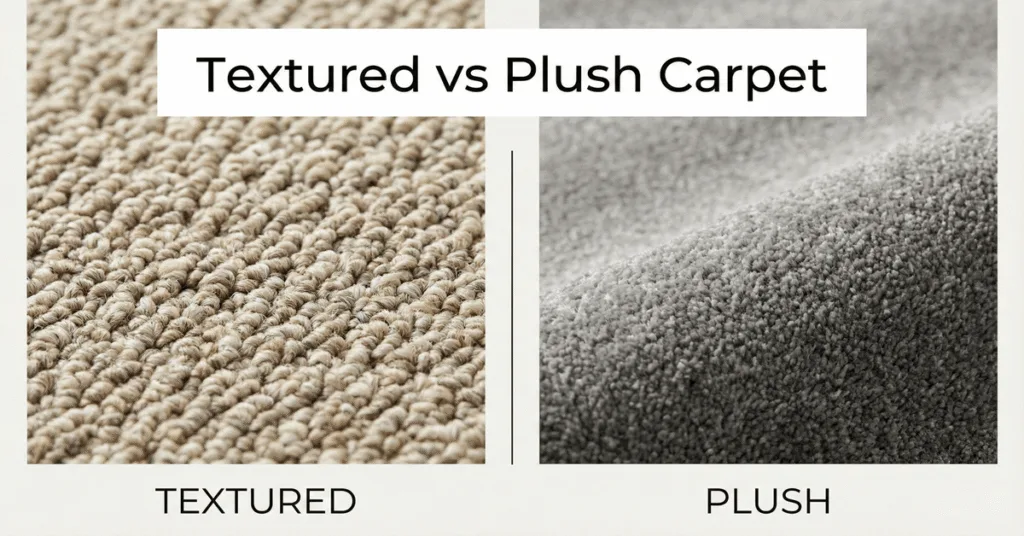
Textured vs plush carpet comes down to cut-pile construction and how it reacts to light, traffic, and cleaning. If you want the quick foundation, start with cut pile vs loop pile basics. Plush (velvet-style) cut pile has a smooth surface that shows footprints and vacuum marks fast. Textured cut pile (often sold as textured Saxony) uses higher twist level and surface variation that hides tracking and daily wear.
Most shoppers feel the difference first, then get surprised later by what they see. A plush bedroom can look rich at night and still show shading by noon. A textured living room can feel slightly less “velvet,” yet it keeps a steadier look with kids, pets, and frequent vacuuming.
Here is a quick comparison you can screenshot and take to the store. Want a fast gut-check? If your eye goes straight to footprints on display samples, plush may annoy you long-term.
| Feature | Plush / velvet cut pile | Textured cut pile (textured Saxony) |
| Look in real light | Smooth, formal, more sheen | Soft texture, casual, hides shading |
| Footprints / vacuum marks | High visibility | Lower visibility |
| Comfort | Very soft underfoot | Soft, slightly more “spring” |
| Wear in traffic | Can show matting/crushing sooner | Hides wear better; still can crush over time |
| Best rooms | Bedrooms, low-traffic sitting rooms | Living rooms, hallways, family spaces |
| Shopping specs to watch | Carpet density and pile height matter a lot | Twist level, density, and patterning matter most |
| Air quality label to ask for | Look for low-VOC options and CRI Green Label Plus on carpet, pad, adhesive | Same request applies |
If you plan to compare two samples, ask for the face weight and check the density by pinching the tufts. If you’re unsure how tall pile affects tracking and wear, this guide on how pile height changes durability makes the tradeoffs easy to spot. Does the backing show fast when you spread the yarn? That sample often shows marks and wears faster in a busy room.
A simple next step: pick the room first, then pick the pile. The look section next helps you predict what you will see every day.
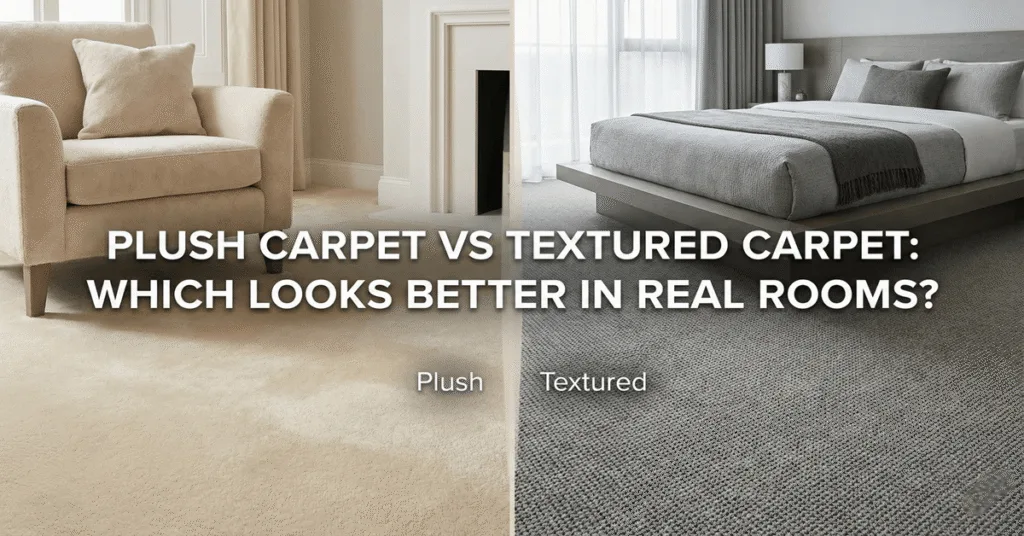
Plush carpet vs textured carpet: which looks better in real rooms?
Plush and textured carpet can both look “high-end,” yet they create different visuals once sunlight, lamps, and foot traffic hit the floor. Plush reflects light in a smooth sheet, so nap direction and shading stand out. Textured cut pile breaks up reflection, so the same room looks more even across the day.
Design taste plays a role, yet daily life plays a bigger role. A plush carpet in a formal lounge can look sharp, then show vacuum stripes after one pass. A textured Saxony in a family room can look relaxed, then stay consistent after kids run through.
Plush carpet appearance: velvet look, shading, and “tracking” expectations
Plush carpet gives a clean, tailored surface with a “velvet” finish. The fibers lay in one direction, so footprints and vacuum marks press the pile and change how light bounces back. Do you like crisp vacuum lines, or do you want a surface that looks untouched all week?
Shading is not rare on plush. It often shows up as light and dark areas that shift as you walk around the room or change viewing angle. A rug, an ottoman, and a sunny window can make this effect stronger.
Textured carpet appearance: multi-tone/twist, how it hides marks and wear
Textured carpet uses a tighter twist and surface variation that scatters light. That texture blurs the edges of footprints and reduces the “one big shadow” look in open spaces. Many textured styles use subtle color flecks or heathering that makes traffic lanes less obvious.
Texture can hide minor wear, yet it can hide crumbs, too. In a dining-adjacent space, a textured cut pile can look clean from across the room, then hold grit deep in the pile if vacuuming slips.
Color and pattern choices that reduce footprints
Color choice changes the footprint story more than most people expect. Dark solids and high-sheen yarn show tracking fast, even on textured carpet. Mid-tones with flecking look calmer in daily use.
A practical store move: hold the sample under bright light, brush it with your hand, then look from two angles. If the sample “flashes” light to dark with tiny movement, your room will show shading too.
Next up: looks are only half the decision. The durability section ties twist, density, and pile height to traffic, stairs, kids, and pets.
Textured vs plush carpet for durability: traffic, stairs, kids, and pets
Textured vs plush carpet durability depends on fiber type and the build: carpet density, twist level, and pile height set the baseline for resilience. Plush cut pile can compress and show matting/crushing sooner in busy lanes, even with good vacuuming. Textured cut pile tends to disguise wear and recovers its look better in medium-to-high traffic rooms.
Start with how the room gets used. A quiet bedroom asks for comfort and a calm look. A hallway asks for grit resistance and a surface that does not telegraph every step.
Which carpet shows footprints more: plush vs textured?
Plush shows footprints and vacuum marks more than textured carpet in most homes. The smooth surface acts like a canvas for tracking, so small pile shifts look dramatic. Textured Saxony adds variation, so the same pile shift blends in.
Do you want the room to look “freshly vacuumed” all the time, or “consistently clean” even between cleaning days?
Quick checklist: “If you hate footprints/vacuum marks, choose…”
- Choose textured cut pile with higher twist and visible surface variation
- Pick a mid-tone or heathered color, not a dark solid
- Favor higher carpet density over extra pile height
- Use a pad that feels supportive, not squishy, under your heel
Best carpet pile for stairs: plush vs textured (and when neither is ideal)
Stairs punish carpet. The pile bends at the same points every day, so low twist and low density show wear fast. Textured cut pile usually performs better on stairs than plush, since it hides traffic patterns and holds shape longer.
Some homes do best with a tighter, lower pile on stairs than either classic plush or soft textured Saxony. Ask the retailer for a stair-rated option and check the warranty language for texture retention and exclusions.
Best option for pets and kids: texture choices + fiber tradeoffs
Pets and kids bring claws, spills, grit, and fast cleanups. A textured surface helps hide tracking, yet it needs consistent vacuuming to pull out hair and sand. Plush feels great for play, then shows traffic lanes faster, especially in darker colors.
Fiber matters here. Nylon often rates well for resilience, triexta can handle many stain scenarios, and polyester can feel soft for the price, so it helps to review a nylon vs polyester durability trade-off before you buy, though it may show wear sooner in busy zones. If you’re considering triexta specifically, this breakdown of SmartStrand vs nylon for pets helps you decide based on stains, traffic, and cleanup.
If you feel torn, pick one sample of plush and one textured option, then test both under your own lighting for two days. The next sections on cleaning and cost make that final call easier.
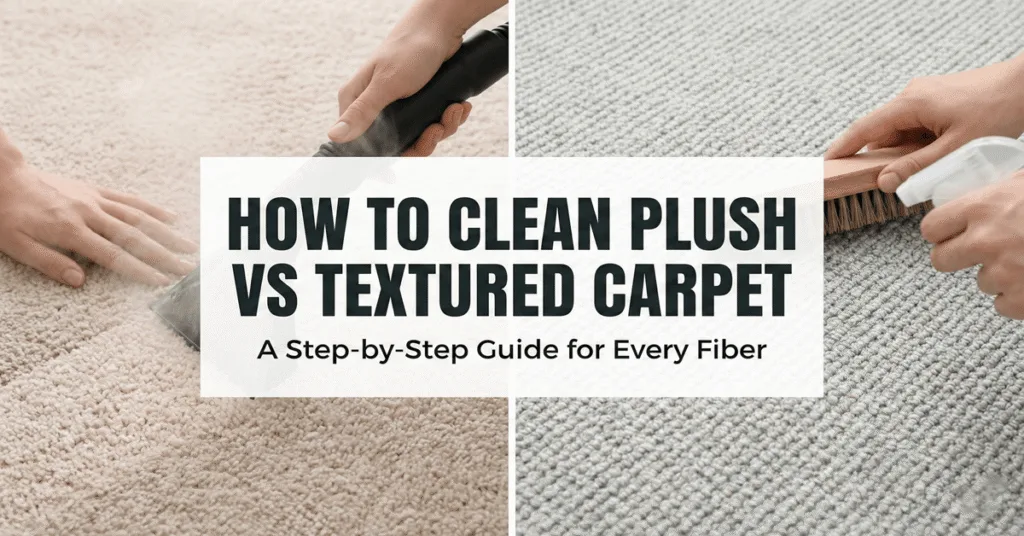
How to clean plush vs textured carpet: vacuuming, stains, and matting
Plush/velvet cut pile and textured cut pile (textured Saxony) clean well with the same basics, yet the settings and timing change the outcome. Plush shows footprints/vacuum marks and can flatten faster, so a gentle vacuum setup and fast spill control matter. Textured carpet hides tracking better, but it can hold grit deeper, so consistent soil removal matters more.
Vacuuming plush carpet without flattening it (settings + frequency)
Plush carpet needs a vacuum that lifts soil without “scrubbing” the tips of the pile. Use a brush roll with height adjustment, then raise the head until the vacuum glides and the pile stands up after a pass. CRI recommends at least weekly vacuuming, with more passes in busy zones like entries, halls, and stairs.
Do you see stripes that stay for hours? That is a cue to reduce brush aggression, slow your pace, and make fewer repeat passes in the same lane.
Vacuuming textured carpet for grit removal (high-traffic routines)
Textured cut pile hides marks, so dirt can build before it “looks dirty.” Treat entry lanes like a maintenance zone: vacuum them more often than bedrooms, and spend time on edges where soil collects. A vacuum and cleaning products with the CRI Seal of Approval add a simple trust check for performance and fiber safety.
Spill and stain response steps (first 15 minutes template)
Fast action protects both plush and textured carpet, since stains bond as the spill dries. Use this short routine:
- Blot with white towels; press, do not rub.
- Scoop solids with a spoon or dull edge.
- Rinse lightly with cool water; blot again.
- Use a CRI SOA spotter, then blot from edge to center.
- Rinse once more; blot until nearly dry.
- Put a dry towel under a weight for 30–60 minutes.
- If odor stays after drying, call a cleaner for sub-surface treatment.
Professional cleaning cadence and what to document for warranties
Deep cleaning removes embedded soil that vacuuming cannot reach. CRI points to professional deep cleaning about every 12–18 months, and some manufacturers tie warranty coverage to that schedule and ask for invoices.
Maintenance schedule by room (quick checklist)
| Room/zone | Vacuum | Spot care | Deep clean |
| Bedrooms | weekly | as needed | every 12–18 months |
| Living rooms | 1–2× weekly | as needed | every 12–18 months |
| Halls/entries/stairs | 2–4× weekly | as needed | every 6–12 months |
Next step: once cleaning feels predictable, cost decisions get easier, since pad choice and maintenance tie straight into lifespan.
Plush vs textured carpet cost: material, pad, installation, and lifetime value
The installed cost of plush vs textured carpet rarely changes just from the surface look; fiber (nylon, polyester, triexta, wool), density, and job conditions move the number more. In many U.S. markets, Homewyse estimates carpet installation starting around $5.26–$7.69 per sq ft (Oct 2025 baseline), and other consumer cost guides show wide spreads by material grade and scope.
A useful question: Is a low bid still low after pad, removal, stairs, and floor prep land on the invoice? That is why comparing line items beats comparing one “installed” number.
Average price ranges: plush vs textured (what actually changes the price)
Plush/velvet cut pile can sit in many price tiers, from entry polyester to premium nylon. Textured Saxony often lands in the same tiers, yet higher twist and higher density can raise material cost. Labor shifts with room shape, stairs, furniture moving, old carpet removal, and transitions.
Cost breakdown (per sq ft view)
| Line item | What moves it most |
| Carpet material | fiber, face weight, density, patterning |
| Padding/cushion | thickness, firmness, moisture barrier options |
| Install labor | stairs, seams, room shape, furniture |
| Removal/disposal | old carpet/pad, tack strip, staples |
| Extras | transitions, subfloor repair, baseboard work |
Carpet padding cost and why “too soft” can shorten life
Padding changes feel, sound, and how the pile rebounds. Plush carpet on overly soft cushion can show matting sooner, since the pile compresses deeper under foot traffic. Ask for pad specs in writing (thickness and density) so you can compare bids on equal footing.
Lifetime value: when a more durable texture saves money
Think in “cost per year,” not “cost per sq ft.” A simple check: (installed price) ÷ (expected years in that room). A textured cut pile with higher twist and density can win in halls and stairs, even if the bid is higher, since replacement and disruption cost more than the upgrade.
Warranty terms to compare
| Term | What to look for |
| Texture retention | exclusions tied to matting/crushing |
| Professional cleaning | timing (often 12–18 months) + proof required |
| Stain/soil coverage | what chemicals void coverage |
| Installation rules | pad spec limits, seam rules |
Price data changes. Refresh the cost section quarterly, then keep a stable method: compare line items, pad specs, and expected life. In Search Console, track non-branded queries (“plush vs textured carpet cost”) apart from branded traffic and add notes on major edits and rollout windows.
How to choose the right carpet: specs checklist for plush and textured
The fastest way to pick plush or textured carpet is to read the construction signals that control real performance: density, face weight (oz), pile height, twist level, backing, plus pad firmness and seam placement. Plush carpet rewards high density and controlled pile height. Textured Saxony rewards twist and recovery, since that is what keeps traffic lanes from looking tired.
Carpet specs that matter most for plush (density, pile height, twist)
Plush looks best when the pile stands upright and stays even. Favor higher density over extra height, since tall plush can show tracking and shading faster. Ask for face weight and pile height on the spec sheet, then compare two options with similar fiber (nylon vs polyester) so the numbers mean something.
Carpet specs that matter most for textured (twist, multi-tone, recovery)
Textured cut pile hides marks through twist and light scatter. Look for a tighter twist level and a denser build, since loose twist can relax in busy lanes. A heathered color can reduce visible footprints without sacrificing a clean look.
In-store test: the 5-minute “bend, brush, and pinch” checks
Use quick checks that match what happens at home:
- Bend a sample to see backing and stitch tightness; tight rows signal density.
- Brush the pile with your hand; see how fast it springs back.
- Pinch the pile; dense carpet feels firm, not airy.
- Press your thumb hard; watch how long the dent lasts.
- View the sample in side light; plush will show shading more.
Installer questions that prevent seams and shading complaints
Ask where seams will land, how they will align pile direction, and which pad spec the warranty allows. Ask about door transitions, stair wrapping method, and subfloor prep for squeaks. Get each answer on the work order so the install matches the quote.
Take-to-the-store scoring checklist (0–2 each)
| Criteria | 0 | 1 | 2 |
| Density feel | soft/airy | medium | firm/tight |
| Pile height fit | too tall | moderate | room-appropriate |
| Twist/recovery | relaxes fast | average | snaps back |
| Footprint tolerance | hates marks | ok with some | fine with marks |
| Cleaning reality | low effort only | moderate | ok with routine |
Next step: once you pick a product, IAQ and safety choices (low-VOC, moisture control, flammability rules) keep the install comfortable and compliant.
Indoor air quality and safety: low-VOC labels, moisture, and flammability rules
Carpet IAQ and safety come down to three controllable pieces: VOC emissions from carpet/pad/adhesive, moisture management during install and cleaning, and basic flammability compliance. If allergies are the main concern, see allergy-friendly carpet choices for fiber and maintenance picks that tend to work better in real homes. CRI Green Label Plus flags low-emitting carpet, cushion, and adhesives, and the EPA notes that VOCs often come from building materials and household products in indoor air.
Low-VOC carpet, pad, and adhesive: what “Green Label Plus” means
Green Label Plus is a voluntary testing program that identifies low-emitting products across the flooring system, not just the carpet face. Look for the label on the carpet, the cushion, and the adhesive, then keep the product names on your invoice for records.
If someone in the home gets headaches from new materials, start with ventilation and product documentation, then talk with the installer about swapping adhesive or cushion to a certified low-emitting option.
Carpet and moisture: when plush or textured becomes a mold risk
Moisture problems come from trapped water in the backing and pad, not from plush or texture alone. Over-wetting during DIY extraction, slow drying in humid weather, and wet subfloor conditions raise risk. Use these drying steps after deep cleaning to cut dry time and lower the chance of odor or mold. CRI advises deep cleaning on a schedule that removes embedded soil, yet drying time still matters after any hot water extraction.
Flammability standards for carpet and rugs (what homeowners should know)
In the U.S., the CPSC enforces surface flammability standards for carpets and rugs under 16 CFR Parts 1630 and 1631. These rules target ignition risk from small sources and set test methods for compliance.
Most homeowners meet this by buying mainstream residential carpet from established retailers, then keeping product labels and receipts in case a claim or inspection comes up.
Low-emission + moisture-safe install checklist
- Choose carpet, cushion, and adhesive with CRI Green Label Plus.
- Ventilate during install; run HVAC fan if available.
- Keep indoor humidity controlled during curing and drying.
- Avoid soaking the pad during spot cleaning or extraction.
- Ask the installer to fix subfloor moisture issues before laying cushion.
- Save invoices, product labels, and cleaning receipts for warranty files.
- Recheck program pages yearly since standards and certified lists can change.
Frequently Asked Questions
Is textured carpet better than plush for high-traffic areas?
Yes, textured cut pile (often textured Saxony) fits high-traffic halls and family rooms more often than plush/velvet. Higher twist level plus strong carpet density resists matting/crushing and hides wear. Pick nylon or triexta in busy zones, then pair it with firm carpet padding to keep the pile from collapsing.
Which carpet shows footprints more: plush or textured?
Plush carpet shows footprints/vacuum marks more than textured cut pile. The smooth surface reflects light in one direction, so shading appears fast, even after normal vacuuming. If you like plush, choose a mid-tone, raised density, and use a vacuum with correct height plus a gentle brush roll setting.
What is the best carpet type for stairs: plush or textured?
Textured cut pile wins on stairs in most homes. Stairs compress carpet at the nose, so higher density and tighter twist hold shape longer and reduce flattening. Look for lower pile height, solid face weight, and a stair-rated pad; seam placement and proper stretching matter as much as the carpet style.
How much does plush vs textured carpet cost installed per square foot?
Installed price usually tracks fiber and specs more than the surface look. Many plush and textured carpets land in the same band, then swing by nylon vs polyester, face weight, and pad choice. Ask quotes that separate carpet, padding, labor, and removal so you can compare “like for like” across two bids.
How long does plush carpet last compared to textured carpet?
Textured cut pile often keeps its appearance longer in active rooms, since it disguises tracking and rebounds better after compression. Plush can last well in bedrooms, yet it shows wear cues sooner in living spaces. Life rises with higher density, tighter twist, firm padding, and routine hot water extraction on schedule.
What are the most common mistakes when choosing plush carpet?
People buy plush for softness, then regret visible shading and marks after week one. Another miss: pairing plush with extra-soft padding, which speeds crushing in traffic lanes. Bring a sample home, view it under your evening lights, and check the label for pile height, density, and warranty exclusions.
What’s the best plush or textured carpet for pets and kids?
For pets and kids, textured cut pile in nylon or triexta stays forgiving and cleans up well after spills. Keep pile height moderate, push density high, and pick a color with heathering to mask daily mess. Want plush comfort in a playroom? Choose a denser plush and plan for visible vacuum marks.
Conclusion
Carpet choice gets easier when you judge cut pile by what drives daily results: twist level, carpet density, pile height, face weight, and the right carpet padding. Those details shape comfort, tracking, and how quickly matting and crushing show up in real rooms. You now have a clear way to match the floor to your traffic, pets, and tolerance for footprints and vacuum marks.
Before you buy, take a sample home and view it under your lighting, then ask for quotes that separate carpet, pad, and labor. Check warranty language and ask for low-emission options, including CRI Green Label Plus, if indoor air quality matters in your space. Which room needs softness, and which room needs forgiveness?
Use the checklist and the cost breakdown to choose with confidence, then share your room and lifestyle needs if you want a second set of eyes on textured vs plush carpet.