Disclosure: Classy Floor is reader-supported. As an Amazon Associate, we earn from qualifying purchases. We may also earn commissions from other affiliate programs, at no additional cost to you. Learn more →
Is a soft, budget-friendly polyester carpet a smart pick for a real home with spills and foot traffic? This guide breaks down polyester carpet pros and cons using the same details shoppers compare in-store: PET (polyethylene terephthalate) fiber, pile style, carpet density, carpet padding, and the way polyester stacks up against nylon carpet and triexta carpet.
Many buyers want comfort and stain resistance, then get surprised by matting, traffic lanes, or oil stains after a kitchen mishap. The article shows what performance comes from the fiber and what performance comes from construction, then maps polyester carpet durability to specific rooms and lifestyles, including the common question, “Is polyester carpet good for bedrooms?” You will get a room suitability matrix, a comparison table, and a showroom checklist that points to manufacturer spec sheets and Carpet and Rug Institute (CRI) programs like Green Label Plus and CRI Seal of Approval for cleaning.
Polyester carpet pros and cons (quick verdict + who it’s for)
Polyester carpet made from PET (polyethylene terephthalate) usually wins on softness, price, and many water-based spill situations, yet polyester carpet can show matting and traffic lanes sooner than nylon carpet or triexta carpet in busy rooms. Check the doc on nylon vs polyester for high-traffic rooms if you’re deciding for hallways, stairs, or family spaces.
Polyester carpet fits best when comfort matters and foot traffic stays low to moderate, such as bedrooms or guest rooms. Polyester carpet can disappoint on stairs, hallways, and family rooms where pile recovery matters every day.
Polyester carpet shoppers get the best results when the carpet construction supports the fiber. A dense, textured pile style with decent twist level hides footprints and helps appearance retention (see textured vs plush for hiding footprints). A thick plush with low density feels great in the showroom, then crushes fast in real life.
| Pros | Cons |
| Soft feel underfoot | Lower resilience; matting/crushing risk in high traffic |
| Often strong value per square foot | Oil/grease stains can set without fast action |
| Many water-based spills resist soaking into PET fiber | Soil can cling after spills if residue remains |
| Color can look bright; solution-dyed polyester can resist fading well | Quality varies; “polyester” covers wide spec ranges |
| Recycled-content PET options exist | End-of-life recycling can be limited by backing systems |
Best for / avoid if (fast decision)
- Best for: bedrooms, guest rooms, low-traffic living spaces, budget refreshes, rentals with short ownership windows.
- Avoid if: busy hallways, stairs, homes with frequent greasy cooking spills, open-plan traffic paths that create clear traffic lanes.
Pros of polyester carpet (what it does well in real homes)
Soft feel and comfort underfoot
Polyester carpet feels plush at a given price point, especially with a good carpet padding choice. A quality pad changes feel and can reduce early crushing. Compare 8 lb vs 10 lb carpet pad differences to match traffic and pile style.
Water-based stain resistance and color clarity (especially solution-dyed PET)
PET fiber tends to resist absorbing many water-based spills, so quick blotting often prevents a permanent mark, especially when you compare triexta vs polyester for stains and traffic in real-life cleanup. Solution-dyed polyester carpet keeps color in the fiber, which can improve fade resistance and reduce color loss from routine cleaning.
Budget-friendly material cost and wide style selection
Polyester carpet shows up in many styles and colors, from textured patterns to frieze looks. The low entry price lets many buyers move money toward better carpet padding or professional installation quality.
Recycled-content options (PET from bottles) and common “eco” positioning
Some polyester carpet uses recycled PET content. Manufacturer spec sheets usually state recycled content and dye method, so buyers can compare like with like.
Cons of polyester carpet (where buyers get disappointed)
Lower resilience in high-traffic areas (matting, crushing, “traffic lanes”)
Polyester carpet fibers recover less after repeated compression than nylon carpet in many builds. The first visible sign is often a darker “lane” through a hallway, even when the carpet is clean.
Oil/grease stain vulnerability and soil attraction after spills
Grease and cooking oil can bind with soil, then make a dark spot that basic water-based cleaners miss. Fast blotting and a CRI Seal of Approval spot cleaner reduce the risk, yet old oil stains can linger.
Performance varies widely by construction (cheap vs “high-performance” polyester)
A label that says “polyester” does not reveal density, face weight, or twist level. Those specs shape durability more than marketing words.
Sustainability caveats (recycling reality, microplastic shedding, end-of-life limits)
Recycled content does not always mean the whole carpet can be recycled later. Backing systems and adhesives can block easy recycling in many regions.
How polyester carpet performs (durability, stains, fading, feel)
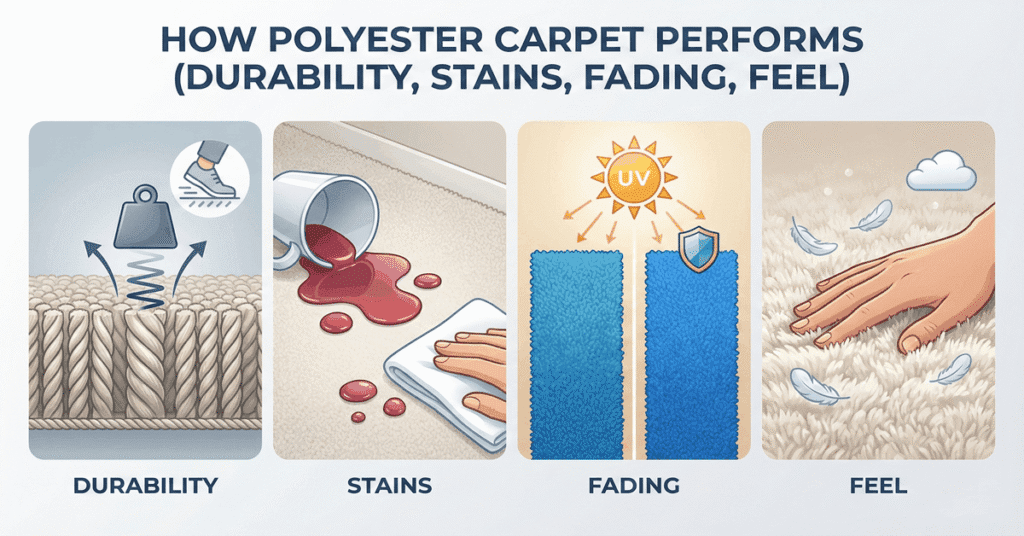
Polyester carpet performance comes from PET fiber traits plus carpet construction, so the same fiber can feel great in one product and fail early in another. Polyester carpet durability often falls behind nylon carpet and triexta carpet in high-traffic use, yet solution-dyed polyester can shine on fade resistance and many water-based stain events. Buyers should judge polyester carpet with measurable specs such as carpet density, twist level, pile style, and carpet padding.
Polyester carpet durability in high-traffic areas (matting vs wear)
What “resilience” means: crushing, matting, pile recovery
Resilience means the yarn springs back after feet and furniture compress the pile. Polyester carpet can flatten in busy pathways, then show permanent shading that looks like wear.
Construction that improves durability: density, twist level, textured styles
High density supports the yarn and reduces sideways collapse. A tighter twist level and a textured pile style can hide footprints and slow traffic-lane appearance. A loop/berber style can wear well, yet loop carpets bring snag risk in homes with pets.
Where durability claims don’t apply (builder-grade plush, low density, stairs)
A tall plush pile with low density can mat fast, even in a bedroom. Stairs put constant compression on the same tread line, so polyester carpet on stairs needs strong density and a matched pad spec.
Polyester carpet stain resistance: water-based vs oil-based spills
Why polyester resists many spills (hydrophobic behavior) but struggles with grease
PET fiber resists soaking from water-based spills, so blotting right away often works. Oil-based messes behave differently and can leave residue that attracts soil.
“Stain treatment” vs “solution-dyed” vs inherent fiber resistance (plain-language)
Topical stain treatments can wear down with time and cleaning. Solution-dyed polyester places pigment through the fiber, which supports color stability; it does not turn oil stains into easy stains.
Pet messes: urine, vomit, feces: what’s fiber vs pad vs subfloor
A pet accident can pass through carpet pile into carpet padding, then sit in the subfloor seam. Odor control often relies on pad choice, seam sealing, and quick extraction, not fiber name alone.
Fade resistance and color retention (sunlight, cleaning chemicals)
Solution-dyed polyester: when it matters and how to confirm on spec sheets
Solution-dyed polyester carpet usually handles sunlight better than piece-dyed builds. Manufacturer documentation should state “solution-dyed” and can list test methods or warranty language tied to fading.
Comfort, warmth, and acoustics (why people still pick polyester)
How pad type change feel and longevity more than fiber alone
A dense pad supports the pile and can slow crushing. A too-thick, low-density pad can let the carpet flex too much, which can stress seams and speed texture change.
| Fiber (typical) | Resilience / matting | Water-based stains | Oil/grease stains | Fade resistance | Soft feel | Best rooms |
| Polyester (PET) | Fair to good | Good | Fair | Good (strong with solution-dyed) | High | Bedrooms, low-traffic |
| Nylon | Good to high | Good (often with treatments) | Good to fair | Good | Medium | Stairs, hallways |
| Triexta (PTT) | Good | Very good | Fair to good | Good | High | Family rooms, pets |
| Olefin / polypropylene | Fair | Good | Fair | Good | Medium | Basements, low moisture risk |
| Wool | Good | Fair to good | Fair | Fair to good | High | Low spill risk areas |
A simple decision tree works well here: traffic level first, then spill type, then budget, then pick fiber plus pile style. Next, the room-by-room section turns this performance view into clear “best rooms” choices.
Best rooms for polyester carpet (and rooms to avoid)
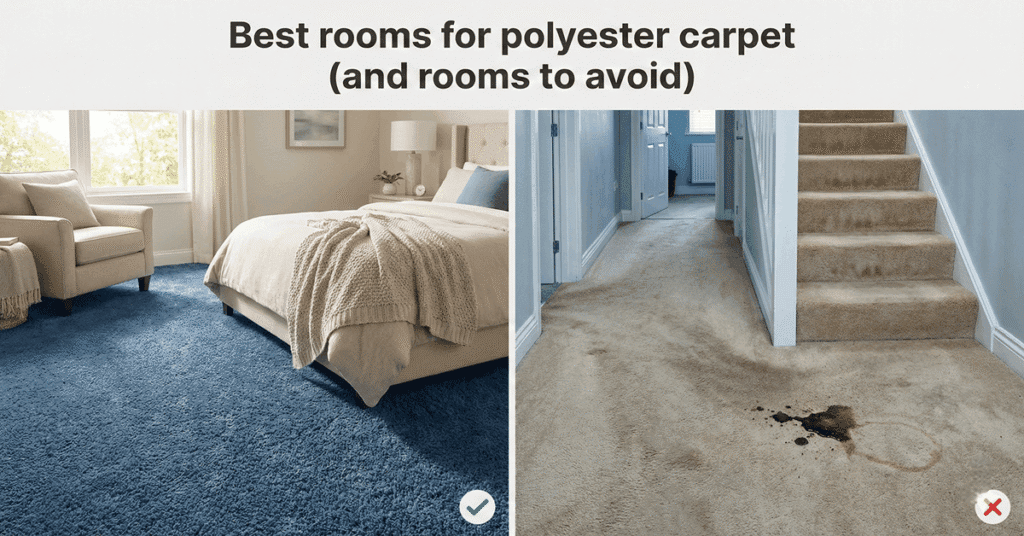
Polyester carpet (PET, polyethylene terephthalate) fits rooms where softness, color, and value matter more than maximum resilience. Polyester carpet durability drops faster in high-traffic paths, since matting and crushing show up as traffic lanes on lower-density plush styles. A quick room check using pile style, carpet density, and carpet padding prevents most “why does this look flat already?” regret.
Best uses: bedrooms, guest rooms, low-traffic living spaces, budget refreshes
A bedroom is the classic win for polyester, which answers the common search “is polyester carpet good for bedrooms?” with a practical “yes, for most homes.” High-density textured polyester or frieze polyester carpet tends to hide footprints and minor wear better than smooth plush. Here’s a helpful breakdown of frieze vs textured for busy pathways. A guest room, formal sitting room, or short-term ownership plan also matches polyester’s value profile.
Caution zones: stairs, hallways, family rooms, open-plan traffic paths
Stairs and hallways punish low-resilience fibers and low-density builds. In these areas, polyester can look tired early even when “wear” is not dramatic, since appearance retention is the issue. Many shoppers who compare “polyester vs nylon carpet for high traffic” end up preferring nylon or triexta for these routes.
If you have pets or kids: what matters more than fiber (pile style, density, pad, stain plan)
Polyester resists many water-based spills, yet oil stains on polyester carpet can linger after pizza grease or sunscreen. A dense textured pile, a sealed spill plan, and a pad that supports pile recovery matter more than a soft showroom feel. A loop/berber style can snag with pets, so a textured cut pile often feels safer.
Rentals and short-term ownership: when polyester is the rational choice
A rental turnover often needs a clean look at a controlled cost. Polyester, paired with a decent carpet padding density, can deliver comfort and quick refresh value, with realistic expectations for traffic paths.
Room suitability matrix
| Room | Recommended fiber | Recommended pile style | Risk notes |
| Bedroom | Polyester (PET) | Textured, frieze | Plush mats faster at low density |
| Guest room | Polyester (PET) | Textured | Low traffic suits PET well |
| Home office | Polyester or nylon | Textured | Chair paths can flatten PET |
| Family room | Nylon or triexta | Textured, frieze | PET shows traffic lanes sooner |
| Hallway | Nylon or triexta | Textured | PET appearance loss is common |
| Stairs | Nylon or triexta | Dense textured | PET can crush quickly here |
Pre-purchase room checklist (quick scan)
- Traffic level: low, moderate, high
- Spill type: water-based spills vs oils/grease
- Sunlight exposure: strong window light or mild light
- Cleaning habits: quick blotting vs “later” cleaning
- Pad plan: pad density matched to traffic and pile style
Polyester vs nylon vs triexta vs olefin vs wool (which to choose)
A fiber choice works best when the choice matches traffic level, stain type, and appearance expectations. Polyester (PET) focuses on softness and value, nylon carpet focuses on resilience, triexta (PTT) sits between with a strong stain reputation, olefin/polypropylene favors moisture situations, and wool brings natural comfort with higher cost and more care. The clean rule: pick the fiber that matches the hardest day your room will see, not the calmest day.
Polyester vs nylon carpet: durability vs value tradeoff
Nylon usually holds texture longer in hallways, stairs, and family rooms. Polyester often wins on soft feel and price, then loses points on matting in the same traffic lanes. If appearance retention drives the decision, nylon takes the lead.
Polyester vs triexta (PTT): stain resistance, resilience, and long-term value
Triexta often appeals to homes that want easy cleanup and better recovery than basic PET. Polyester still competes well in bedrooms and low-traffic zones, especially in solution-dyed polyester carpet styles with solid colorfastness. Compare warranty language for texture retention and cleaning rules before paying the upcharge.
Polyester vs olefin (polypropylene): moisture resistance vs softness and appearance retention
Olefin handles moisture situations well and shows up in basements and some loop/berber carpets. Many people find olefin less plush than polyester, and olefin can show wear patterns in busy areas. For comfort-first rooms, polyester usually feels better.
Polyester vs wool: comfort and natural resilience vs cost and maintenance expectations
Wool carpet can feel premium and can recover well, yet wool requires more careful cleaning choices and a higher budget. Wool fits buyers who want a natural fiber and accept maintenance tradeoffs. Local availability and installer familiarity vary by region and store.
Choose based on priorities
| Top priority | Recommended fiber | Why it fits |
| Highest traffic | Nylon | Strong resilience and texture retention |
| Mixed stains (kids/pets) | Triexta | Strong cleanup reputation plus recovery |
| Lowest budget, low traffic | Polyester (PET) | Soft feel and value for calm rooms |
| Damp basement use | Olefin | Moisture-friendly choice for that space |
| Luxury natural feel | Wool | Premium comfort with higher care needs |
| Sunlight-heavy room | Solution-dyed polyester or nylon | Good color retention with the right build |
Next step: pick two fibers for the target room, then match one pile style and one pad spec, then request samples and quotes with the same carpet density and pile height so the comparison stays fair.
What to look for when buying polyester carpet (specs + showroom checklist)
Polyester carpet shopping goes well when the buyer treats PET (polyethylene terephthalate) fiber as only one part of the system. Carpet density, twist level, pile style, and carpet padding often decide how a polyester carpet handles traffic lanes, matting, and stain cleanup. This section shows the specs to request, plus a quick way to score options on a showroom rack.
Polyester carpet specs that predict performance (what to ask for)
High-performance polyester carpet usually comes from tighter construction, not a thicker look. Ask the retailer for a spec sheet that lists carpet density, pile height, face weight, and twist level, then match those numbers to the room.
Density and pile height (why “thicker” can be misleading)
A tall, fluffy plush can feel great in a store and still crush fast in a hallway. A tighter, lower pile with higher density tends to hide footprints and holds shape longer.
Twist level/twist count (appearance retention)
Twist level matters most on cut-pile styles like textured or frieze. More twist often means better appearance retention, since the yarn resists untwisting in traffic paths.
Face weight (how to use it without overtrusting it)
Face weight helps compare two carpets with the same pile height and style. Face weight misleads when pile heights differ, so use face weight as a “tie-breaker,” not the main rule.
Pile style: textured, frieze, loop/berber, plush—what works best for polyester
Textured polyester and frieze polyester usually forgive traffic better than flat plush. Loop/berber style varies a lot by loop size and density, so the spec sheet matters more than the label.
Questions to ask the retailer/installer (to avoid warranty surprises)
Warranties can turn on pad specs and cleaning rules, not just fiber type. Ask for the exact pad requirement (thickness and density) and the cleaning standard tied to coverage, such as Carpet and Rug Institute (CRI) Seal of Approval guidance for equipment or products.
Warranty coverage: texture retention, stains, wear, fading (what’s excluded)
Look for a separate “texture retention” or “appearance retention” term, since “wear” can still look fine on paper while the carpet looks flat. Ask what counts as excluded “soiling,” “improper maintenance,” or pet staining.
Recommended pad specs (thickness vs density) and why it matters
A thick pad can feel soft and still shorten carpet life if pad density is low. A denser carpet pad usually supports PET yarn better and slows crushing.
Cleaning requirements tied to warranty (CRI Seal of Approval products/equipment)
Ask which cleaning method the warranty expects and how often. Keep receipts for professional hot water extraction if the warranty sets a schedule, and if you’re deciding on equipment, carpet extractor vs cleaner for deep cleaning clears up the difference.
Tooling/artifact: Polyester carpet shopping rubric (score 1–5)
| Category | 1 (weak) | 3 (average) | 5 (strong) |
| Density + pile height fit | Loose, tall plush | Mid pile, moderate density | Tight, room-appropriate density |
| Twist level for style | Low twist cut pile | Moderate twist | High twist textured/frieze |
| Stain plan realism | No clear plan | Basic spot plan | Clear water + oil plan |
| Pad match | Soft, low-density pad | Acceptable pad | Pad meets spec sheet |
| Warranty clarity | Vague exclusions | Standard terms | Clear texture + cleaning rules |
Tooling/artifact: Sample label photo checklist
- Fiber type listed as PET polyester or solution-dyed polyester
- Pile style named (textured, frieze, plush, loop)
- Pad requirement printed (thickness and density)
- Texture retention term shown in writing
- Cleaning method and frequency listed (check CRI references)
A buyer can take the rubric score to the next section and decide if the price fits the expected service life.
Polyester carpet cost, lifespan, and value (realistic expectations)
Polyester carpet value comes from matching installed cost to a realistic lifespan in the room. Installed price includes the carpet, carpet padding, labor, and prep work, so “cheap carpet” can still cost a lot once install details show up. This section sets expectations for polyester carpet cost installed per square foot, then shows when nylon carpet or triexta carpet can cost less over time.
Typical polyester carpet price ranges (material vs installed)
Retail pricing varies by region, store, and season. If you’re timing a purchase, the best time of year for carpet deals can help you plan around promos. Ask for two numbers: the material price and the installed price with pad, removal, and stairs listed as line items. A written quote makes comparison easy.
Lifespan by traffic level (low, moderate, high) and what shortens it
A bedroom can look good for years with a decent-density textured polyester. A hallway can show matting fast when density is low or pile is plush. Crushing speeds up with rolling chairs, gritty soil near doors, and low-density pad.
Value math: when paying more for nylon/triexta saves money long term
A simple rule works well: if replacement would be disruptive or costly, pay more for resilience. Nylon often wins on recovery in traffic lanes, and triexta can win when stain mix includes frequent food spills. Polyester often wins when comfort and budget matter most in low-traffic rooms.
Warranty fine print that changes “value” (pro-rated years, exclusions)
A long stain term does not mean a long “looks good” term. Check the texture retention period and any pro-rated coverage. Keep cleaning records when the warranty asks for CRI Seal of Approval products or professional cleaning.
Table required: Cost & value tiers (polyester carpet)
| Tier | What it tends to look like | Spec signals to ask for | Best-use rooms |
| Good | Soft plush, basic texture | Moderate density, clear pad spec | Guest room, low-use bedroom |
| Better | Textured or frieze look | Higher density, stronger twist | Main bedroom, home office |
| Best | Tight texture, better backing | Strong density, solid warranty terms | Living room with moderate traffic |
Visual aid note: In the final article, use a simple bar chart that shows “installed cost range” next to “expected service life range” for polyester, nylon, and triexta, with ranges shown as bands, not single numbers.
Next up is the part that protects the value: cleaning routines that reduce stains and slow matting.
Cleaning and maintenance for polyester carpet (stains, matting, and odor)
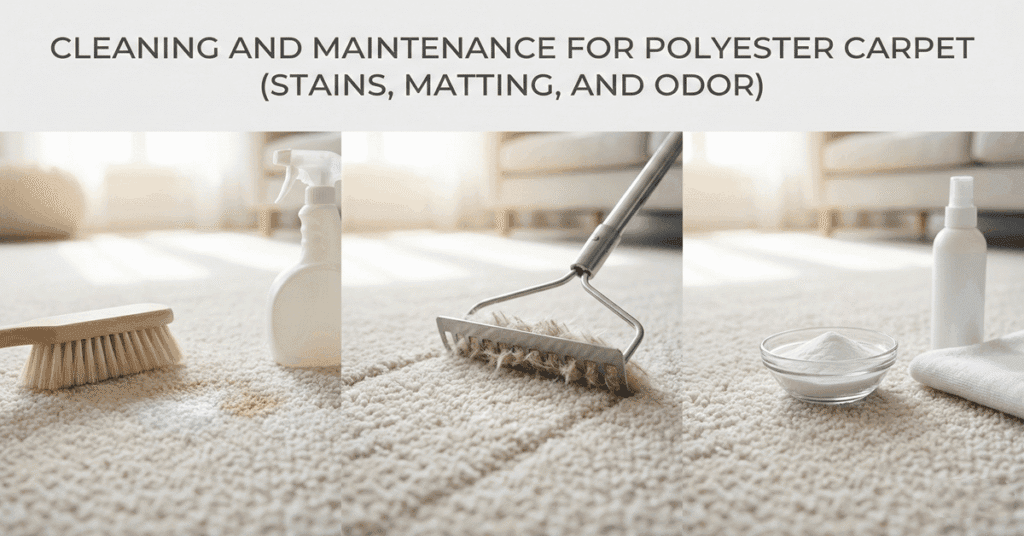
Polyester carpet maintenance works best when the routine targets soil removal, fast spill control, and pile recovery. PET polyester carpet resists many water-based spills, yet oil stains and gritty soil can still lock in and dull the surface. This section gives a simple day-to-day plan, a spot-clean approach, and practical steps for how to stop polyester carpet from matting.
How to clean polyester carpet day-to-day (vacuuming, soil control)
Vacuuming removes abrasive grit that drives traffic lane wear. Set the vacuum cleaner beater bar height to match the pile style, then vacuum high-traffic paths more often than the rest of the room. Place a door mat at entries to cut soil transfer.
Choosing a vacuum and cleaning products (look for CRI Seal of Approval)
CRI Seal of Approval is a useful filter for vacuums and cleaning products. The label does not make a product perfect for every carpet, so still follow the manufacturer’s spec sheet and warranty terms.
Spot-cleaning guide: what works for common stains
Fast action beats strong chemistry. Blot, do not rub, then rinse with clean water when the product label allows it. Test any cleaner in a hidden corner first.
Food and drink (water-based)
Blot, rinse, blot again. Mild detergent in water often works on many water-based stains when used sparingly, then rinsed.
Grease and oil (what to do immediately; what to avoid)
Oil stains on polyester carpet can set quickly. Blot up excess, then use a cleaner made for oily residue per label directions, and rinse well. Skip heavy DIY solvents that can harm backing or leave residue that attracts soil.
Pet accidents (fiber vs pad; when to call a pro)
Pet urine can pass through PET fiber and stay in carpet padding or subfloor. Use an enzyme cleaner that matches the mess type, then extract moisture. Call a pro when odor stays after drying, since the pad may hold the source.
How to prevent and fix matting/crushing (traffic lanes, furniture dents)
Matting often comes from low-density, plush pile, and concentrated foot paths. Rotate furniture and rugs, then use runners in traffic lanes. Lift dents with a spoon and a light brush once the fibers relax.
Raking/brush methods and when they help
A carpet rake or stiff brush can lift crushed pile on textured styles. Raking helps less on very soft plush that has low twist.
Area rugs and furniture pads as prevention
Rugs spread traffic and slow wear. Furniture pads reduce dents under heavy legs.
Checklist required: Spill response checklist (60-second plan)
- Blot with a clean white towel
- Remove solids with a dull edge
- Apply the right cleaner for the spill type
- Rinse when the label calls for it
- Blot dry, then air-dry fully
- Groom pile lightly on textured styles
Checklist required: Quarterly maintenance checklist
- Vacuum traffic paths with slow passes
- Inspect entry mats and replace when worn
- Spot-clean old drips before they darken
- Schedule extraction cleaning when the warranty calls for it
- Check odor sources near pets or litter areas
Cleaning choices link to indoor air quality next, since product selection and ventilation affect VOC exposure and comfort.
Health and sustainability considerations (VOCs, allergies, recycling, end-of-life)
Health and sustainability choices for polyester carpet often come down to low-emitting materials, moisture control, and honest end-of-life planning. Carpet off-gassing VOCs vary by carpet, backing, adhesive, pad, and installation method, so certification labels like CRI Green Label Plus or GREENGUARD Gold can help narrow options. This section covers practical steps to reduce new carpet smell and VOCs, plus what recycled PET claims mean in real disposal systems.
New carpet smell and VOCs: how to reduce exposure safely
Fresh carpet smell often fades with time and airflow. Increase ventilation during and after installation when possible, and pick low-emitting carpet, pad, and adhesive options that match published certifications. Some regions set different indoor air quality guidance, so follow local building rules when they apply.
What certifications mean (CRI Green Label Plus; low-emitting adhesives/pad)
CRI Green Label Plus focuses on low emissions from carpet materials. GREENGUARD Gold often appears on indoor products that target stricter emission thresholds. Treat these marks as a screening tool, then confirm details on vendor documentation.
Practical steps: ventilation, timing installation, who should be cautious
Plan installation when the home can air out for a few days. People with asthma or fragrance sensitivity may prefer to stay out during the strongest odor window, then return after the space airs out.
Allergies, asthma, and indoor air quality: when carpet helps vs hurts
Carpet can trap dust until vacuuming removes it. Carpet can feel worse when moisture stays in the pad or subfloor. Use a moisture-safe plan in basements and avoid carpet in rooms with leak history.
Moisture and mold risk: the “when this doesn’t apply” conditions (leaks, basements)
A basement with humidity swings and water seepage can turn pad and backing into a moisture reservoir. In that case, hard flooring or specialized moisture systems may fit better than standard carpet.
“Eco-friendly polyester” claims: recycled PET, tradeoffs, and transparency checks
Recycled PET polyester carpet can reduce virgin plastic use, yet “recycled content” is not the same as “easy to recycle later.” Ask for the recycled content claim in writing and check whether the backing system can enter local carpet recycling streams.
Recycled content vs recyclability (face fiber vs backing system reality)
Face fiber can be PET, yet backing can be a mixed material that complicates recycling. That mix changes by product line, so spec sheets matter.
End-of-life options: take-back, local carpet recycling partners
Look for take-back programs, then check local availability. Carpet America Recovery Effort (CARE) resources can help identify recycling pathways where programs exist.
Health & sustainability checklist
| Topic | What to look for | Action step |
| Low emissions | CRI Green Label Plus, GREENGUARD Gold | Confirm carpet + pad + adhesive labels |
| Odor control | Clear ventilation plan | Air out rooms after install |
| Moisture risk | Basement humidity, leak history | Avoid carpet where water risk stays |
| Cleaning chemistry | CRI Seal of Approval products | Follow label + warranty rules |
| Recycling reality | Backing details, take-back options | Check CARE or local programs |
These checks help a buyer choose polyester with fewer surprises, then carry that choice through day-to-day living.

Frequently Asked Questions
Is polyester carpet good for high-traffic areas like hallways and stairs?
Polyester carpet (PET) can look great at first, yet many hallways and stairs show matting and traffic lanes sooner than nylon carpet or triexta carpet. For heavy use, pick a textured or frieze pile style, higher carpet density, and a supportive carpet padding density. Skip low-density plush polyester on stairs where crushing shows fast.
Polyester vs nylon carpet: which is better for pets and kids?
Nylon carpet usually wins on resilience, so nylon pile recovers better from running paths and furniture pressure. Polyester carpet resists many water-based spills, yet oil-based messes and body oils can cling and turn into soil spots. For pets, focus on pile style, carpet padding, and a cleaning plan that matches the warranty terms.
Does polyester carpet stain easily from grease or cooking oil?
Polyester carpet often handles water-based stains well, yet grease and cooking oil can soak in and hold soil. Blot fast, use a CRI Seal of Approval spot cleaner, and rinse residue so the area does not attract more dirt. If oil stains happen often, nylon carpet or triexta carpet is usually a safer fit.
How long does polyester carpet typically last in a bedroom?
For many bedrooms, polyester carpet can deliver solid service life since foot traffic stays moderate. Lifespan varies with carpet density, twist level, pile height, and carpet padding quality. A high-density textured polyester holds its appearance longer than a low-density plush. Ask for the texture retention warranty details, not only the wear warranty.
What does “solution-dyed polyester” mean, and is it worth paying more?
Solution-dyed polyester means color is added during fiber production, not applied later. Solution-dyed PET tends to hold color well and can improve fade resistance from sunlight and cleaning. Value comes from the full build: density, twist count, and pile style. Confirm “solution-dyed” on the manufacturer’s spec sheet, not showroom tags.
Is recycled PET polyester carpet actually eco-friendly?
Recycled PET polyester carpet can reduce virgin plastic use, yet “eco” claims vary by backing system and end-of-life options. Some carpet recycling programs accept certain constructions; others do not. Look for transparent recycled content statements plus CRI Green Label Plus or GREENGUARD Gold low-emission labels to support indoor air quality priorities.
How do I reduce new carpet smell and VOCs after installation?
New carpet smell usually comes from materials in carpet backing, carpet padding, and adhesives, not only polyester fiber. Ventilate rooms, run HVAC fans, and follow product instructions for safe airflow. For lower VOCs, choose CRI Green Label Plus certified carpet and low-emitting pad and adhesive. Sensitivity levels differ by person and home conditions.
Conclusion
Polyester carpet (PET) can be a smart choice when buyers match fiber limits, pile style, and carpet density to the room’s traffic and spill risks. The real trade is simple: polyester often feels soft and handles many water-based stains, yet polyester can show matting and traffic lanes faster than nylon carpet or triexta carpet in busy paths.
A confident pick comes from the same checks used in the guide: compare spec sheets, match carpet padding density to the build, and read texture retention warranty terms, not only the headline warranty. If sunlight, stairs, or frequent oil-based messes show up in daily life, the safer move is a higher-density textured construction or a different fiber choice. Which room in the home needs comfort, and which room needs recovery?
Use the room matrix and shopping rubric, then verify low-emission labels like CRI Green Label Plus before signing off on polyester carpet pros and cons.