Disclosure: Classy Floor is reader-supported. As an Amazon Associate, we earn from qualifying purchases. We may also earn commissions from other affiliate programs, at no additional cost to you. Learn more →
Do carpet ripples feel like a trip hazard that keeps getting worse? Many cases of wavy carpet come from slack in the carpet backing, carpet padding movement, or a loose edge on tack strips, not from dirty fibers. This guide shows how to get wrinkles out of carpet without a stretcher using safe, repeatable methods such as the ice cube method for dents and a knee kicker reset for real slack, with clear notes on seams and thresholds.
A wrinkled carpet can show up after furniture moves, cleaning, or seasonal humidity shifts, and the wrong fix can stress a seam or leave carpet lifting near a doorway. If the goal is how to fix ripples in carpet and learn how to get rid of carpet wrinkles that keep returning, the steps ahead focus on quick diagnosis, simple smoothing, then reseating the edge with a carpet tucker, pliers, and a knee kicker. For room wide buckled carpet, the article flags when a carpet installer or a power stretcher makes more sense.
Choose the right fix for carpet wrinkles, dents, bubbles, and ripples
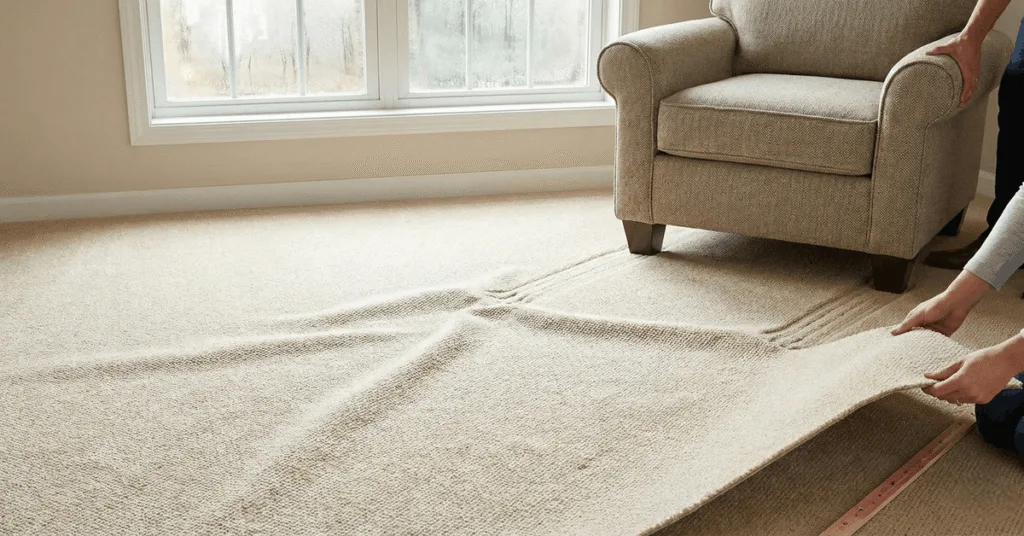
Carpet wrinkles and carpet ripples can look similar, yet the cause changes the fix. A furniture dent comes from compressed carpet pile, a wavy carpet ridge points to slack carpet backing, and carpet bubbles often signal carpet padding movement. A fast diagnosis saves time and protects seams, tack strips, and loop pile carpet.
A quick rule works in most rooms. If the surface looks flat after a brush and dries flat after a little water, the issue is usually fiber and pile direction. If the surface rises again when you walk across the spot, the issue is often slack in stretch in carpet installation near a wall edge or a doorway transition strip.
Table: Symptom to likely cause to best no stretcher method
| Symptom you see | Likely cause | Best no stretcher method | Time to notice change | Risk level |
| Furniture dents or flat spots | Carpet pile compression | Ice cube method, then carpet rake | Same day | Low |
| Small bump that shifts under foot | Carpet padding bunched or moved | Check padding position at nearest edge, then re seat edge | Same day | Medium |
| Wavy carpet line across the room | Slack carpet backing on tack strips | Knee kicker re tension, then tuck edge | Same day | Medium |
| Carpet lifting at doorway | Door drag or loose threshold strip | Fix door clearance, secure threshold strip, tuck edge | Same day | Medium |
| Buckled carpet after cleaning | Temporary moisture expansion or pre existing slack | Let carpet dry fully, then re check ripples | One to three days | Low to Medium |
| Ripple along a seam | Seam stress or seam lift | Gentle smoothing only, stop if seam separates | Same day | High |
Quick checks before you start
- Press the ripple with a shoe and watch if the rise returns during walking
- Check carpet type: cut pile carpet acts differently from berber carpet and other loop pile carpet, so review loop pile versus cut pile differences
- Look at the nearest wall edge and tack strip line for loose grip or gaps
- Check thresholds, transition strip hardware, and door swing for snag points
- Note any recent trigger: furniture drag, professional carpet cleaning, humidity change
A safe starting point is the lowest risk method. Try fiber-based fixes for dents and tiny bumps, then move to edge work and a knee kicker when carpet backing slack shows up. The next section explains why carpet buckling starts in the first place.
What causes carpet wrinkles and ripples?
Carpet wrinkles and rippled carpet usually start with one of four drivers: low installation tension, weak tack strip grip, choosing the right carpet padding, or indoor humidity shifts. Each driver leaves a clue in the room, and each clue points to a different repair path. Manufacturer installation guidance for stretch in carpet and tool manuals for a knee kicker explain the same core idea: carpet backing tension holds the field flat.
Top causes of carpet wrinkles and how to confirm
Carpet was not stretched tight during installation
A loose stretch during installation leaves extra carpet backing in the room, especially when you are unsure of how long carpet installation usually takes. A common sign is a long wavy carpet line that runs parallel to a wall, often worse in a large open area. You can confirm by lifting the edge near the closest wall and feeling slack that gathers before the tack strips.
Humidity and temperature changes loosen carpet backing
Indoor humidity can change how carpet backing and carpet padding sit, especially after a wet cleaning cycle. Ripples may look worse right after cleaning, then settle as the room dries, so it helps to dry the carpet the right way. A good check is time: let the carpet reach full dry down, then walk the area again and see if carpet ripples stay.
Dragging heavy furniture shifts the carpet and pad
Dragging a sofa can pull carpet off tack strips near the direction of movement and bunch carpet padding under the field. The ripple often starts near the furniture path and points toward a doorway. A quick confirm is to inspect the edge near the path and look for carpet lifting or a loose tuck at the baseboard.
Soft or thin carpet padding allows movement
Low-density padding can compress and slide, which creates carpet bubbles or small ridges that move underfoot, and pad weight and support can play a role. The ridge often feels spongy rather than tight. If the carpet feels loose in one zone yet the edges feel seated, padding movement is a likely cause.
Loose tack strips, damaged gripper, or failing seams
Tack strips that lose grip let the carpet edge creep back over time. A seam can add a weak point, so a ripple that tracks along a seam needs care. If you see fraying, delamination, or seam separation, stop pulling and use gentle smoothing only, then contact a carpet installer.
When the cause changes the fix
Wrinkles that return within days point to slack backing or poor edge grip, not just pile direction. Ripples that shift underfoot point to carpet padding movement, so edge tension alone may not hold. Buckling after cleaning can be temporary moisture expansion, so a dry-down window helps separate a short-term wave from a true re-stretch need.
Next, the article moves from diagnosis to quick fixes for minor carpet wrinkles that need no special tools.
Quick fixes for minor carpet wrinkles without special tools
Minor carpet wrinkles often come from surface fiber shift, light carpet ripples after cleaning, or a small bump where carpet padding settled. Quick fixes work best on localized waves in carpet that do not run wall to wall, and on dents that look like buckled carpet but feel flat underfoot. These methods target the carpet pile first, then the backing, so a seam stays safer and carpet lifting near a doorway stays less likely.
Use the ice cube method for furniture dents and tiny bumps
The ice cube method carpet trick resets carpet fibers after heavy furniture compresses the pile. Place one or two ice cubes on the dent, let the ice melt, then blot with a dry towel until the area feels only slightly wet. Fluff the pile with a spoon edge or a carpet rake, then let the spot dry fully before walking on it.
Dents can look like wrinkles, yet the carpet backing still sits tight on tack strips. A quick hand test helps: press the bump with a palm. A dent springs back as fibers lift; a true ripple slides or shifts across the carpet backing.
Use a towel and iron for steam assisted smoothing
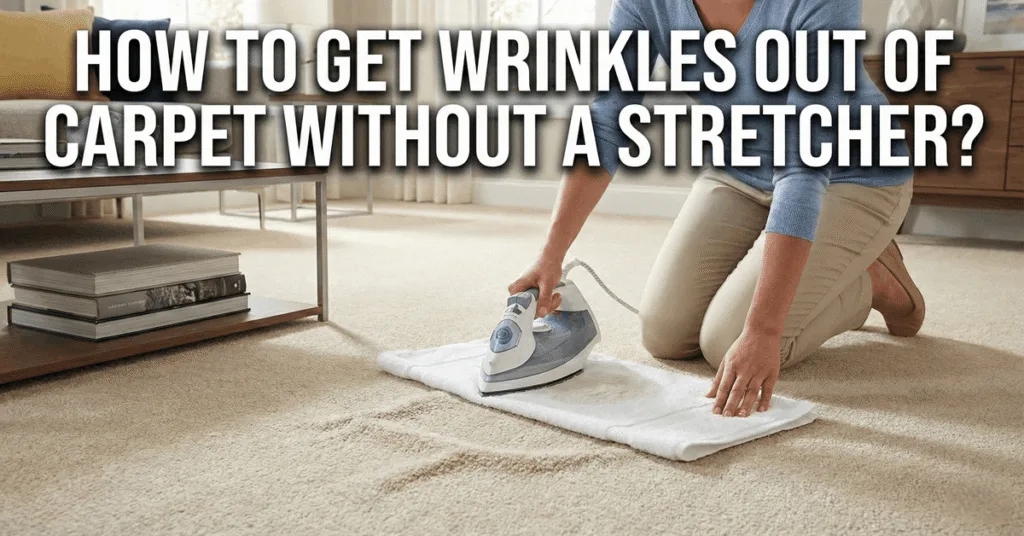
The towel and iron method works for shallow surface waves and light steam carpet wrinkles, not for slack carpet backing. Place a damp towel over the wrinkle, set the iron to a low setting, then touch the towel in short passes. Lift the towel, smooth the pile with a brush, then let the area cool before checking the result.
Heat needs care on synthetic carpet such as nylon carpet, polyester carpet, polypropylene carpet, or olefin carpet, especially when you consider nylon compared with polyester. Keep the iron off the carpet fibers and keep passes short, since direct heat can flatten pile, glaze fibers, or change texture near seams.
Use weight to flatten mild ripples temporarily
Weight can calm a mild wavy carpet ridge while the fibers settle, yet weight rarely fixes true slack. Choose a flat, wide item such as a clean cutting board under a box, keep edges smooth, and leave it in place overnight. Skip narrow legs or small weights, since new furniture dents can form fast.
A simple success check: look at the ripple from the side in daylight. If the ridge height drops and stays down after walking across the area, the issue was surface movement. If the ridge returns in the same line, move to a re-tension method.
Use a carpet rake or stiff brush to reset pile
A carpet rake changes the look of waves in carpet by aligning carpet pile direction and lifting flattened fibers. Brush across the wrinkle line, then brush with the grain so the surface reads even. This step pairs well with the ice cube method and the towel and iron method.
Brushing can expose a hidden cause. If a ridge feels like a soft tube underfoot, carpet padding may have bunched. A knee kicker fix fits that kind of carpet ripples far better than more brushing.
Temporary edge holds for small problem areas
Small edge lift near a doorway can respond to a clean tuck and a secure transition. Press the edge down, then seat it with a carpet tucker or stair tool, and check the threshold strip for movement. Double-sided carpet tape can help in a small spot, yet the tape stays a short-term hold when the carpet backing has slack.
A quick self-check keeps risk low. Stop if a seam starts to gap, if backing threads show, or if the wrinkle runs across most of the room. At that point, the better path shifts from surface fixes to re-tension work.
How to fix carpet wrinkles without a power stretcher using a knee kicker
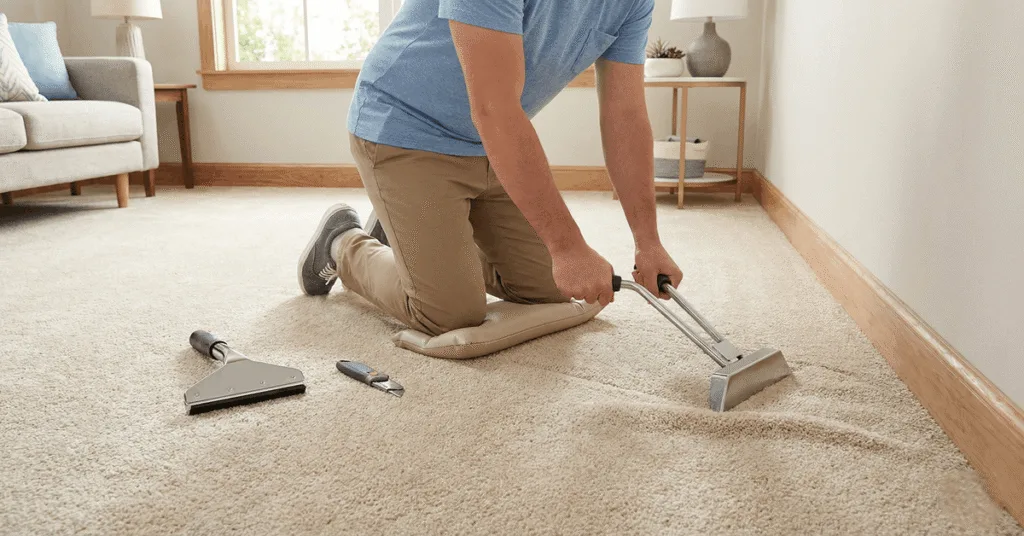
A knee kicker can remove carpet wrinkles by pushing slack carpet backing back onto tack strips, one small section at a time. This method fits localized carpet ripples, wavy carpet lines near a wall, and buckled carpet that started after furniture moves or cleaning. A knee kicker does not replace a power stretcher in large rooms, yet a careful reset often solves how to fix ripples in carpet without a full tool setup.
What you will need
A knee kicker does the pushing, then hand tools finish the edge. A flathead screwdriver or pry bar helps lift the carpet edge, pliers help grip backing, and a carpet tucker or stair tool seats the edge tight. Gloves and knee pads protect skin from tack strips, and a seam roller can smooth a seam edge after the carpet lies flat.
Keep a utility knife on hand only for rare trimming at a doorway threshold. Trimming too early can create carpet lifting later, since slack may hide at the wall line.
Step by step knee kicker method for carpet ripples
A clean sequence reduces damage and keeps the carpet pile looking even. Work from the nearest wall toward the ripple line, since tension travels back through the carpet backing.
- Clear the room and vacuum so the knee kicker grips clean carpet fibers.
- Find the closest wall edge that lines up with the ripple, then remove the carpet edge from tack strips with a flat tool.
- Set the knee kicker head a few inches from the wall, with teeth grabbing the carpet backing through the pile.
- Tap the kicker with a knee, then shift the tool a few inches and repeat until slack moves back to the wall.
- Hook the carpet back onto tack strips, then press the edge down with a carpet tucker or stair tool.
- Walk the ripple zone, then repeat small kicks if a low ridge remains.
- Check door swing and threshold strip fit, since a tight carpet edge can change clearance.
A good finish looks flat from multiple angles and feels firm underfoot. If a line still reads as a shadow, brush the pile with a carpet rake so the surface matches nearby carpet pile direction.
Troubleshooting when the ripple will not flatten
Some failures point to the room setup, not the technique. A tack strip can lose bite, so the carpet backing slips back, and carpet ripples return. A bunched carpet padding layer can create a soft ridge that moves under a foot, even after the edge sits tight.
Room size matters. When ripples cover most of the room, a carpet installer with a power stretcher often gives a longer-lasting result, since a power stretcher pulls tension across the full span and reduces repeat buckling. If the ripple crosses a seam and the seam starts to separate, stop and plan seam repair help before more kicking.
How to fix wrinkles near walls, doorways, seams, and stairs
Wrinkles near a wall, doorway, seam, or stair usually come from an edge that slipped off tack strips, a transition that pinches carpet, or tension that pulled against a seam line. A clean fix keeps the carpet backing seated, keeps carpet padding flat, and avoids stressing carpet seam repair areas. Start by checking door clearance, threshold strip fit, and any spot where carpet lifting shows at the perimeter.
Doorways and thresholds
A doorway ripple often starts when a door drags the pile, or a transition strip clamps the carpet too high. Set the door swing first, then check the threshold strip screws and the carpet edge tuck. A carpet tucker, sometimes called a stair tool, can press the edge down so the carpet sits below the threshold line.
Wrinkles near seams
Seam area waves need a light touch since pulling the field can separate seam tape or fray edges. Use gentle smoothing first, then a seam roller only for short passes along the seam line, not across it. Stop if the seam opens, the backing shows, or the ridge gets sharper instead of flatter.
Stairs and landings
Stairs work differently from open rooms since tackless placement and staples vary by installer and stair shape. A small tuck at the riser edge can fix a minor ripple, yet strong pulling on stairs can tear carpet backing or pop a staple line. For a landing with wavy carpet, treat the landing edge like a doorway and keep tension changes small.
When to use a power stretcher or call a professional installer
A power stretcher becomes the right tool when carpet wrinkles cover a large area, return soon after a knee kicker attempt, or show up as buckled carpet across the main walking path. A carpet installer can reset stretch in carpet tension across the room, check tack strips, and replace carpet padding that has shifted or broken down. This choice saves time when room geometry or carpet age makes DIY tension uneven.
Signs you may need a power stretcher
| Sign in the room | What it often means | Next step |
| Ripples run wall to wall | Slack across the full span | Power stretcher stretch |
| Wrinkles return within weeks | Tack strips slip or padding shifts | Tack strip and pad check |
| Multiple edges lift near baseboards | Poor grip at the perimeter | Re seat or replace tack strips |
| Seams look stressed or raised | Tension pulls at seam tape | Installer seam inspection |
| Large open plan room | Even tension is hard with a knee kicker | Installer stretch plan |
When it makes sense to hire help
Large rooms, old carpet, and loop pile or berber carpet raise the snag risk during reseating, so it helps to know whether berber is still a good pick. A home with repeated dampness can hide a pad problem that keeps rippled carpet coming back. Vendor documentation and installer training guidance often tie long-term results to proper stretching and solid perimeter grip, so a pro visit can protect the carpet surface and seams.
What to ask a carpet pro to avoid repeat ripples
Ask if the quote includes a tack strip inspection, a padding check, and re-stretching across both length and width where the room needs it. Ask how the installer will handle doorways and transition strip height so the carpet does not bunch up again. Ask what signs should trigger a follow-up, such as new waves in the carpet near the same edge.
Tips to prevent carpet wrinkles from coming back
Prevention focuses on carpet tension, stable carpet padding, and low stress at doorways and transitions. Small habits reduce carpet ripples and keep the carpet backing seated on tack strips. Most repeat wavy carpet cases start after heavy furniture moves or seasonal humidity changes.
Prevention checklist
- Use furniture sliders before moving heavy furniture across wall to wall carpet
- Keep humidity steady in damp rooms with ventilation or a dehumidifier
- Re-check door clearance each season so the door does not grab the pile
- Tighten threshold strip and transition strip fasteners if carpet lifting appears
- Vacuum with the correct height setting near edges so suction does not pull the carpet lip
- Treat small ripples early with light smoothing before they spread
- Keep spills from soaking into carpet padding, then dry the area fully
If wrinkles appeared after cleaning
A carpet can look rippled right after cleaning if water swells fibers and relaxes the backing. Let the carpet dry fully, then re-check the same spots the next day, and follow the guidance on when it is safe to move furniture back. If the same buckling pattern stays, move on to edge checks at tack strips and thresholds, then decide if a power stretcher visit fits the room.

Frequently Asked Questions
How do you get rid of carpet wrinkles fast without renting tools?
Fast results come from matching the problem type. For dents, use the ice cube method, then brush the pile when dry. For small surface waves, try the towel and iron method with a damp towel barrier and low heat. If carpet ripples feel loose underfoot, quick smoothing will not last, and a knee kicker reset near tack strips fits better.
Why is my carpet rippling even though it was installed recently?
Recent stretch in carpet can relax after a deep clean, heavy furniture dragging, or humidity swings that affect carpet backing and carpet padding, including the difference between a cleaner and an extractor. A loose edge on tack strips can start a ripple that grows with foot traffic. If the room shows wavy carpet from wall to wall, a carpet installer may need a power stretcher for a full re-stretch.
Can an iron damage carpet when removing wrinkles?
Yes. Synthetic carpet fibers can melt, and direct heat can flatten pile or shine the surface. Keep the iron off the carpet by using a damp towel barrier, keep heat low, and move in short passes. Test a hidden corner first, especially on polypropylene carpet or olefin carpet, plus loop pile carpet where snags show easily.
How long does the ice cube method take for carpet bumps?
The ice cube method needs time for the ice to melt, then time for carpet fibers to dry. Plan for several hours, often overnight for deep dents under heavy furniture. Blot water, then lift the pile with a spoon or carpet rake once dry. A fan speeds drying and lowers the chance of a lingering damp spot under furniture.
How do you fix wavy carpet in the middle of the room without a stretcher?
For true slack, the lasting fix is reseating the edge and pulling tension with a knee kicker, not just brushing the pile. Lift one edge off the tack strips near the closest wall, kick in small steps, then tuck with a carpet tucker. If buckled carpet spans a large room, a power stretcher often gives a cleaner, longer hold.
How much does professional carpet re stretching usually cost?
Cost varies by room size, furniture moving, seam condition, and whether carpet padding or tack strips need work. Many installers price by room or by job scope, so a doorway repair can differ from a full re-stretch. Ask for a written scope that names power stretcher use, seam checks, and transition strip work at thresholds.
Will carpet wrinkles come back after a DIY fix?
Wrinkles can return if the cause stays in place, such as loose tack strips, shifting carpet padding, or repeated dragging at a threshold strip. Quick methods like steam carpet wrinkles smoothing help minor surface waves, not slack backing. Track results for a week after drying from cleaning. If carpet ripples reappear, a knee kicker reset or pro re stretch is the next step.
Conclusion
Carpet wrinkles usually come from slack carpet backing, shifting carpet padding, or a loose edge on tack strips, so the fix starts with the right diagnosis. Small dents respond to the ice cube method and gentle brushing, while carpet ripples and wavy carpet need controlled re tension, often with a knee kicker and careful tucking along the wall.
A smart finish means picking the lowest risk method that matches the wrinkle type and stopping before seams or thresholds get stressed. Room wide buckled carpet that keeps returning is a clear decision cue for a carpet installer and a power stretcher, since even pressure matters more than extra force. Which problem shows up most in the room, dents or ripples?
If the next step is action, start with the quick checks, then follow the steps for how to get wrinkles out of carpet without a stretcher, and re-check the area after normal foot traffic.