Disclosure: Classy Floor is reader-supported. As an Amazon Associate, we earn from qualifying purchases. We may also earn commissions from other affiliate programs, at no additional cost to you. Learn more →
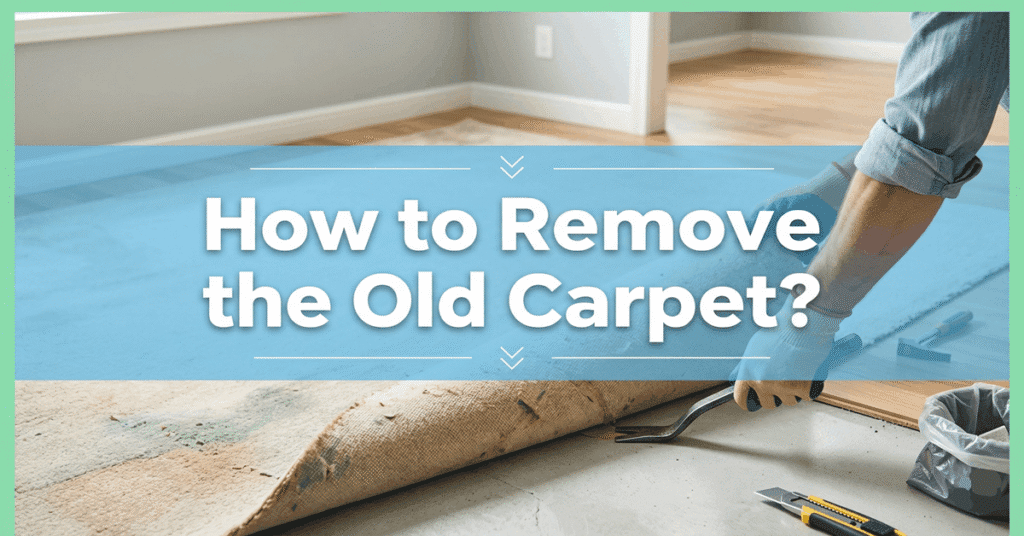
Removing worn flooring starts well before the first cut. If you need to know how to remove the old carpet without wrecking the subfloor, this guide walks through the job in a room-safe, floor-safe way. It covers carpet, carpet padding, tack strips, staples, and the surface hiding underneath.
Most readers here are getting a room ready for new flooring, dealing with stained material, or trying to pull up old carpet after years of wear. The real job goes past lifting the top layer; it includes clean removal, careful handling at edges and doorways, disposal, and a close check for moisture, odor, residue, or hidden damage. You’ll get a cleaner process, stronger decision support, and a practical look at how to remove old carpet and padding from concrete or wood without turning a basic tear-out into subfloor repair.
Decide Whether You Should Remove the Old Carpet Yourself
Removing old carpet yourself makes sense when the room is simple, the material is dry, and the subfloor looks stable, especially if the carpet is already reaching the point where replacement makes sense. A standard bedroom with one doorway, loose carpet at the edge, basic carpet padding, and visible tack strips is often a reasonable DIY carpet removal job. The decision changes fast once odor, staining, glued pad, stairs, or signs of water damage enter the picture. It also helps to know how different carpet pad setups affect removal.
This section is really a scope check. The question is not can you pull up old carpet at all. The better question is whether you can pull it up, clear the staples, deal with the tack strips, and leave the subfloor ready for the next step without turning a tear-out into a repair problem. A small room can feel manageable right up to the moment the padding starts sticking to concrete or the plywood subfloor shows dark, soft patches near a wall.
| Situation | DIY removal often makes sense | Bring in help |
| Room size and layout | One room, open floor, easy path out | Large area, tight hall, heavy built-ins |
| Carpet condition | Dry, lightly worn, few odors | Pet urine, heavy staining, damp spots |
| What’s underneath | Sound subfloor, no visible movement | Rot, mold signs, loose panels, cracked concrete |
| Installation type | Loose edge, standard tack strips, stapled pad | Glued carpet padding, stubborn adhesive residue |
| Physical effort | You can kneel, lift, cut, and haul safely | Stairs, back strain, limited mobility, bulky waste issues |
Signs the job is DIY-friendly
A DIY-friendly room tends to be boring in the best way. The carpet lifts at a doorway or corner, the tack strips are where you expect them, and the pad comes free in sections instead of tearing into crumbs. You are not trying to save fragile hardwood flooring hidden underneath, and you are not dealing with a full flight of stairs.
Time matters here. If you can cut the carpet into strips, roll it, tape it, and move it out without blocking the whole house, the work stays under control. That is often the difference between a decent weekend job and a drawn-out mess.
When old carpet removal is likely to become a repair job
Trouble usually shows up in three forms: moisture, residue, or structural wear. A sour smell, blackened tack-strip areas, soft spots near an exterior wall, or carpet padding bonded hard to concrete all suggest more than simple removal. In many cases, the carpet was hiding the real project.
Stairs deserve a harder look. Carpet on stairs can be packed with staples, folded tight around edges, and fixed under metal transition pieces or nosing. That is a different level of effort, and it tends to punish rushed work.
When to call a flooring pro, remediation contractor, or junk hauler
Call a flooring pro when the floor underneath needs repair, leveling, or a clean handoff for new flooring. Call a remediation contractor if the carpet appears to have trapped mold, repeated leaks, or deep contamination from pet urine. If you are unsure, check for common signs of mold in carpet before you keep tearing into the room. Call a junk hauler when the removal itself is manageable, though getting bulky carpet rolls, carpet padding, and tack strips out of the house is the part likely to stall the job.
A fair rule of thumb is simple: if the challenge is labor and disposal, outside help can save time; if the challenge is hidden damage, specialist help may save the floor. The next step is getting the room and your tool kit ready before the first cut.
Tools, Safety Gear, and Room Prep Before You Remove the Old Carpet
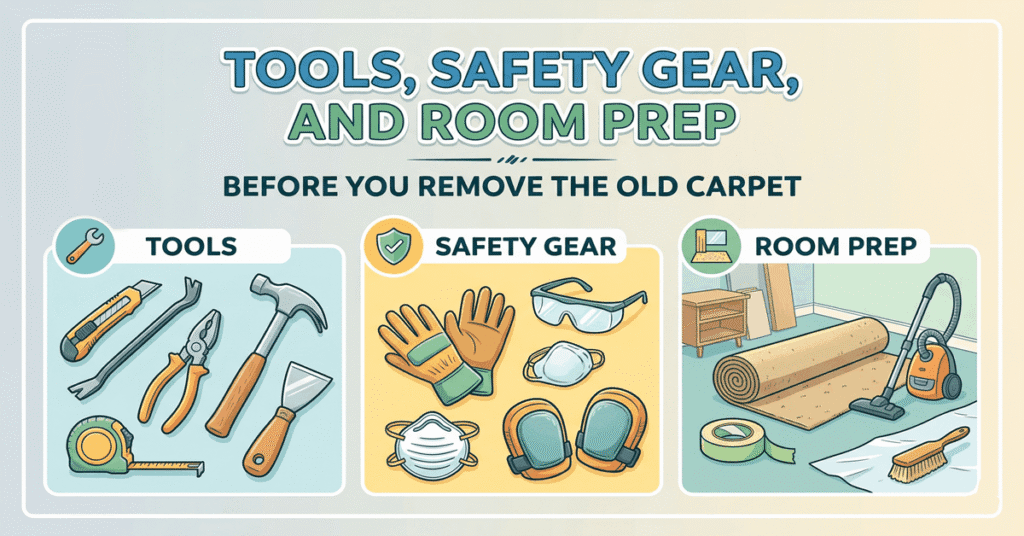
Good prep cuts down wasted motion, protects the subfloor, and keeps sharp tack strips and staples from turning a simple carpet removal job into a rough afternoon. For most rooms, the base kit is straightforward: a utility knife for cutting the carpet into strips, pliers for lifting an edge, a pry bar and hammer for tack strips, a floor scraper for stuck padding or adhesive residue, contractor bags, tape, work gloves, safety goggles, and knee pads. Add a dust mask or N95 respirator if the carpet is old, dusty, or carrying pet odor.
A lot of DIY carpet removal advice throws every possible tool into one pile. That tends to blur the difference between what you need and what merely makes the work easier. The better approach is to match each tool to one stage of the job, then prep the room so you can move from cut to pull to cleanup without stopping every few minutes to hunt for gear.
The essential tool kit for carpet, pad, and tack strip removal
The core tools each have a clear job. The utility knife opens the first cut and turns a bulky carpet into manageable strips. Pliers help lift a stubborn edge near a doorway or transition strip. A pry bar and hammer handle tack strips, which can splinter fast if you try to yank them by hand. A floor scraper earns its place once you get into carpet padding, glue, or stubborn scraps left on concrete slab or plywood subfloor.
Safety gear deserves more respect than many quick guides give it. Gloves protect against staples and tack strip nails. Safety goggles matter most when you start prying, since wood chips and small metal fragments can jump farther than people expect. Knee pads sound optional until you have spent twenty minutes pulling staples one by one. This kind of protective gear is easy to underestimate until the sharp debris starts flying.
A compact prep checklist keeps the work moving:
- Utility knife with fresh blades
- Pliers, pry bar, hammer, and floor scraper
- Work gloves, safety goggles, knee pads, dust mask or N95 respirator
- Contractor bags, tape, and marker for rolled sections
- Nail puller for stubborn fasteners
How to prepare the room so removal goes faster
Clear the room fully if you can. Sliding furniture from one side to the other usually slows the job and leaves you cutting around obstacles. In a small bedroom, that often means doing half the room twice, which is a poor bargain.
Check the doorway, baseboards, shoe molding, floor vent covers, and any transition strip before the first cut. Some rooms let you start at an exposed edge near a threshold. Others need a vent cover removed first so you can grab the carpet cleanly. If a door drags or blocks removal, taking it off its hinges may save more time than working around it.
Set up a path for hauling the rolled carpet out of the room. That small step matters more than it sounds. A rolled strip of old carpet gets awkward fast, and dragging it across hardwood or fresh paint can leave a second mess behind.
Safety mistakes that cause most injuries during carpet tear-out
Most injuries come from haste, not complexity. A utility knife aimed too deep can score the subfloor. A pry bar placed at the wrong angle can nick trim or send a tack strip snapping upward. Lifting a saturated carpet roll alone is another common bad call; old carpet can hold more weight than it appears to.
Dust is easy to dismiss in a room that looks clean. Old carpet tends to release fine debris once you start cutting and pulling, and that gets worse around glued carpet pad or pet-stained areas. In practice, ventilation helps, though an open window does not replace a proper mask when the material looks dirty, damp, or suspect.
Once the room is staged and the right gear is within reach, the removal itself gets much simpler.
How to Remove the Old Carpet Step by Step
Removing old carpet goes fastest when you work in a fixed order: lift one edge, cut the carpet into strips, roll each strip as you go, pull up the carpet padding, then take out tack strips, staples, and transition pieces. The job stays manageable when each strip is small enough to carry and the utility knife never digs into the subfloor. In practice, most trouble starts at the edges, where a rushed cut or a hard pry can scar wood or leave fasteners behind.
Start at the right edge or corner
A doorway is often the easiest place to begin. The carpet usually ends at a transition strip there, which gives you a clean spot to grab with pliers and lift without fighting the full room at once. A floor vent opening can work too, as can a loose corner near the wall.
Use your gloved hands or pliers to peel back a small section first. You only need enough space to confirm what sits under the carpet and to see how tightly it is held by the tack strips. If the edge will not lift with moderate force, stop and check for a metal threshold, heavy staples, or paint and debris locking the edge down.
Cut the carpet into manageable strips before you pull
Once one edge is free, fold back a section and cut from the back of the carpet, not the face. That keeps the blade away from the visible surface and gives you more control over depth. For most rooms, strips about 2 to 3 feet wide are easier to roll, tape, and carry than one large sheet.
This is where many DIY carpet removal jobs go sideways. A deep cut can mark plywood subfloor, and a strip that is too wide turns into dead weight fast. In a hallway, narrower strips usually make more sense. On stairs, cut one section at a time and keep the blade short; the cramped angle leaves less room for error.
Pull, roll, and secure each section as you go
After cutting a strip, pull it back steadily from the tack strips rather than jerking it upward. A slow pull tends to release the carpet with less snapping and less mess. If the strip catches hard in one area, cut that section shorter instead of fighting the whole piece.
Roll each strip tightly with the backing facing out, then tape it closed. That keeps loose fibers, dust, and grit under control. It sounds minor, though a room with three or four loose carpet sections gets chaotic fast, especially near doorways where you still need a path in and out.
Remove the padding without leaving fasteners behind
The carpet padding comes next, and the method depends on how it was installed. Stapled pad usually lifts in sections with a quick pull once you find an edge. Glued pad is slower and often breaks apart, especially on concrete slab surfaces where old adhesive can grip hard.
Pull up the large pieces first, then go back for the staples or adhesive residue. A floor scraper helps with stubborn bits, though the goal here is a clean floor, not a polished one. If you are figuring out how to remove old carpet and padding from concrete, expect more scraping and a longer cleanup than you would on wood.
Take out tack strips, staples, and transition pieces carefully
With the soft materials gone, you are left with the parts that can cause the most nicks and punctures. Slip a pry bar under each tack strip near the nails and lift in short motions instead of trying to rip the full length up at once. Old tack strips can split sharply, and the nails often stay surprisingly firm.
Go back over the floor for stray staples, nail fragments, and transition strips at the doorway. A few missed fasteners may not look like much, yet they can damage new flooring or catch a shoe later. Run your hand close to the surface with gloves on, look across the floor at a low angle, and keep pulling anything that sits proud of the subfloor. Once the room is stripped down to a clean surface, you can judge what needs repair and what is ready for the next step.
How to Remove the Old Carpet Without Damaging What’s Under It
Protecting the surface under the carpet comes down to restraint, tool control, and knowing what kind of floor you are working over before you start prying. A plywood subfloor, a concrete slab, hidden hardwood flooring, and a stair tread do not react the same way to a utility knife, pry bar, floor scraper, or loose staple. The safest approach is simple: cut shallow, pull in small sections, lift tack strips with steady pressure, and stop the moment the surface starts chipping, splintering, or lifting.
| Surface under carpet | Main risk during removal | Best handling choice |
| Plywood or OSB subfloor | Gouges, delamination, torn top layer | Keep knife depth shallow and pry tack strips from the nail points |
| Concrete slab | Adhesive smears, chipped edge areas, moisture signs hidden under pad | Pull first, scrape low and flat, inspect dark spots before moving on |
| Hardwood flooring | Scratches, deep stains, finish loss, nail marks | Test a small area first and use hand tools with light pressure |
| Stairs and landings | Broken nosing, torn edges, slips during removal | Work one tread at a time and cut smaller sections than you would in a room |
Over plywood or OSB subfloor
Wood panel subfloors take damage fast. One deep pass with a utility knife can slice the top veneer, and a rushed pry bar can leave dents that telegraph through new flooring later. Keep the blade barely through the carpet backing. If the carpet resists, cut again rather than forcing a longer, deeper stroke.
Tack strips deserve patience here. Slide the pry bar under the strip near each nail, then lift a little at a time instead of wrenching up the full length in one move. In many cases, the strip breaks before the wood does, and that is a fair trade. A broken tack strip is cheap. A torn subfloor panel is not.
Over concrete
Concrete usually brings a different kind of mess. The carpet may come up cleanly, yet the carpet padding can leave glued patches, dark damp areas, or a chalky adhesive film that clings to the slab. Keep the floor scraper low, almost flat, so you shave residue rather than chip at it.
This is the surface where hidden moisture tends to show up. If a section looks darker than the rest, smells stale, or feels cool and damp, pause there. Pulling up more material before you know what that patch means can turn a straightforward tear-out into a cleanup problem with no quick fix.
Over hardwood you hope to keep
Old carpet over hardwood flooring tempts people into optimism. Sometimes the wood is in decent shape. Sometimes it is full of tack strip marks, black staining, pet odor, and faded patches where sunlight never reached. Test one small area near a doorway or closet before you commit to the full room.
Use pliers, a pry bar, and a light hand. Skip aggressive scraping unless you know the finish is already beyond saving. If the goal is to protect hardwood under carpet, think in terms of preservation, not speed. Fast removal often leaves a floor that now needs sanding, patching, or board repair.
On stairs, landings, and around metal nosing
Stairs raise the difficulty right away. The carpet is often wrapped tightly around each tread and riser, and staples tend to be packed into corners where a careless pull can scar the wood or catch your hand. Cut the carpet into short sections and clear one tread at a time. That slower rhythm gives you better footing and a clearer view of each fastener.
Metal nosing and transition strips need the same caution. Lift them only where needed, and avoid twisting the pry bar against finished edges. Most damage at doorways comes from impatience, not hard material.
A clean removal matters, though the real test starts once the floor is fully exposed.
What to Do After Carpet Removal: Cleanup, Disposal, and Subfloor Inspection
Once the carpet, carpet padding, tack strips, and staples are out, the room still is not ready for new flooring. The real finish line is a clean subfloor with no sharp fasteners, no adhesive residue that will interfere with the next surface, and no hidden signs of moisture, mold, stains, or squeaks. A fast tear-out can feel productive, yet a rushed cleanup often creates the sort of small floor problems that show up later under hardwood flooring, laminate, or fresh carpet.
A good rule here is simple: if the floor is still dusty, sticky, uneven, or smelly, the job is still active. Old carpet tends to hide more than wear. Pet urine, dark staining near tack strips, and soft spots at doorways are common trouble areas. On concrete slab floors, glued carpet pad residue is the snag that slows people down. On plywood subfloor panels, missed staples and shallow gouges tend to be the bigger issue.
How to bag, roll, and dispose of old carpet and pad
Old carpet gets awkward fast once it comes off the floor. Tight rolls are easier to move than loose folds, and smaller sections usually fit local disposal rules better than one huge bundle. Contractor bags work for carpet padding and loose debris. Carpet itself usually needs to be rolled, taped, and carried out in manageable lengths.
Curbside pickup can be hit or miss. Some waste programs accept small, cut sections. Others reject carpet entirely or place strict size limits on bundles. Carpet recycling exists in some areas, though access tends to vary by city and by material type. If the room produced several heavy rolls, or the carpet is damp and foul-smelling, a haul-away service may be worth the cost simply to get it out in one trip.
How to inspect the subfloor for moisture, rot, mold, stains, and squeaks
Start with a slow visual pass in full light. Look at the perimeter first, especially near exterior walls, windows, closets, and thresholds. That is where moisture marks, black staining, crumbling wood, or patchy mold often show up. A concrete slab may show dark patches, white powdery residue, or adhesive areas that feel colder and damp to the touch.
Then shift from looking to feeling. Walk the room in a grid, pressing your weight near seams, corners, and old tack strip lines. A plywood subfloor that flexes, dips, or makes sharp squeaks may need attention before any new flooring goes in. If the floor smells strongly of urine or mildew after the carpet is gone, the odor source is often still in the subfloor, not in the debris pile.
What to fix before new flooring goes in
Before the next floor arrives, the subfloor should pass a short readiness check:
- no remaining staples, nails, or tack strip fragments
- no loose transition strip hardware at doorways
- no heavy dust or carpet fiber left in seams or corners
- no adhesive residue that will interfere with underlayment or glue
- no soft spots, raised edges, or obvious low areas
- no active odor source in the subfloor
- no visible moisture problem that still needs drying or repair
Small cleanup jobs are normal. Pull the last staples, scrape residue, vacuum slowly, and patch minor surface damage where needed. Staining is a judgment call. Light discoloration may be only cosmetic. Deep odor, swelling, or softness points to a bigger floor issue and can stop the project cold. If the floor looks clean yet still feels uneven underfoot, trust the feel. That tends to matter more than appearance once the new flooring goes down.

Frequently Asked Questions
Can I remove old carpet and install new flooring the same day?
Sometimes, yes. A dry room with light dust, minimal staples, and a clean subfloor can move quickly from carpet removal to the next step. The catch is hidden work. Adhesive residue on a concrete slab, pet odor in plywood, or tack strip damage near doorways can slow the job more than the carpet itself. If the floor still feels rough, sticky, or damp, pushing ahead usually creates trouble later.
Do I need to remove tack strips if I’m installing new carpet again?
Not always. Tack strips that are firmly fixed, straight, and placed correctly may stay if they still suit the new carpet and pad. Old strips with split wood, loose nails, rust, or odd spacing are poor candidates for reuse. In practice, many installers swap them out rather than build a new floor around worn parts that cost little to replace.
What’s the easiest way to remove glued carpet padding from concrete?
The easiest route is steady scraping after the carpet padding is gone, not brute force. A concrete slab often holds onto glue in thin patches that look minor yet fight every pass of a floor scraper. Work in small areas and keep the blade low so you shave residue off the surface rather than chip at the slab. If the floor still feels tacky, it is not ready for new flooring.
How long does it take to remove carpet from one room?
A small bedroom in decent shape may take a couple of hours. A larger room, stairs, or a floor packed with staples can run much longer. Disposal changes the pace too. Rolling carpet, bagging padding, pulling tack strips, and vacuuming the subfloor often take more time than people expect. The room may look finished early, yet cleanup is usually the part that tells the truth.
Can old carpet hide mold or water damage?
Yes, and old carpet is surprisingly good at hiding it. Dark staining along exterior walls, musty odor, brittle tack strips, or soft spots in the subfloor all suggest moisture got in at some point. Carpet padding can trap that history out of sight. If the floor shows black growth, crumbling wood, or persistent damp patches, the job has shifted from simple tear-out to a repair issue.
Is it worth removing old carpet yourself to save money?
It can be, if the room is straightforward and the subfloor is sound. A basic tear-out often makes sense for one room with dry carpet, accessible edges, and manageable disposal. The savings shrink fast once the job includes glued pad on concrete, strong urine odor, stairs, or hidden floor damage. DIY carpet removal is a good fit for clean, limited work. It is a poor fit for a room that already hints at a deeper problem.
Conclusion
A clean carpet tear-out ends with a sound subfloor, not with the last strip of carpet in the trash. The job goes well when the carpet padding, tack strips, staples, and residue all come out cleanly, and when the floor underneath gets a serious check for odor, moisture, staining, or damage. That is the difference between a straightforward prep job and a rushed removal that creates more work for the next floor.
Good judgment matters as much as effort. A dry room with a solid plywood subfloor or concrete slab may be ready after cleanup and minor patching, yet pet stains, soft spots, stubborn adhesive, or hidden mold change the picture fast. If the surface still feels rough, smells off, or shows movement underfoot, stopping to fix the base is the smarter call.
If you are figuring out how to remove the old carpet, the next step is simple: leave the room truly ready for new flooring, or pause and deal with what the carpet was hiding.