Disclosure: Classy Floor is reader-supported. As an Amazon Associate, we earn from qualifying purchases. We may also earn commissions from other affiliate programs, at no additional cost to you. Learn more →
How much does it cost to install carpet? For most homeowners, the real question is the full installed price once carpet, carpet padding, labor costs, square footage, stairs, and any subfloor prep are counted together. A low sticker price on the carpet itself rarely tells you what the project will cost once a carpet installer measures the room and writes the quote.
That matters if you are replacing old flooring, planning one room at a time, or trying to figure out how much it costs to install carpet per square foot without missing charges that show up later. This guide looks at carpet installation cost in a way that makes quotes easier to judge, with room-based budgeting, cost drivers, and clear decision points for materials, pad, and labor. It stays grounded in real estimate logic, since removal, floor condition, and stair work can change the final number before any upgrades enter the picture.
How Much Does It Cost to Install Carpet? Typical Price Ranges That Actually Help You Budget
Most carpet projects are priced as an installed total, not a carpet-only number. For a homeowner comparing carpet, carpet padding, labor costs, and square footage, a realistic installed carpet cost often falls between $2 and $8 per square foot, with many projects landing closer to $5.27 to $7.72 per square foot once standard materials and labor are bundled together. A very low-end quote may start around $0.50 to $1.50 per square foot for basic labor alone, or about $1 to $3 per square foot for low-grade material, though that kind of pricing rarely reflects the full job.
That range is more useful than a single average. A budget bedroom with basic polyester carpet and a simple layout can sit near the lower end. A stair-heavy project, a premium wool carpet, or a room that needs extra cuts and seams can move close to the top of the range. Some homeowners searching for how much it costs to install carpet per square foot only see the material price and miss the installed carpet price, which is where the real budgeting decision sits.
| Project level | Typical installed price range | What that usually looks like |
| Budget | $2 to $4 per sq. ft. | Basic carpet, standard pad, straightforward labor |
| Midrange | $5.27 to $7.72 per sq. ft. | Better fiber, better padding, more polished finish |
| Premium | $6 to $12 per sq. ft. | Higher-end carpet, upgraded pad, tougher layout or stairs |
Installed carpet cost per square foot: low, midrange, and premium scenarios
The low end usually applies to simple rooms with few cuts, basic carpet padding, and an open rectangular layout. Figures like $0.50 to $9 per square foot can confuse shoppers. The spread is so wide that it only becomes useful once the quote is broken into labor, material, and extras.
Midrange pricing is where many homeowners shop. This is often the sweet spot for nylon carpet or better polyester, paired with decent padding and standard installation. It usually gives a better balance of comfort, wear, and replacement timing than the cheapest option.
Premium pricing shows up when the carpet fiber, pad, or layout raises the job complexity. Wool carpet, upgraded nylon, stair runs, custom seams, and detailed trim work can push the installed number into the $6 to $12 per square foot range without anything being off about the quote.
What it costs to carpet a bedroom, living room, basement, stairs, or a whole house
Room examples make the numbers easier to use. A small bedroom may come in far below a whole-home project, though the price per square foot can rise on tiny jobs if the installer has a minimum charge. A common search like average cost to carpet a 12×12 room points to a modest total, though the exact number still shifts with carpet type, pad, and labor.
A larger living room or finished basement gives the quote more room to spread fixed labor charges. Stairs are different. They take more time per foot, create more waste, and often cost far more than a flat room. For a full-home replacement, the total can climb fast, which is why some estimates reach $4,720 or around $1,650 for smaller projects. Those numbers only help when the scope is clear.
What is usually included in an installed carpet quote
A true carpet installation estimate often includes the carpet, basic carpet padding, standard labor, and basic fitting. Some quotes include moving light furniture, old carpet removal, and disposal. Others price those items separately, which can make one bid look cheaper even when it is not.
The useful question is not just what the carpet costs. It is what the full installed quote covers, room by room and line by line. That is where the next cost differences start to show.
What Changes How Much It Costs to Install Carpet
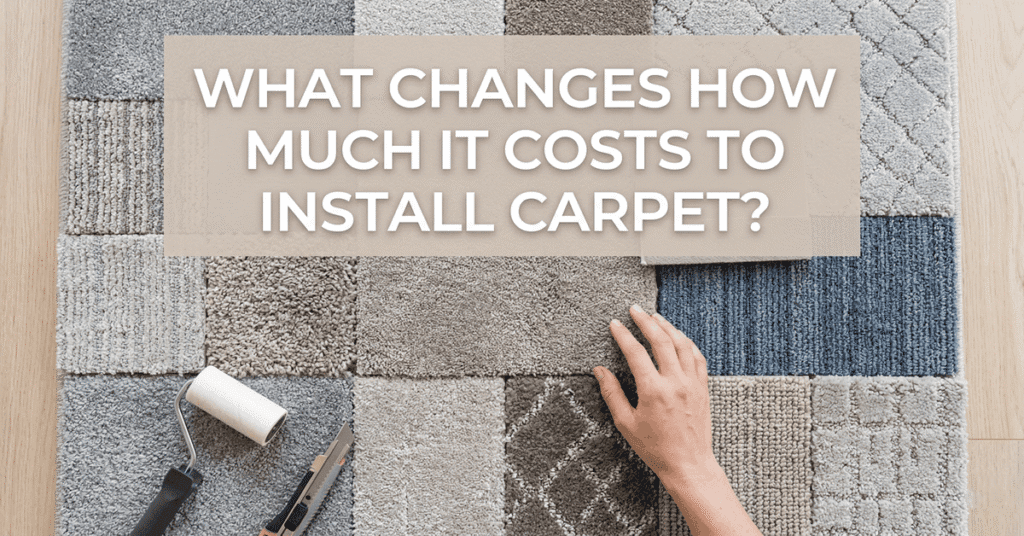
The installed price usually moves most from four things: carpet fiber, carpet padding, room layout, and local labor costs. A nylon carpet for a simple bedroom with basic seams usually lands in a very different range than wool carpet on stairs with tight turns, closet cuts, and subfloor issues. The biggest quote gaps usually come from durability choices, labor difficulty, and how much material gets wasted during the install.
A useful way to read carpet installation cost is to separate what you choose from what the room demands. Fiber, style, and pad sit on the choice side. Stairs, seams, odd corners, and installer rates sit on the job side.
| Cost driver | What raises the price | What keeps it lower | Why it matters |
| Carpet fiber and style | Wool, dense cut pile, premium textures | Polyester, basic styles, lower-density options | Material price changes fast across fiber types |
| Padding | Thicker or better-grade pad | Standard pad | Pad affects comfort, wear, and some warranty terms |
| Layout and stairs | Stairs, angles, closets, many seams | Open rectangular rooms | More cuts and fitting time raise labor and waste |
| Labor market | Higher local rates, small-job minimums, skilled stair work | Competitive local pricing, larger open jobs | Labor can shift the installed carpet price more than shoppers expect |
Carpet fiber and style: polyester, nylon, triexta, olefin, and wool
Fiber choice sets the base for both price and expected wear. Polyester often works for budget-focused rooms and rentals, nylon usually costs more but handles traffic better, triexta sits in the middle for many buyers, olefin shows up in some lower-cost options, and wool sits at the premium end. That is why two quotes with the same square footage can land far apart.
Style matters too. A simple carpet with a straightforward cut pattern is easier to price than a denser product with a more exact finish. For a low-traffic bedroom, a cheaper fiber can make sense. For hallways, family rooms, or stairs, a bargain carpet can wear out fast and push replacement sooner than expected.
Padding quality, face weight, and durability trade-offs
Padding does more than add softness underfoot. It changes how the carpet feels, how well it wears, and whether the floor feels flat or flimsy after install. Comparing padding options for carpet can make quote differences easier to judge. Basic pad can work in light-use rooms. Better pad often makes more sense in rooms that see daily traffic or frequent furniture movement.
Face weight enters the conversation here too, though it should not be read on its own. A heavier carpet can feel richer, yet fiber type and construction still shape real-world wear. For quote review, the better question is what material and pad combination fits the room without paying for performance you do not need.
Room layout, stairs, seams, closets, and custom cuts
Room shape changes both labor time and material waste. An open rectangle is easy to measure and fit. A room with alcoves, multiple closets, doorways, or sharp angles takes more cutting and can leave more unused carpet.
Stairs push pricing up fast. Each tread and riser needs careful fitting, and the job moves slower than a flat-room install. Different common stair installation styles can also affect the finish and labor involved. Seams matter too. A larger room may need seam placement that follows residential carpet installation standards so it hides them well and keeps wear even. That takes judgment from the carpet installer, not just extra minutes on site.
Local labor rates, installer experience, and minimum job charges
Labor costs change by market, installer demand, and job size. In one city, carpet installation estimate rates may look modest for a whole-house project yet feel high for one small room. That often comes down to minimum job charges, travel time, and setup time rather than carpet alone.
Experience shows up in the finished floor even if it does not stand out on the quote. Skilled installation on stairs, around transitions, and across seams often costs more up front. Manufacturer guidance often ties warranty performance to proper installation and approved carpet padding, so the cheapest labor number is not always the best value. Before you compare line items, it helps to know which charges come from labor, removal, prep work, and add-ons.
Carpet Installation Cost Breakdown: Labor, Removal, Prep Work, and Add-On Charges
A carpet installation quote is often split into four buckets: labor costs, removal of old carpet, subfloor prep, and add-on charges such as stairs, transitions, or upgraded carpet padding. This is where two estimates that look close at first can end up far apart once the full scope is written out. If you want a reliable carpet installation estimate, read the line items rather than the top number alone.
Labor costs vs. material costs
Material cost covers the carpet itself and, in many cases, the pad. Labor covers measuring, cutting, seaming, stretching, trimming, fitting around edges, and cleanup. In a simple square room with easy access, labor may stay near the lower end of the range. In a room with closets, tight corners, or multiple seams, the labor share usually climbs.
This is one reason people see broad ranges such as $2 to $8 per square foot, $5.27 to $7.72 per square foot, or even $0.50 to $9 per square foot in search results. Some figures reflect carpet only. Some reflect installed carpet cost. Some fold in carpet padding. Some assume a basic room, not stairs or subfloor repair. When you compare quotes, ask whether the number is for product only or carpet cost per square foot installed.
Removing old carpet, hauling debris, and moving furniture
Removal is often priced separately, especially in replacement jobs. Old carpet, old pad, tack strip cleanup, disposal fees, and hauling debris can add a noticeable amount to the final bill. Some installers charge about $1 to $3 per square foot for tear-out and disposal. You may even see lower figures such as $0.50 to $1.50 per square foot, depending on local labor rates, dump fees, and how easy the material is to pull up.
Furniture moving is another common line item. A basic quote may assume the room is empty. Beds, dressers, sectionals, office desks, or heavy entertainment units often trigger extra labor charges. A homeowner who handles light furniture ahead of time may cut part of that cost, though the installer should still state who is responsible for anything left in place.
Subfloor repairs, moisture issues, and floor leveling
Subfloor condition is one of the biggest reasons a final invoice rises after the first visit. If the installer finds soft spots, uneven patches, pet damage, staple damage, or moisture in the subfloor, the carpet cannot simply go down and perform well. Prep work may involve patching, leveling, cleaning, or replacing damaged areas before pad and carpet are installed.
This matters most in basements, older homes, and rooms where old flooring hid damage for years. Moisture issues deserve extra attention, since a new carpet laid over a damp subfloor can trap odor, shorten carpet life, and create warranty trouble with some manufacturers. In practice, the repair scope changes from one house to the next, so this part of the quote is often listed as an allowance or a possible extra rather than a fixed charge.
Extra charges for stairs, pattern matching, premium pad, transitions, and trim
Add-ons are where many homeowners get surprised. Stairs usually cost more per square foot than a flat room since each tread and riser needs careful fitting and fastening. Premium carpet padding raises comfort and may support longer wear, though it lifts the installed price. Transitions, trim pieces, closet work, and door-edge finishing can show up as separate charges even in a small project.
Pattern matching can push cost higher with some carpet styles since it creates extra waste and slows installation. Minimum job charges can raise the price of a single bedroom or hallway, even if the square footage is low. That is why a small project does not always scale down neatly from national figures such as around $1,650 for smaller projects or totals like $4,720. Those numbers can help with context, yet the line items tell you far more about what you will actually pay.
| Line item | Common billing approach | What to check in the quote |
| Labor | Per square foot or minimum job charge | Seaming, stretching, trimming, cleanup |
| Old carpet removal | Per square foot or flat fee | Pad removal, haul-away, disposal |
| Furniture moving | Per item or flat fee | Which items are included |
| Subfloor prep | Allowance, hourly, or repair-based | Moisture, leveling, patching, damaged areas |
| Stairs | Per stair or premium labor rate | Open stairs, landings, bullnose edges |
| Upgraded pad | Per square foot upgrade | Pad density, thickness, warranty fit |
| Transitions and trim | Per piece or bundled add-on | Doorways, reducer strips, edge finishing |
A detailed quote should show these charges in plain language, so you can compare bids on the same scope rather than picking a lower number that leaves half the work off the page.
How to Estimate Your Carpet Installation Cost Before You Get Quotes
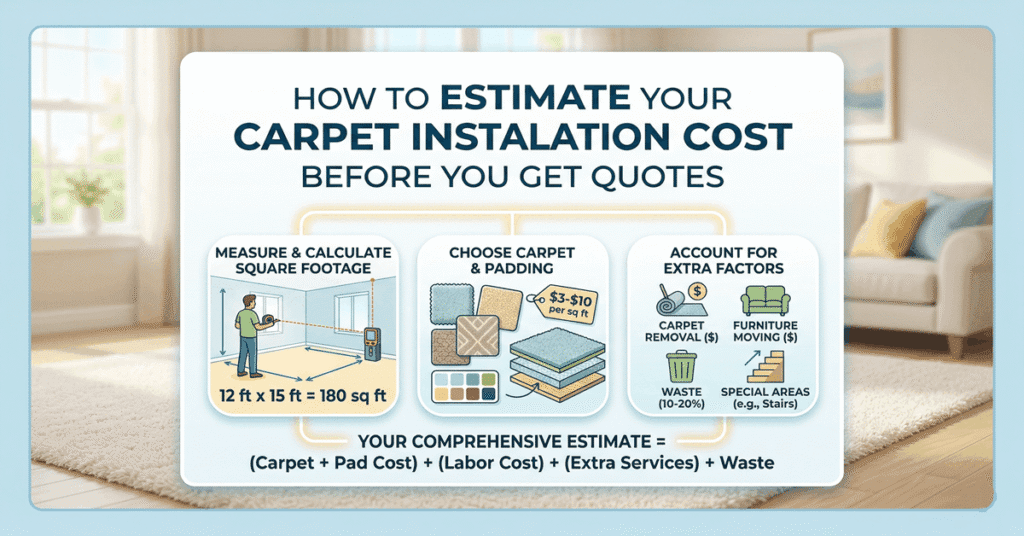
A reliable carpet installation estimate starts with the full job scope, not a single per-square-foot number. Your working budget needs room size, waste, carpet padding, labor costs, stairs or closets if they apply, and a small reserve for subfloor work that may show up after the old carpet comes out. That approach gives you a usable range before any carpet installer steps into the house.
Measure the space the way installers price it
Start with the length and width of each room and convert that to square footage. Then add a little extra for cuts, seams, closets, doorways, and layout waste. A simple rectangular bedroom is easier to price than a room with alcoves, angled walls, or a hall tied into the same run.
Stairs need their own line in the estimate. They take more labor, more fitting time, and more material planning than an open room. The same goes for tight turns, built-ins, and transitions into another flooring type.
A rough homeowner estimate works best as a planning number, not a final quote. If you are trying to figure out how much it costs to install carpet per square foot, measure each room on its own first, then total the project. That keeps a large whole-house number from hiding the rooms that cost more to carpet.
Build a realistic budget using a low-mid-high estimate
Use three budget lanes: low, mid, and premium. That gives you a better read on carpet installation cost than one average pulled from a search result. A low figure may fit a basic polyester carpet and standard pad in an easy room. A midrange figure often lands closer to what most homeowners pick once comfort, durability, and labor are priced together. A premium figure leaves room for better fiber, denser padding, stair work, or a more complex layout.
This small worksheet gives you a clean starting point:
| Budget lane | What to include |
| Low | Carpet, basic padding, standard labor, simple room layout |
| Mid | Better carpet fiber, upgraded pad, normal furniture moving, standard removal |
| Premium | Higher-grade carpet, denser pad, stairs, tricky cuts, trim or transition work |
Keep the estimate honest by adding every cost bucket, not just the carpet roll. For a room-based budget, many homeowners search terms like average cost to carpet a 12×12 room or cost to carpet a room. Those searches are useful for orientation, though your actual number can move once room shape, pad choice, and subfloor condition are known.
Compare estimates without choosing the wrong cheap quote
When quotes start coming in, compare the line items, not only the total. It also helps to get written estimates from more than one contractor. One quote may look lower and still leave out carpet removal, disposal, furniture moving, premium padding, or trim work. Another may bundle those items into the installed carpet price, which makes the number look higher at first glance.
Use the same checklist for each bid:
- carpet fiber and product grade
- carpet padding type and thickness
- square footage charged
- labor scope
- old carpet removal and disposal
- stairs, closets, seams, and transitions
- subfloor prep or repair terms
This is where many budget mistakes happen. A cheap quote can turn expensive after change orders, or it can leave you with a lower-grade carpet and pad than you expected. A clean estimate should show what is included, what is optional, and what may change once the installer sees the floor under the old carpet.
When Carpet Is Worth the Cost and When Another Flooring Option May Be Better
Carpet is worth the cost in rooms where comfort, warmth, and noise control matter more than moisture resistance or long service life under heavy wear. In bedrooms, low-noise spaces, and colder areas, carpet padding and a well-matched carpet fiber can make daily use feel better at a lower upfront price than hardwood, tile, or many luxury vinyl plank jobs. The better choice shifts once pets, damp conditions, frequent spills, or resale priorities move to the front of the decision.
Best situations for installing carpet
Carpet makes the most sense in bedrooms, guest rooms, and upper-floor living spaces where people want a softer feel underfoot and less sound transfer. A nylon carpet or triexta carpet paired with solid padding often gives a good balance of comfort and wear for family use. Polyester can work well in a lower-traffic room or a rental where keeping the installed carpet price under control matters more than getting the longest lifespan.
Cold climates can make carpet a sensible spend as well. A carpeted bedroom or finished upstairs hallway usually feels warmer first thing in the morning, and the extra cushion can make a room feel quieter and more comfortable without the higher price of a premium hard surface plus rugs.
Carpet can work in a finished basement with a dry subfloor and no moisture history, though that choice needs a careful look at past leaks, humidity, and slab-floor moisture control. One water event can change the value equation fast.
When hardwood, vinyl plank, or tile may be the smarter spend
Hardwood, luxury vinyl plank, or tile often make more sense in entry areas, kitchens, homes with large dogs, or any room where tracked-in dirt and spills are routine. Carpet installation cost may look lower at the start, though the cheaper first bill does not always mean lower long-run cost if the carpet will need replacement far sooner.
Luxury vinyl plank is often the safer pick for basements, mudrooms, or homes with recurring pet accidents. Looking at carpet versus luxury vinyl plank costs can help when the decision comes down to budget as much as performance. Tile suits bathrooms, laundry areas, and other spaces with regular water exposure. Hardwood can appeal more in main living areas where resale presentation matters and the owner wants a longer-cycle floor, even with a higher starting price. That is usually easier to weigh once you see how carpet compares with engineered hardwood in practical terms.
| Room or condition | Carpet | Another flooring option |
| Bedroom | Strong fit for comfort and noise control | Hardwood or vinyl if allergy cleanup is a top concern |
| Stairs | Soft and quieter, yet wear shows faster | Hardwood looks cleaner long term, though slip resistance needs thought |
| Basement | Works only with a dry subfloor | Vinyl plank or tile is often the safer pick |
| Pet-heavy home | Can work with the right carpet fiber, yet odor and stain risk stay higher | Vinyl plank usually handles cleanup better |
| Resale-focused main living space | Good for budget refreshes | Hardwood often carries stronger buyer appeal |
Cost now vs. value over time
Upfront price matters, though value over time matters more in high-use rooms. A low-cost carpet replacement can be a smart move for a guest room, a short-term rental refresh, or a home sale prep project. That same bargain carpet may feel like poor value in a busy family room with kids, pets, and daily traffic.
Face weight, carpet fiber, pad quality, and room use all shape the real lifespan. Manufacturer warranty language often notes that pad choice, moisture issues, and traffic patterns affect performance. For someone asking how much it costs to install carpet in a bedroom, carpet may still be the right answer. For a main floor that takes constant abuse, vinyl plank, tile, or hardwood may be the smarter spend, even with a higher starting quote.
How to Save Money on Carpet Installation Without Regretting It Later
Saving money on carpet installation comes down to cutting the right costs, not the parts that affect comfort, wear, or fit. The best savings usually come from smarter material selection, better quote review, and tighter project scope, not from stripping out carpet padding, skipping prep, or hiring the lowest labor bid with vague terms. A good carpet installation estimate should make the trade-offs clear before the job starts.
Where to save safely: material selection, timing, and room prioritization
Start with the room itself. A guest room, rental bedroom, or low-traffic office can often do well with a lower-priced carpet material than a family room, hallway, or stair run. Polyester or olefin may work fine in lighter-use spaces, where premium nylon is often money better spent in rooms that take daily wear.
Room prioritization can cut the total bill without lowering quality in the areas that matter most. If the whole house does not need new carpet at once, focus on the rooms with the worst wear or the highest comfort value. That can free up budget for better carpet padding or stronger installation work in the first phase.
Timing can help too. Some retailers and installers run promotions during slower periods or offer better pricing when several rooms are done in one visit. Knowing the best season to shop for carpet can help you plan around those savings. A whole-house job may lower the installed carpet price per square foot compared with a single small room, since many crews have minimum job charges.
A few ways to save without hurting the result:
- Choose carpet fiber by traffic level, not by showroom feel alone
- Replace the rooms that need it most first
- Compare full installed quotes, not material prices on their own
- Ask if furniture moving or old carpet removal can be handled ahead of time
- Look for simple, durable styles that hide wear without a premium price tag
What not to cut: padding, prep, and installation quality
Cheap carpet can still perform decently in the right room. Cheap padding is a different story. Carpet padding supports comfort, reduces wear, and can affect how the carpet holds up over time. Manufacturer warranty terms often tie performance to the right pad type and thickness, so shaving off a few dollars here can cost more later.
Prep work is another place where a low quote can turn into a bad one. Subfloor issues, tack strip replacement, moisture spots, or uneven areas need attention before the carpet goes in. If a quote skips those details, the price may look better on paper and worse after installation.
Installation quality matters most on stairs, seams, transitions, and closets. Poor seam placement or rushed stair work can make a new carpet look worn far sooner than it should. A low labor rate may be fine for a simple square bedroom, though the risk rises when the layout gets more complex.
Questions to ask every installer before you sign
A solid quote should spell out carpet, pad, labor costs, tear-out, disposal, furniture moving, stair pricing, and any subfloor allowance. If those items are vague, the estimate is harder to trust and harder to compare.
Ask these before you commit:
- What exactly is included in the installed price per square foot?
- Is carpet padding included, and what pad spec is listed?
- Are old carpet removal and disposal separate charges?
- How are stairs, closets, seams, and transitions priced?
- What happens if subfloor repair is needed after tear-out?
- Who handles warranty service if there is a fit or seam issue?
The lowest quote can still be the right one, though only when the scope, product specs, and labor details match the other bids. That is where real savings show up.

Frequently Asked Questions
Is carpet installation cheaper than hardwood or luxury vinyl plank?
Yes, carpet installation usually has a lower upfront cost than hardwood and is often lower than luxury vinyl plank as well. The gap can shrink once you add carpet padding, old carpet removal, stair work, and subfloor prep. Carpet still tends to be the lower entry-price choice for bedrooms and similar spaces, though replacement may come sooner in high-traffic areas. It helps to know when carpet usually needs replacement before deciding whether a lower upfront cost is really the better value.
How much does it cost to install carpet in one 12×12 room?
A 12×12 room gives you a useful starting point for budgeting, though the final quote is based on layout, waste, carpet material, pad, and labor costs. Closets, doorways, seam placement, furniture moving, and minimum job charges can push the installed carpet price above a simple square-foot estimate. For a small room, the quote often reflects setup time as much as raw square footage.
Do carpet installers charge separately for removing old carpet?
Many do. Some quotes bundle old carpet removal, hauling, and disposal into the installed price, though others list each item on its own. That difference can make one carpet installation estimate look cheaper than another even when the full project cost is close. Ask for a line-item quote so you can compare labor, disposal fees, and any subfloor cleanup on equal terms.
Is carpet padding included in installation cost?
Sometimes, though not in every quote. One installer may include a basic carpet padding option, and another may price pad separately or quote a better pad at a higher rate. Since padding affects comfort, wear, and fit, check the pad spec rather than assuming all included options are equal. A low quote with weak padding can be a poor value.
Why are stairs so much more expensive to carpet?
Stairs cost more to carpet since the work is slower, more detailed, and harder to fit cleanly than a flat room. Each tread and riser needs careful cutting, fastening, and finishing, and the labor rate reflects that extra time. Stair runs can create more waste as well, which affects material use and can raise the cost per square foot beyond what you would expect from a bedroom or living room.
Can I save money by removing old carpet myself?
Yes, you can cut some labor costs by handling tear-out on your own, though that only makes sense if you can do it cleanly and safely. If the old carpet was wet, dry water-damaged materials within 24 to 48 hours, before you decide what can stay. If you are trying to salvage any area first, understanding steam cleaning versus hot water extraction can help you choose the right cleanup approach. Old tack strip, staples, damaged subfloor areas, or moisture spots may show up once the carpet is gone. If the room is large or the stairs are involved, a contractor may prefer to handle removal so the subfloor condition and installation scope stay clear from the start.
Conclusion
A realistic carpet budget starts with the full installed price, not the carpet sample in the showroom. Carpet padding, labor costs, stairs, room layout, old flooring removal, and subfloor condition all shape the final quote, so the smartest way to compare options is to look at complete estimates side by side instead of chasing the lowest material price.
The best value usually comes from matching the carpet material to the room, protecting the parts of the job that affect fit and wear, and checking what the installer has actually included. A small bedroom, a stair run, and a whole-house replacement can each price out very differently, even with similar carpet.
If you are still asking how much it costs to install carpet, the next step is simple: measure the space, narrow down the carpet and pad that fit the room, and get line-item quotes that show labor, removal, and any prep work. That gives you a budget you can trust and a clearer way to judge which quote is actually the better buy.