Disclosure: Classy Floor is reader-supported. As an Amazon Associate, we earn from qualifying purchases. We may also earn commissions from other affiliate programs, at no additional cost to you. Learn more →
The carpet industry has undergone a significant transformation over the past decade, driven by advances in polymer engineering, a growing interest in sustainable natural materials, and the continued evolution of synthetic fiber performance. While nylon has long dominated the synthetic category, wool carpets have maintained their reputation as the benchmark of luxury and ecological integrity.
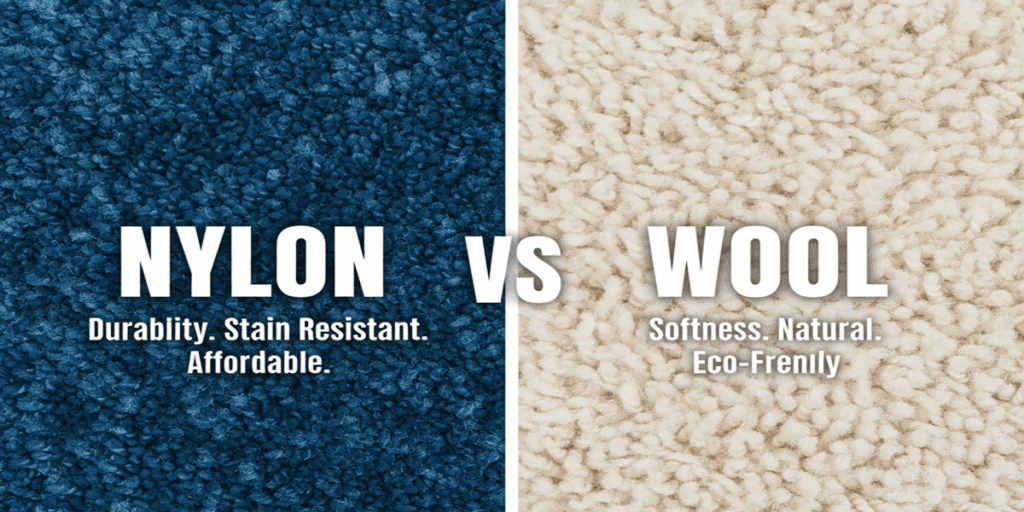
Understanding the differences between nylon vs wool carpet is essential for anyone studying modern flooring materials, evaluating building product sustainability, or specifying carpets in interior architecture. Though both offer resilience and comfort, their chemical composition, environmental impact, and functional behavior differ substantially.
This educational guide examines every critical aspect of nylon and wool carpets, from fiber chemistry and tactile comfort to stain resistance, maintenance science, and life-cycle sustainability, using 2026 materials data and independent research findings.
What Is Nylon Carpet?
Composition and Manufacturing
Nylon is a synthetic polyamide polymer originally developed by DuPont in the late 1930s. It is produced through a condensation reaction between diamine and dicarboxylic acid monomers, creating long molecular chains of amide linkages (CONH). These chains are extruded, cooled, and drawn into filaments that are then tufted into carpet backing.
Two commercial forms dominate:
- Nylon 6,6 – features tight molecular bonding, excellent strength, and high melting point.
- Nylon 6 – offers similar resilience with slightly improved dyeability and flexibility.
Contemporary manufacturing includes solution-dyed nylon (SDN), in which pigment is added before extrusion, producing colorfast fibers that resist fading and chemical bleaching. Some manufacturers now use recycled nylon six recovered from industrial waste or discarded fishing nets, aligning with circular economy practices.
Key Performance Advantages
- High Tensile Strength: 5–6 g/denier on average, suitable for high-traffic environments.
- Elastic Recovery: Excellent compression resilience; retains pile height after repeated foot traffic.
- Stain Resistance: Solution-dyed versions show exceptional resistance to everyday household stains.
- Abrasion Resistance: Outperforms most synthetic and natural fibers under wear testing.
- Manufacturing Efficiency: Consistent fiber quality, rapid production cycles, and color versatility.
Typical Applications
- Commercial offices and hospitality venues require durability.
- Family homes with heavy foot traffic.
- Educational or healthcare facilities where easy cleaning and hygiene are priorities.
What Is Wool Carpet?
Composition and Characteristics
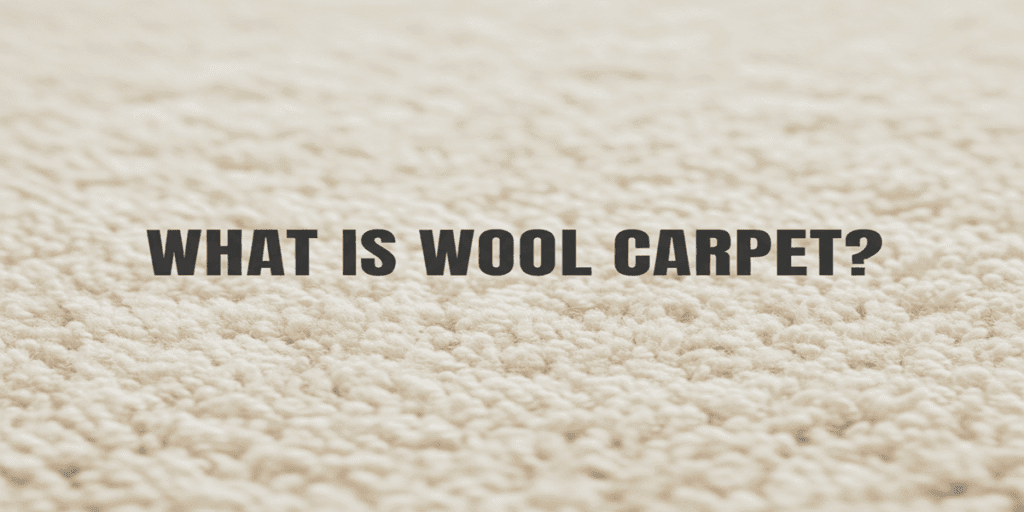
Wool is a natural protein-based fiber obtained from the fleece of sheep. Each strand consists primarily of keratin, the same resilient protein found in human hair and nails. The fiber’s microscopic scale structure creates natural crimp and elasticity, while its waxy coating (lanolin) provides water and soil repellence.
Wool fibers are graded by micron thickness from coarse (38 µm) for durable loop piles to fine merino (19–21 µm) for premium plush textures. Unlike synthetic fibers, wool is renewable, biodegradable, and carbon-active, meaning it absorbs CO₂ during growth.
Key Performance Advantages
- Natural Elasticity: Retains shape under compression; self-resilient.
- Thermal and Acoustic Insulation: Air pockets trap heat and dampen sound.
- Air Purification: Absorbs indoor pollutants, including formaldehyde and nitrogen oxides.
- Flame Resistance: Ignition temperature around 570 °C; self-extinguishing.
- Biodegradability: Decomposes naturally, returning nutrients to soil.
Common Applications
- Luxury residential interiors and executive offices.
- Spaces emphasizing natural aesthetics or acoustic comfort.
- Environments where indoor-air quality and sustainability are priorities.
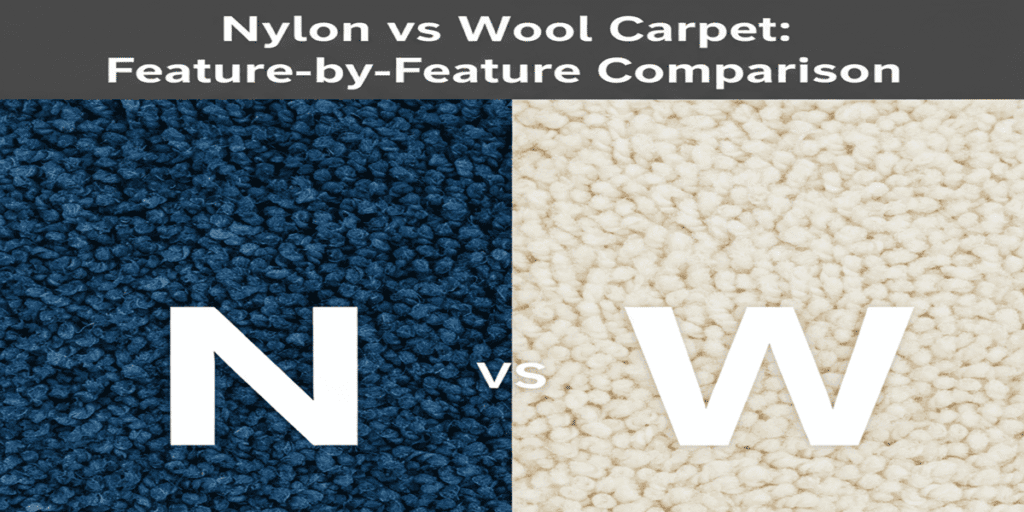
Nylon vs Wool Carpet: Feature-by-Feature Comparison
1. Durability and Longevity
Durability remains the most studied property in carpet performance science. In standardized Martindale abrasion and compression recovery tests, nylon demonstrates exceptional endurance under repeated stress. Its polyamide chains act as molecular springs, returning to their original configuration even after thousands of compressive cycles.
| Feature | Wool Carpet | Nylon Carpet |
| Elastic Recovery | Natural, moderate | Excellent under high load |
| Abrasion Resistance | High – fibers scuff gracefully | Very high – resists wear in heavy traffic |
| Typical Lifespan | 15–25 years | 7–15 years |
| UV Resistance | Good, may fade gradually | Excellent (especially SDN) |
Educational Note: Durability is influenced not only by fiber composition but also by pile density, backing quality, and installation environment. Wool may outlast nylon in residential contexts due to slower aesthetic degradation, whereas nylon excels in commercial durability metrics.
Verdict: Nylon excels in mechanical resilience; wool retains its long-term appearance.
2. Softness and Tactile Comfort
Softness derives from fiber fineness, crimp structure, and thermal behavior. Wool fibers, typically 20–25 µm thick, exhibit natural crimps that create cushioning and warmth. The presence of internal air pockets provides both acoustic damping and thermal insulation.
Nylon, although synthetic, can be engineered into ultra-fine filaments that mimic the softness of natural materials. Modern SDN carpets employ twisted multi-filament yarns to enhance tactile feel. Yet, nylon’s lower hygroscopicity means it cannot equal wool’s humidity-balanced comfort.
Verdict: Wool remains the benchmark for softness and natural underfoot comfort.
3. Stain Resistance and Soil Behavior
Stain resistance involves surface energy and absorption behavior. Nylon, particularly when solution-dyed, exhibits inherent hydrophobicity; color pigments are built into the polymer, so spills rarely penetrate. Laboratory data show that nylon absorbs less than 0.4% of its weight in moisture.
Wool’s scaly surface repels dry dirt but absorbs liquid spills quickly. Its amino acid side chains attract polar molecules, making it susceptible to staining from substances such as wine or coffee. However, the lanolin film offers limited natural protection and can be refreshed through periodic professional cleaning.
Verdict: Nylon provides superior stain and soil resistance in everyday use.
4. Cleaning and Maintenance
Maintenance science emphasizes fiber chemistry, detergent compatibility, and soiling resistance.
- Nylon: Responds well to hot-water extraction at 60–70 °C; detergents should remain neutral (pH 7). Its color stability allows frequent cleaning without fading.
- Wool: Requires mild pH (5–6) detergents to avoid protein degradation. Excessive heat or alkalinity can cause felting.
Modern wool carpets often feature insect-resistant and stain-repellent treatments that enhance their cleanability and durability. If you’re comparing cleaning tools, our breakdown of the best cleaning method for different carpet types explains how steamers and shampooers affect nylon and wool performance.
Verdict: Nylon = low maintenance; Wool = careful, methodical upkeep.
5. Indoor Air Quality and Health Factors
Indoor Environmental Quality (IEQ) research highlights the influence of carpet on air composition. High-grade nylon products certified under CRI Green Label Plus emit minimal VOCs.
Wool, however, actively improves air quality through the adsorption of harmful gases and humidity regulation, maintaining a relative humidity between 40% and 60%.
For households with respiratory sensitivities or allergies, wool offers natural benefits by reducing airborne dust through its electrostatic properties. Nylon is safe when certified as low-VOC, but it may produce minor static buildup in arid climates.
Verdict: Wool enhances air quality; Nylon meets safety through certification.
6. Thermal and Acoustic Insulation
Wool’s hollow, crimped structure traps air, achieving thermal R-values up to 0.18 m²·K/W per 10 mm thickness. Acoustic testing reveals a 20–30 dB reduction in impact noise.
Nylon also offers sound absorption, particularly in dense loop piles, but conducts heat more readily and provides less natural insulation.
Verdict: Wool outperforms in both thermal and acoustic regulation.
7. Environmental Impact and Sustainability
| Criterion | Wool Carpet | Nylon Carpet |
| Origin | Renewable animal fibre | Petroleum-derived polymer (some recycled) |
| Biodegradability | Complete | Partial – recyclable Nylon 6 |
| Carbon Footprint (kg CO₂ eq/kg fibre) | 3.5 – 5.0 | 6.0 – 7.0 (virgin); ≈ 4.0 (recycled) |
| VOC Emissions | Negligible | Low in Green Label Plus products |
Wool’s sustainability advantage stems from its renewable and biodegradable nature. However, livestock methane emissions contribute to its carbon footprint.
Recycled nylon (e.g., Econyl) offsets some of the petrochemical impact by recovering waste materials, such as fishing nets and industrial scrap.
Verdict: Wool excels in renewability; recycled nylon narrows the gap through circular-economy innovation.
8. Cost and Economic Analysis (2026 Estimates)
| Category | Wool Carpet | Nylon Carpet |
| Material Cost (AUD/m²) | $80 – $150 | $60 – $100 |
| Installation Cost (AUD/m²) | $15 – $20 | $10 – $15 |
| Average Lifespan (yrs) | 20 | 12 |
| Annualized Value ($/m²·yr) | 6 – 7 | 7 – 8 |
Although wool demands a higher initial investment, its longevity and indoor comfort performance often yield a better lifetime value. For homeowners weighing options beyond nylon and wool, understanding the cost comparison between carpet and LVP flooring can further clarify which material best fits their budget. Nylon offers an economically efficient solution for commercial properties with high turnover or rental rates.
Verdict: Nylon = budget efficiency; Wool = long-term value.
9. Static Electricity and Safety
Static generation can cause minor discomfort and interfere with electronics.
- Wool: Naturally dissipates static due to inherent moisture content (12–14 %).
- Nylon: Can accumulate charge in dry climates, but anti-static carbon fibers or topical treatments mitigate this.
Verdict: Wool offers innate static protection; modern nylon performs acceptably with treatments.
10. Colorfastness and Aesthetic Longevity
Nylon’s colorfastness, especially in solution-dyed form, surpasses most fibers. It resists UV fading and chemical bleaching.
Wool accepts dyes richly, yielding deep, natural hues, but may experience gradual fading when exposed to prolonged sunlight.
Verdict: Nylon for color stability; Wool for natural depth and texture.
11. Fire Performance and Safety Behavior
Wool’s ignition temperature (570 °C) and low heat release rate classify it as naturally flame-resistant. It does not melt or drip when burned.
Nylon softens at 220 °C and melts at 250 °C, which can cause localized deformation but limits flame spread once the heat source is removed.
Verdict: Both meet safety standards; Wool provides superior passive fire resistance.
12. Lifecycle and End-of-Use Management
End-of-life considerations now form part of Building Product Declarations (BPDs).
- Wool: Fully compostable; contributes nutrients (nitrogen, sulfur) to soil.
- Nylon: Recoverable through depolymerization; recycled into new polymer chips.
Global initiatives by Aquafil and Interface (2024–25) are scaling closed-loop nylon recycling, aiming for 100% fiber recovery by 2030.
Summary Table: Nylon vs Wool Carpet (2026 Overview)
| Factor | Wool Carpet | Nylon Carpet |
| Fibre Type | Natural protein (keratin) | Synthetic polyamide (Nylon 6/6, 6) |
| Origin | Renewable animal source | Petrochemical/recycled synthetic |
| Softness | Exceptional, warm | Moderate to soft in SDN versions |
| Durability | Long life, resilient | High wear resistance |
| Stain Resistance | Moderate – natural lanolin | Excellent – inherent hydrophobicity |
| Cleaning Ease | Requires gentle care | Simple maintenance |
| Air Quality | Absorbs pollutants | Low VOC certified |
| Sustainability | Biodegradable & renewable | Recyclable variants available |
| Cost Range (AUD/m²) | $80 – $150 | $60 – $100 |
| Static Control | Natural anti-static | Requires treatment |
| Fire Resistance | Self-extinguishing | Melts / drips, slow spread |
| Ideal Use | Luxury residential, eco spaces | High-traffic commercial, family areas |
Conclusion
From an academic standpoint, the nylon vs wool carpet comparison exemplifies the broader contrast between engineered polymers and natural protein fibers.
Nylon demonstrates how molecular design can deliver mechanical resilience, stain resistance, and affordability. Wool illustrates nature’s capacity for thermal regulation, acoustic comfort, and environmental balance.
In practical selection:
- Choose nylon for high-traffic areas, low maintenance, and color permanence.
- Choose wool for its tactile comfort, ecological integrity, and long-term benefits for indoor wellness.
Hybrid developments, such as wool-nylon blends, are emerging to integrate synthetic durability with natural aesthetics, reflecting the future direction of sustainable flooring technology.

Frequently Asked Questions (FAQ)
Which carpet lasts longer: nylon or wool?
Wool generally lasts 15–25 years, while nylon lasts 7–15 years. Wool’s fiber memory slows visible wear; nylon’s tensile strength resists crushing.
Is wool carpet more eco-friendly than nylon?
Yes. Wool is renewable and biodegradable. Recycled nylon lessens environmental impact but remains petrochemical-based.
Which carpet is easier to clean?
Nylon is easier to maintain due to its inherent stain resistance. Wool requires pH-balanced cleaners and prompt attention to spills.
Do wool carpets improve air quality?
Yes. Wool absorbs indoor pollutants and balances humidity, contributing to healthier air conditions.
Does nylon carpet emit VOCs?
Modern Green Label Plus-certified nylon carpets emit very low VOCs and are safe for indoor environments.
Which carpet is better for allergies?
Wool’s natural hypoallergenic properties make it ideal for allergy-sensitive households.
Do nylon carpets fade in sunlight?
Solution-dyed nylon is extremely UV-resistant and resists fading even under intense sunlight.
Is wool carpet fire-resistant?
Yes. Wool is naturally flame-retardant and self-extinguishing, a significant safety advantage.
Which carpet is more expensive?
Wool generally costs $80–$150 per square meter installed, while nylon costs $60–$100 per square meter.
Can both be recycled or reused?
Wool biodegrades; nylon can be chemically recycled through depolymerization systems, such as Econyl.