
Disclosure: Classy Floor is reader-supported. As an Amazon Associate, we earn from qualifying purchases. We may also earn commissions from other affiliate programs, at no additional cost to you. Learn more →
Trying to choose between wool vs synthetic carpet for your home? Wool feels warm, natural, and luxurious underfoot, while synthetic carpet fibres (nylon, polyester, polypropylene, and triexta) usually cost less, resist stains better, and handle busy family traffic with less fuss.
In this 2026 guide, you’ll see clear pros and cons, cost comparisons, and best rooms for each option, plus a dedicated look at triexta vs wool carpet for modern homes with kids, pets, and frequent spills. The article is written for homeowners, interior designers, and materials enthusiasts who want more than marketing claims.
Wool vs Synthetic Carpet: Quick Answer
Wool carpet is best for quiet, low-to-moderate traffic rooms where you value natural materials, indoor air quality, and long-term aesthetics. Synthetic carpet, especially nylon and triexta, is usually better for busy family spaces, stairs, hallways, and basements because it’s more stain-resistant, easier to clean, and often cheaper upfront.
If you’d like to check current styles and pricing while you read, you can browse wool carpet options and compare synthetic carpet choices.
- Choose wool for natural luxury and indoor comfort.
- Choose synthetics when you need durability, stain resistance, and low-maintenance performance.
What Is Wool Carpet?
Wool carpet is a natural, premium carpet fibre made from sheep’s wool. It feels warm and cushioned, helps regulate indoor temperature and humidity, and can last 15–25 years in residential settings when properly maintained.
Composition and Manufacturing
Wool is a protein-based natural fibre rich in keratin. Each filament has a microscale cuticle with millions of tiny scales that create natural crimp and elasticity. This structure helps wool recover from compression and gives it a distinctive, plush hand feel.
Typical steps in wool carpet production include:
- Shearing – Fleece is shorn from sheep.
- Scouring – Fibres are washed to remove lanolin, dirt, and impurities.
- Carding and spinning – Clean fibres are aligned and spun into yarn.
- Tufting or weaving – Yarn is made into loop, twist, or plush carpet constructions.
Fibre fineness (often 19–38 microns) varies by breed and grade, influencing softness, resilience, and the best end use.
Key Performance Advantages of Wool Carpet
- Natural elasticity and “memory” – Wool bounces back from furniture marks and foot traffic, helping carpets maintain texture over time.
- Thermal and acoustic regulation – Crimped fibres trap pockets of air, delivering insulation and sound absorption.
- Moisture buffering – Wool is hygroscopic, absorbing and releasing moisture to help stabilise indoor relative humidity.
- Air-purifying behaviour – Wool can adsorb certain indoor pollutants (e.g., formaldehyde, NOx) for extended periods.
- Fire performance – Wool has a relatively high ignition temperature, tends to char rather than melt, and is naturally self-extinguishing once the flame source is removed.
- Biodegradability – At the end of life, wool can break down in soil, returning nitrogen and sulphur nutrients.
Typical Applications
Wool carpet is favoured in:
- Bedrooms and nurseries
- Quiet living rooms and reading rooms
- Libraries and executive offices
- Interiors prioritising natural materials, acoustic comfort, and premium aesthetics
If you’re planning a comfort-focused room, you can explore wool carpet styles for bedrooms or look at wool rugs for nurseries and reading corners to get a feel for colours, textures, and price ranges.

What Is Synthetic Carpet (Nylon, Polyester, Polypropylene, Triexta)?
If you’re wondering what is synthetic carpet, think of it as carpet made from engineered, man-made fibres rather than animal hair. Synthetic carpet is produced from plastics like nylon, polyester, polypropylene, and triexta, which are extruded into filaments and then tufted or woven into carpet. In modern homes, most wall-to-wall carpets fall into this synthetic carpet category.
Composition and Manufacturing
“Synthetic carpet” is an umbrella term for several polymer-based fibres:
- Nylon (Polyamide; PA 6 or PA 6,6) – Strong, resilient, and highly versatile. Often used in high-traffic residential and commercial spaces. Available as solution-dyed nylon (SDN) for superior colourfastness and stain performance.
- Polyester (Polyethylene Terephthalate; PET) – Cost-effective, soft feel, commonly produced as recycled PET (rPET) from post-consumer bottles.
- Polypropylene (Olefin; PP) – Very hydrophobic and stain-resistant, often used for indoor/outdoor and damp environments. Lower crush resistance compared to nylon or triexta.
- Triexta (Polytrimethylene Terephthalate; PTT) – A newer fibre family related to polyester that offers excellent softness and elastic recovery, with potential bio-based content.
Modern mills carefully control:
- Filament denier and cross-section
- Twist level of yarn
- Pigment infusion for solution-dyed variants
These parameters allow manufacturers to tune resilience, stain resistance, and UV stability for different applications.
Key Performance Advantages of Synthetic Carpet
- Engineered resilience – Especially in nylon and triexta, which deliver strong compression recovery in high-traffic spaces.
- Inherent stain resistance – Solution-dyed nylon, PET, PP, and triexta resist many common household stains.
- Colour variety and UV stability – Solution-dyed synthetic fibres offer excellent colourfastness, even with frequent cleaning and sun exposure.
- Ease of cleaning – Most synthetic carpets tolerate neutral detergents and hot-water extraction (following manufacturer guidelines).
- Scalability and price range – From budget-friendly polyester and polypropylene to more premium SDN and triexta, there are options for nearly every budget.
Typical Applications
You’ll commonly see synthetic carpet in:
- High-traffic family rooms, hallways, and stairs
- Kids’ playrooms and rental properties
- Classrooms and waiting rooms
- Basements and indoor/outdoor transitions (especially polypropylene)
For these spaces, you can check out nylon carpet options for high-traffic areas, browse triexta carpet styles, or look at moisture-resistant polypropylene and indoor/outdoor carpet to see what fits your rooms and budget.
Synthetic Carpet vs Wool at a Glance
When comparing synthetic carpet vs wool, the trade-off is simple:
- Wool carpet – Natural, warm, luxurious feel; excellent in quiet living spaces; higher upfront cost and gentler cleaning requirements.
- Synthetic carpet – Engineered for stain resistance, durability, and affordability; better suited to busy households, pets, and frequent cleaning.
If your main question is wool carpet vs synthetic for a typical family home, synthetics often win in high-traffic, spill-prone areas, while wool shines in comfort-focused rooms.
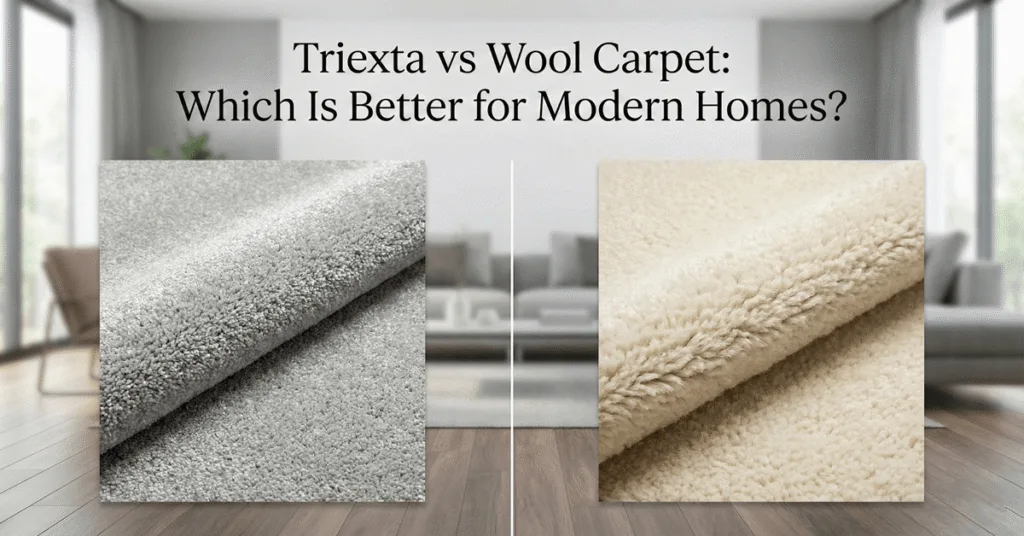
Triexta vs Wool Carpet: Which Is Better for Modern Homes?
Interest in triexta vs wool has grown as homeowners look for fibres that combine softness, stain resistance, and some sustainability benefits. Triexta is often marketed as a “next-generation” synthetic carpet fibre, while wool remains the benchmark for natural comfort.
Softness and Feel
- Wool carpet – Feels warm and cushioned, with natural crimp that supports the foot and quiets footsteps.
- Triexta carpet – Offers a silky, springy feel that many people find as comfortable or sometimes even softer than wool, especially in plush constructions.
Durability and Wear
- Wool – In low-to-moderate traffic residential spaces, wool can deliver 15–25 years of service life with proper care.
- Triexta – Generally offers 10–15 years of good appearance in busy family rooms, especially when installed with proper underlay and maintained regularly.
Stain Resistance and Cleaning
- Triexta – Has excellent built-in stain resistance at the polymer level and tolerates more aggressive cleaning (within manufacturer guidelines). It is a strong choice for homes with kids and pets.
- Wool – Naturally repels some spills initially due to lanolin, but it can stain if spills are not treated promptly and with pH-appropriate cleaners.
Environmental Profile
- Wool – Renewable and biodegradable, sourced from sheep; environmental impact depends on farm practices, transport, and processing. Independent life cycle assessment of wool carpets shows how factors like farming, manufacturing energy, and end-of-life options influence wool’s overall footprint compared with synthetic fibres.
- Triexta – Petrochemical-based but can include bio-based content and may be recyclable in specific take-back programs. It does not biodegrade like wool.
Practical Verdict
For modern family homes where spills, pets, and heavy use are everyday realities, triexta carpet often edges out wool in stain resistance and lower-maintenance performance. For quiet, design-led spaces where indoor comfort, natural materials, and long-term aesthetics matter most, wool carpet still feels more authentically luxurious.
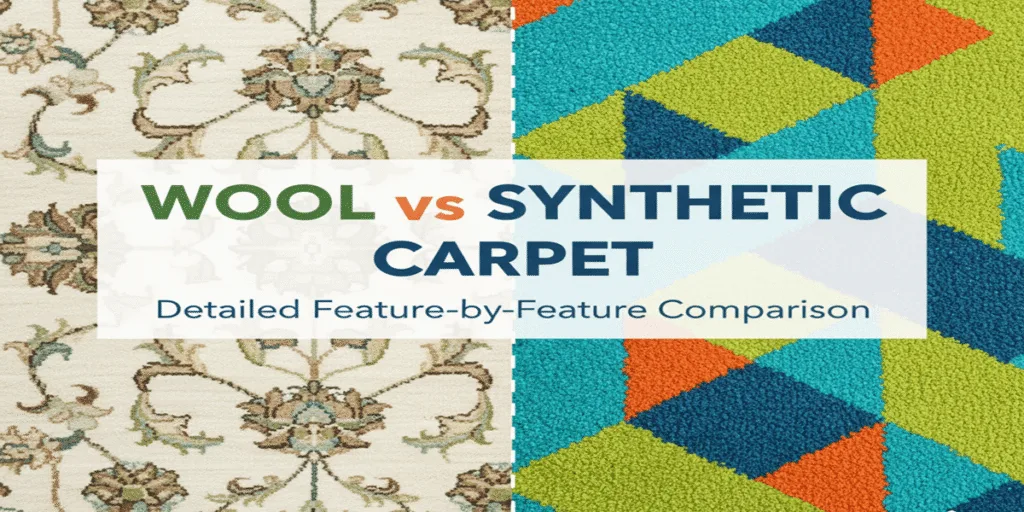
Wool vs Synthetic Carpet: Feature-by-Feature Comparison
1. Durability and Longevity
Durability blends abrasion resistance, elastic recovery, pile density, and backing quality. Your underlay matters too: choosing between medium vs high-density carpet padding can make a noticeable difference in how supportive and long-lasting your carpet feels.
- Wool – Natural fibre memory helps carpet retain texture over time; excellent residential longevity in lower-to-moderate traffic spaces.
- Nylon (PA) – Among synthetics, nylon has the highest mechanical resilience and handles heavy traffic very well.
- Triexta (PTT) – Strong compression recovery and good long-term appearance retention, often outperforming standard PET.
- Polyester (PET) – Soft and attractive initially, but more prone to matting in heavy-use areas unless very densely constructed.
- Polypropylene (PP) – Good for moisture and stains, but lower crush resistance.
Typical residential service life (with proper maintenance):
- Wool: 15–25 years
- Nylon: 7–15 years
- Triexta: 10–15 years
- PET: 5–10 years
- PP: 5–8 years
Takeaway: For longevity, wool, nylon, and triexta lead; PET and PP fit better as budget or light-use options.
2. Softness, Texture, and Underfoot Comfort
Softness depends on fibre fineness, crimp, twist, and pile height.
- Wool – Naturally plush with thermal warmth; crimp adds cushioning and reduces noise.
- Triexta – Very fine filaments create a silky, “springy” feel; excellent for barefoot comfort.
- PET – Smooth, soft initially, but may feel less springy over time in busy zones.
- Nylon – Can be engineered for a tuned feel, from firm support to very soft in premium constructions.
- PP – Soft enough for many indoor/outdoor designs but typically less luxurious.
Verdict: Choose wool for natural plushness, triexta or premium nylon for engineered soft support in high-traffic rooms.
3. Stain Resistance and Soil Behaviour
Stain behaviour hinges on surface energy, dye sites, and hydrophobicity.
- Wool – Lanolin slows initial wetting; prompt blotting helps. Prolonged exposure can lead to permanent staining.
- Nylon (especially SDN) – Pigment is locked inside the polymer, offering excellent colourfastness and resistance to common stains.
- PET – Hydrophobic and resistant to many water-based stains, but can attract oily soils that dull the appearance over time.
- PP (Olefin) – Highly hydrophobic and strongly stain-resistant; limited dyeability encourages solution dyeing.
- Triexta – Inherently stain-resistant and easy to clean with neutral detergents.
Verdict: For stain resistance, solution-dyed nylon, triexta, and polypropylene outperform wool, making synthetics better for messy households.
4. Cleaning and Maintenance
- Wool carpet
- Best cleaned with pH-neutral to mildly acidic products (around 5–6).
- Avoid high-alkaline chemicals and excessive heat/steam that can damage fibres.
- Requires regular vacuuming and periodic professional cleaning with wool-safe methods.
- Synthetic carpet (nylon, PET, triexta)
- Typically tolerates neutral detergents and hot-water extraction (per manufacturer instructions).
- Generally lower-maintenance and more forgiving of DIY cleaning.
- Polypropylene
- Cleans easily with mild soap and water; suitable for indoor/outdoor or damp areas. If you clean carpets often, pairing PP with quick-drying carpet care routines helps you avoid lingering moisture after a deep clean.
Verdict: Synthetics are usually easier and cheaper to maintain; wool rewards careful, methodical care.
5. Moisture, Mold, and Mildew
- Wool – Hygroscopic, can absorb up to ~30% of its weight in moisture without feeling wet. This helps buffer humidity but requires good ventilation; prolonged dampness can encourage mildew or insect activity without preventive treatments.
- Synthetics – Nylon, PET, and especially PP are resistant to moisture uptake. Performance still depends on backing, underlay, and subfloor conditions.
Verdict: In moisture-prone spaces, synthetic carpet, particularly polypropylene, beats wool. It’s still important to watch for signs of moisture-related carpet mold and understand whether carpet cleaning can lead to mold problems if drying and ventilation aren’t handled properly.
6. Indoor Air Quality and Allergen Considerations
- Wool – Helps buffer humidity and can adsorb certain indoor pollutants, supporting comfortable indoor conditions. Its relatively low static helps it attract less airborne dust.
- Synthetics – Quality products often carry low-VOC certifications and, once aired out, perform well in typical homes. Some synthetic carpets can generate static in dry air, though treatments are available.
Verdict: Wool offers active IAQ benefits, while low-VOC synthetic carpets are acceptable for most households seeking practical performance. For more details on how carpet interacts with VOCs and dust in real homes, you can review independent carpet indoor air quality research.
7. Thermal, Acoustic, and Static Performance
- Thermal & acoustic
- Wool: Excellent insulation and sound absorption; ideal for bedrooms and media rooms.
- Synthetics: Provide good thermal and acoustic comfort, especially in dense constructions, though usually with less moisture buffering.
- Static electricity
- Wool: Naturally anti-static due to its moisture content.
- Synthetics: Nylon, PET, and PP can develop static; anti-static additives and adequate humidity help.
8. UV Stability and Fade Resistance
- Wool – Offers rich colour but may gradually fade in strong, direct sunlight over many years.
- Solution-dyed synthetics – Nylon, PET, PP, and triexta in solution-dyed form excel in UV stability; ideal for sunny rooms and near windows.
Verdict: For sun-drenched rooms, solution-dyed synthetic carpet is the safer choice.
9. Fire Performance
- Wool – Naturally flame-resistant, chars, and tends to self-extinguish without melting or dripping.
- Synthetics – Soften and melt; can drip under high heat, but generally meet fire standards when specified correctly with the right backing and treatments.
10. Cost and Budgeting
(Actual prices vary by region, brand, and construction.)
- Wool: Higher upfront cost; often positioned as a long-term investment.
- Nylon (SDN): Mid-to-high range, strong balance of performance and price.
- Triexta: Typically mid-to-high range, similar to or slightly under premium nylon.
- Polyester (PET/rPET): Budget to mid-range, especially for residential use.
- Polypropylene (PP): Budget-friendly, especially for indoor/outdoor or secondary spaces.
Rule of thumb: Wool and premium synthetics may cost more upfront, but can deliver a lower annualised cost when they last longer and age gracefully. If you’re planning a full room refresh, it helps to compare overall carpet vs hard-flooring costs and time your purchase for the ideal season to shop for new carpet to get the best value.
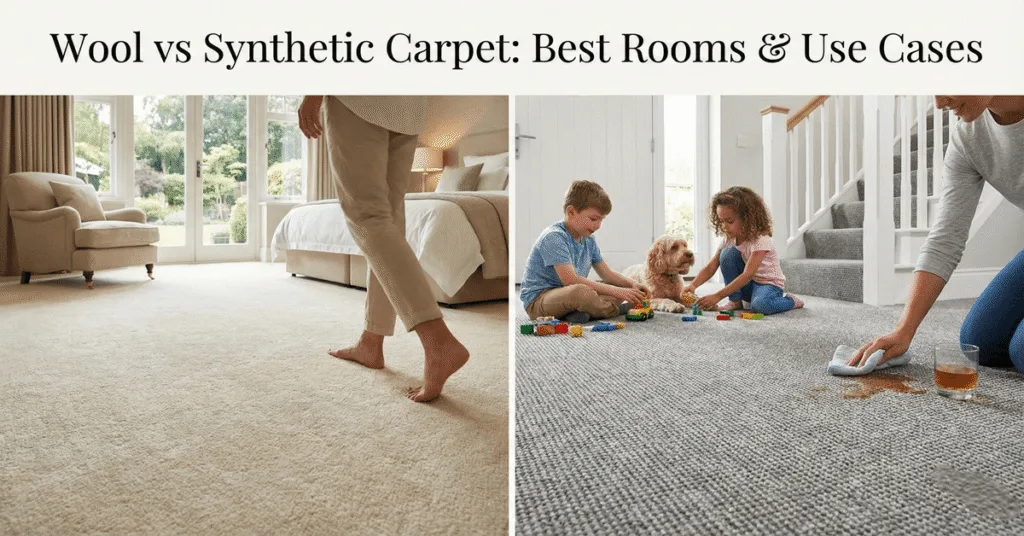
Wool vs Synthetic Carpet: Best Rooms & Use Cases
Choosing wool or synthetic carpet becomes easier when you think room by room.
Bedrooms and Nurseries
- Best choice: Wool or high-quality nylon/triexta
- Wool provides warmth, acoustic comfort, and a natural feel underfoot.
- For allergy-sensitive families or frequent spills (kids), consider low-VOC nylon or triexta with good underlay.
Living Rooms and Family Rooms
- Low-traffic, design-led living rooms: Wool carpet looks and feels premium, especially in loop or plush constructions.
- Busy family rooms with kids and pets: Triexta or solution-dyed nylon offers the best balance of comfort, stain resistance, and durability.
Stairs and Hallways
These areas see concentrated wear.
- Best choice: Dense nylon or triexta for maximum resilience.
- Alternative: Dense wool carpet can work if you’re prepared for attentive maintenance.
- If your main question is synthetic vs wool carpet for stairs, synthetics are usually the safer, longer-lasting option. You’ll also want to decide how the stair edge is finished; your choice of bullnose vs waterfall stair finish will affect both safety underfoot and the overall look of the staircase.
Basements, Entries, and Moisture-Prone Areas
- Best choice: Synthetic carpet, especially polypropylene or carefully selected nylon/PET, paired with appropriate underlay and moisture management.
- Wool is not ideal in spaces with persistent dampness or risk of water leaks.
Rental Properties and Shorter-Term Use
- Best choice: Budget-friendly polyester (PET) or polypropylene, or hard-surface flooring with area rugs.
- These options balance cost and acceptable performance when replacement cycles are shorter.
Summary Table: Wool vs Synthetic Carpet
| Factor | Wool | Nylon (PA) | Triexta (PTT) | Polyester (PET/rPET) | Polypropylene (PP) |
| Fibre Origin | Natural protein (keratin) | Petrochemical / recycled | Petro/bio-based PTT | Petrochemical / recycled | Petrochemical |
| Softness | Exceptional, warm | Soft–firm (engineered) | Very soft, springy | Soft, less springy | Moderate |
| Typical Durability | 15–25 yrs | 7–15 yrs | 10–15 yrs | 5–10 yrs | 5–8 yrs |
| Stain Resistance | Moderate | Excellent (SDN) | Excellent | Good (watch oils) | Excellent (hydrophobic) |
| Maintenance | Gentle, pH-controlled | Easy, robust | Easy | Easy (oils caution) | Easy |
| Moisture Tolerance | Needs ventilation | Good | Good | Good | Excellent (indoor/outdoor) |
| UV Stability | Moderate | Excellent (SDN) | Excellent (SD) | Excellent (SD) | Excellent (SD) |
| Static Behaviour | Naturally low | Needs treatment | Low/moderate | Moderate | Low/moderate |
| Fire Behaviour | Chars, self-extinguishes | Melts/slow spread | Melts/slow spread | Melts/slow spread | Melts/slow spread |
| Sustainability | Renewable, biodegradable | Recyclable (some grades) | Emerging recycling paths | Recycled content common | Long life outdoors, mixed |
| Ideal Use | Quiet, comfort-driven rooms | High-traffic interiors | Busy family rooms | Budget residential | Damp/UV-exposed spaces |
Conclusion
From a materials-science perspective, wool vs synthetic carpet reflects the broader choice between natural protein fibres and engineered polymers. Wool delivers tactile luxury, acoustic and thermal benefits, and indoor air quality advantages in the right settings, usually quieter residential rooms with moderate traffic.
Synthetic carpets, especially solution-dyed nylon, triexta, and well-designed PET, offer tough, stain-resistant, and cost-effective performance for the more demanding parts of the home: stairs, hallways, family rooms, basements, and rental spaces.
In practice, many homeowners and designers mix both:
- Wool in bedrooms, studies, and formal living rooms
- Synthetic carpet in high-traffic, kid-and-pet areas
If you’re ready to shortlist specific options, you can compare wool carpet styles alongside durable synthetic choices for busy rooms and see what fits your budget and rooms best.
Thinking about your lifestyle, traffic patterns, and maintenance preferences will tell you whether wool carpet vs synthetic is the right answer for each room, not just for the house as a whole.

Frequently Asked Questions (FAQ)
Is wool carpet better than synthetic?
It depends on what “better” means for your home. Wool carpet is “better” when you prioritise natural materials, warmth, and quiet, low-traffic rooms. Synthetic carpet is “better” when you need strong stain resistance, lower upfront cost, and easier cleaning, especially with kids, pets, and frequent entertaining.
Wool vs synthetic carpet: which lasts longer?
In well-maintained residential settings:
– Wool often lasts 15–25 years, especially in low-to-moderate traffic rooms.
– Nylon and triexta generally offer 10–15 years of good appearance in busier zones.
– PET and polypropylene tend to be shorter-cycle options, especially under heavy use.
If durability is your main concern, premium wool, nylon, and triexta are the safest bets.
Wool or synthetic carpet: how do I choose?
Ask yourself:
1. Traffic: High-traffic, kids, pets → lean synthetic (nylon/triexta).
2. Budget: Tight budget → polyester or polypropylene, or mid-range synthetics.
3. Comfort and natural feel: Bedrooms and quiet rooms → wool.
4. Moisture risk: Basements and damp areas → synthetic, not wool.
5. Maintenance style: If you want easy DIY cleaning, synthetics are simpler.
The answer to “wool or synthetic carpet?” can differ from room to room.
What is synthetic carpet?
Synthetic carpet is man-made carpet fibre produced from plastics such as nylon, polyester, polypropylene, and triexta. These fibres are extruded, twisted into yarn, and tufted or woven into carpet. Synthetic carpet is typically more stain-resistant, easier to clean, and often more affordable than wool, which is why most modern wall-to-wall carpet installations are synthetic.
Triexta vs wool carpet: which is better for families?
For busy families with kids and pets, triexta carpet is often more practical: it offers excellent softness, strong built-in stain resistance, and easier cleaning. Wool carpet can still work beautifully in family homes, but it demands more careful maintenance and is usually better suited to lower-traffic rooms where spills are less frequent.
Synthetic vs wool carpet: which is easier to clean?
In general, synthetic carpet is easier to clean. Solution-dyed nylon, PET, polypropylene, and triexta tolerate more aggressive cleaning methods and handle common household spills better. Wool cleans well too, but requires pH-appropriate products, lower temperatures, and prompt attention to avoid damage.
Does wool carpet shed?
Yes, slight initial shedding is normal as loose fibres left from manufacturing are released. This typically decreases over the first few months with regular vacuuming. Persistent, heavy shedding can indicate a construction or quality issue and may be worth discussing with the retailer or manufacturer.
Is wool carpet more eco-friendly than synthetic?
From a fibre perspective, wool is renewable and biodegradable, which gives it an advantage over fossil-based synthetics. However, recycled synthetic carpets (such as those made from rPET or regenerated nylon) reduce waste and can have competitive environmental profiles, depending on how they’re produced and disposed of.