Disclosure: Classy Floor is reader-supported. As an Amazon Associate, we earn from qualifying purchases. We may also earn commissions from other affiliate programs, at no additional cost to you. Learn more →
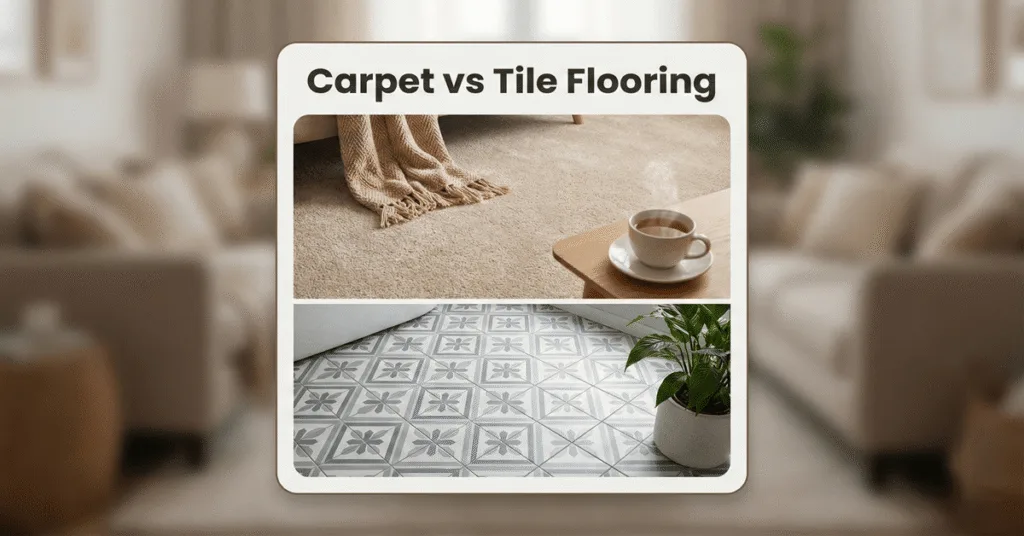
Carpet vs tile flooring comes down to how you live, not just what you like the look of. Tile wins for durability, moisture resistance, allergens, and resale value, while carpet wins on comfort, warmth, and noise control. In many homes, the smartest choice is a mix of both in the right rooms.
Choosing between carpet and tile flooring is one of the biggest decisions you’ll make in any renovation. It affects comfort, cleaning routines, air quality, and even how buyers perceive your home. In this guide, we’ll walk through a practical, room-by-room comparison so you can confidently pick the best surface for each space.
We’ll compare carpet vs tile flooring on lifespan, cost, comfort, indoor air quality, maintenance, style, and home value. You’ll also find examples for homes with pets and kids, plus a quick reference chart and FAQs to make your final decision easier.
Carpet vs tile flooring at a glance
Here’s a quick side-by-side overview of how carpet and tile compare on the factors most homeowners care about.
| Factor | Carpet | Tile (ceramic/porcelain/stone) |
|---|---|---|
| Lifespan | 5–15 years on average | 20–75+ years; some ceramic can last 75–100 years |
| Upfront cost | Lower material and installation cost | Higher labor cost; wide range of material pricing |
| Comfort & warmth | Soft, warm, great for bare feet and kids | Hard, cool underfoot; can add rugs or radiant heat |
| Maintenance | Frequent vacuuming; periodic deep cleaning | Sweep and mop; occasional grout sealing |
| Allergens & health | Traps dust, dander, and pollutants | Hypoallergenic, easier to keep allergen-low |
| Moisture resistance | Poor in wet areas | Excellent in kitchens, baths, entries |
| Style & resale | Cozy; can look dated if overused | Seen as a premium upgrade in many rooms |
| DIY-friendliness | Easier for beginners (especially carpet tile) | More skill-intensive; some formats are DIY-friendly |
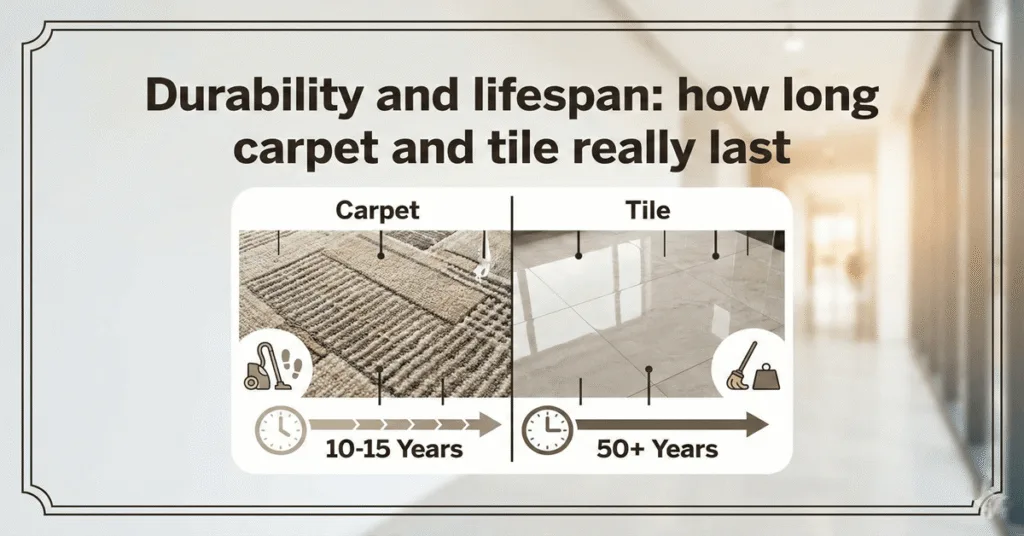
Durability and lifespan: how long carpet and tile really last
When you compare carpet vs tile flooring over decades, tile is almost always the longer-lasting investment.
Most residential carpet lasts around 5–15 years, depending on the quality, density, padding, and how much traffic and wear it sees. Understanding nylon’s durability compared to other synthetic fibers can also help you anticipate how long different carpet materials may hold up. High-grade styles can last longer, but hallways, stairs, and homes with pets or kids often show matting, stains, and wear much sooner.
Ceramic and porcelain tile, by contrast, are designed for long service lives. Many sources put well-installed tile at 20–75 years or more, and some ceramic tile floors can realistically last 75–100 years with proper care. Even if a tile cracks, it’s usually possible to replace individual pieces instead of redoing the entire floor.
Natural stone tiles like marble, granite, or travertine can last just as long or longer when properly sealed and maintained, making tile the clear winner for long-term durability.
Cost comparison: upfront price vs long-term value
Carpet often looks cheaper at first glance, but tile can be more cost-effective over the life of your home.
Average ranges (per square foot) in many U.S. markets are:
- Carpet materials: roughly $1.50–$8.00, depending on fiber and quality
- Carpet installation: about $0.50–$1.50
- Tile materials (ceramic/porcelain): roughly $1.00–$20.00+
- Tile installation: about $4.00–$14.00 due to surface prep, cutting, and setting
Carpet also comes with ongoing cleaning costs. Professional steam cleaning can run $100–$250 per visit, and you’ll likely replace carpet several times over the lifespan of one tile floor.
Tile has higher labor costs up front and sometimes requires additional subfloor prep and grout sealing, but routine maintenance is minimal, and replacement cycles are far longer. Over 30–50 years, many homeowners find tile offers better value than repeatedly replacing worn carpet.
Comfort, warmth, and noise: how each floor feels to live with
Comfort is where carpet shines. It’s soft underfoot, warm in cooler climates, and gentle on joints. Bedrooms, nurseries, and media rooms often benefit from carpet’s cushioned feel and natural sound absorption, which can reduce echo and footsteps in multi-story homes. The differences between high-pile and low-pile options play a big role in comfort and maintenance.
Tile is firm and cool to the touch. In hot or humid climates, that can be a huge advantage, helping rooms feel more comfortable in summer. However, in colder regions, tile may feel chilly without area rugs or radiant floor heating.
If you love the feel of carpet but want tile’s practicality in certain rooms, a common solution is to install tile and layer it with strategically placed, washable rugs for softness and sound control.
Allergies, indoor air quality, and health
If anyone in your home has allergies, asthma, or other respiratory issues, the surface underfoot can make a noticeable difference. For households with sensitive individuals, reviewing the best carpet choices for allergy-prone homes can help you understand which fibers perform better.
Carpets and rugs act like reservoirs for dust mites, pet dander, pollen, mold spores, and other pollutants. The American Lung Association notes that carpets can trap a wide range of allergens and fine particles that settle into fibers. Without consistent, thorough cleaning, these build up and can be re-released into the air as people walk across the carpet.
The U.S. Environmental Protection Agency points out that biological pollutants like dust mites and pet dander are significant indoor triggers for allergies and asthma, especially for children and older adults. Carpets don’t cause these issues by themselves, but they can make controlling them harder.
Tile, on the other hand, is non-porous and much easier to keep free of dust and allergens. Regular sweeping and mopping remove particles from the surface, making tile a popular recommendation in homes with severe allergies, asthma, or multiple pets.
Maintenance and cleaning: everyday life vs deep cleaning
Both carpets and tiles require care, but the type and frequency of that care differ.
Carpet needs:
- Regular vacuuming (often several times a week in busy areas)
- Prompt spot treatment of spills to prevent stains
- Periodic deep cleaning, usually with hot water extraction or steam, to remove embedded dirt and allergens
Despite this effort, some stains never fully disappear, and odors from pets, moisture, or spills can linger in the padding, especially if the carpet stays wet for too long. Knowing the proper carpet drying techniques helps prevent lingering smells and moisture issues.
Tile flooring is generally simpler to maintain:
- Routine sweeping or vacuuming with a hard-floor setting
- Occasional mopping with a mild cleaner
- Grout sealing every few years (if applicable) to reduce staining and moisture penetration
In high-traffic or wet areas, tile tends to look “like new” for far longer with far less work than carpet.
Style, design flexibility, and home value
Decades ago, wall-to-wall carpet signaled luxury. Today, extensive carpet, especially in bathrooms and high-traffic areas, often dates a home and can be a turnoff for buyers, who worry about stains and allergens.
Tile, by contrast, is increasingly seen as an upgrade in kitchens, bathrooms, laundry rooms, and entries. Real estate and flooring sources frequently note that tile in these spaces is considered a premium feature, thanks to its durability, moisture resistance, and upscale look.
Design-wise, tile is extremely versatile:
- Wood-look porcelain mimics hardwood with far better water resistance
- Stone-look tile gives the feel of marble, limestone, or concrete at a lower cost
- Large-format tiles can visually expand small rooms
- Decorative patterns, borders, and mixed layouts allow for custom designs
Carpet still plays an important role in creating cozy, quiet, and relaxing spaces. Modern low-pile carpets and patterned styles can look fresh and contemporary, especially when used thoughtfully in bedrooms and lounge areas.
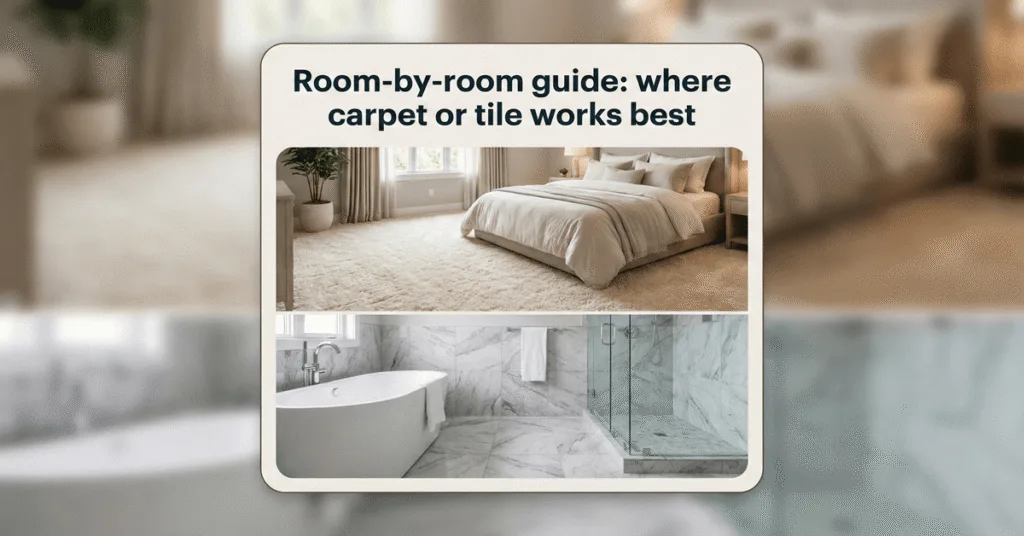
Room-by-room guide: where carpet or tile works best
Different rooms place different demands on your floors. Here’s how carpet vs tile flooring stacks up by space.
Living rooms and family rooms
For living rooms, either surface can work, depending on your priorities.
- Choose carpet if comfort, warmth, and sound absorption matter most, especially in homes with young kids playing on the floor.
- Choose tile if you live in a hot climate, have pets, or want an open-concept space that flows seamlessly into a tiled kitchen or dining area.
A popular compromise is tile throughout, with a large area rug defining the seating zone.
Bedrooms
Bedrooms are where carpet still has a strong case. The softness underfoot, insulation against cold, and quieter steps are all big advantages when people are resting or getting ready for the day.
However, tile can still be a good option in:
- Allergy-sensitive households
- Warm climates where cool floors are more comfortable
- Modern or minimalist designs that pair tile with area rugs
Kitchens and dining rooms
Most professionals strongly discourage wall-to-wall carpet in kitchens and dining areas. Frequent spills, splashes, grease, and dropped food make carpets difficult to keep clean and can quickly lead to stains and odors.
Tile is usually the better choice here because it:
- Handles spills and moisture without damage
- Resists stains better than carpet
- Is easier to sanitize and keep food-safe
If you want softness near the sink or prep zones, consider small washable mats that can be laundered regularly.
Bathrooms and laundry rooms
Bathrooms, laundry rooms, and powder rooms are high-moisture environments. Carpet in these spaces is prone to mildew, persistent dampness, and hidden damage to the subfloor, which is why many experts list them as “never carpet” rooms.
Tile is the clear winner in:
- Full baths and showers
- Powder rooms
- Laundry rooms and utility spaces
Slip-resistant, textured tiles and small-format mosaics can improve safety in wet zones while maintaining a clean look.
Entryways, mudrooms, and hallways
Entryways and mudrooms take a beating from dirt, grit, rain, and snow. Even the toughest carpets can wear out quickly in these areas and are harder to clean when mud or road salt gets ground in.
Tile is usually a better fit because it:
- Stands up to heavy foot traffic
- Won’t absorb water from wet shoes
- Cleans up easily with a broom and mop
In hallways, you can mix approaches: tile in the entry, then transition to carpet or wood in the more interior parts of the home.
Basements
Basements vary widely, but moisture is a big concern. Even finished basements can have humidity, minor seepage, or the risk of flooding.
- Tile is ideal if your basement has any moisture risk, or if you’re creating a gym, game room, or workshop.
- Carpet can work in dry, well-sealed basements, but should be paired with proper moisture barriers and vigilant monitoring.
In many homes, tile plus large rugs gives a comfortable yet safer option.
Carpet tiles vs broadloom: a flexible middle ground
If you like the look and feel of carpet but want something easier to install and replace, carpet tiles are worth a close look.
Modern carpet tiles:
- Come in modular squares or planks that are easier to handle than a full roll
- Often use peel-and-stick or loose-lay systems suitable for confident DIYers
- Allow you to replace just the damaged pieces if there’s a spill or stain
- Offer creative pattern and color combinations that broadloom can’t match
They’re especially practical in home offices, playrooms, or low-to-moderate traffic bedrooms where you want softness but also flexibility. For a more timeless look, choose low-pile, looped styles (similar to Berber) over thick shag, which can date a space and be harder to clean.
Understanding the differences between looped vs cut-pile constructions can help you choose the right style for long-term performance.
Sustainability and underfloor heating
Both carpet and tile can be part of an environmentally conscious home, depending on the products you choose.
- Carpet: Look for low-VOC adhesives and backings, recycled content, and certifications that address indoor air quality and emissions. Regular replacement, however, means more material ultimately enters the waste stream.
- Tile: Ceramic and porcelain are inert, long-lasting materials. Their durability and long lifespan can reduce waste over time, though the energy used in manufacturing and transporting heavy tiles is higher than for some other flooring types.
When it comes to underfloor heating, tile is the standout choice. Its thermal mass helps it distribute and retain heat efficiently, making it ideal for radiant systems in bathrooms, living spaces, and basements. Carpet can be used over radiant heat as well, but thick padding and high-pile styles can reduce efficiency.
How to decide: key questions to ask yourself
Before you commit to carpet or tile, walk through these practical questions for each room:
- How much moisture, spills, or tracked-in dirt does this space see?
- Do you have pets, kids, or allergy-sensitive family members using this room daily?
- Is comfort under bare feet more important than long-term durability here?
- What’s your realistic cleaning routine, quick sweeps or regular deep cleans?
- Are you planning to sell within the next 5–10 years, and what will local buyers expect?
Often, the best solution is a hybrid approach: tile in high-traffic, wet, or allergy-sensitive areas, and carpet or carpet tiles in cozy, quiet zones where softness matters more than ultimate durability.
Conclusion: choosing between carpet vs tile flooring
There’s no one-size-fits-all answer to carpet vs tile flooring, but the pattern is clear. Tile is usually the better long-term choice in kitchens, bathrooms, entries, and other high-traffic or wet spaces thanks to its durability, easy cleaning, and resale appeal. Carpet still excels in bedrooms, lounges, and media rooms where comfort, warmth, and quiet matter most. By evaluating each room’s use, your climate, and your maintenance preferences, you can combine both materials in a way that looks great today and continues to work for your home for decades to come.

FAQs about carpet vs tile flooring
Is tile always better than carpet for resale value?
Not always, but in many markets, buyers expect tile or another hard surface in kitchens, bathrooms, and entryways, and may view wall-to-wall carpet in those spaces as a negative. Well-maintained carpet in bedrooms is usually acceptable and sometimes preferred for its comfort.
Is tile too cold for bedrooms?
Tile can feel cool in bedrooms, especially in colder climates. If you prefer tile for allergies or design reasons, you can pair it with area rugs, slippers, and (where feasible) radiant floor heating to keep the space cozy while still enjoying tile’s durability and easy cleaning.
Which is better for pets: carpet or tile?
For most pets, tile is easier to live with. It doesn’t absorb accidents, is simple to wipe clean, and doesn’t trap hair and dander the way carpet does. Carpet can still work in pet homes, but it will require more frequent vacuuming, deep cleaning, and eventual replacement.
Does carpet really make allergies worse?
Carpet doesn’t cause allergies, but it can trap dust mites, pet dander, pollen, and other allergens that trigger symptoms if not cleaned thoroughly and regularly. Hard surfaces like tile don’t hold onto particles as easily, so many allergy specialists recommend them in sensitive households.
Can I install tile myself, or do I need a professional?
Many homeowners successfully install ceramic or porcelain tile themselves in smaller rooms, especially when using standard sizes and simple layouts. However, natural stone, large-format tiles, and complex patterns often benefit from professional installation to ensure proper leveling, cutting, and long-term performance.