Disclosure: Classy Floor is reader-supported. As an Amazon Associate, we earn from qualifying purchases. We may also earn commissions from other affiliate programs, at no additional cost to you. Learn more →
Saxony and frieze are two of the most common cut-pile carpets you see in showrooms today. The Saxony vs Frieze carpet choice shapes how your living room, stairs, or bedroom looks, feels, and wears under daily traffic. This guide gives you a clear starting point so you can match each style to real life, not just a pretty sample board.
You might wonder which one hides footprints, stands up to kids and pets, or feels plush when you step out of bed. In this guide, you’ll see how pile twist, fiber type, and density change comfort, durability, sound, and cleaning needs for both styles. By the end, you’ll know where Saxony shines, where frieze holds up better, and how to choose the right carpet for each room in your home.
Saxony vs frieze carpet at a glance
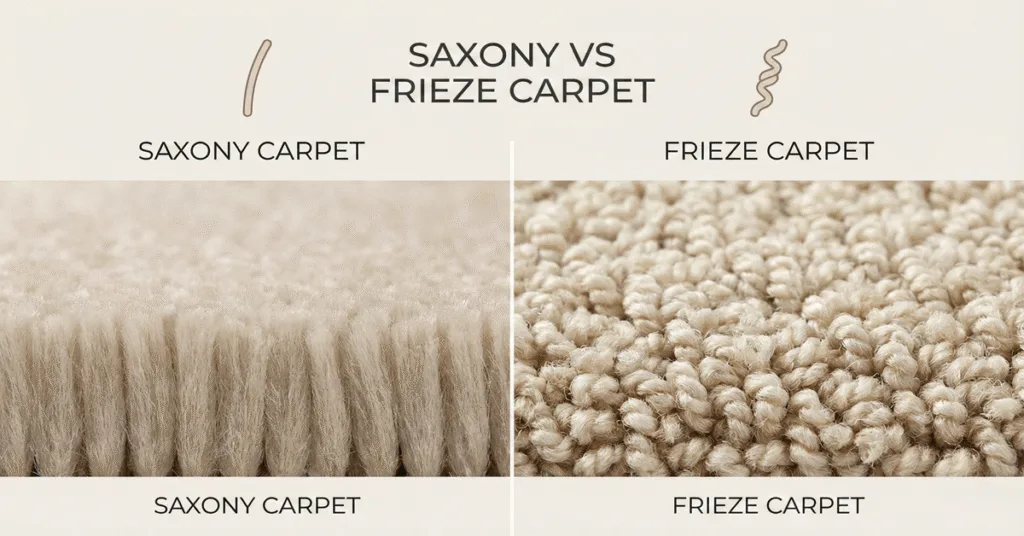
Saxony and frieze are both cut-pile carpets (if you want the basics, see this breakdown of cut pile vs loop pile construction), yet they look, feel, and wear in very different ways in a real home.
Saxony carpet has straight, upright fibers for a smooth, plush surface, while frieze carpet has tightly twisted, curly fibers for a textured, casual look. For most buyers, the Saxony vs frieze carpet decision comes down to style, high traffic performance, and how much you care about footprints, vacuum marks, and daily cleaning.
Quick comparison summary
Saxony carpet suits rooms where you want a soft, even, “hotel style” floor, such as bedrooms and formal living rooms. Frieze carpet suits busy family spaces, stairs, and hallways, since the high twist pile hides tracks, seams, and small specks of soil. If you want a smooth, plush look, saxony tends to fit best; if you want a forgiving surface that keeps a “just vacuumed” look longer, frieze takes the lead.
Think about your own home for a moment. Do you picture children, pets, and constant movement, or a quiet space with bare feet and soft lighting? That picture already points you toward either Saxony or frieze as your main carpet style.
Side-by-side feature table
A short feature table gives a fast view of how Saxony and Frieze differ in structure, style, and performance. Use it as a quick filter before you start looking at samples or prices.
| Feature | Saxony carpet | Frieze carpet |
| Pile structure | Cut pile, straight upright fibers | Cut pile, very high twist, curly fibers |
| Look and style | Smooth, even, more formal | Textured, relaxed, slightly shaggy |
| Footprints and tracks | Shows footprints and vacuum lines | Hides tracks, seams, and minor shading |
| Comfort underfoot | Plush and cushy with a good pad | Soft, springy feel |
| High traffic areas | Best in low to medium traffic | Strong choice for medium to heavy traffic |
| Best rooms | Often mid-range, everyday and “pet friendly” options | Family rooms, playrooms, hallways, stairs, basements |
| Noise and acoustics | Good sound softening | Very good sound softening |
| Cleaning experience | Easy to vacuum, marks stay visible | Hides soil well, needs steady vacuuming into the texture |
| Style match | Classic, traditional, simple décor | Casual, modern, family-friendly interiors |
| Typical price band | Wide range from budget plush to premium dense styles | Often mid-range, everyday, and “pet friendly” options |
When Saxony usually wins vs when Frieze usually wins
For many shoppers comparing Saxony vs frieze carpet for living rooms, bedrooms, and stairs, the pattern is clear. Saxony usually wins in calm, low-traffic spaces where a smooth, elegant surface and a cushy feel matter more than track resistance. Frieze usually wins in family rooms, playrooms, and staircases, where heavy use, kids, and pets would make a smooth Saxony show wear too soon.
Saxony tends to fit best when you:
- Want plush, even carpet, in a primary bedroom or guest room.
- Prefer a tidy, classic look in a sitting room or home office.
- Have light to medium traffic and do not mind seeing vacuum lines.
Frieze tends to fit best when you:
- Need carpet for stairs, hallways, or a busy family room.
- Share your home with kids, dogs, or cats that run and play on the floor.
- Like a casual, textured look that hides high traffic paths and small flaws.
Once you know where Saxony belongs, it helps to look at how this style performs in real homes before you commit to it over a tougher frieze.
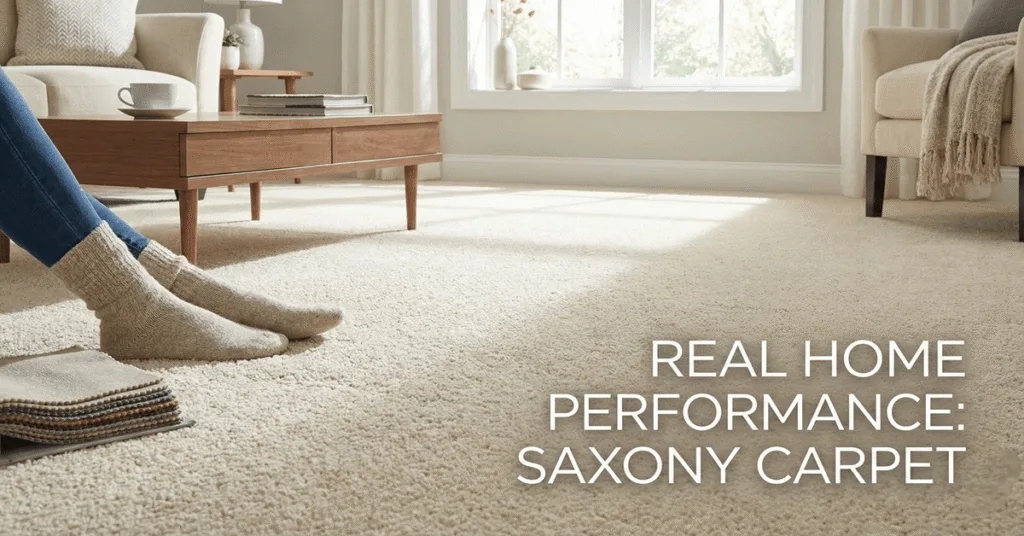
How Saxony carpet performs in real homes
Saxony carpet gives a smooth, cushioned surface that feels soft underfoot and looks neat when traffic stays moderate. In real homes, it works well in bedrooms, guest rooms, and formal living areas, yet it can show tracks and shading in very busy zones. Its performance comes from fiber type, twist level, density, and the pad under the carpet, not from the style name alone.
Structure and feel of Saxony carpet
Saxony uses cut-pile construction with fibers that stand upright in a medium to high pile. This creates a uniform surface with a plush feel rather than a rough texture. Common Saxony carpets use nylon, polyester, triexta, or wool, and each fiber changes how well the pile springs back after footsteps and furniture pressure. If you’re torn between the two most common synthetics, this guide on nylon vs polyester performance differences makes the trade-offs clearer.
A dense Saxony with a tighter twist tends to resist crushing and matting much better than a loose, very tall pile. Moving your hand across Saxony changes the shading since the fibers lean in a new direction and catch light in a different way. That shading effect is part of the style, yet in a high-traffic path, it can make wear patterns easier to see.
Comfort, acoustics, and aesthetics
Saxony stands out in any room where comfort and quiet matter. A good carpet pad under a dense Saxony softens each step, cuts echo, and makes bedrooms, nurseries, and loft spaces feel calm. Many homeowners pick Saxony in the main bedroom for that “step out of bed onto clouds” feeling.
From a design angle, Saxony works as a smooth backdrop for both simple and layered décor. Neutral Saxony carpet lets furniture, rugs, and wall color stand out without fighting for attention. If you imagine a calm, tidy space rather than a bold texture on the floor, Saxony usually fits that picture.
Durability and traffic tolerance
Saxony can last for many years in real homes, yet its best performance shows up in low and medium traffic, not in the busiest paths. A dense nylon saxony with a strong twist and quality backing holds its shape longer than a budget polyester with low density. High traffic lanes across a smooth Saxony surface often start to show flattening, shading, and visible paths sooner than an equally busy frieze.
This shows up most clearly on stairs, landings, and tight hallways where people walk in the same line every day. The fibers lean along that path, and even fresh carpet can look marked in those strips. If your floor plan pushes most movement through one route, Saxony in that strip may age faster than the same carpet in a wide, open room.
Cleaning, maintenance, and stain resistance
Saxony is simple to vacuum since the pile stands up and the head of the vacuum glides across a smooth surface. Regular vacuuming lifts soil from the tips of the fibers and helps them stand taller again, which slows down matting.
Stain resistance depends on fiber and treatment, so a solution-dyed nylon saxony with a good stain shield will handle food and drink spills better than an untreated budget carpet. If stain-proofing is a top priority, compare triexta vs nylon for stains and wear before choosing a style.
Footprints and vacuum lines show clearly on Saxony and give a “freshly groomed” look right after cleaning. Many people like this signal that the carpet is clean, even if tracks from kids or pets appear again during the day. Homes that bring in a lot of grit from outside may need more frequent vacuuming to keep a smooth Saxony from looking dull in entry zones.
Best rooms for Saxony carpet
Saxony shines in spaces where comfort and a neat look matter more than raw toughness. Primary bedrooms, guest rooms, nurseries, and home offices on upper floors are common spots for Saxony carpet. In these rooms, traffic stays moderate, and the pile keeps its height and even color for longer.
Stairs, tight hallways, and kids’ playrooms bring a different pattern. The same smooth pile that looks great in a bedroom can highlight wear and flattening on steps and narrow paths. Many families still use Saxony on stairs, yet homeowners comparing Saxony vs frieze carpet for stairs often lean toward frieze, since the twisted fibers hide scuffs and tracks.
Think of Saxony as the “comfort first” choice for quiet rooms and soft landings in your home. The next section on frieze carpet shows how a high-twist, textured pile steps in where you need more forgiveness in high traffic areas.
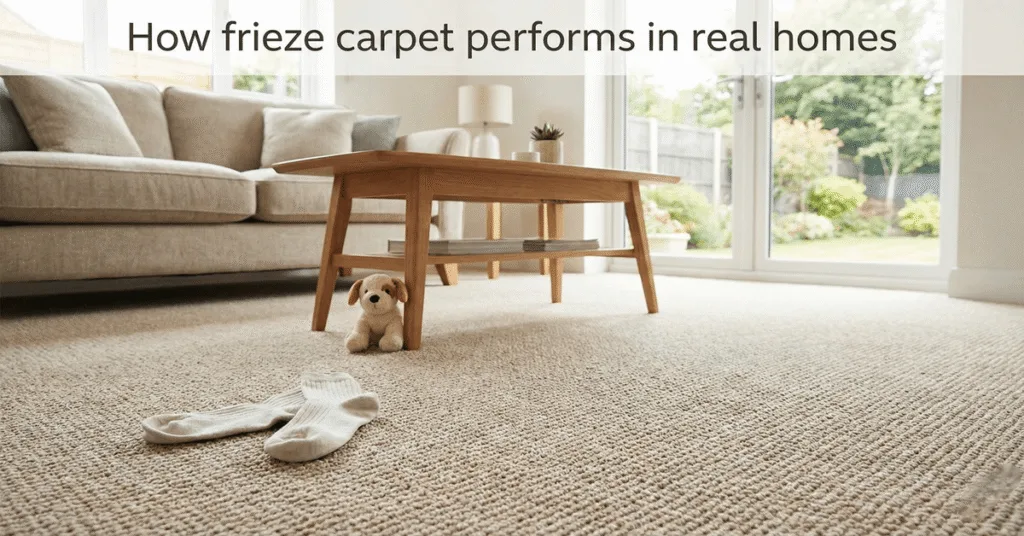
How frieze carpet performs in real homes
Frieze carpet is a high-twist cut-pile style that hides footprints, seams, and everyday soil, so it suits high-traffic rooms, stairs, hallways, and busy homes with kids and pets. Its curly fibers bend in many directions, which gives a relaxed, textured look and helps the surface spring back after constant use. In most real homes, frieze carpet works best where you want durable, “lived-in” flooring that still looks tidy between deep cleans.
Structure and feel of frieze carpet
Frieze uses cut pile with very tight twists, so each yarn curls and lies in different directions across the carpet surface. This breaks up light and shadows and helps the frieze hide marks better than a smooth Saxony carpet. Many frieze carpets use PET polyester, nylon, or triexta with medium to high face weight, which adds bounce underfoot.
The feel is soft and springy rather than flat and velvety. With a quality pad, frieze feels comfortable for sitting, playing, and walking barefoot. If you like the idea of a cozy floor that does not show every step or vacuum pass, this structure fits that picture.
Comfort, acoustics, and aesthetics
Frieze carpet gives strong comfort and sound control in open-plan living rooms, playrooms, lofts, and media rooms. The curled pile traps air and softens footfall, so TV noise, running feet, and dropped toys feel less sharp. With a dense pad, frieze can feel close to a plush Saxony, yet with a more textured surface.
The look leans casual. Frieze pairs well with sectionals, media walls, toy storage, and modern or family-friendly décor. If you picture a relaxed family room where people sit on the floor as often as on the sofa, frieze usually matches that space.
Durability and high-traffic performance
Frieze earns its “high traffic carpet” label through twist level, density, and fiber type. Tightly twisted yarn resists crushing and matting, so paths across the room do not show as quickly as they do on a smooth, straight pile. A dense nylon or triexta frieze handles stairs, hallways, and busy family rooms far better than a loose, low-density option with the same style name.
The textured surface hides small dents from furniture and play. When the fibers bend, they blend marks into the pattern instead of leaving sharp grooves. For homes with kids racing down the stairs or dogs charging the hallway, that extra forgiveness can extend the life of the carpet compared with many Saxony styles.
Cleaning, maintenance, and stain resistance
Frieze carpet needs steady vacuuming, yet the texture helps it look clean between deeper sessions. A vacuum with strong suction and the right height setting can pull dirt from between the curls without damaging fibers. For spill cleanup, fiber type and stain treatment matter, so solution-dyed PET or nylon frieze with stain protection handles food and drink better than basic rental-grade carpet.
The texture can hold particles below the tips of the pile, which is why a simple, regular vacuum routine pays off. The upside is that small bits of soil and pet hair are less visible on the surface. If you keep to a weekly schedule, frieze rewards you with carpet that still looks fresh in high-traffic areas.
Best rooms for frieze carpet
Frieze shines in family rooms, playrooms, stairs, hallways, and basements where comfort and wear resistance both matter. Many homeowners choose frieze carpet for living spaces that double as kids’ zones, home theaters, or game spaces, since the sound-dampening and soft feel suit those uses. On stairs, the twisted pile wraps around each tread and hides the constant wear better than many Saxony carpets.
In bedrooms, frieze works well for kids’ rooms and teen rooms, where spills and rough play are common. Some owners still prefer smooth Saxony carpet in the primary bedroom, then use frieze carpet for high-traffic areas and stairs. For many households, Saxony handles the quiet retreat spaces while Frieze takes the daily hits in busy zones, which leads to a room-by-room view of Saxony vs Frieze.
Room-by-room: Saxony vs Frieze for living rooms, bedrooms, stairs, and more
Room type and traffic pattern often decide Saxony vs frieze carpet more than brand or price. Saxony fits low and medium-traffic rooms that call for a smooth, plush surface, while frieze fits busy areas, stairs, and basements that see constant movement. This section maps each carpet style to common rooms so you can match the right pile to the way each space actually works.
Quick room guide
| Room type | Better fit: Saxony or frieze? | Notes |
| Formal living room | Saxony | Plush, smooth look for lighter traffic |
| Family room / TV room | Frieze | Hides wear, great for kids and pets |
| Primary bedroom | Saxony | Soft, calm surface with moderate use |
| Kids’ bedrooms | Frieze | Handles play, spills, and toys on the floor |
| Stairs and landings | Frieze | Twisted pile hides tracks and edge wear |
| Hallways and entries | Frieze | Strong choice for high traffic paths |
| Guest room / home office | Saxony | Neat, even surface with light traffic |
| Basement family space | Often frieze | Texture and sound control suit concrete floors and larger rooms |
This guide gives a fast view; the next parts explain why each room leans toward one style.
Living rooms and family rooms
For living rooms and family rooms, the choice between Saxony and frieze carpet depends on how you use the space. A formal sitting room that hosts quiet gatherings or occasional guests suits Saxony, since the smooth pile and subtle shading add to a polished look. A family room with games, snacks, pets, and a big TV suits frieze, since the high-twist pile hides crumbs, footprints, and dragged toy marks.
Think about how many hours you spend in each room and how people use the floor. Do kids sprawl on the carpet with devices, or do you keep this room tidy for reading and calm talk? Formal use leans toward Saxony; everyday use with kids and pets leans toward frieze carpet for living rooms.
Bedrooms and guest rooms
In primary bedrooms and guest rooms, many people place comfort and calm above maximum wear performance. Saxony carpet works well here, as the plush, even surface feels soft under bare feet and helps the room feel like a retreat. A dense Saxony in a neutral color gives a clean base for bedding and furniture without drawing much attention.
Kids’ bedrooms and teen rooms call for carpet that tolerates rolling chairs, toy bins, and rough play. Frieze carpet for kids’ rooms handles this better than most Saxony styles, and the texture hides wear near beds, desks, and dressers. A common mix is Saxony in the main suite and guest room, then frieze in children’s rooms and shared sleep spaces.
Stairs, hallways, and entryways
Stairs, landings, and hallways take the hardest hits in most homes, so frieze carpet for stairs and high-traffic paths tends to last longer. The twisted pile wraps around stair noses, absorbs impact on each tread, and hides scuffs where people land their heels. In hallways, frieze helps prevent sharp “ruts” that smooth saxony often shows down the center of the path.
Entry zones that open from a front door or garage bring in grit and moisture. Many owners pair a hard-surface entry with a mat, then start frieze carpet a few steps in to protect the rest of the flooring. Saxony can work in a wide upper hallway with lighter use, yet for narrow, busy runs, frieze usually holds its look for more years.
Basements and lower-level spaces
Basements often serve as media rooms, playrooms, guest zones, or home gyms, and they sit on concrete slabs that feel cold and hard. Frieze carpet suits these spaces, since the texture and pad add warmth, sound control, and a bit of softness over an unyielding subfloor. The casual look also fits the way many people use basements as relaxed, flexible living zones.
Moisture control still matters, so pair frieze with the right pad and follow local guidance on vapor barriers and sealing. Saxony can work in a dry, finished lower level used as a quiet office or guest suite, yet many families lean toward a tougher frieze carpet for basements and shared rooms.
Rentals and investment properties
In rentals and investment properties, the carpet choice must balance cost, durability, and broad tenant appeal. Frieze carpet often wins here, since it hides seams and wear, tolerates varied cleaning habits, and stretches the time between full replacements in high traffic units. Many “pet-friendly” rental carpets are tight-twist friezes in medium tones that mask early staining and shading.
Saxony still fits in higher-end rentals or short-term stays that aim for a plush feel in bedrooms or main living spaces. A common plan is a durable frieze in hallways, stairs, and family rooms, then a denser Saxony carpet in one main bedroom for extra comfort. Once you match carpet type to each room’s traffic and use, the next step is to line that plan up with lifestyle, pets, and design style.
Lifestyle and design: matching Saxony or Frieze carpet to your household
Saxony and frieze carpet behave very differently in real homes with pets, kids, allergies, and noise. Saxony brings a smooth, plush “hotel style” surface, while frieze uses a high-twist, textured pile that hides wear in family rooms, stairs, and hallways. The best fit for your household depends on traffic, cleaning habits, and whether your style leans formal or casual.
Pets, kids, and messy households
For busy homes with dogs, cats, and young children, frieze carpet usually beats Saxony for day-to-day looks. The tight twist and texture hide pet hair, crumbs, and small stains, especially in PET polyester or solution-dyed nylon “pet-friendly” lines. In a family room or playroom, a dense frieze often stays presentable between deep cleans.
Saxony can still work where life feels calmer, such as a primary bedroom or home office. A soft saxony in a kids’ bedroom may flatten in play zones if face weight and density are low. Do your kids race toy cars across the floor and eat snacks there, or mainly read and sleep in that room? The answer points you toward frieze or toward a more resilient Saxony.
Allergies, indoor air quality, and cleaning routines
For allergy sufferers, both Saxony and frieze can help as long as you vacuum often and use a HEPA filter. If allergies are a daily issue at home, start with these hypoallergenic carpet picks for allergy relief and then choose the pile style.
Pile height and density influence how much dust and pet dander stay in the fibers between cleans, so a dense Saxony can hold as much as a textured frieze if maintenance slips. Many doctors focus on frequent vacuuming, low-VOC carpet padding, and fresh air more than on Saxony vs frieze alone.
If you like a weekly deep clean, the smooth surface of Saxony makes dust and vacuum lines easy to see. If you rely on a robot vacuum most days and one manual pass each week, frieze hides small build-ups yet still releases soil when the beater bar reaches into the twist. Ask yourself honestly: will you follow the schedule you plan, or do you need carpet that forgives gaps?
Formal vs casual design styles
Saxony carpet suits classic, formal, or minimalist interiors where you want a calm, even floor. Its smooth surface and solid colors pair well with panelled walls, tidy sofas, and simple rugs. Neutral Saxony in beige, greige, or soft gray often acts as a quiet backdrop that lets furniture and art stand out.
Frieze carpet leans toward casual and contemporary design, where a bit of texture on the floor feels right with sectionals, media units, and relaxed seating. Even in a solid color, the twist breaks up reflections from large windows and adds a soft, mottled look. If your inspiration images show cozy family spaces and a big screen on the wall, a frieze usually fits that mood better than a flat, formal Saxony.
Noise, comfort, and underfoot feel
Both Saxony and frieze improve comfort and cut noise compared with hard floors, yet the feel underfoot differs. Saxony, with a good carpet pad, gives an even, cushioned step that suits bedrooms, nurseries, and upstairs offices. Many people like Saxony on the upper floors, where they start and end the day.
Frieze absorbs sound well in high-traffic areas because the twisted fibers scatter noise from games, music, and conversation. In an open-plan living room, loft, or townhouse, a thick frieze plus dense underlay can soften footsteps and echo. One common plan is to use Saxony in bedrooms for a plush feel and frieze on stairs and in family rooms for high-traffic carpet performance.
Most households do not need one style everywhere. A mix of Saxony and frieze carpet, chosen room by room, usually matches real life better than a single type across the whole house.
Cost, installation, and long-term value: Saxony vs Frieze
Saxony and frieze carpet both span a wide price range, from entry-level polyester to premium nylon and wool. In many showrooms, frieze appears in mid-range “everyday family” lines, while saxony stretches from budget plush to dense, high-end options. True value comes from fiber quality, face weight, density, pad choice, and installation, not just the label on the roll.
Typical cost ranges for Saxony and Frieze
Budget Saxony and frieze carpets in polyester often sit at the lower end of the price scale and suit spare rooms, short-term rentals, or low-use spaces. Mid-range nylon or triexta saxony and frieze move higher in price but deliver better resilience, stain resistance, and lifespan in high-traffic areas.
Premium wool Saxony and heavy-weight nylon styles cost more again and often target main living rooms where you want both comfort and long wear. If you’re deciding whether the “natural luxury” is worth it, see wool vs synthetic carpet pros and cons.
Price tags usually split “carpet only” from “installed price,” which includes pad and labor. A low number on the tag may not include carpet padding, old carpet removal, or stairs. To compare Saxony vs Frieze carpet cost fairly, ask for written quotes for each option in the same room size with materials, pad, and installation listed separately.
Installation considerations and padding choices
Carpet padding can make a modest Saxony feel richer and can boost comfort and sound reduction for any frieze. Look at pad density and thickness rather than judging by squish alone; many installers like a dense pad for hallways and stairs to support the backing.
This quick guide explains best pad density for stairs and traffic so you don’t overpay (or under-support) your carpet. A softer pad can work in bedrooms, yet too much give under a smooth Saxony may speed up visible crushing.
Installation quality affects how both styles age. Loose stretching and poor seams show up quickly on a smooth Saxony, and they still harm performance on frieze. Ask if your installer uses power stretchers, how they handle seams in long rooms, and what they do to prepare the subfloor before laying the pad and carpet.
Lifespan, warranty, and replacement cycles
Lifespan for saxony or frieze carpet can range from a few hard-used years in rentals to a decade or more in careful owner-occupied homes. Many products list a residential traffic rating and carry separate wear and stain warranties. These ratings depend more on fiber, backing, and density than on the words “saxony” or “frieze” printed on the sample.
Nylon and triexta carpets in both styles often carry stronger warranties and handle busy spaces better than basic polyester. A family using frieze carpet for stairs and living rooms may see more years before visible wear demands replacement. Low-traffic guest rooms with saxony often outlast the official warranty window, so you can plan staggered replacement cycles across the house.
Long-term value vs short-term savings
Short-term savings show up on the first invoice, while long-term value appears in how often you replace worn carpet. A very cheap Saxony or frieze may work for a short lease or quick refresh, yet it can flatten fast on stairs or in main living rooms. A mid-range or premium frieze with a high twist and dense backing often costs more at the start but stays attractive much longer in high-traffic routes.
One simple check is to divide the installed cost by the years you expect to keep that carpet in a given room. A product that costs slightly more but lasts twice as long offers a lower cost per year of use. When you weigh Saxony vs Frieze for value, picture the hallway or family room five to seven years from now, not just the first week after installation.
With price, pad, and lifespan clear, you are ready to look at specs and shop Saxony and frieze carpet like an expert.
How to shop and compare Saxony vs Frieze carpet like a pro
Smart carpet shopping focuses on real specs and room needs instead of color names and soft sample boards. Saxony and frieze both appear in many lines, so you need to compare face weight, density, twist level, fiber type, and traffic rating. When you read these details and ask clear questions, the Saxony vs Frieze carpet choice becomes much easier.
Key carpet specs that matter more than marketing names
Face weight tells you how many ounces of fiber sit in a square yard of carpet. Higher face weight can mean a fuller feel, yet density and pile height still control how well the carpet resists crushing. A tall, loose Saxony with high face weight may show traffic sooner than a shorter, denser frieze with a slightly lower number.
Density describes how tightly yarns pack together on the backing. Dense Saxony or frieze keeps its shape under furniture and regular use better than a loose weave. Twist level, often listed as turns per inch, is key for frieze carpet on stairs and in hallways, since a high twist locks the yarn and helps the pile spring back.
Fiber type shapes stain resistance and resilience. Nylon often leads for toughness, PET polyester offers good value and color, triexta builds in stain resistance, and wool brings a natural, premium feel. When you compare Saxony vs Frieze carpet for high-traffic areas, check fiber first, then the style name.
Step-by-step in-store checklist
A short checklist helps you stay focused in a carpet showroom. Use it when you compare Saxony and Frieze options for bedrooms, living rooms, and stairs:
- Bring room sizes, photos, and notes on traffic, pets, and natural light.
- Pick at least one Saxony and one frieze sample for each room type.
- Read face weight, pile height, density, twist level, and fiber on each label.
- Ask for the residential traffic rating and any “pet” or “high-traffic carpet” marks.
- Put samples on the floor, press and rub the pile, and see how fast it springs back.
- Request written quotes that include carpet, pad, installation, stairs, and removal of old carpet.
- Take swatches home to view in your lighting during the day and at night.
This simple path keeps the focus on performance instead of only color and price. It also gives you a record to compare offers across stores.
Shopping online for Saxony and Frieze
When you shop online, filters are your main tools. Start by setting style filters for Saxony carpet and frieze carpet, then narrow by fiber, traffic rating, color, and price per square foot. Product pages usually list face weight, pile height, backing, stain protection, and carpet pad recommendations.
Read reviews from buyers who used the same carpet in rooms like yours, such as “frieze carpet for stairs” or “saxony carpet for bedroom.” Many brands offer low-cost sample swatches by mail, which lets you test softness, color, and pile structure in your own home. A few minutes walking on a sample on your subfloor tells you more than any photo.
Questions to ask installers and retailers
Good questions turn store staff and installers into useful guides. They see how both Saxony and Frieze hold up after years of use, so tap that knowledge before you decide. Keep questions clear and practical so you get direct answers you can compare between quotes.
Points worth asking:
- In local homes, which style holds up better on stairs and in high-traffic living rooms?
- What pad density and thickness do you recommend for each room, and is that pad included in the price?
- Where will seams go in long hallways or large rooms, and how will they be joined?
- Do you move furniture, remove and dispose of old carpet, and trim doors if needed?
- How long does the installation warranty last, and what problems does it cover?
The mix of those answers, the hard numbers on the label, and your own room needs give you a clear path to the right Saxony or frieze carpet. From there, you can move on to final checks and book your installation with confidence.
FAQs
Is Saxony or Frieze carpet better for high-traffic areas?
Saxony vs frieze carpet for high-traffic areas often comes down to pile twist and density. Frieze carpet usually handles heavy traffic better, since its tight, curly fibers hide wear paths and seams. Choose a dense nylon or triexta frieze for hallways, stairs, and family rooms; reserve Saxony for side rooms with lighter use.
Which is softer underfoot: Saxony carpet or Frieze carpet?
For pure softness underfoot, Saxony carpet usually feels plusher than frieze in a like-for-like product. Saxony’s straight, dense pile gives a cushioned, “hotel bedroom” feel, especially with a quality pad. Frieze still feels soft, yet the springy, textured surface focuses more on resilience and traffic performance than cloud-like comfort. For cold floors or upstairs bedrooms, Saxony often gives the coziest first step of the day.
Does frieze carpet hide stains and footprints better than Saxony?
Frieze carpet hides footprints and vacuum marks better than Saxony in most homes. Its high-twist, curly pile scatters light in many directions, so tracks and seams blend into the texture. Small crumbs and minor spots tend to stand out less, though deep stains still need fast cleaning and a good stain-resistant fiber such as solution-dyed nylon or triexta.
Is Saxony carpet a bad choice if I have pets or young kids?
Saxony carpet is not always a bad choice for homes with pets or young kids, yet it needs careful product selection. A dense, textured Saxony in nylon or triexta with strong stain protection copes better with spills and play. Many families place Saxony in bedrooms and low-traffic rooms, then use frieze or other textured carpet in busy family spaces.
Which carpet type is best for stairs: Saxony or Frieze?
For most staircases, frieze carpet performs better than Saxony, since the twisted pile hides wear, seams, and daily scuffs on each tread. The texture grabs the eye less, so traffic lanes look more even over time. A dense, low- to mid-height frieze with a firm pad gives safer footing, cleaner edges on nosings, and stronger long-term appearance.
Is frieze carpet outdated, or is it still in style?
Frieze carpet is still in style, especially in family rooms, basements, and media rooms with a relaxed feel. Current frieze styles use subtle heathered colors, tighter texture, and cleaner lines than older “shag” looks. Many designers pair frieze with modern sofas, large area rugs, and open-plan living, so it fits well in both new builds and remodels.
How do Saxony and frieze carpets compare for bedrooms and guest rooms?
For bedrooms and guest rooms, many homeowners prefer Saxony carpet for its plush, even surface and quiet, cozy feel. A dense Saxony with a quality pad gives strong sound reduction and a soft step when you get out of bed. Frieze still works in kids’ bedrooms or multipurpose rooms where play, spills, and traffic matter more than a perfectly smooth look.
Conclusion
Saxony carpet and frieze carpet each bring a different mix of comfort, traffic resistance, style, and cleaning needs to real homes. Saxony leans toward plush bedrooms and quiet living spaces, where a smooth surface and soft feel matter most. Frieze feels at home on stairs, in hallways, and in busy family rooms, where twisted fibers help hide footprints, seams, and everyday wear.
When you weigh Saxony vs frieze carpet, think about who uses each room, how hard they are on the floor, and how much texture you like to see. Lay samples on your subfloor, check them in day and evening light, and ask a trusted flooring fitter or retailer about fiber, pad, and expected lifespan. With those checks done, you can pick a carpet style for each room that feels good underfoot today and still looks good years from now.