Disclosure: Classy Floor is reader-supported. As an Amazon Associate, we earn from qualifying purchases. We may also earn commissions from other affiliate programs, at no additional cost to you. Learn more →
Carpet steam cleaning vs hot water extraction is a common point of confusion for homeowners, renters, and anyone booking a professional carpet cleaner. The terms often sound interchangeable, yet the cleaning process, the role of a carpet extractor, and the effect on carpet fibers and carpet backing can differ in ways that matter. That difference shapes deep carpet cleaning results, drying speed, residue control, and the safety of wool carpet and other sensitive materials.
Most readers want a practical answer. They want to know which method fits their home, their stains, their traffic level, and their drying limits. This guide sorts out the language, explains where hot water extraction carpet cleaning stands apart from surface cleaning, and points out mistakes that lead to poor results. It stays focused on carpets, not hard floors or broad sanitizing claims, so the comparison stays clear and useful.
Carpet steam cleaning vs hot water extraction: are they actually different?
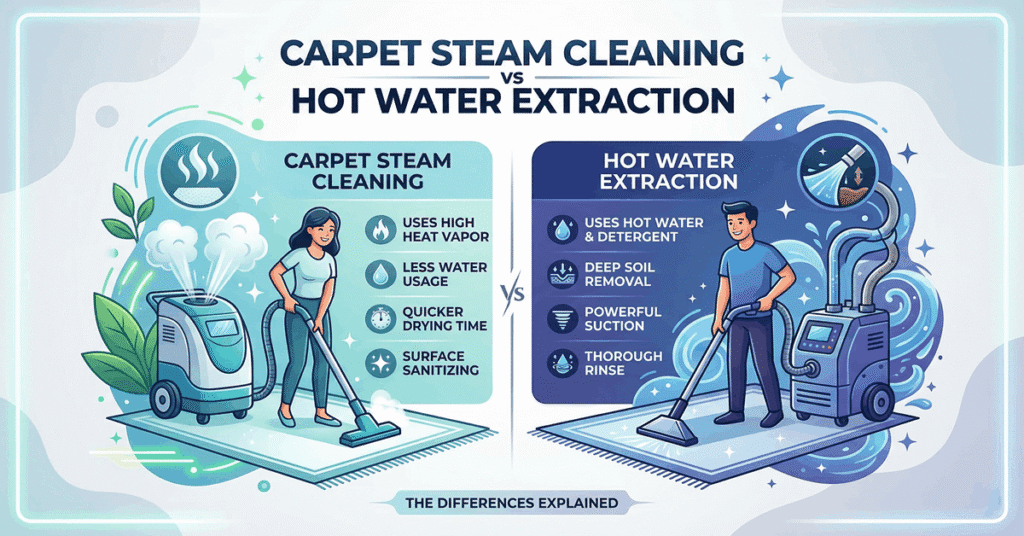
Yes. On carpet, true steam cleaning and hot water extraction are not the same process, even if a professional carpet cleaner uses the names as if they match. True steam cleaning relies on very hot vapor near the surface of carpet fibers. Hot water extraction sends hot water and cleaning solution into the carpet, then pulls water, soil, and residue back out with a carpet extractor. That difference affects cleaning depth, moisture left behind, and the result a homeowner can expect.
A lot of confusion starts with buyer language. Many homeowners search for steam cleaning carpet when they really want deep carpet cleaning. Many companies market hot water extraction carpet cleaning as steam cleaning since the phrase is more familiar. On carpet, the label on the ad tells you less than the actual steps used in the job.
| Term you may see | What it usually means on carpet | What matters most |
| Steam cleaning | A loose marketing label, often used for extraction services | Ask what machine and process are used |
| True steam cleaning | High-heat vapor applied near the surface | Better judged by surface effect, not deep soil removal |
| Hot water extraction | Hot water plus solution sprayed in, then extracted out | Better judged by rinse quality, suction, and drying control |
Why the terms get used interchangeably in the real world
The mix-up comes from the gap between technical language and buyer language. A homeowner may search is carpet steam cleaning the same as hot water extraction, yet a service page may use steam cleaning to describe any heated carpet cleaning method. That makes the service easier to market, yet it can hide the real process.
A better question for any provider is simple: do you use hot water extraction, and how much water do you recover? Ask whether they pre-treat the carpet, how many extraction passes they make, and what dry time they expect. Those details tell you far more than the service label.
What true steam cleaning does on carpet fibers
True steam cleaning uses heat and vapor near the carpet surface. That can loosen light soil, freshen the face of the pile, and help with some surface grime on carpet fibers. It does not give the same rinse-and-recovery action that an extractor gives.
That distinction matters on heavier soil. Dirt, residue, and contamination often sit below the visible tips of the pile, closer to the base of the carpet and carpet backing. Vapor at the surface may improve appearance, yet appearance is not the same as soil removal from deeper layers.
What hot water extraction does differently
Hot water extraction works as a wash-and-recover process. The machine applies hot water and cleaning solution into the carpet, lifts suspended soil, then removes much of that moisture with suction. That recovery step is the main difference. It is one reason this method is widely linked to restorative cleaning in carpet care guidance and Carpet and Rug Institute discussions.
The result is usually deeper soil removal, better flushing of residue, and a stronger path for stain work than vapor alone. The outcome still rests on machine strength, pre-spray, rinse control, and operator skill. A weak portable extractor can leave a very different result from a strong truck-mounted extractor, even when both fall under hot water extraction.
Carpet steam cleaning vs hot water extraction: which method cleans better in real use?
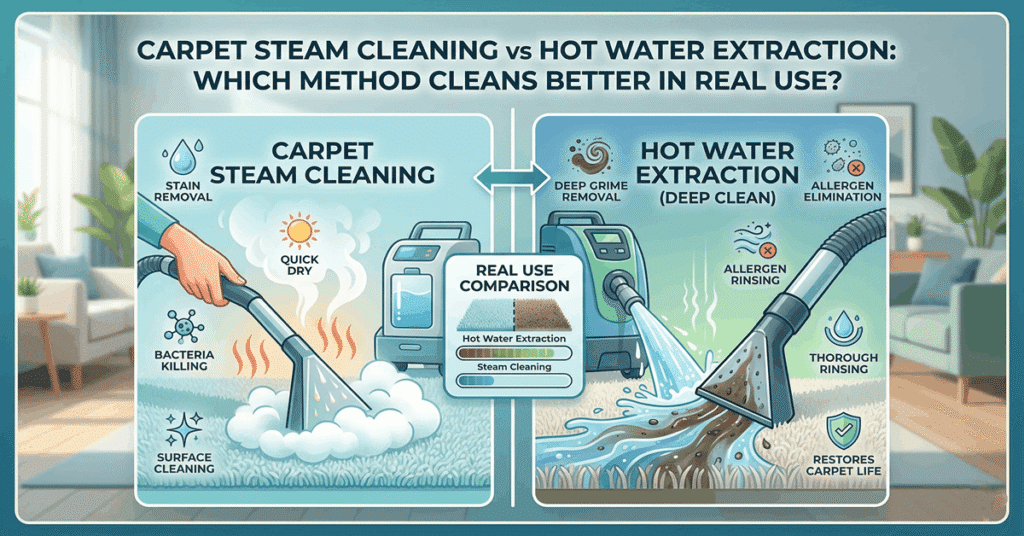
For most carpets, hot water extraction cleans better in real use when the goal is deep soil removal, stronger stain work, lower residue, and better recovery from traffic lanes. A steam cleaner can freshen the surface and lift light grime, yet a carpet extractor removes suspended soil and cleaning solution from carpet fibers and backing in a way surface-focused cleaning usually cannot match. The better method turns on soil load, stain type, extraction strength, dry time limits, and the condition of the carpet itself.
A lot of confusion starts with the sales label. Many homeowners search steam cleaning carpet and expect one result, then book a service that uses hot water extraction carpet cleaning under the same name. The real question is less about the sales term and more about what the machine does after soil is loosened. If dirty water and solution are not pulled back out well, the carpet may look cleaner for a short stretch yet hold soil, residue, or odor below the surface.
Deep soil, stains, and pet contamination
Hot water extraction has the edge on deep soil, tracked-in grit, food spills, and pet accidents that have moved past the tips of the pile. The process pushes hot water and solution into the carpet, breaks up bonded soil, then pulls that soil back out with suction. That rinse-and-recover step, reflected in the professional textile floor covering standard, gives a carpet extractor a stronger result on heavy-use areas.
True steam cleaning can help on lighter surface issues, especially when the carpet mainly needs a refresh. It is less convincing on pet urine, oily spots, or embedded grime in a high-traffic hallway. If a reader is asking which is better steam cleaning or hot water extraction for carpet after a dog accident, hot water extraction is usually the stronger answer. Even then, pad contamination can stay behind in severe cases, so no method should be sold as a full fix for every odor problem.
Moisture, residue, and drying time
Drying time is where many people hesitate. A weak machine or rushed technician can leave too much water in the carpet, and that can lead to sour odor, quick resoiling, or trouble around carpet backing. In severe cases, mold risk after over-wetting becomes part of the concern. A strong extractor, used with proper dry passes, often leaves less risk than a lower-power machine that puts water in and fails to pull enough out.
Residue matters just as much. If detergent stays in the pile, the carpet may attract new dirt fast. Good rinsing and thorough extraction matter for that reason. A steam cleaner used with limited recovery can leave more product behind, especially in DIY use. Hot water extraction takes longer to dry in many cases, yet better rinsing and stronger soil removal often make that trade worth it.
| Cleaning factor | Steam cleaning | Hot water extraction |
| Light surface refresh | Good | Good |
| Deep soil removal | Fair | Strong |
| Pet accident cleanup | Fair at surface level | Stronger, with limits if the pad is affected |
| Residue control | Mixed | Stronger with proper rinse and extraction |
| Drying profile | Can be shorter in light-use cases | Can be longer, based on suction and airflow |
Appearance improvement vs restorative cleaning
A carpet can look brighter after either method, yet appearance alone is not the best test. Surface cleaning can lift the pile, mute dullness, and make the room feel cleaner without fully removing what sits deeper in the carpet fibers. That is one reason a carpet may look good right after service and still soil again fast.
Restorative cleaning asks more of the process. It aims to remove embedded dirt, lower residue, and deal with the kind of buildup that changes feel, smell, and wear over time. In real homes with kids, pets, and heavy foot traffic, hot water extraction usually delivers the stronger result when the carpet needs more than a cosmetic reset.
How to choose based on carpet type, soiling level, and household needs
The right choice comes down to three things: the carpet itself, the depth of soil, and what the household needs from the result. Carpet fibers, carpet backing, pile height, pet accidents, dry-time tolerance, and foot traffic all change which carpet cleaning methods make sense. Hot water extraction usually fits deeper soil removal and stronger rinse performance, yet wool carpet, older carpet, and lightly soiled rooms may call for a gentler approach with close attention to heat, chemistry, and moisture.
A simple rule helps here: match the method to the problem, not the label on the machine or service page. A living room with traffic lanes, ground-in dirt, and recurring pet stains needs a different plan from a guest room that only looks dull. The safest choice starts with the carpet type and the condition you can actually see.
| Situation | Better fit | Why |
| Light soil, routine freshening | Lower-moisture approach or careful steam cleaner use | Good for appearance improvement with less downtime |
| Heavy traffic lanes, embedded dirt | Hot water extraction carpet cleaning | Stronger rinse and soil recovery from deeper in the pile |
| Pet urine or repeated spills | Hot water extraction with proper spot treatment | Better for flushing out contamination near the backing |
| Wool carpet or delicate construction | Fiber-safe professional method | Heat, moisture, and chemistry need tighter control |
| Older carpet with weak backing | Cautious professional assessment first | Aggressive cleaning can expose existing wear or damage |
Best choice for routine maintenance vs neglected carpet
Routine maintenance cleaning is about keeping soil from building up to the point where the carpet starts to look flat, gray, or sticky. In that setting, a lighter cleaning plan may be enough if the carpet still feels soft and the soil sits near the surface. This is where people often ask, should I rent a carpet cleaner or hire a professional, and the answer often turns on room count, traffic pattern, and drying tolerance.
Neglected carpet is a different case. If the pile holds grit, dark traffic lanes return fast, or spots have spread into larger dingy areas, hot water extraction is usually the stronger choice. The rinse-and-extract step gives a better shot at removing soil and leftover detergent, which matters for long-term appearance. A quick refresh may brighten the surface for a short period, yet it can leave deeper soil in place.
A practical way to judge the room is simple. If vacuuming no longer changes the look much, the carpet likely needs deeper work. If the issue is mostly dullness in a low-use room, a lighter pass can be enough. For whole-home maintenance on synthetic carpet, many homeowners do well with periodic professional carpet cleaning rather than repeated shallow cleaning that never resets the pile.
Best choice for wool, delicate rugs, and older carpet
Wool carpet needs extra care. Heat, moisture load, agitation, and cleaning agents all need tighter control than they do on many synthetic carpet fibers. Understanding nylon and wool carpet differences can make that contrast much clearer before booking a cleaner. A method that works well on standard wall-to-wall carpet can cause shrinkage, texture change, or color trouble on wool if the operator pushes too much water or too much heat into the pile and backing.
Older carpet needs the same caution for a different reason. Wear in the face yarn, weak seams, thinning backing, and old adhesive can leave very little margin for aggressive cleaning. The exact process turns on the carpet’s condition, not just the fiber label. A small test area and a fiber-safe plan are often the smartest first move.
This is one case where method names can mislead. Someone searching for the best carpet cleaning method for wool carpet should focus less on surface cleaning compared with extraction methods and more on fiber safety, temperature control, moisture control, and the cleaner’s experience with wool carpet.
Best choice for homes with pets, kids, allergies, or high traffic
Busy homes usually need stronger removal, not just a fresher look. Pets, kids, shoes, and repeated spills drive soil deeper into the carpet pile and push odors closer to the carpet backing. In that setting, hot water extraction often makes more sense than a lighter surface-focused pass, especially when the goal is deep carpet cleaning rather than a quick visual lift.
Pet issues need the clearest thinking. Fresh spots near the surface are one thing. Repeated urine contamination is another. If odor returns after drying, the problem may sit below the visible carpet fibers. No carpet cleaning method can promise a full fix once contamination has moved into pad or subfloor, so the smartest choice is the one that gives the best chance of flushing out the carpet itself without making the area too wet.
For allergy-focused households, the practical question is removal. A method that lifts dust, soil, and residue out of the pile tends to do more than one that mainly loosens surface material. That is especially relevant when comparing cleaning plans for allergy-friendly carpet options. High-traffic homes often benefit from scheduled hot water extraction carpet cleaning, paired with routine vacuuming between visits, since waiting too long usually turns a maintenance job into a restoration job.
Professional service vs DIY machine: what changes the result most
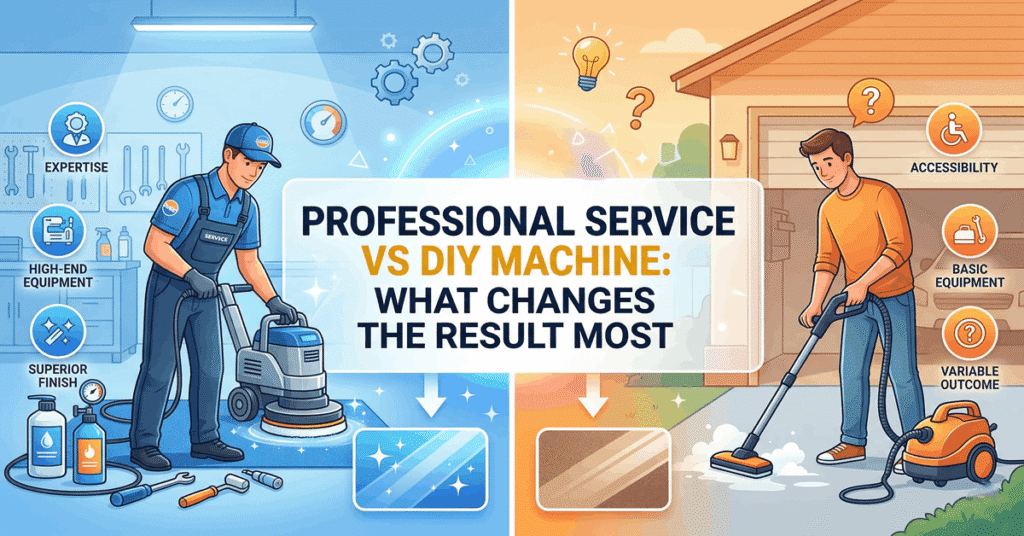
A pro carpet cleaning job usually beats a DIY pass for one reason: the result comes from the full process, not the label on the machine. Hot water extraction can leave carpet cleaner, drier, and less sticky after cleaning when the operator uses good pre-treatment, enough dwell time, strong extraction, and fast drying airflow. A rental carpet extractor can still help with light soil or a fresh spill, yet the gap gets wider on pet urine contamination, heavy traffic lanes, or large rooms.
Many homeowners compare steam cleaning carpet services with a rental unit as if the method alone decides the outcome. It helps to understand carpet cleaner and extractor differences before judging what a machine can really do. In real use, the bigger factors are suction, rinse quality, how much water and solution stay in the carpet backing, and whether the cleaner knows when to stop. Process quality matters more than marketing terms alone.
Why extraction power and pre-treatment matter more than labels
The strongest machine can still do a poor job if the cleaner skips the early steps. Dry soil should come out first with thorough vacuuming. Pre-spray needs a short dwell period so soil can loosen from carpet fibers, and agitation helps in high-traffic areas or spots with oily residue.
Extraction power matters at the rinse stage. A truck-mounted extractor or a strong portable extractor pulls more suspended soil and more water back out of the pile. That can cut residue, shorten carpet cleaning dry time, and lower the risk of over-wetting. A weak machine, extra detergent, or too few dry passes can leave the carpet looking clean for a day or two, then traffic lanes come back fast.
Questions to ask before booking a carpet cleaner
A short set of questions can tell you more than any service label:
- Do you use hot water extraction, low-moisture cleaning, or another process for this carpet?
- How do you handle pre-treatment, rinse, and extraction passes?
- What dry time should I expect for my carpet and room conditions?
- Do you clean wool carpet or delicate carpet fibers with a different approach?
- What can you do for pet stains or pet urine contamination, and what falls outside normal cleaning?
These questions help you sort real process details from broad sales claims. They help with the common search question what method do professional carpet cleaners use, since many companies say steam cleaning even when the job is really hot water extraction carpet cleaning.
When a rental machine is good enough and when it is not
A rental machine can be good enough for maintenance cleaning in a small apartment, a single-room refresh, or a recent spill that has not reached the pad. It can work for people who have time, can make slow overlapping passes, and can keep windows open or fans running until the carpet is dry.
A pro service is a better fit for whole-home cleaning, strong odor, older stains, pet accidents, dense pile, or rooms that need to be back in use soon. That matters even more when you need to put furniture back after carpet cleaning without trapping moisture. The same goes for wool carpet, carpets with delicate backing, and homes where residue or long dry time would create a bigger problem than the initial stain. If your main question is should I rent a carpet cleaner or hire a professional, the answer usually comes down to soil depth, drying tolerance, fiber sensitivity, and how much extraction power the job really needs.
Cost, timing, and the mistakes that lead to poor results
Cost and timing make sense only when linked to cleaning quality. A low quote for professional carpet cleaning can look attractive, yet the real value comes from soil removal, residue control, dry time, and fiber safety. Hot water extraction often costs more than a quick surface pass for a simple reason: a stronger process uses more labor, better equipment, more dry passes, and closer attention to carpet fibers, carpet backing, and stain conditions.
A cheap service can turn expensive after a second visit, a longer dry window, or new wear from over-wetting. The same issue shows up with DIY work. A rental carpet extractor may freshen light traffic soil, yet weak suction, too much detergent, or rushed extraction can leave residue in the pile and extra moisture near the backing. For homes with pet urine contamination or heavy traffic lanes, the lowest price often buys the least useful result.
What you are really paying for with hot water extraction
With hot water extraction, the bill reflects more than hot water. You are paying for pre-treatment, dwell time, agitation where needed, rinse extraction, stain work, skilled passes with a truck-mounted extractor or portable extractor, and airflow support that helps carpet cleaning dry time stay reasonable. When a cleaner skips those steps, the method name stays the same, yet the result changes sharply.
Room count alone does not tell the full story. A lightly soiled synthetic carpet in two bedrooms is a different job from a wool carpet with pet spots, traffic lanes, and older residue from past cleaning. The extra cost often comes from condition, not square footage. That is why the cheapest price can miss the point: carpet cleaning maintenance works best when the process matches the soil load and the material.
| Cost driver | Why it changes the job | Effect on outcome |
| Pre-treatment | Loosens embedded soil and oily residue | Better soil removal |
| Stain work | Targets spots that a general pass will not lift | Better appearance with fewer repeat visits |
| Extraction strength | Pulls water and soil back out of the carpet | Less residue and shorter dry time |
| Fiber sensitivity | Wool carpet and older carpet need more care | Lower risk of damage |
| Drying support | Air movers and careful dry passes reduce wet time | Faster return to normal use |
The most common mistakes homeowners make
Poor results usually come from process mistakes, not from the label on the machine. A homeowner may hear steam cleaning carpet and assume deep extraction is part of the service. A better question is what method do professional carpet cleaners use on your carpet, with your soil level, and with what equipment.
Common mistakes include:
- Choosing by price alone
- Using too much detergent in a rental machine
- Making one wet pass and no extra dry passes
- Treating wool carpet like standard synthetic carpet
- Assuming every stain will lift in one visit
- Walking on carpet too soon and pushing soil back into damp fibers
- Booking a quick refresh for carpet that needs full hot water extraction carpet cleaning
When neither method is the full answer
Some carpet problems sit past the reach of either option. Pet urine contamination may have moved into the pad or subfloor. Old stains may have changed the dye. Carpet backing may be weak from age, past over-wetting, or delamination. In those cases, more cleaning can bring only a small visual gain, with added risk to the material.
That is where honest guidance matters. A skilled professional carpet cleaner should tell you when the likely result is modest, when odor work needs a deeper corrective approach, or when replacement is the better use of money. Cost, timing, and method choice all look different once the carpet condition is viewed clearly.

Frequently Asked Questions
Is carpet steam cleaning the same as hot water extraction?
Not always. Many homeowners use the terms as if they mean the same thing, yet professional carpet cleaning companies often call hot water extraction steam cleaning in sales copy. The useful question is not the label alone. Ask whether the cleaner applies hot water and solution into the carpet, then removes soil and moisture with a carpet extractor. That process gives a clearer picture of what carpet fibers and carpet backing will actually go through.
Which method is better for pet urine in carpet?
Hot water extraction is usually the stronger option for pet urine in carpet when the goal is to flush out dissolved soil and pull moisture back out. A surface pass may improve smell for a short period, yet deeper odor can remain if urine has reached the pad or subfloor. In that case, even a strong carpet extractor may not fully solve the problem, so the cleaner should set realistic expectations before starting.
Does hot water extraction take longer to dry?
Yes, hot water extraction often takes longer to dry than a light surface cleaning, yet dry time is shaped by more than the method name. Extraction strength, dry passes, airflow, humidity, and soil load all affect the result. A truck-mounted extractor or a strong portable extractor can shorten carpet cleaning dry time compared with weaker equipment that leaves more water behind. Readers who want to dry carpet after cleaning faster should pay close attention to airflow and moisture recovery.
Can steam cleaning damage carpet?
It can if the method, heat, or moisture level does not match the carpet. Wool carpet, older carpet, and carpet with weak backing need more care than standard synthetic carpet. Damage usually comes from over-wetting, harsh chemistry, or poor technique rather than from the word steam itself. Asking how the cleaner handles fiber type, residue control, and drying is smarter than judging by the service label.
What do most professional carpet cleaners actually use?
Most professional carpet cleaners use hot water extraction, even when the service is marketed as steam cleaning carpet. The process often includes pre-treatment, agitation where needed, rinse extraction, and multiple passes with a truck-mounted extractor or portable extractor. That matters more than the headline term. If you want a clear answer to what method do professional carpet cleaners use, ask about the full process, not the brochure wording.
How often should carpets be cleaned with hot water extraction or steam cleaning?
Most carpets need cleaning on a schedule tied to traffic, pets, spills, and fiber type rather than a single fixed timeline. High-traffic homes, homes with pets, and homes with recurring stains usually need hot water extraction carpet cleaning more often than lightly used rooms. Manufacturer care guidance can matter here, especially for wool carpet. A maintenance clean works well for light soil, yet neglected carpet often needs a deeper reset first.
Conclusion
The clearest takeaway is simple: the label matters less than the actual cleaning process. A service called steam cleaning may still be hot water extraction, and the better choice comes down to soil level, carpet fibers, drying tolerance, residue control, and the condition of the carpet backing. A strong professional carpet cleaner looks at those details before choosing the process.
The next step is straightforward. Identify the carpet material, decide whether you need a light refresh or deep cleaning, and ask what equipment and extraction steps will be used. For most readers comparing carpet steam cleaning vs hot water extraction, the smartest decision starts with matching the method to the carpet’s condition and the result you actually need.