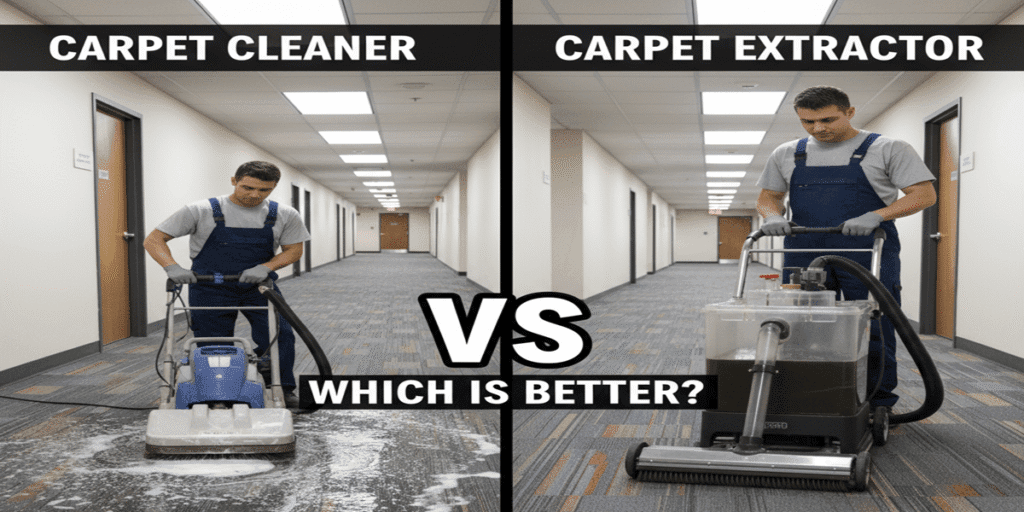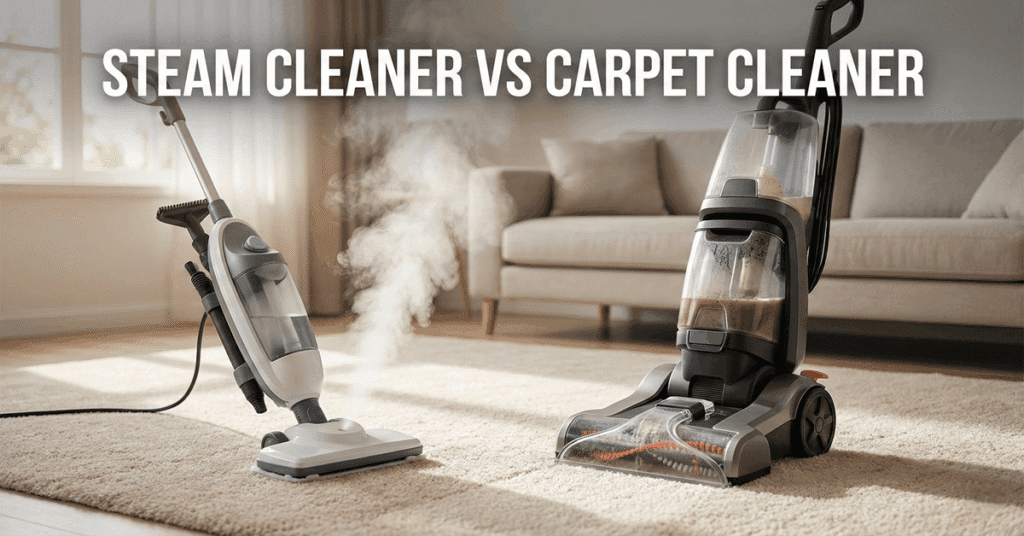
Disclosure: Classy Floor is reader-supported. As an Amazon Associate, we earn from qualifying purchases. We may also earn commissions from other affiliate programs, at no additional cost to you. Learn more →
Why does carpet still look tired after “steam cleaning”? The answer often comes down to tool design: steam cleaner vs carpet cleaner is really a choice between high-heat vapour and a carpet cleaner built for spray-and-suction extraction. A steam cleaner can freshen and sanitise some surfaces, yet a carpet shampooer (injection and extraction) targets soil pulled from carpet fibres, closer to hot water extraction results.
This guide helps household buyers pick the right machine for stains, odours, pets, and drying time, without messy trial and error. The article answers steam cleaner vs carpet cleaner, which should you buy, then tackles real questions like can you use a steam cleaner on carpet without harming a wool rug, carpet backing, or underlay. Expect clear comparison tables, clean-out steps, and practical checks that reduce detergent residue and re-soiling, using terms aligned with CRI-style certification and IICRC S100-style process language.
Steam cleaner vs carpet cleaner: what’s the difference?
A steam cleaner heats water into vapour and uses heat plus light agitation to lift surface grime. A carpet cleaner sprays liquid into carpet fibres, scrubs with a brush, then pulls dirty water back out with suction. Many shoppers search for how a shampooer compared with a steamer actually differs after a “clean” carpet still looks dull, or a stain keeps reappearing.
Steam cleaning carpet often suits quick refresh jobs on compatible materials. A carpet shampooer, often described as an extraction-style carpet machine, targets embedded soil in traffic lanes and under furniture. The main trade-offs come down to soil removal depth, drying time drivers, and the risk of overwetting carpet backing or underlay.
Table: Steam cleaner vs carpet cleaner (mechanism, results, trade-offs)
| Tool type | How the tool works | Removes best | Common limits | Ongoing costs |
|---|---|---|---|---|
| Steam cleaner | Heat turns water into vapour; tool head loosens surface dirt | Light grime, sanitising touch on compatible surfaces | Heat and moisture can stress some carpet fibres, rug dyes, adhesives | Water; occasional pads/attachments |
| Carpet cleaner (carpet shampooer) | Solution spray plus brush agitation; suction extracts dirty water | Embedded soil, fresh spills, many stains | Heavy machine; needs tank cleaning; slow drying if overwet | Cleaning solution; brush and filter upkeep |
Steam cleaner vs carpet cleaner: how do they work?
A steam cleaner relies on temperature at the surface, contact time, and steady passes. A carpet cleaner relies on water flow, brush action, and suction power inside a two-tank system that keeps clean water separate from dirty water. That split matters for consistent extraction on large rooms.
Real-world use looks different. Steam moves fast on small areas, then air-drying finishes the job. A carpet extractor machine needs a slow “wet pass” then one or two suction-only passes, plus airflow from fans or a dehumidifier for faster drying and fewer wick-back stains.
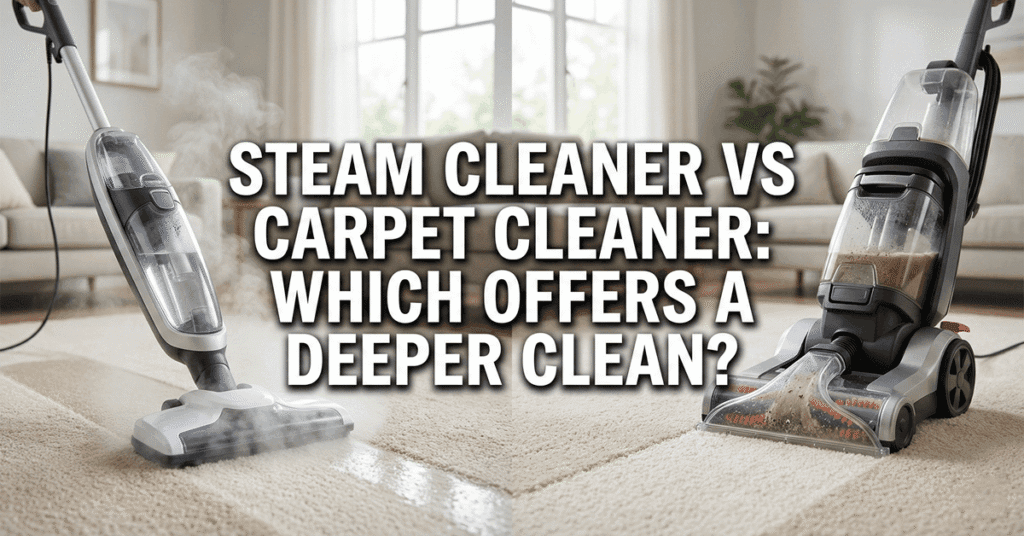
Steam cleaner vs carpet cleaner: which offers a deeper clean?
A carpet cleaner usually gives the deeper clean on wall-to-wall carpet. Injection and extraction suspends soil in liquid and removes that soil with suction, closer to professional hot water extraction practice described in IICRC S100-style process language. Steam can freshen carpet, yet steam cleaning carpet rarely matches extraction for ground-in dirt.
Think in outcomes. “Deeper” means less grit left in carpet fibres, less detergent residue, and fewer dull traffic lanes after the carpet dries. A steam cleaner can help with surface hygiene on suitable materials, yet deep soil removal stays limited without extraction.
Stains, odours, and pet mess: which tool performs better?
For most food spills and tracked-in mud, a carpet shampooer wins on removal. The brush breaks up the stain edge, then suction pulls out the dirty water. Set-in pet odour needs chemistry plus extraction, so an enzyme cleaner paired with a carpet cleaner tends to work better than heat alone.
A common pitfall is too much detergent. Excess solution can leave a film that attracts soil after drying time after carpet cleaning. A simple fix is an extra extraction pass with water only, then speed up drying with airflow until the carpet feels dry to the touch.
Allergen and hygiene claims: what steam can and cannot prove
Steam can reduce microbes on some surfaces when heat reaches the target area for long enough. Carpet adds variables such as pile height, moisture retention, and backing materials, so hygiene results vary by carpet type and machine settings. Consumer guidance often points readers to the CRI Seal of Approval programme and manufacturer care labels for safe methods on specific fibres.
For allergens and dust mites, soil removal matters as much as heat. A carpet cleaner removes suspended dirt and can reduce what stays trapped in the pile after vacuuming. If you’re also weighing allergy-friendly carpet choices, the next section breaks down where each machine fits best in day-to-day cleaning choices.
When to choose a steam cleaner
A steam cleaner fits households that want heat-based cleaning on sealed hard surfaces and only a light carpet refresh, with strict attention to carpet fibre and carpet backing limits. A steam cleaner lifts surface grime and can reduce odour on some textiles, yet a steam cleaner does not pull as much embedded soil from carpet fibres as a carpet extractor machine with suction. Manufacturer care labels and fibre type matter, especially wool carpet cleaning safety and heat-sensitive adhesives in carpet backing and underlay.
Choose a steam cleaner for quick upkeep in entryways, for spot work on certain rugs, and for sanitising tasks on grout or sealed tile. Steam cleaning carpet makes sense for light traffic-lane dullness, not for heavy soil or old stains. A patch test on an out-of-sight edge avoids surprises, since heat and excess water can mark natural fibres.
Can you use a steam cleaner on carpet safely?
A steam cleaner can be carpet-safe on some synthetic carpets, yet safety rests on temperature, contact time, and how much water reaches the backing. Vendor documentation and care labels often warn against over-wetting and high heat on delicate fibres. Keep the steam head moving, keep output low, and speed drying with airflow to reduce mould risk from trapped moisture in line with EPA guidance on drying carpet quickly.
Steam cleaner do’s and don’ts for carpets and rugs
- Do vacuum first with a strong vacuum, ideally HEPA for fine dust.
- Do use the lowest effective steam setting and keep passes brief.
- Do patch test on wool, blends, and any rug with unknown backing.
- Don’t park the steam head in one spot or push steam into seams and edges.
- Don’t treat steam as a cure for pet urine; urine salts and deep odour often stay without extraction.
A simple rule works: steam refreshes and sanitises surfaces; extraction removes the gritty soil that flattens carpet pile.
When to choose a carpet cleaner
A carpet cleaner is the right pick for deep soil, stains, and odours on wall-to-wall carpet, stairs, and many upholstery fabrics, since a carpet cleaner uses injection and extraction to pull dirty water back out. A carpet shampooer or portable extractor handles traffic lanes, muddy footprints, and food spills far better than vapour-only cleaning. Pet stains and lingering smell usually need chemistry plus strong suction, not heat alone.
Choose a carpet cleaner for homes with pets, kids, frequent entertaining, or light-coloured carpet in busy rooms. If you’re pairing cleaning habits with carpet built for busy rooms, a carpet cleaner can cut down detergent residue and fast re-soiling when the user runs a water-only rinse pass after the cleaning pass. The result feels more like hot water extraction than surface freshening.
Renting vs buying a carpet cleaner: when each makes sense
| Situation | Renting a carpet cleaner | Buying a carpet cleaner |
|---|---|---|
| Deep cleans per year | One-off or seasonal | Regular schedule |
| Home size and carpet area | Small areas | Many rooms, stairs |
| Pets and accidents | Rare | Frequent |
| Storage and setup time | Short-term | Ongoing |
| Preferred approach | Occasional reset | Quick response to spills |
Many households rent first to test weight, hose reach, and drying time in real rooms. A purchase makes sense once the household sees repeat use, since repeated rental trips and tool checkout add friction.
What to look for in a carpet cleaner (before you buy)
- Strong suction and a clear dirty-water tank, since extraction is the core performance lever
- Brush design that lifts pile without shredding loops on some carpets
- Two-tank system for clean water and dirty water separation
- Upholstery tool and stair tool for sofas, car seats, and steps
- Easy clean-out of nozzles and brushes to prevent smells and clogs
- Compatibility with CRI Seal of Approval style guidance and safe solutions for the carpet fibre
Steam cleaner vs carpet cleaner: which is easier to use and maintain?
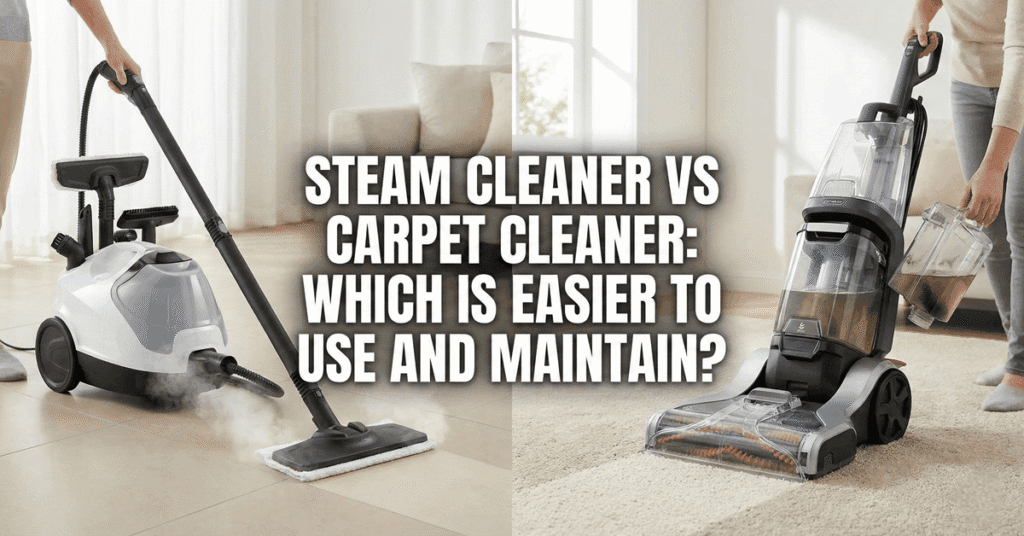
A steam cleaner usually feels simpler day to day, since a steam cleaner often needs only water, a heat-up cycle, and a pad or nozzle wipe-down. A carpet cleaner asks more of the user: mixing solution, managing a two-tank system, emptying a dirty water tank, cleaning a rotating brush, and flushing hoses so suction power stays steady. For many homes, ease comes down to weight, tank design, and how quickly a machine can be cleaned after a job that leaves carpets wet and slow to dry.
Carpet cleaner upkeep matters more than most buyers expect. Residual moisture in tanks and lines can leave odour and clogs, a risk echoed in a moisture and mould remediation SOP. Manufacturer manuals and industry process language aligned with IICRC S100-style cleaning place real emphasis on post-use rinse and dry steps, since poor clean-out creates the same complaints people label as “bad machine” performance.
After-use clean-out checklist (prevents smells and clogs)
| Task | Steam cleaner | Carpet cleaner |
|---|---|---|
| Empty and dry tanks | Empty boiler or reservoir; leave cap open to air-dry | Empty clean tank and dirty tank; air-dry both with caps off |
| Clean contact parts | Rinse pads or cloths; wipe nozzle and head | Rinse brush roll, nozzle window, and upholstery tool; clear hair and lint |
| Flush the system | Run clean water through briefly if the manual recommends it | Run a water-only rinse pass through the lines to reduce carpet cleaning solution residue |
| Prevent blockages | Clear any mineral build-up per the manual | Check hose ports and filters; keep seals free of grit |
| Storage | Store dry; keep attachments together | Store fully dry; keep brush and nozzle off carpet to avoid mildew odour |
Troubleshooting: why carpets feel sticky or resoil fast
Sticky carpet and fast re-soiling often trace back to detergent residue left in carpet fibres. A common fix is a slow water-only rinse pass with strong extraction, then faster drying with airflow from a fan or dehumidifier. If a carpet still feels tacky, reduce solution strength next time and clean the nozzle path, since poor flow and weak pickup can leave more moisture behind.
A simple self-check helps. Push a clean paper towel into a small area after extraction. A towel that turns grey fast points to poor soil removal, not just surface grime. That cue often means another rinse pass and better brush and nozzle cleaning.
Steam cleaner vs carpet cleaner: which is more affordable?
Upfront price often favours a steam cleaner, yet total cost can tilt toward a carpet cleaner when deep cleans happen often or rental fees add up. The real cost drivers are purchase price, cleaning solution, replacement parts, and time spent cleaning out tanks and tools. A household choosing between carpet cleaner rental vs buy can use a basic yearly estimate to compare options without guessing.
Running costs for a carpet cleaner come from solution and wear parts. Brush rolls, belts, and filters can need replacement, and dirty water tank cleaning takes time. A steam cleaner can carry costs tied to pads and descaling in hard-water areas, based on vendor guidance for safe maintenance.
Cost template: estimate your yearly cleaning spend
Use these inputs to estimate a rough yearly total for each option:
- Cleans per year and number of rooms, plus any upholstery or stairs
- Rental cost per clean, if rentals are part of the plan
- Cleaning solution cost per clean, including pre-treatment for stains and pet odours
- Replacement parts and accessories, such as pads, filters, belts, or brush rolls
- Drying support, such as a fan or dehumidifier, when drying time after carpet cleaning runs long
A final practical filter is time. A carpet cleaner can save money on service calls, yet the clean-out routine adds minutes after each use. If quick maintenance matters more than restoration-level soil removal, the usability trade-off can outweigh the savings.

Frequently Asked Questions
Is a steam cleaner the same as a carpet cleaner?
A steam cleaner and a carpet cleaner are different machines with different cleaning mechanisms. A steam cleaner uses heated vapour and usually leaves little water behind, yet a carpet cleaner uses a two-tank spray-and-suction system that pulls dirty water out of carpet fibres. Many shoppers mix up “steam cleaning carpet” with hot water extraction, yet most home “carpet shampooer” units rely on injection and extraction rather than true steam at the fibre base.
Is it better to steam clean carpet or shampoo it?
For ground-in soil, traffic lanes, and dull-looking carpet, a carpet cleaner usually gives the stronger reset since suction removes suspended dirt and leftover solution. Steam can suit a light refresh on steam-safe carpet, yet steam rarely matches the soil removal that extraction delivers. A quick decision rule: choose steam for surface refresh, choose carpet cleaning for visible soil and staining risk.
Does steam cleaning damage carpet fibres or cause shrinkage?
Steam cleaning can cause problems on heat-sensitive carpet backing, adhesives, or certain rug constructions, so manufacturer care guidance matters. Wool rugs and some natural-fibre carpets can react badly to heat and moisture, with texture change or shrink risk if the pile gets overwet. A patch test in an edge area gives safer feedback than guessing from a marketing label.
How long should carpet take to dry after steam or carpet cleaning?
Drying time links to moisture load, airflow, underlay thickness, and how much water the machine leaves behind. A carpet cleaner can leave more moisture in the pile than a steam pass, so ventilation, fans, and a dehumidifier often matter more than the brand name. If you’re unsure when it’s safe to move furniture back, wait until the carpet feels fully dry to the touch. Sticky feel after drying often points to detergent residue or weak extraction rather than “slow drying” alone.
What works best for pet urine and old odours, steam or carpet cleaner?
Pet urine and old odours usually respond better to a carpet cleaner paired with the right chemistry, since extraction removes contaminated moisture from carpet fibres and underlay contact zones. Steam heat can warm and spread odour if moisture pushes deeper into backing, so steam is rarely the first choice for urine. Enzyme cleaner use and full extraction matter for results, with realistic limits for deeply soaked padding.
Can you use a steam mop on carpet with a carpet glider?
A steam mop with a carpet glider can freshen the surface of low-pile carpet, yet it is not a substitute for a carpet extractor or carpet shampooer. A glider reduces direct contact and limits snag risk, yet heat and moisture still hit the pile and backing, so carpet label guidance still applies. Keep passes light and fast, then boost airflow to avoid lingering dampness.
What do professionals use to clean carpets?
Many carpet cleaning services rely on truck-mounted extractors or high-powered portable extractors that follow hot water extraction principles with strong vacuum recovery. Industry process language often references IICRC S100-style steps, and certification cues like the CRI Seal of Approval can signal compatible equipment and solutions. A good service quote should name fibre type, stain type, and drying plan, not just “deep clean carpet at home” promises.
Conclusion
A steam cleaner and a carpet cleaner solve different cleaning jobs, and the right choice hinges on hot water extraction-style soil removal, drying time control, and carpet fibre and backing tolerance. A steam cleaner suits light surface refresh on steam-safe materials, while a carpet shampooer with injection and extraction fits traffic lanes, stains, and odour risks where suction matters.
The key is matching the machine to the mess, then protecting results with good clean-out habits and strong airflow so detergent residue and damp underlay problems do not linger. Check carpet care guidance for wool rugs and heat-sensitive constructions, and treat pet urine as an extraction task, not a heat task.
If one room keeps re-soiling or smells return, revisit the comparison table and the after-use checklist, then choose with confidence: steam cleaner vs carpet cleaner is a decision about method, not marketing.