Disclosure: Classy Floor is reader-supported. As an Amazon Associate, we earn from qualifying purchases. We may also earn commissions from other affiliate programs, at no additional cost to you. Learn more →
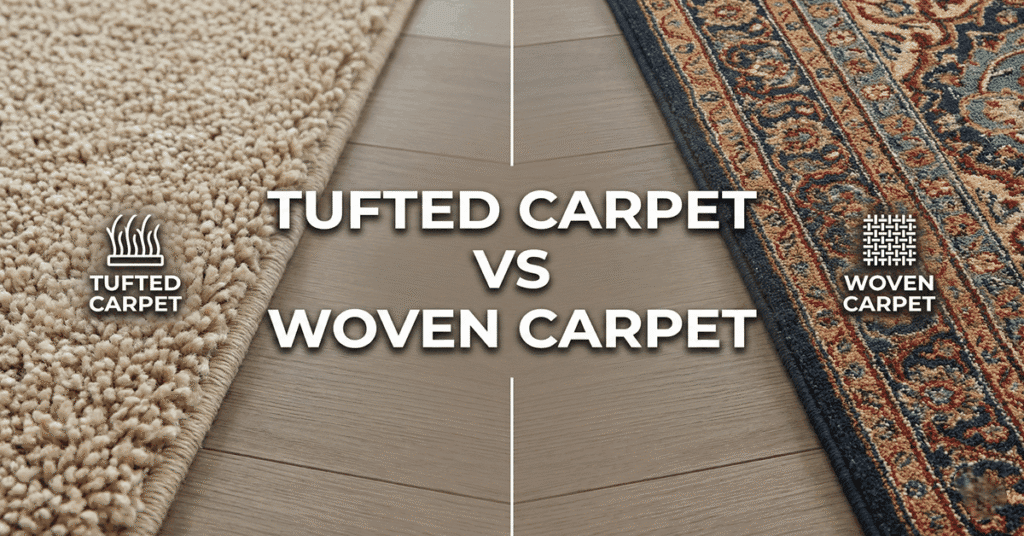
Choosing between tufted carpet vs woven carpet is not a style choice first; it is a construction choice that affects durability, feel, and cleaning. Tufted carpet relies on carpet backing and a latex backing system, while woven carpet includes Wilton carpet and Axminster carpet builds that hold pattern and structure in different ways. The right pick shows up fast in stairs, hallways, and high-traffic rooms.
Homeowners, landlords, designers, and facility managers often face the same decision: pay for longer service life, or prioritise upfront value without surprises later. This guide compares carpet construction types with clear criteria, a carpet durability lens, and room-by-room recommendations, so questions like “tufted vs woven carpet for stairs” get a direct answer. Expect practical checks such as backing and carpet installation seams, plus a focus on common warranty issues and maintenance mistakes that change outcomes.
Tufted carpet vs woven carpet construction differences that change performance
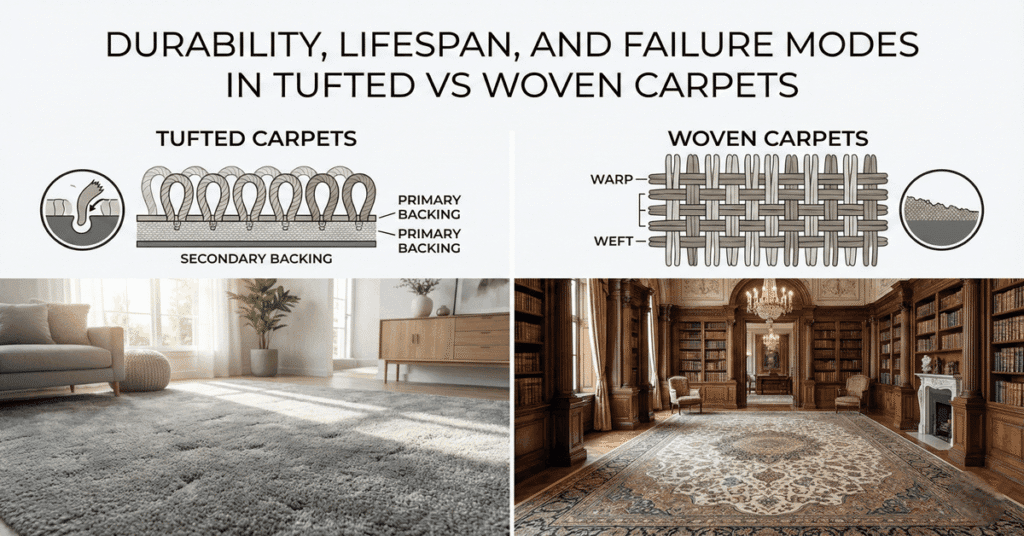
Tufted carpet and woven carpet perform differently for one reason: the pile is held in place in two different ways. Tufted carpet pushes yarn through a primary backing, then a latex backing bond locks the tufts before a secondary backing is added. Woven carpet forms the pile and the backing together on a loom, so the structure is built as one unit, which often supports sharper pattern definition and steadier long-term structure in durable carpet choices for busy rooms.
Many carpet listings blur carpet construction types, so the safest starting point is the construction stack: primary backing, latex backing, secondary backing, and the way the pile is anchored. Vendor documentation notes these details, and the same product can look similar in a sample while behaving very differently under footfall and furniture load. Carpet backing details also shape how a carpet is handled at installation seams.
| What to check | Tufted carpet | Woven carpet |
| How pile is anchored | Yarn tufted into primary backing, then bonded | Pile and backing woven together on a loom |
| Backing build | Primary backing + latex backing + secondary backing | Integrated structure, no separate bonding step |
| Pattern control | Good in many styles, less stable in complex repeats | Strong pattern definition, stable repeats |
| What spec sheets often highlight | stitches per inch, face weight, pile density | weave type (Wilton carpet, Axminster carpet), construction notes |
Tufted: primary backing, latex bind, secondary backing (what to verify on spec sheets)
With tufted carpet, performance rises or falls with the bond between the primary backing, latex backing, and secondary backing. Look for clear statements on the backing system, plus stitches per inch and pile density, since those cues often track with how well the pile resists loosening and how well the surface holds shape. Face weight can help comparison, yet only when the pile style is like-for-like.
A practical showroom check is to ask for the product sheet, then confirm the backing stack and the stitch count language matches the label. Weak documentation is a trust cue in itself, since backing details affect how the carpet handles at installation seams and how the pile stays seated over time.
Woven: Wilton vs Axminster basics (why pattern precision and structure differ)
Woven carpet forms the backing and pile together, which changes the feel of stability under traffic and supports crisp pattern definition. Two common woven builds are Wilton carpet and Axminster carpet. Wilton carpet often suits repeating patterns with consistent structure, and Axminster carpet is known for complex designs where the construction supports clear pattern placement.
When comparing woven options, focus on the weave description and the construction notes in the same way a buyer checks tufted backing. A woven label without a clear weave type is a cue to pause and verify, since the weave method is the core reason woven carpet behaves differently.
Durability, lifespan, and failure modes in tufted vs woven carpets
For carpet durability, tufted carpet and woven carpet fail in different ways under the same conditions. Stairs, hallways, rentals, and commercial-grade carpet areas raise the risk of seam issues, carpet crushing, and backing problems. Tufted carpet relies on carpet backing and latex backing to hold the pile, so wear can show up as delamination or loosened pile when the backing system breaks down. Woven carpet (including Wilton carpet and Axminster carpet builds) holds structure through the weave, so wear more often shows as surface flattening, pattern distortion, or edge fray from traffic.
High traffic puts stress on carpet installation seams first. Poor seam placement on a doorway line, weak join work, or movement from a soft underlay can lead to gapping and visible lines. Vendor documentation and installer guidance, including seam placement and installation planning guidance, often tie seam performance to correct joining methods and room layout choices, so seam planning matters as much as the carpet itself, including how long carpet fitting usually takes.
Delamination is a key tufted failure mode. Latex backing can dry out, crack, or lose grip over time, which can let the pile start to lift from the primary backing. Heat, harsh cleaning chemistry, and repeated wet cleaning raise that risk, so it helps to understand steam cleaning versus a carpet shampooer before choosing a routine. Woven carpet avoids that specific failure pattern, yet woven carpet can still wear hard on stairs where tread edges take repeated impact.
Pile crush is not a defect in most carpet warranty language; it is classed as appearance change. Dense construction and the right pile type reduce visible tracking, yet heavy furniture legs and frequent pivot points can still flatten fibres. A simple room test helps: look at the same spot from two angles under light. If the “shade change” shifts with angle, the carpet shows tracking rather than fibre loss.
Failure mode to cause to prevention, plus lifespan ranges by traffic band
| Topic | Tufted carpet: typical cause | Woven carpet: typical cause | Prevention focus |
| Seam gapping | Weak join, tension changes, high traffic at thresholds | Join stress at thresholds, edge stress | Place seams away from door lines; use proven joining practice; keep traffic off seams during cure |
| Delamination | Latex backing bond weakens; repeated wet cleaning; heat | Rare; structure held by weave | Follow carpet warranty care notes; avoid over-wetting; use correct cleaning method and drying |
| Carpet crushing / tracking | Pile flattens under rolling loads and pivot points | Pile flattens under repeated footfall | Choose appropriate pile type; rotate furniture; use mats in pivot zones |
| Stair wear | Edge abrasion and pile loss on nosings | Edge abrasion and fray on nosings | Specify stair-suited construction; focus on tight fit and correct fixing on stairs |
| Lifespan bands | Light traffic: longer; Moderate: mid; High: shorter | Light traffic: longer; Moderate: longer; High: mid to long | Match construction to traffic band; plan maintenance and inspection cadence |
The table gives patterns, not promises. Carpet lifespan changes with traffic, cleaning habits, and install quality, and carpet warranty terms can narrow what counts as a defect. A quick check before purchase helps: ask for the care guidance in writing, then compare it to the cleaning routine the space can realistically support.
Appearance, pattern clarity, and feel underfoot
Tufted carpet and woven carpet create different results in pattern definition, comfort, and how quickly visual wear shows. Woven carpeting, including Wilton carpet and Axminster carpet, tends to hold crisp pattern edges and stable repeats. Tufted carpeting often delivers a plusher first step, shaped by cut pile vs loop pile choices and how the carpet backing supports the pile.
Pattern clarity starts with structure, not marketing. A woven build locks yarns in place across the width and length, so motifs keep their edges when light hits the surface at an angle. A tufted build relies on yarn held into primary backing with latex backing support, so texture can look richer in plain colours, yet fine lines can soften in busy designs.
Feel underfoot is easiest to judge with pile type and density cues. A dense loop pile can feel firm and controlled, which suits corridors and office routes. A cut pile can feel softer and warmer, yet low pile density can show carpet crushing sooner, even when the colour looks right on a small swatch.
Visual wear visibility is a real design constraint. Dark, solid cut pile can show tracking and shading faster than a patterned woven face, even when the carpet durability level is similar. Vendor documentation notes that sample viewing under natural light gives a truer read than showroom spotlights.
| Design goal | Tufted carpet tends to suit | Woven carpet tends to suit | What to check on the sample |
| Clean, plush comfort | Solid colours, softer cut pile feel | Less “sink-in” feel for some piles | Rub direction changes and shading |
| Sharp pattern lines | Larger-scale patterns, textured looks | Fine motifs, crisp borders, stable repeats | Edge sharpness from 2 metres away |
| Hide day-to-day tracking | Texture or mid-tone mixes | Patterned faces that break up traffic lanes | How pile reflects light near windows |
| Consistent look over time | When pile density is high | Strong pattern stability in repeats | Distortion at corners and seams |
A quick showroom check keeps decisions grounded: view the same carpet sample in daylight and shade, look at pattern edges from across the room, run a hand both directions to see shading, compare a cut pile sample beside a loop pile sample, ask to see backing type so carpet backing matches the expected look.
Cleaning, stain resistance, and maintenance realities
Cleaning outcomes come from carpet construction types, fibre choice, and day-to-day habits, not marketing claims. Tufted carpet relies on carpet backing and latex backing, so spill control and drying matter for long-term appearance. Woven carpet, including Wilton carpet and Axminster carpet, usually holds structure well, yet stain resistance still depends on wool carpet, nylon carpet, polyester carpet, or polypropylene carpet, and the nylon and polyester fibre trade-offs can shift the best choice by room. Stain treatment works best when the approach matches pile type and backing design.
Most buyers want a floor that stays presentable with normal living, pets, and routine traffic. The decision often turns on how fast soil shows, how easy recovery feels after a spill, and how strict the carpet warranty rules are around cleaning products and drying, including speeding up carpet drying after cleaning. Vendor care notes often highlight missed steps that cause odour, watermarking, or texture change.
A practical baseline starts with vacuuming and scheduled professional carpet cleaning based on a recognised standard for professional carpet cleaning methods. Dense pile and certain loop styles can hold grit at the surface, so frequent vacuuming keeps fibres from dulling early. For rentals and family homes, focus on consistent soil removal and quick spill control rather than chasing new stain treatments.
| Situation | Tufted carpet focus | Woven carpet focus | Practical action |
| Routine vacuuming | Grit can sit near the surface and work into pile | Similar grit risk with dense woven piles | Vacuum at a steady cadence that matches traffic; pay attention to stairs and entry paths |
| Spot cleaning a fresh spill | Latex backing can trap moisture if overwet | Structure stays stable, yet overwetting still leaves residue | Blot first, then apply a suitable stain treatment in small amounts; rinse lightly and blot again |
| First 5 minutes after a spill | Fast blotting limits spread | Fast blotting limits spread | Press with clean towels; avoid rubbing that distorts pile |
| First hour after a spill | Drying speed protects backing and reduces odour | Drying speed protects appearance | Keep airflow moving; avoid leaving damp padding under furniture |
| First day after a spill | Residue can attract soil and show as reappearing marks | Residue can show as dull patches | Re-blot with clean water, then dry fully; follow carpet warranty cleaning guidance |
| Scheduled deep clean | Overwetting risk rises with aggressive methods | Pattern clarity can suffer from poor technique | Book professional carpet cleaning at intervals that fit use; confirm method matches fibre and backing |
| Indoor air sensitivity | Choose low-odour products; check VOC/indoor air certifications | Same product discipline applies | Select cleaners with clear labelling and rinse out residues |
Pet homes often ask, “which is easier to keep clean with pets: tufted or woven carpet?” The cleaner result usually comes from nylon carpet with steady vacuuming and fast blotting, regardless of tufted or woven build. Wool carpet can look rich, yet stains need careful stain treatment, and drying steps need more discipline. Polyester carpet and polypropylene carpet can resist many stains, yet oily soil can cling and show in traffic lanes.
Missteps tend to come from oversoaking, leaving residue, or ignoring the carpet backing and underlay pairing. A simple routine and a spill response that respects drying limits keeps tufted carpet and woven carpet looking consistent, which sets up a clearer value comparison in the next section.
Tufted carpet vs woven carpet cost, value, and sustainability trade-offs
Cost and value follow carpet construction more than appearance. Tufted carpet costs less to produce since the pile is set into primary backing and held with latex backing and a secondary backing. Woven carpet, including Wilton carpet and Axminster carpet, takes more time on a loom and often carries a higher purchase price. The better value choice is the one that fits the traffic level, the expected carpet lifespan, and the replacement cycle a space can tolerate.
Upfront price can mislead when the space has stairs, corridors, or frequent chair movement. A woven build can hold pattern definition longer and resist visual wear, so the service window can stretch in busy areas. A tufted build can still be the right buy in bedrooms or lower-use rooms where plush feel matters and the replacement cycle is less disruptive. Vendor documentation and warranty text often point to the same pressure points: backing integrity, carpet installation seams, and underlay pairing.
Use a simple total cost of ownership view before choosing. If indoor air is a deciding factor, note the VOC emissions testing method used by many certification schemes when you compare product claims. The goal is not a perfect forecast; the goal is avoiding a miss on lifespan, cleaning spend, or early replacement.ent.
| TCO input | Tufted carpet (record) | Woven carpet (record) | Notes to capture |
| Area covered | ___ | ___ | Same area for both options |
| Underlay for carpet | ___ | ___ | Underlay spec affects feel and wear |
| Carpet installation cost | ___ | ___ | Include stairs and seam work where present |
| Ongoing cleaning | ___ | ___ | Record routine and professional cleaning cadence |
| Expected carpet lifespan | ___ | ___ | Use manufacturer spec sheet cues, not showroom feel |
| Replacement count over your time horizon | ___ | ___ | Higher count raises disruption and install spend |
| Disposal or take-back plan | ___ | ___ | Note any take-back terms from supplier paperwork |
The “is woven carpet worth the extra cost” question usually settles fast once replacement count becomes visible. A rental corridor, a school office, or a retail back area often values fewer replacements and fewer seam repairs. A guest bedroom, a low-use sitting room, or a short-term fit-out often values lower upfront spend and quicker selection, even when the service window is shorter, and stair projects add another variable in stair carpet wrap styles.
Sourcing and indoor air quality matter in the same decision window. Wool carpet and wool blends often sit in woven ranges, though tufted ranges can carry wool too. Nylon carpet, polyester carpet, and polypropylene carpet appear across both constructions, with different trade-offs for stain resistance and long-term appearance, including olefin versus PET carpet fibre differences. For indoor air, look for VOC or indoor air certifications in supplier documentation and keep product comparison within similar fibre and backing types, since fibre choice and backing can change emissions profiles.
Commercial grade carpet specs can support the value check, even for homes. Face weight and pile density help compare like-for-like, yet those figures only make sense when the construction type matches. The next step is choosing a construction that fits the room profile and budget band, then checking the spec sheet and warranty language against that use case.
How to choose: room-by-room recommendations and buyer profiles
Choose tufted carpet or woven carpet by matching carpet construction to three conditions: traffic load, turning and pivot wear, and cleaning tolerance. Tufted carpet suits many rooms when carpet backing, latex backing, and carpet installation seams are specified well. Woven carpet fits spaces that punish pile and pattern, with Wilton carpet and Axminster carpet offering stable structure for long service life.
A fast selection starts with a simple rule: stairs and long corridors punish tufted carpeting first, since seam placement and backing quality carry more risk. Woven carpeting handles repeated pivot points and pattern alignment with fewer surprises, yet the budget line climbs. Vendor documentation and warranty language often name seams, cleaning methods, and underlay choices as make-or-break constraints, so those details belong in the decision, not after purchase.
The room selector below turns those constraints into a practical pick. Use the scoring rubric as a check: rate each room goal from 1 (low priority) to 5 (high priority), then follow the construction recommendation that matches the highest priorities.
| Room / Use case | Key condition | Best fit construction | Pile and appearance cue | Practical install and care cue | Scoring rubric focus (1–5) |
| Stairs | Pivot wear, edge wear, frequent vacuuming | Woven carpet | Pattern definition stays cleaner; visual wear shows less | Place seams away from stair noses; match underlay firmness | Durability, maintenance |
| Pivot wear, edge wear, and frequent vacuuming | Constant foot traffic, turning | Woven carpet | Pattern clarity supports heavy use | Check carpet durability notes in spec sheets; protect seams | Durability, value |
| Living rooms | Mixed traffic, comfort | Tufted carpet | Cut pile or cut-and-loop for comfort | Confirm carpet backing build and seam layout | Comfort, value |
| Bedrooms | Low traffic, softness | Tufted carpet | Softer hand feel; cut pile often suits | Choose underlay for comfort; plan fewer seams | Comfort |
| Rentals | Turnover, cleaning, budget control | Tufted carpet | Texture that hides marks | Pick straightforward care requirements; avoid fussy finishes | Value, maintenance |
| Offices | Chair movement, paths, spot cleaning | Woven carpet | Stable look under repeated movement | Ask about seam performance and cleaning limits | Durability, maintenance |
| Hospitality / reception zones | High traffic, first impressions | Woven carpet | Strong pattern definition | Keep seams minimal in focal areas; follow care limits | Durability, aesthetics |
Buyer profiles help when the room list points in two directions. A family home with pets often values maintenance and value, so tufted carpeting works in bedrooms and living rooms, with woven carpeting reserved for stairs and hallways. A design-led brief that needs pattern definition often lands on Wilton carpet or Axminster carpet in public-facing spaces, then shifts to tufted carpet in quieter rooms for comfort.
Installation decisions can shift the outcome even with the right construction. Carpet installation seams matter more in tufted carpet, so seam count and seam placement deserve an early check. Underlay pairing matters in both builds; carpet padding types and what each does can change firmness, comfort, and how quickly wear shows, even on a strong woven carpet.
Quick picks: best choice for stairs, bedrooms, living rooms, hallways, rentals, offices
Stairs and hallways: woven carpet first, with Wilton carpet or Axminster carpet in patterned schemes. Bedrooms and many living rooms: tufted carpet for comfort and value, with careful attention to carpet backing and seam planning. Rentals: tufted carpet for budget control, paired with clear care limits from vendor documentation and the carpet warranty.

Frequently Asked Questions
Is woven carpet always better than tufted carpet, or only in high-traffic areas?
Woven carpet often holds structure and pattern longer in high-traffic areas, especially on stairs and hallways, where pile crush and visual wear show fast. Tufted carpeting can still be a strong choice in bedrooms or lower-traffic rooms when comfort, budget, and simple replacement cycles matter more than maximum lifespan.
What lasts longer: tufted carpet vs woven carpet on stairs and hallways?
For stairs, woven carpeting tends to resist crushing and pattern distortion better, especially with Wilton carpet and Axminster carpet constructions. Tufted carpet can wear well too, yet outcomes rely more on carpet installation seams, underlay pairing, and whether the carpet backing system stays bonded over time.
How can I tell if a carpet is tufted or woven when shopping in-store?
Ask for the construction method on the label or in vendor documentation, then cross-check with the backing description. Tufted carpet usually lists a primary backing with a secondary backing and latex backing, while woven carpet is commonly labelled Wilton or Axminster and may show a more integrated structure. If a shop relies only on “plush” or “luxury” language without construction terms, treat that as a weak signal.
Does woven carpet feel less soft than tufted carpet?
Not always. Feel is driven by pile type (cut pile vs loop pile), fibre choice such as wool carpet or nylon carpet, and pile density. Many tufted carpets feel plusher underfoot, yet woven carpets can still feel comfortable with the right pile and underlay.
Which is easier to keep clean with pets: tufted or woven carpet?
Cleaning depends more on pile type and density than on tufted vs woven alone. Loop pile can trap hair, while some cut pile styles show less visible debris yet can show pile crush. Check the care guidance tied to the carpet warranty, since some stain treatments and cleaning methods can cause problems if they clash with the backing system.
Is Wilton carpet the same thing as woven carpet?
Wilton carpet is a type of woven carpet construction. Axminster carpet is another woven method. Both are woven carpeting, yet they can differ in pattern approach and how the pile yarns are set, which affects pattern clarity and long-term appearance.
When is the extra cost of woven carpet not worth it?
Woven carpet may be poor value in short-term rentals, fast renovation cycles, or rooms with low footfall where replacement is planned within a few years. Tufted carpet can suit those cases, as long as the carpet backing and carpet installation seams are sound and cleaning is kept within the vendor’s care guidance.
Conclusion
Carpet construction types drive real-world results in durability, pattern clarity, and maintenance, so the right choice comes from structure, not showroom feel alone. Woven carpet builds such as Wilton carpet and Axminster carpet often hold appearance longer, while tufted carpet can deliver comfort and value when the backing system is sound. Spec sheet cues like pile density and stitches per inch help keep comparisons fair.
Stairs, hallways, and rentals reward a decision that accounts for carpet installation seams, underlay pairing, and carpet warranty limits, since weak installation or mismatched care can shorten service life. Does the space need long-term pattern stability, or a practical finish that can be refreshed on a planned cycle?
Use the room selector and scoring rubric from the guide, then confirm the construction details in writing before purchase, and make the final call on tufted carpet vs woven carpet.