Disclosure: Classy Floor is reader-supported. As an Amazon Associate, we earn from qualifying purchases. We may also earn commissions from other affiliate programs, at no additional cost to you. Learn more →
Choosing carpet fibre can go wrong fast: two carpets can share a similar price tag, yet age very differently once traffic lanes, sunlight, and spills start to stack up. This polypropylene vs polyester carpet comparison focuses on the fibres that shoppers see most often, including polypropylene carpet (olefin) and polyester carpet (PET polyester), plus the real-world factors that change outcomes such as pile type, carpet density, underlay, and warranty texture retention.
This topic matters when a room needs a clear choice, not a sales pitch, and the wrong pick leads to carpet crushing and matting long before the carpet looks “worn out” on paper. If the question is “polypropylene vs polyester carpet, which is better”, this guide uses the same criteria later sections cover, from stain types and UV fade resistance carpet concerns to solution-dyed carpet fibre details, with a quick comparison table and a practical decision path that matches how people shop for olefin carpet vs polyester.
Quick comparison table: polypropylene vs polyester carpet
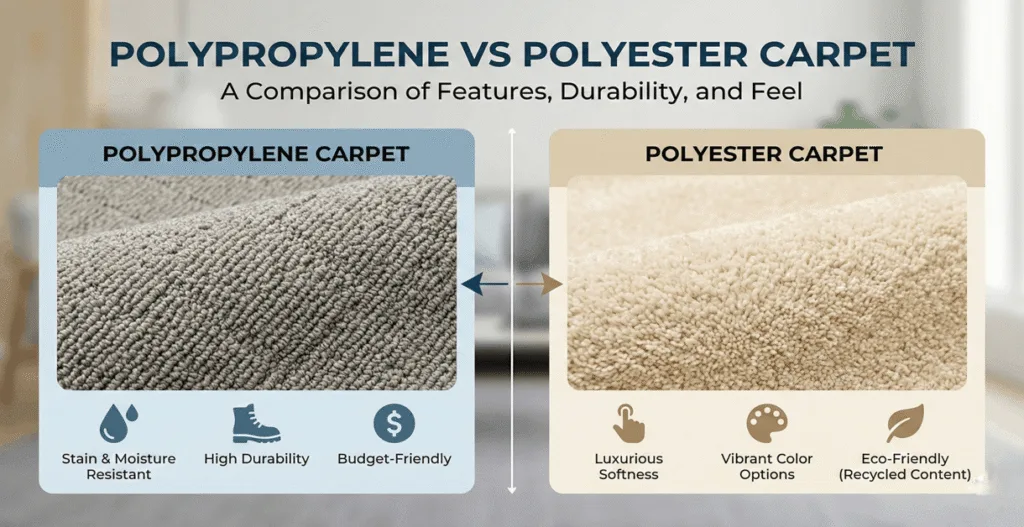
Polypropylene carpet (olefin carpet) and polyester carpet (PET polyester) sit in the same “affordable synthetic” lane, yet they solve different problems in real rooms. Polypropylene (olefin) usually suits moisture-prone spaces and budget installs, and polyester often suits softer-feel rooms where comfort and colour matter. For shoppers typing “polypropylene vs polyester carpet which is better”, the fastest route is a room-first choice, backed by carpet construction details such as pile type, carpet density, underlay, and warranty texture retention.
The table below works like a carpet fibre comparison chart. It keeps the focus on outcomes a homeowner can see: stain types, traffic-lane flattening, UV fade risk, and cleaning workload.
| Decision factor | Polypropylene carpet (olefin) | Polyester carpet (PET polyester) | What to check before buying |
|---|---|---|---|
| Typical feel underfoot | Often firmer | Often softer and plusher | Sample at home; feel changes with pile height and underlay |
| Moisture-prone rooms | Often a safer match | Can work with the right backing and installation | Backing system, installation method, subfloor moisture control |
| Water-based spills | Often wipes up well | Often wipes up well | Care label, stain treatment notes, cleaning method allowed |
| Oil and greasy soil | Can show dulling from oily soil | Can show dulling from oily soil | Cleaning guidance and vacuum routine matter as much as fibre |
| Traffic-lane flattening | Can crush in busy paths | Can crush in busy paths | Carpet density, twist level, pile style, stairs exclusions |
| Sunlight and fading | Often strong with solution-dyed yarn | Can be strong with the right dye method | Look for solution-dyed carpet fibre notes and UV guidance |
| Style range | Often more utilitarian | Often wider style range | Pile type, patterning, warranty on appearance retention |
| Best-fit rooms | Basements, utility areas, light-use rooms | Bedrooms, low to moderate traffic living areas | Match to traffic level and the household’s mess profile |
| Who should look beyond both | Heavy-traffic stairs, hallways | Heavy-traffic stairs, hallways | Compare nylon carpet or triexta (PTT) carpet in those zones |
Quick decision: choose polyester if…
Polyester carpet is often the better pick when comfort and look lead the decision and the room runs low to moderate traffic. A bedroom, guest room, or lounge area often suits PET polyester when carpet density and pile type support texture retention.
Use this quick screen:
- Softness matters more than maximum moisture tolerance
- The room stays fairly dry year-round
- The room has moderate footfall, not constant traffic lanes
- Colour and pattern options matter
- A clear warranty covers texture retention in that use case
Quick decision: choose polypropylene if…
Polypropylene carpet (olefin) often fits rooms where moisture and budget rank above plush feel. Olefin carpet vs polyester becomes a simple call in basements, near exterior doors, or utility spaces where damp shoes, drips, or humidity show up.
Use this quick screen:
- The room has a higher moisture risk
- The budget is tight and replacement cycles may be shorter
- The space is practical rather than “barefoot luxury”
- A solution-dyed yarn option is available for sunlight exposure
- Cleaning is frequent and simple care matters
When neither is the right choice
Some rooms punish any low-cost fibre. Stairs, busy hallways, and entry runs can flatten fast, even with good cleaning habits, once pile yarn loses resilience and traffic lanes set in, so it helps to review carpet choices for heavy-traffic zones.
If stairs and hallways are the priority
A stair runner and a hallway path stress carpet crushing and matting more than most rooms. Fibre choice helps, yet construction and rating matter more, so many buyers compare nylon carpet or triexta (PTT) carpet for those zones, then use polyester or polypropylene in bedrooms and secondary spaces.
If long-term appearance retention matters most
Appearance retention comes from density, twist, pile style, and underlay as much as fibre, so choosing the right carpet padding matters as much as the carpet itself. Manufacturer technical data sheets and warranty terms usually reveal the realistic expectation, especially where exclusions mention stairs, rentals, pets, or insufficient underlay.
Durability and resilience in real homes
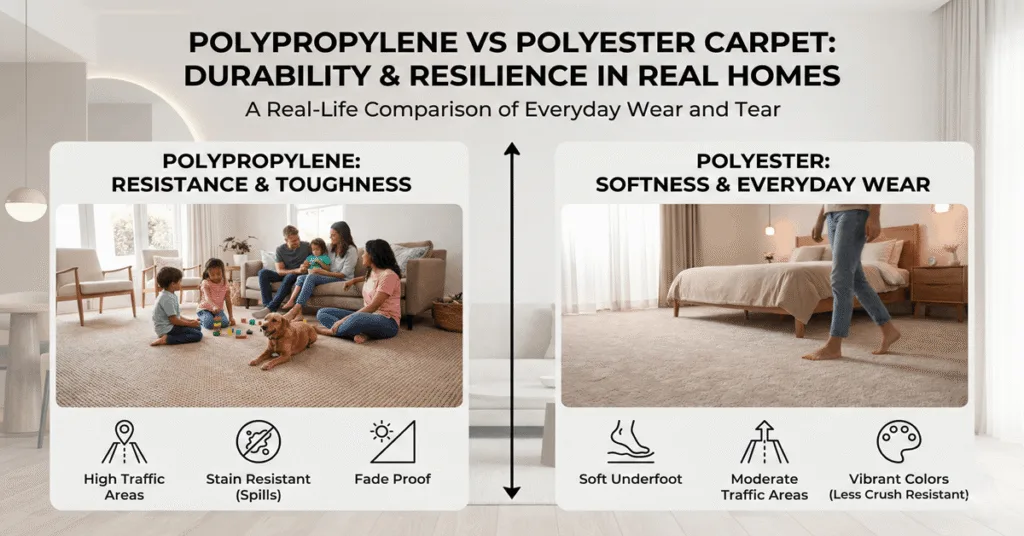
Durability in polypropylene carpet and polyester carpet usually fails as flattening, matting, and worn-looking traffic lanes, not as sudden tearing, which aligns with industry definitions for crushing and matting.
Resilience means the pile springs back after feet, chairs, and vacuuming; texture retention means the surface keeps a similar look over time. Fibre type sets the baseline, yet carpet construction, underlay, and cleaning habits often decide whether olefin carpet vs polyester looks acceptable after a year of real use.
A quick reality check helps: shoppers often compare fibres and forget the carpet’s build. A low-density plush carpet can “ugly out” quickly even when the fibre label looks right for the room.
What “uglying out” looks like and why it happens
“Uglying out” shows up as shiny lanes, a matted look, and pile that stays flattened after vacuuming. Soil grinds into the pile, pile tips fray, and the surface starts to look uneven, especially where people pivot, drag chairs, or walk in a straight line daily.
Most homeowners spot this first near sofas and doorways. The carpet fibre can resist staining and still look tired if pile yarn lacks resilience or the underlay lets the pile compress too far with each step.
Crush resistance: traffic lanes, furniture marks, stairs
Crush resistance is the main durability pain point for both polyester vs olefin carpet in busy homes. Furniture legs leave dents, traffic lanes flatten, and stairs add repeated bend stress that challenges texture retention.
A practical check in a showroom is simple: press a thumb into the sample and watch the pile recovery. A denser, tighter construction often rebounds faster, and that behaviour often holds in the home once vacuuming and daily use start.
Loop pile vs cut pile: how construction changes outcomes
Loop pile vs cut pile carpet changes how durability feels day to day, and if you are considering loop styles, it can help to check whether Berber is still a good look before you commit. Loop pile styles can hide footprints and minor texture changes, and cut pile styles often feel softer underfoot, yet cut pile can show shading and traffic patterns sooner in busy rooms.
Construction details make the difference within the same fibre. Carpet density, twist level, and the backing system can lift performance more than a fibre swap from polypropylene to PET polyester.
Warranty language that signals realistic durability
Warranty wording often tells the truth that marketing skips. Texture retention and appearance retention clauses set the expectation for flattening, matting, and the level of change that counts as a valid claim.
Industry guidance and vendor documentation often tie warranty validity to care steps such as vacuuming, professional cleaning intervals, and correct underlay. Reading these terms upfront saves frustration later.
Texture retention and appearance retention clauses
Texture retention clauses usually describe what level of change counts as failure and how the carpet must be maintained. Appearance retention language may mention traffic lanes, shading, and acceptable variation over time, which matters for polyester carpet in plush styles.
A smart habit is to compare the clause with the room plan. A living room with daily use needs stronger texture retention terms than a spare bedroom, even when both carpets share the same fibre label.
Exclusions: stairs, rentals, pets, improper underlay
Exclusions often list stairs, heavy traffic, pet damage, and underlay problems. Many claims fail on installation details rather than fibre choice, so underlay thickness and density matter, along with correct seam work and stretch.
This is where “what to check before buying polyester carpet” becomes practical: confirm the warranty fits the room, confirm the underlay spec meets the requirement, and confirm the installer follows the manufacturer’s guidance. The next section on spills and cleaning builds on this, since soil and cleaning choices can speed up matting in any synthetic fibre.
Stain resistance, moisture, and the spills that actually happen
Polypropylene carpet (olefin) and polyester carpet (PET polyester) can both look “stain resistant” on a label, yet household messes fall into two buckets that behave differently on synthetic fibres: water-based stains and oil-based stains. Polypropylene carpet often resists water absorption, which helps in damp settings, and polyester carpet often holds colour well, which can make many food and drink spills less intimidating. Real results depend on dye method, stain treatments, pile type, and maintenance habits, so the same fibre can perform very differently across quality tiers.
People searching “which is more stain resistant: polyester or polypropylene carpet” usually want a simple winner. The practical answer is mess-specific: polypropylene carpet often copes well with moisture exposure, and polyester carpet can look cleaner longer with many common spills when cleaning happens fast and residue is not left in the pile. Manufacturer care instructions still matter, and a small hidden test spot stays the safest first move for any cleaner.
Water-based stains vs oil-based stains
Water-based stains like tea, juice, and muddy footprints tend to clean up best with fast blotting and rinsing, since residue is what later attracts soil. Oil-based stains like cooking grease and body oils behave differently, since oil bonds with soil and can dull fibre appearance over time. That difference explains why “stain resistance polypropylene vs polyester” looks inconsistent across reviews.
A simple rule helps in real homes: treat the spill type first, then think about fibre. Water-based stains call for blotting, cool water rinsing, and a gentle cleaner that leaves minimal residue. Oil-based stains call for careful removal of oily residue without over-wetting the backing, since heavy moisture can create secondary issues in the pad and subfloor.
Moisture and mould risk: basements, utility rooms, near exterior doors
Moisture resistance is not only about a spill on the surface; moisture can come from a damp slab, wet shoes, or seasonal humidity. Polypropylene carpet is often chosen for basements and utility areas, since polypropylene fibre absorbs very little water compared with many other fibres, and solution-dyed colour can stay stable after repeated cleaning. Polyester carpet can work in a basement setting too, yet installation details matter more, including the backing system, underlay choice, and how quickly moisture dries out.
Mould and mildew risk rises when moisture stays trapped below the pile, so it helps to know the signs of mould in carpet if a room has repeated dampness. A carpet that feels dry on top can still hold moisture in the pad after repeated wetting near exterior doors. For “best carpet for basements” decisions, confirm the room conditions first, then match fiber and installation system to that reality.
Pet homes: odour, repeat cleaning, and stain reappearing
Pet accidents create two problems: visible staining in the pile and odour in the pad and subfloor. Polyester carpet often looks attractive at first in family spaces, yet repeated cleaning can pull old residue back to the surface if the backing and pad stay damp. Polypropylene carpet can handle frequent rinsing better in some cases, yet oil-based soil and repeated foot traffic can still create dull traffic lanes.
A pet-home plan should focus on quick removal and controlled moisture. Blotting reduces spread, and limited rinse water reduces pad saturation. If odour keeps returning after proper surface cleaning, the source may sit below the pile in the underlay or subfloor, and a professional assessment can prevent repeated surface cleaning that never solves the root cause.
Cleaning and maintenance requirements that preserve texture
Stain removal and texture retention are linked. Aggressive scrubbing can break fibre tips and speed up carpet crushing and matting, which makes a carpet look dirty even after cleaning. Industry guidance and vendor documentation commonly stress gentle blotting, residue control, and the right vacuum settings for the pile type.
The goal is clean fibres with minimal detergent left behind. Residue turns into a soil magnet, then traffic grinds that soil into the pile. A consistent routine often beats occasional heavy cleaning for appearance retention.
Vacuum settings and frequency by pile type
Vacuum settings change results more than most shoppers expect. A beater bar can help lift soil in many cut pile carpets, yet the same setting can fuzz loop pile and speed texture change in some constructions. A vacuum with adjustable height and a brush roll control gives more control across frieze, saxony, loop pile, and mixed textures.
Frequency matters too. High traffic lanes and entry zones may need more frequent passes than low-use bedrooms, since soil acts like sandpaper on fibre tips. A simple habit of removing fine grit early supports stain resistance and longer appearance retention.
Professional cleaning intervals and what to ask for
Professional hot water extraction can reset appearance when household cleaning leaves residue or when soil load is heavy, and understanding steam cleaning versus carpet cleaning machines can help you pick the right approach for your carpet type. Ask for a method matched to the carpet backing and pile type, and confirm that rinsing and drying time are prioritised. Over-wetting risks longer dry times, odour issues, and pad problems, especially on lower floors, so plan to dry the carpet properly after cleaning.
For any synthetic carpet, follow the carpet warranty language and the care label for approved methods, and use the IICRC S100 guidance for textile floor coverings as a useful reference point when talking to a professional cleaner. Warranty texture retention and stain coverage clauses can hinge on proper cleaning records, and those clauses vary by brand and product line.
Stain first-aid matrix (by spill type)
| Spill type (common examples) | First response (fast steps) | What to avoid | When professional help makes sense |
|---|---|---|---|
| Water-based stains (coffee, tea, juice) | Blot with clean cloth, rinse lightly with cool water, blot again | Rubbing hard, using hot water, leaving detergent residue | Repeated staining in the same spot, large area spills |
| Mud and tracked soil | Let mud dry, vacuum, then blot remaining marks with light rinse | Scrubbing wet grit into fibres | Heavy traffic lanes that look grey after normal vacuuming |
| Oil-based stains (cooking oil, lotion) | Blot excess, use a carpet-approved cleaner in small amounts, rinse lightly, blot dry | Over-wetting backing and pad, strong solvents without approval | Oily traffic lanes, dulling that returns after cleaning |
| Pet accidents | Blot, light rinse, blot dry; keep moisture controlled | Saturating the pad, masking odour with fragrance-only products | Odour returns, staining reappears, repeat incidents in one area |
| Sticky spills (syrup, sauce) | Lift solids, blot with cool water rinse, blot dry | Spreading the spill, leaving sticky residue | Large spills that soak through or attract soil after drying |
A smooth handoff into the next decision is comfort: a carpet that cleans well still needs to feel right underfoot and keep colour and texture in bright rooms.
Comfort and feel, appearance, and fade resistance
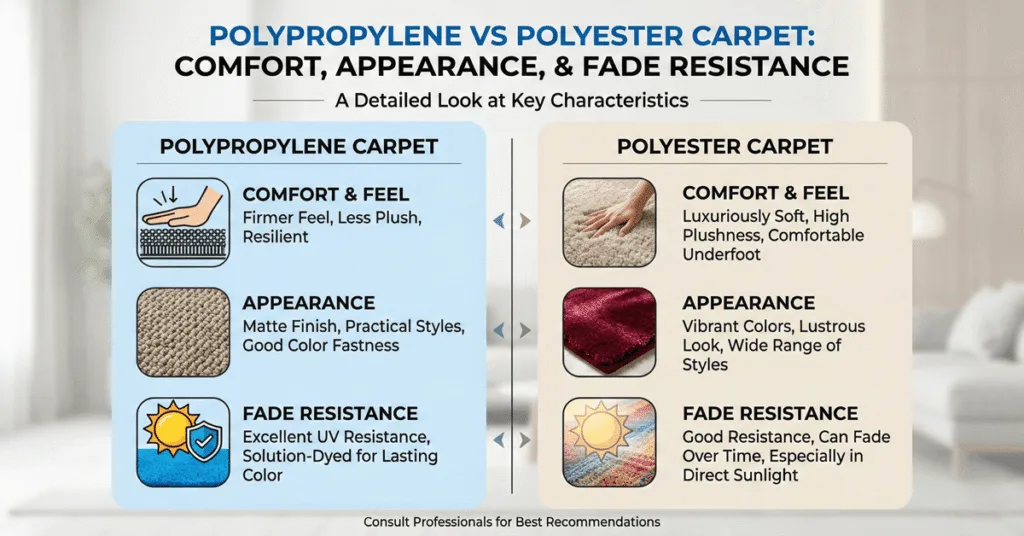
Polyester carpet is often chosen for comfort and softness, and polypropylene carpet is often chosen for practicality and price, yet “feel” and “looks” depend on more than fibre names. Pile type, twist level, carpet density, and underlay shape determine what feet feel on day one and what the carpet looks like after months of use. Fade resistance also depends on dye method and sunlight exposure, so fibre alone does not predict colour stability.
A buyer who cares about appearance and style options usually wants a carpet that stays attractive with normal living, not a showroom-perfect sample. UV fade resistance carpet concerns matter most in bright rooms, and solution-dyed carpet fibre construction can help colour stay stable across routine cleaning and sun exposure. For sun-heavy rooms, the safest move is to confirm UV and colourfastness notes in the manufacturer’s specification and warranty language.
Softness: what you feel on day one vs year three
Day-one softness often comes from fibre shape and pile construction, yet year-three comfort depends on resilience. Polyester carpet can feel plush, and many shoppers prefer that feel in bedrooms and low to moderate traffic living areas. Texture change can arrive when fibres bend and stay bent, which makes the surface feel flatter and less springy.
Underlay choice can shift comfort more than a small change in fibre grade. A supportive underlay can reduce early flattening and help a carpet maintain a more consistent feel. A soft underlay can feel luxurious at first, yet it can allow more flex underfoot in high-traffic zones, which can accelerate matting.
Colour clarity and style options: patterns, heathering, texture
Polyester carpet often offers strong colour clarity and a wide range of styles, including modern textures and soft neutrals. Polypropylene carpet is common in practical styles, and solution-dyed polypropylene can hold colour well in many use cases. Patterns, heathering, and multi-tone designs can hide small marks and traffic shading better than solid colours.
For households that track soil, heathered or textured surfaces often look cleaner between deep cleans. That visual effect is not a trick; it is a design choice that reduces the contrast between clean and soiled fibre tips. A carpet sample should be viewed in the room lighting, since indoor lighting can make a colour look warmer or cooler than it does in a shop.
Sunlight and UV: how to choose for bright rooms
Strong daylight can shift carpet colour over time, especially near windows and doors. Fade can show as a lighter “window stripe” or as uneven colour across the room. Polyester and polypropylene can both resist fading in the right construction, yet a bright room needs a product-level check of dye method, UV notes, and warranty terms.
A practical approach is to place a sample in the sunlit area for a short period and compare it to the same sample kept out of direct light. That check does not replace lab testing, yet it helps a homeowner spot obvious mismatches in expectation. Window coverings and UV film can also reduce exposure without changing carpet fibre.
Solution-dyed yarn and what it means for fading
Solution-dyed yarn has colour added during fibre production rather than applied later, which often improves colour consistency through wear and cleaning. Many polypropylene carpets are solution-dyed, and some polyester products also use dye systems designed for colourfastness. The key is to confirm dye method in vendor documentation rather than guessing from fibre name.
The query “does solution-dyed yarn matter for fading?” has a clear practical answer: dye method matters most in sun-heavy rooms and in spaces cleaned frequently. The next step is to read the manufacturer specification and warranty language for colourfastness and appearance retention, then match that to the room’s sunlight and traffic pattern.
Price analysis and long-term value
Polypropylene carpet (olefin carpet) and polyester carpet (PET polyester) often sit in the same “affordable” bracket, yet long-term value comes from appearance retention, not the ticket price. Installed cost rises fast when underlay, stairs, furniture moves, and subfloor prep enter the quote. A fair comparison uses a lifespan comparison by room and a simple cost per year calculation, not a single price-per-roll number.
Carpet pricing varies by retailer, region, and construction. A dense cut pile polyester can cost more than a thin olefin loop, even when both labels say “synthetic”. The fibre name helps, yet carpet density, pile type, backing system, and warranty texture retention do more work than most shoppers expect.
Typical price bands by quality tier
A useful way to shop is by “quality tier”, then fibre, then spec check. Polypropylene carpet tends to dominate entry-level rental refresh projects, and polyester carpet shows up in more mid-tier “soft feel” ranges with heavier face yarn and richer colour options. Quotes often bundle underlay and fitting, so ask for a line-by-line breakdown before comparing numbers.
Here is a simple tier view that stays accurate across markets: entry-level focuses on lowest installed cost; mid-tier aims for better texture retention; higher-end synthetics chase comfort and appearance retention. Nylon carpet and triexta (PTT) carpet often enter at the higher end of “family home” ranges, and comparing triexta and polyester can help when you are deciding what that upgrade buys you.
Lifespan comparison by room and traffic level
Real lifespan is “how long the carpet looks acceptable”, not how long the backing stays intact. Polypropylene carpet can look tired faster in busy traffic lanes when carpet crushing and matting show up, especially on stairs and hallways. Polyester carpet can hold a nicer feel in a bedroom, yet a low-density polyester can still flatten early.
Use room use as the main filter. A guest bedroom faces light wear, so a mid-tier polyester can hold up well with regular vacuuming. A family living room sees repeated footfall and oily soil from skin and outdoor grime, so construction and maintenance matter more than the fibre headline.
Cost per year calculator (template)
Cost per year keeps the decision honest. The template below works for any fibre, any pile type, and any room, as long as the lifespan assumption matches traffic level and cleaning habits. Vendor documentation and warranty terms can guide reasonable lifespan expectations, yet a showroom sample still needs a “traffic lane” reality check.
| Calculator input | What to enter | Notes for realistic estimates |
|---|---|---|
| Area | Room size (m² or ft²) | Use the measured room, then add waste allowance from the fitter |
| Installed cost | Total quote | Include carpet, underlay, grippers, fitting, stairs, and VAT/sales tax if applicable |
| Expected lifespan | Years until appearance is no longer acceptable | Use room traffic level and texture retention reputation of the construction |
| Cleaning cost | Annual spend | Home cleaning plus periodic professional hot water extraction if used |
| Replacement friction | One-off moving/furniture costs | Optional, yet real for large rooms |
| Cost per year | (Installed cost + replacement friction) ÷ lifespan + annual cleaning | Compare fibres on the same room and same assumptions |
A quick example in plain language helps during shopping: the cheaper carpet can cost more per year if it needs replacement two or three years earlier. That single idea explains why “cost per square metre carpet installed” can mislead when used alone.
Which should you choose? Practical guidance by situation
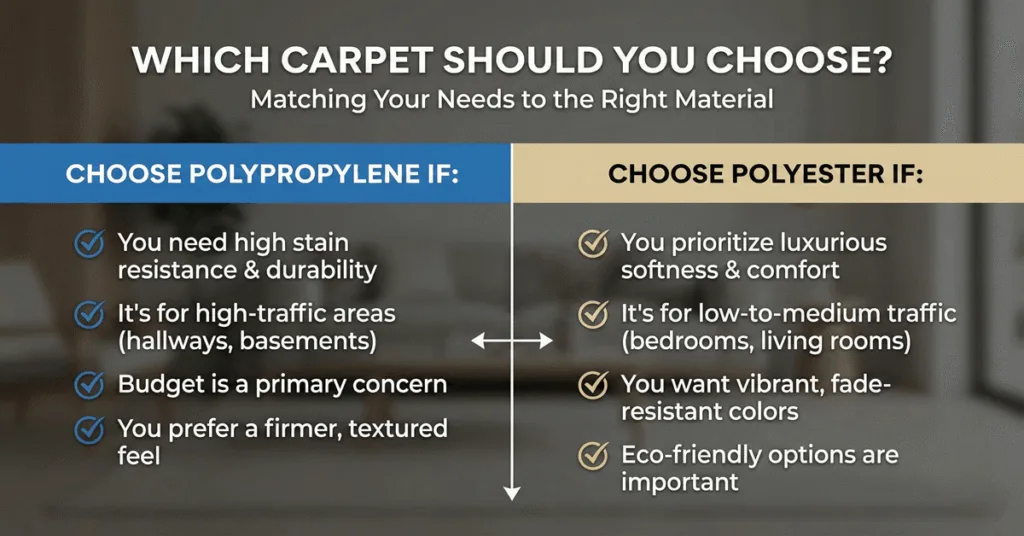
A good choice in the polypropylene vs polyester carpet debate starts with room conditions, then stain types, then construction. Polypropylene carpet suits moisture-prone spaces and low-cost installs, and polyester carpet suits comfort-led rooms with light to moderate traffic. The final pick should match pile type, carpet density, underlay quality, and carpet warranty terms that cover texture retention in real use.
Start with one question: “What will damage the carpet first in this room?” In a basement, moisture and mould risk often lead the list. In a family room, traffic lanes, oily soil, and furniture marks usually arrive first.
Best for bedrooms and low-traffic rooms
Bedrooms reward softness and colour clarity. Polyester carpet often fits this goal, especially in a cut pile style with decent density and a supportive underlay. A patterned or heathered polyester can hide small marks and daily dust between cleans.
Best for basements and moisture-prone spaces
Basements and utility rooms put moisture behaviour front and centre. Polypropylene carpet resists water absorption better than many fibres, so olefin carpet can make sense when damp risk is part of the brief. A safer install still needs dry subfloor checks and the right underlay, since moisture problems can come from the slab, not the fibre.
Best for rentals, landlords, and quick refresh projects
Rental projects often aim for low upfront spend and simple cleaning. Polypropylene carpet frequently wins that brief, especially in loop pile options that keep costs down. Landlords still benefit from checking warranty exclusions, since stairs and high-traffic corridors often sit outside the most generous terms.
Best for pets and children: what matters most
Pet homes and busy households need a stain plan, not a fibre label. Polyester carpet can handle many water-based stains well, yet oily soil and repeat cleaning can dull appearance on some constructions. Polypropylene carpet handles moisture well, yet texture loss can show faster in active zones, so density and pile selection carry real weight.
A practical shopping move is to think in stain categories. Water-based stains, oil-based stains, and mud behave differently. A quick in-store test with a dry hand rub can reveal how fast the pile shows shading and tracking, which hints at appearance retention.
Mistakes to avoid when choosing polypropylene or polyester
Most disappointment comes from choosing by fibre name and skipping the build details. The carpet label can say “polyester” or “olefin”, yet two products can perform very differently once traffic lanes form. Use these pitfalls as a last-minute check before checkout:
- Choosing fibre and ignoring density and pile type
- Treating “stain resistant” as “oil proof”
- Paying attention to face colour and skipping warranty texture retention language
- Buying a soft carpet sample and skipping underlay quality
- Forgetting sunlight exposure and UV fade resistance carpet needs in bright rooms
Choosing fibre and ignoring density and pile type
Carpet density and pile type shape crush resistance more than most shoppers realise. Loop pile can resist some tracking patterns yet can snag in some pet homes. Cut pile can feel softer, yet low-density cut pile can flatten in busy pathways.
Assuming “stain resistant” means “oil proof”
Many real stains in a living space involve oil-based soil that builds over time. A carpet can clean well after a spill and still look dingy from repeated oily tracking. Ask what cleaning method the warranty expects and what it excludes.
Skipping underlay quality and installation details
Underlay changes comfort and texture retention from the first week. A weak underlay can lead to faster matting, even with a decent fibre. Good fitting matters on stairs and doorways, since movement and wrinkles can mimic “fibre failure”.
If the shortlist still feels tight, widen the comparison for the toughest zones. Nylon compared with polyester can clarify durability trade-offs, and triexta (PTT) carpet can appear in the same showroom set as polyester.
Frequently Asked Questions
Is polypropylene carpet the same as olefin carpet?
Polypropylene carpet and olefin carpet refer to the same carpet fibre in most retail listings. “Olefin” is a common label for polypropylene yarn, so a tag that says olefin usually means polypropylene carpet. When comparing polypropylene carpet vs polyester carpet, treat “olefin” as the polypropylene side of the comparison, then check construction details like pile type and carpet density.
Which is better for pets: polyester or polypropylene carpet?
For many pet homes, polyester carpet performs well on comfort and colour, and polypropylene carpet performs well in moisture-prone spots. The deciding point is the mess type: oil-based stains and tracked-in greasy soil often cause more visible dinginess than a single water spill. A tight, dense pile and the right underlay matter as much as the fibre for odour control and repeat cleaning.
Which lasts longer in high-traffic areas: polyester or polypropylene?
In high-traffic areas, both polyester carpet and polypropylene carpet can flatten if the carpet has low density or loose pile. Texture retention usually tracks with construction quality, not fibre marketing. For stairs and busy hallways, a buyer often gets better appearance retention from a dense build and a warranty that names texture retention limits in plain terms.
Which is more stain resistant: polyester or polypropylene carpet?
Stain resistance depends on the stain type, the dye method, and the cleaning speed. Polypropylene carpet is often less absorbent, so moisture sits closer to the surface, which can help with fast cleanup. Polyester carpet can handle many water-based stains well, yet oily soil may cling more, so vacuuming and routine cleaning shape the result.
Is polyester carpet good for basements?
Polyester carpet can work in a basement that stays dry year-round, with good ventilation and no history of damp patches. A basement with moisture risk often suits polypropylene carpet (olefin) better, paired with a backing system and underlay that handle humidity. A quick check helps: feel the slab, check for musty odour, note seasonal dampness near exterior walls.
Does solution-dyed yarn matter for fading?
Solution-dyed yarn matters for colourfastness, since pigment runs through the fibre rather than sitting mainly on the surface. In bright rooms, solution-dyed carpet fibre can reduce visible UV fade resistance carpet issues over time. Manufacturer documentation and warranty terms usually state the dye method, so the label can confirm the claim.
What specifications should be checked before buying?
Start with carpet density, pile type (loop pile vs cut pile), and warranty texture retention wording. Next, confirm fibre type on the spec sheet: polypropylene carpet (olefin) or polyester carpet (PET polyester), then match the fibre to the room and stain profile. For a query like “polypropylene vs polyester carpet which is better”, the best answer comes from the full system: carpet build, backing, underlay, and the cleaning plan.
Conclusion
Polypropylene carpet (olefin) and polyester carpet (PET polyester) solve different room problems, so the right choice comes from matching fibre traits to carpet density, pile type, underlay, and the warranty texture retention wording. A soft feel and strong colour can matter most in a bedroom, while moisture exposure and repeat cleanups can matter more near exterior doors or a basement. A label alone rarely predicts how long a carpet keeps its shape.
A practical finish comes from checking the spec sheet, comparing stain types you actually deal with, and noting sunlight exposure where UV fade resistance becomes a real factor. Many bad outcomes start with one miss: choosing fibre and ignoring construction, then being surprised by crushing and matting in traffic lanes. Which room needs the best appearance retention one year from now?
Use the quick comparison table and the “choose this if” guidance, then validate the shortlist with the manufacturer documentation and warranty terms before buying. That is the simplest way to decide on Polypropylene vs Polyester Carpet with fewer regrets.