Disclosure: Classy Floor is reader-supported. As an Amazon Associate, we earn from qualifying purchases. We may also earn commissions from other affiliate programs, at no additional cost to you. Learn more →
Can a “nylon” label predict how a carpet will look after a year of foot traffic? Often, no. The real answer sits in nylon carpet pros and cons tied to carpet density, twist level, solution-dyed nylon, and the texture retention language in a carpet warranty, not marketing copy.
This guide helps homeowners choose carpet for stairs, hallways, and family rooms with a clear way to compare nylon carpet durability across real spec sheets. Readers searching “is nylon carpet stain resistant or does it need treatment” will see how dye method and cleaning habits shape results, with CRI Seal of Approval guidance and hot water extraction basics in plain language. Terms can differ by brand and region, so the article points to CRI Green Label Plus and manufacturer warranty PDFs as the reference points for a fair comparison.
Nylon carpet pros and cons (quick decision table)
Nylon carpet tends to win on resilience and traffic-lane appearance when carpet construction is dense and well-made, yet nylon carpet can disappoint when a buyer expects easy stain removal from the fiber name alone. Nylon 6 and nylon 6,6 both show strong “bounce-back,” and the difference readers notice most often comes from carpet density, twist level, and pile style, plus the carpet warranty wording for texture retention. A quick scan of nylon carpet pros and cons works best when the table points to what to verify on a spec sheet.
| What you gain with nylon carpet | What you trade off | What to verify before purchase |
| Strong resilience for stairs and hallways | Higher installed cost than some fibers | Density and twist level on the spec sheet |
| Better traffic-lane look in many cut-pile styles | Some constructions show shading or tracking | “Texture retention / appearance retention” terms in the carpet warranty |
| Wide style range (textured, frieze, loop pile) | Loop pile can snag in pet homes | Pile style fit for pets, stairs, and seams |
| Good performance with the right cleaning plan | Stain results vary by dye method and care | Solution-dyed nylon vs piece-dyed nylon details |
| Compatible with many pads and installs | Poor install can cause ripples and early wear | Power stretch, seam quality, and pad match |
Mini decision tree: High traffic or stairs → choose dense, higher-twist nylon → check texture retention language → match pad + installer quality → confirm dye method for stain and fade goals.
Nylon carpet durability in real homes: what actually controls matting
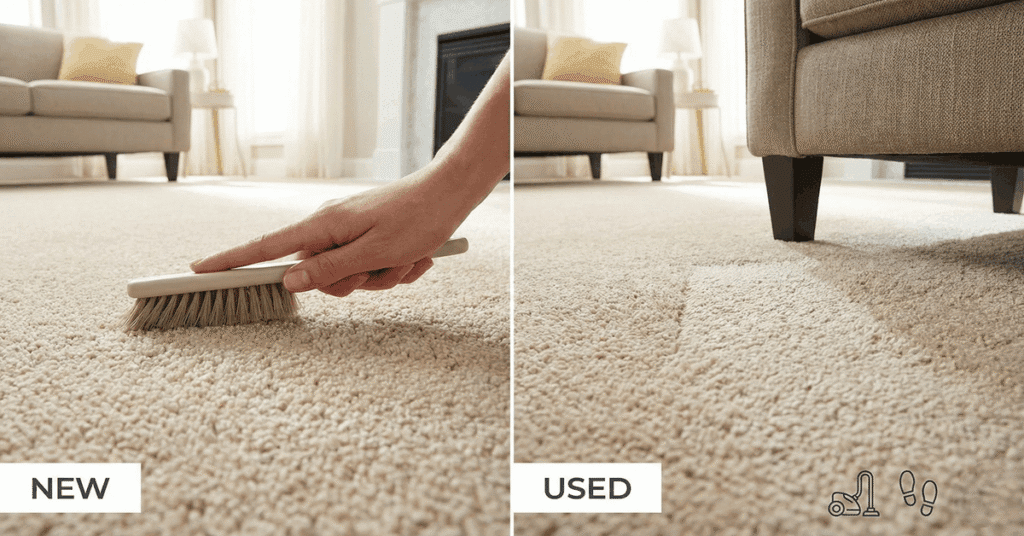
Nylon carpet durability comes from a full system: nylon fiber, carpet construction, pad, and installation. Matting and traffic lane “crush” show up fastest in plush, low-twist cut pile, even when the label says nylon. A dense, higher-twist nylon in a textured or frieze style often keeps a cleaner look on stairs and in hallways.
How to read nylon carpet specs without getting misled
Density and pile yarn density (why it matters for traffic lanes)
Carpet density describes how tightly yarn is packed in the face of the carpet. Tighter construction supports the tuft and slows traffic lane matting. When two nylon samples feel similar underfoot, the denser build usually holds shape longer.
Twist level and pile style (textured vs plush vs frieze; loop pile snag considerations with pets)
Twist level helps cut pile yarn resist “blooming” and flattening. Plush can feel soft, yet plush shows footprints and lane marks sooner in busy spaces. Loop pile can work well for wear, though loop pile can snag from pet claws; that risk belongs in the buying decision.
Stairs and seams as durability multipliers (installation quality matters)
Stairs, doorways, and seams concentrate stress. A strong nylon fiber still looks tired when seams peel, a stair nose gets loose, or the carpet was not power-stretched. Ask the installer how seams get sealed and how stairs get wrapped before signing off. If the quote mentions specific stair wrapping, review stair install method choices so the scope matches what you expect.
In-store checklist (fast comparison across two nylon samples):
- Bend the sample: a tight face shows less backing between tufts.
- Pinch the pile: tighter tufts feel firmer, not spongy.
- Look at yarn: a tighter twist looks like a cleaner cord than a fuzzy rope.
- Ask for the spec sheet: note density and pile style, not just “nylon.”
- Read warranty lines: find texture retention exclusions for stairs and rentals.
A small shift in construction can beat a big shift in brand. That idea matters for anyone searching best nylon carpet for stairs and hallways, since stairs punish weak twist and weak installation far more than a bedroom does.
Nylon carpet stain resistance and cleaning: treatment vs dye method
Nylon carpet stain resistance depends on the color method, stain and soil treatment, and maintenance habits tied to the carpet warranty. Solution-dyed nylon often helps with fade resistance and some stain scenarios, yet no dye method stops soil buildup from foot oils and dirty shoes. A stain plan that matches the household matters more than a single marketing claim.
Solution-dyed nylon vs piece-dyed nylon (what changes for stains and fading)
What solution-dyed usually improves (fade resistance, color-through fiber)
Solution-dyed nylon carries pigment through the fiber. Color sits “inside” the yarn, so sunlight and bleach-type accidents tend to show less obvious fading in many lines. Many shoppers choose solution-dyed nylon for sunny rooms or for high-use areas where frequent cleaning happens.
What it does not automatically solve (soil, oil-based stains, residue buildup)
Soil and oily grime can cling to any carpet face. Many “stains” people blame on nylon come from sticky residue left after spot cleaners, plus soil that sticks to that residue. Good rinsing and dry-down often matter more than a stain-guard label.
Nylon cleaning that preserves appearance and warranty coverage
Vacuuming and pile grooming basics (traffic lanes, stairs)
A quality vacuum and steady routine protect texture retention. Use a vacuum that fits the pile style; loop pile often needs a gentler setting than plush. Light pile grooming can lift traffic lanes in textured styles.
Spot-cleaning protocol (blot/rinse/dry; what cleaners to avoid)
Start with blotting using plain water, then rinse, then dry with a towel and airflow. Skip high-soap cleaners that leave residue. Check the carpet warranty and CRI Seal of Approval lists when picking a cleaner.
Hot water extraction timing and common mistakes (over-wetting, wick-back, detergent residue)
Hot water extraction can reset appearance when soils build up, yet over-wetting can push grime into the pad and bring stains back through wick-back. Ask a cleaner about rinse steps and dry time targets before booking.
Spill triage card (quick choices):
- Coffee or tea: blot, rinse, dry; re-rinse if brown shadow returns.
- Grease: use a CRI Seal of Approval spot product; rinse well.
- Pet urine: treat the pad and subfloor risk early; seams and tack strip can hold odor.
- Food dye: act fast and avoid heat; pro help often wins.
- Mud: let it dry, vacuum, then rinse; scrubbing spreads soil.
For homes with sensitive occupants, check CRI Green Label Plus for carpet and cushion and confirm adhesive choices with the installer, since product availability and labeling vary by region and by manufacturer line.
Nylon carpet cost and long-term value (installed, not just material)
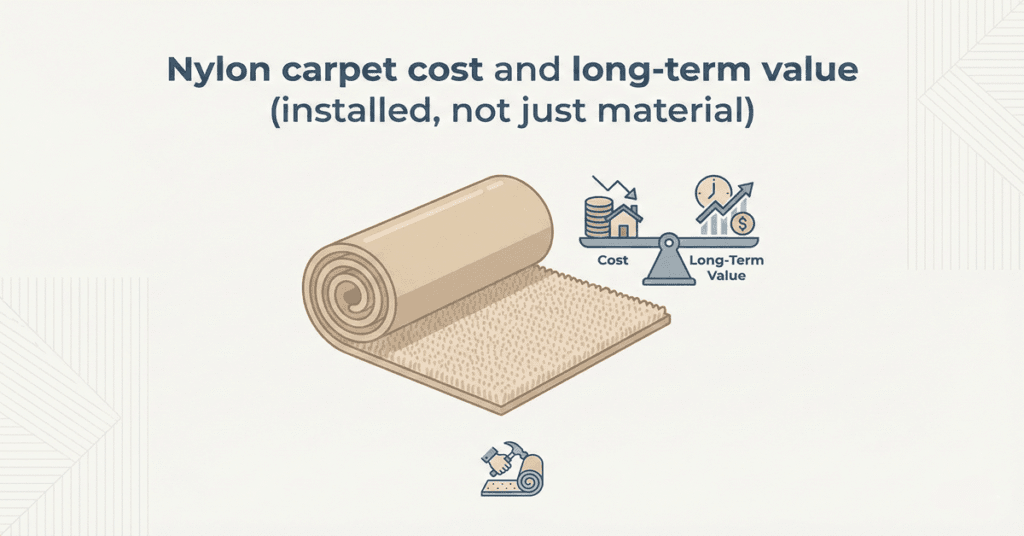
Nylon carpet value shows up in the full installed system: nylon carpet construction, carpet pad, installation method, stairs, and floor prep shape the final bill and the long-term look. A dense, higher-twist nylon can cost more up front, yet reduce traffic lane matting and early replacement in hallways and stairs. A softer, low-density nylon can feel nice on day one, then lose texture fast, which raises the real cost.
What drives installed price for nylon carpet
Installed cost moves with carpet construction tier, pad selection, and labor complexity. The phrase “what carpet pad is best for nylon carpet” matters here, since carpet pad/cushion affects comfort and wear, and pad upgrades often change quotes. Use pad density for nylon installs to compare common options before you accept an upgrade. Stairs, seams, transitions, and subfloor prep can swing labor more than the fiber label.
A simple “cost per year” comparison framework
Use a copy-and-fill table to compare two quotes without guessing.
| Item | Option A | Option B |
| Installed cost (carpet + pad + labor) | ||
| Room and traffic level (stairs, hallway, bedroom) | ||
| Construction notes (density, twist level, pile style) | ||
| Warranty terms that matter (texture retention, stain/soil) | ||
| Maintenance plan (vacuuming + hot water extraction cadence) | ||
| Expected appearance window (your standard, not marketing) | ||
| Estimated cost per year (installed ÷ appearance window) |
Vendor documentation and warranty PDFs help confirm which line items count, and which exclusions reduce value. Price bands shift by region and labor market, so date-stamp quotes and compare itemized scopes, not a single square-foot number.
Nylon vs polyester vs triexta vs olefin: which carpet fiber fits each room
Fiber choice is a room decision, not a brand decision. Nylon carpet often earns its keep in high-traffic zones through resilience and better appearance retention, polyester (PET) often wins on softness and many stain situations, triexta (PTT) often appeals for stain performance see these triexta stain performance notes, and olefin (polypropylene) fits budget or moisture-tolerant use cases with tradeoffs in traffic lanes.
This section turns the pros and cons of nylon carpet into a clear room map, plus a quick check for common regrets. If you’re torn between fibers, start with nylon vs PET for high-traffic rooms before comparing brands.
Fiber comparison chart (quick read)
| Fiber | Strength in plain words | Common pain point | Rooms that match well |
| Nylon (nylon 6 or nylon 6,6) | Bounce-back in traffic lanes, strong durability when dense | Higher installed cost; stain/soil outcomes vary by dye method and care | Stairs, hallways, living rooms, kids’ areas |
| Polyester (PET) | Soft feel; many stains clean up well with good habits | Can crush or matte sooner in heavy traffic in some constructions | Bedrooms, lower-traffic rooms, cozy spaces |
| Triexta (PTT) | Strong stain performance in many households | Performance still tied to construction; feel and look vary by line; if you’re looking at brand lines, use SmartStrand vs nylon buying notes to compare construction and warranty details. | Family rooms, kids’ zones, many pet homes |
| Olefin (polypropylene) | Budget-friendly; handles moisture better in some settings | Traffic-lane appearance can drop faster; can show wear patterns | Basements, low-traffic areas, short-term needs |
Room selector (choose by constraints)
- Stairs or hallway traffic lanes: lean nylon with higher density and twist level; confirm texture retention warranty wording.
- Bedroom comfort priority: compare nylon carpet vs polyester for bedrooms by feel plus construction; if softness is the priority, review PET carpet in bedrooms, then pick the denser sample that still meets comfort goals.
- Kids’ spills and food dye: consider solution-dyed nylon or a fiber with strong stain behavior; if you’re deciding between options, use nylon vs triexta for pets and spills, then match with a CRI Seal of Approval cleaning plan.
- Pet homes: focus on pile style (loop pile snag risk), seams, pad, and pet-accident cleanup habits; fiber alone will not save a poor install.
- Sunny rooms: check fade/UV notes and dye method in the spec sheet; bring samples into daylight.
A smart buying move: compare two samples by density and twist before comparing “nylon vs polyester” as labels. The label starts the discussion; the spec sheet ends the argument.
Indoor air quality, allergies, and sustainability for nylon carpet
Indoor air quality comes from the full material set: carpet fiber, carpet backing, carpet pad/cushion, and adhesives, which can all affect VOC emissions and odor reports. For sensitive households, low-emission certifications and installation practices often matter more than the nylon vs polyester as a fiber debate. Sustainability varies by product line, recycled content, and local end-of-life options.
IAQ: What to look for before and after installation
Low-emission certifications and what they cover (carpet, cushion, adhesives)
Look for CRI Green Label Plus on carpet and cushion when low-VOC carpet and padding is a goal. Check that adhesive choices match the same low-emission intent, since adhesives can drive odor complaints. Product documentation from the manufacturer and certification bodies is the cleanest source for scope.
Ventilation and acclimation steps to reduce odor complaints
Ventilation, temperature control, and a clean subfloor help reduce “new carpet smell” and moisture-related issues. Some buildings follow local indoor air rules or building program criteria, so the safest path is to align product selection with the building’s requirements and the installer’s written scope.
Sustainability signals that are harder to fake
Recycled content vs recyclability (take-back programs, local availability)
Recycled nylon content and recyclability are separate questions. A carpet can list recycled content, yet still have limited local take-back access. Ask for written details on recycling pathways and any program limits in your area.
Multi-attribute standards and building programs (when relevant)
NSF/ANSI 140 and similar multi-attribute frameworks can help compare sustainability claims across brands. Building programs such as LEED v4.1 and WELL may reference low-emitting materials, which can shape product choices on larger projects.
Low-emission install plan (quick checklist)
- Pick carpet and cushion with CRI Green Label Plus where available.
- Confirm low-emission adhesive notes in the installer scope.
- Plan ventilation during and after installation (open-air exchange, HVAC run time).
- Keep seams and subfloor dry; moisture raises odor and mold risk.
- Save spec sheets and warranty PDFs for future cleaning and resale questions.
Next up, the article moves from air and sustainability back to hands-on buying steps, so the final carpet choice matches the room, the budget, and the maintenance reality.

Frequently Asked Questions
Is nylon carpet good for pets and heavy foot traffic?
Nylon carpet suits heavy foot traffic when carpet density and twist level support texture retention, especially on stairs and hallways. For pets, loop pile can snag claws, so many households pick a textured cut pile or frieze with clear stain/soil terms in the carpet warranty. Check CRI Seal of Approval guidance for cleaning products and vacuum compatibility.
Nylon 6 vs nylon 6,6 carpet: what is the difference in practice?
Nylon 6 and nylon 6,6 are two nylon carpet fiber types sold under many brand lines, so performance is shaped by construction more than the chemistry label. Use manufacturer spec sheets to compare density, pile style, and warranty language for appearance retention. When comparing two samples, treat nylon 6 vs nylon 6,6 as one data point, not the decision.
How long does nylon carpet usually last in a hallway or on stairs?
Nylon carpet life in a hallway or on stairs tracks traffic, pile style, installation quality, and cleaning habits more than fiber name. A dense, higher-twist nylon tends to resist traffic-lane matting longer than a soft, low-twist plush. Read texture retention and stair coverage terms in warranty PDFs, since exclusions are common and vary by product line.
Is solution-dyed nylon worth it for stain and fade resistance?
Solution-dyed nylon places color through the fiber, which often improves fade resistance in sunlight and helps hide wear in busy rooms. Stain resistance still relies on spill type, soil control, and cleaning method, so oily stains and residue can be tricky. Look for cleaning compatibility through CRI Seal of Approval listings plus the brand’s care guide.
What is the best way to clean nylon carpet without damaging it?
Nylon carpet cleaning works best with dry soil removal first, careful spot cleaning, then periodic hot water extraction with CRI Seal of Approval products. Use low-residue solutions and strong drying to cut wick-back and re-soiling. Match the process to the carpet warranty, since some brands require documented professional cleaning intervals.
Does nylon carpet off-gas VOCs, and how can odor be reduced after install?
VOC emissions for carpet come from carpet, pad, and adhesives, not nylon alone, so product selection matters. CRI Green Label Plus and similar IAQ certifications help screen for low-emission materials, and then ventilation after installation reduces odor complaints. Sensitivity varies by household and region, so follow the product’s installation and airing guidance.
What carpet padding works best under nylon for comfort and wear?
Carpet pad choice affects nylon carpet durability, seam stability, and comfort, so “what carpet pad is best for nylon carpet” starts with room use. A supportive pad paired with the correct thickness and density helps nylon maintain its appearance on stairs and traffic lanes. Confirm pad specs on the invoice and check warranty language, since some lines limit acceptable cushion types.
Conclusion
Nylon carpet performs best when carpet density, twist level, pile style, and installation quality align with the room’s traffic and cleaning reality. The article showed how to compare two samples using spec sheets and warranty language, so nylon choices feel less like guesswork and more like a clear match for stairs, hallways, and family rooms.
A smart next step is simple: bring samples home, read the texture retention terms in the carpet warranty, and confirm cleaning compatibility through CRI Seal of Approval guidance. If odor or sensitivity is a concern, CRI Green Label Plus helps focus on low-emission options, and ventilation after installation supports comfort. Which room in the home will reveal a bad choice first?
Use the checklists and comparison framework again before signing a quote, and keep notes from each sample card and warranty PDF. That quick routine turns nylon carpet pros and cons into a confident decision.