Disclosure: Classy Floor is reader-supported. As an Amazon Associate, we earn from qualifying purchases. We may also earn commissions from other affiliate programs, at no additional cost to you. Learn more →
If your hallway carpet already has a matted “path” down the middle, you know the anxiety: pick the wrong replacement and you’ll be staring at crushed fibers, stubborn stains, and fuzzy edges again in a year. Shopping for the best carpet for high traffic areas can feel like a trap because the softest sample in your hand is not always the one that holds up to kids, pets, rolling chairs, or nonstop foot traffic.
This guide is here to make the choice simpler and safer. We’ll focus on what actually predicts long-term performance, not showroom impressions. You’ll see how durability shows up in fiber type and construction, why pile height and density matter for hiding wear, and how stain resistance and cleaning needs affect daily life. We’ll also cover comfort underfoot without sacrificing resilience, backing, and installation considerations that prevent rippling and premature breakdown, and the safety side, like low-odor options and warranties that reflect real confidence.
We’ll walk you through clear comparisons by room and use case, then help you narrow to a few smart picks based on your budget and priorities. Recommendations are grounded in research, including specifications, manufacturer documentation, and consistent patterns from verified owner reviews.
7 Best Carpet for High Traffic Areas
Mohawk Elite 24″ x 24″ Berber Loop Nylon Carpet Tiles
Best for: Busy basements, home offices, and playrooms where you want durable, replaceable flooring

Why it made our list
These nylon Berber loop tiles are built for high-traffic areas, with a low pile and modular format that makes it easier to swap one damaged tile instead of redoing a whole room, especially if you’re weighing whether Berber still looks current. The main trade-off is feel and seams: carpet tiles can read more “structured” underfoot than a plush roll carpet, and you may notice grid lines depending on lighting and installation.
What to know before you buy
- Check the install method because glue-down is more permanent, while FlexLok uses separate adhesive tabs that you must buy separately.
- Check the room’s moisture reality because the product page claims tiles are impervious to moisture damage from spills and water-extraction cleaning, but subfloor conditions still matter, especially in areas flagged in EPA guidance on moisture and mold prevention.
- Check pile style expectations because loop (Berber) wears well in traffic, but can be less forgiving on bare feet than a thicker cut pile.
- Check the color in your space because “Dappled Steel” is a medium gray that can shift on screen, so a sample is smart for lighting and undertones.
- Specs vary by size/variant, so confirm the exact listing before you order.
Key features
- 24 in. x 24 in. carpet tiles; 24 tiles per carton covering 96 sq ft.
- Low pile listed as 0.08 in. pile height (loop/Berber).
- Total tile thickness listed as 0.17 in. (retailer listing).
- Fiber: Colorstrand nylon (retailer listing); backing material listed as EcoFlex Matrix.
- Includes EcoSentry Soil Protection and EcoSentry Plus Stain Protection, per retailer listing.
- Recommended installation: direct glue-down or FlexLok adhesive tabs (tabs sold separately).
- Carton weight listed as 41 lbs (retailer listing).
Pros
- Strong fit for the “best carpet for high traffic areas” category because low-pile Berber loops tend to hide wear better than taller, softer piles.
- Tile format is practical in busy rooms since a stained or damaged section can be replaced tile-by-tile.
- Moisture-resistance claim makes it appealing for basements, gyms, and spill-prone spaces where water-extraction cleaning is more likely.
- Flexible install paths (glue-down or tab-based floating) let you balance permanence vs future change.
Cons
- FlexLok is not included, so the “floating” route adds extra materials to the plan.
- Like most carpet tile, seams can be more visible than broadloom, especially under raking light or with imperfect subfloors.
- Some listings include a California Prop 65 warning, which can be a concern for sensitive households, so check the label/listing for any disclosures and review what a Prop 65 warning means for consumers.
Who it’s best for
If you need the best berber carpet for high traffic areas in a space that takes daily abuse, this tile style is a sensible, low-drama choice. It’s especially helpful when you want a dependable, easy-clean carpet surface but also want the option to replace sections over time.
Who should skip it
Skip it if you want a seamless, plush feel for lounging or a high-traffic family room where softness is the top priority. Also pass if you dislike the look of tile lines or if buying separate tabs or adhesive complicates your install plan.
One-sentence comparison
Compared with peel-and-stick polyester tiles or thicker plush roll carpet, these low-pile nylon Berber tiles lean more toward long-wear durability and replaceability than cushiony comfort.
Mohawk Basics Berber Loop Pile Carpet Tile
Best for: DIY-friendly basements, home offices, and playrooms where spills and heavy foot traffic are common

Why it made our list
This is a modular, loop-pile carpet tile setup that fits high-traffic rooms because individual tiles can be replaced instead of redoing the whole floor. The trade-off is that the feel and look are more “commercial practical” than plush wall-to-wall, and install choices affect cost and effort.
What to know before you buy
- Check the installation method because FlexLok floating installs require separate tabs and adhesive, while glue-down needs the right adhesive plan for your subfloor.
- Check color in person because the product pages warn that screen images can differ, so ordering a sample can prevent a wrong-shade surprise.
- Check room moisture reality because the listing says tiles resist moisture damage from spills and water extraction cleaning, but your subfloor still needs to be suitable for carpet tile.
- Check carton weight and coverage because one carton covers 96 sq ft and weighs about 41 lbs, which matters for carrying and planning deliveries.
- Specs vary by size/variant, so confirm the exact listing details before ordering.
Key features
- 24 in. x 24 in. carpet tiles; 96 sq ft per carton; case weight listed at 41 lbs.
- Loop pile “Berber” style; charcoal color described as textured loop, patterned, dark gray.
- PET fiber is listed on retailer pages (often described as EnviroStrand PET fiber).
- Pile height is listed as 0.09 in. on some listings (confirm on the exact variant you are buying).
- Install options shown: glue-down or FlexLok floating floor installation (tabs and adhesive purchased separately).
- Product pages state tiles are impervious to moisture damage from spills and water extraction cleaning.
Pros
- Modular format is practical for the best carpeting for high traffic areas where one tile can take the worst wear near doors or desks.
- Loop-pile construction typically helps hide footprints and everyday scuffing compared with higher, plusher piles, which is useful in a high-traffic family room.
- Coverage and handling are straightforward to plan since cartons list square footage and weight for delivery math.
- FlexLok-style installs can make future swaps easier because tiles can be separated, which helps when a spot gets permanently stained.
Cons
- FlexLok is not “included,” so the floating install can cost more once you add tabs and adhesive.
- If you want a seamless wall-to-wall look, visible tile seams may be a dealbreaker depending on layout and lighting.
- Some key specs are not consistently displayed across every seller page, so you may need to cross-check the label/listing for your exact color and SKU.
Who it’s best for
If you are choosing the best carpet for high traffic family room, basement, or office and you want something you can maintain in sections, carpet tiles reduce the “all or nothing” risk. It’s especially handy for households with pets and kids where accidents happen and you would rather replace a tile than live with a permanent spot.
Who should skip it
Skip this if you want the softest lounge feel or a fully seamless look, since loop tiles lean functional and can show grid lines. It may also be a poor fit if you do not want to manage separate install components, because the floating option depends on add-on tabs and adhesive.
One-sentence comparison
Compared with traditional broadloom carpet, these tiles make spot replacement and high-traffic maintenance easier, but they can look more “modular” and may require more install planning than a simple roll-and-stretch job.
Mohawk Home 24″ x 24″ Indoor/Outdoor Peel and Stick Carpet Tile
Best for: DIY coverage in basements, garages, workshops, and covered patios where spills and scuffs are common

Why it made our list
If you want a modular floor that can handle busy zones and still be easy to repair, peel-and-stick carpet tile is a practical route for high traffic areas. According to major listings, this one uses 100% polyester with a peel-and-stick backing and is sold in 24 inch by 24 inch tiles with a 0.25 inch pile height.
The trade-off is feel and finish: tiles prioritize convenience and replaceability over the seamless, cushy comfort of broadloom carpeting.
What to know before you buy
- Check your subfloor condition because bumps, dust, or moisture can weaken adhesion and show through tile edges.
- Check where you plan to install it because “indoor/outdoor” does not always mean fully exposed weather, so confirm on the listing.
- Check the pattern expectation because tile designs may not line up like wall-to-wall carpet, especially if you rotate tiles for a varied look.
- Check chair use because rolling office chairs can be hard on carpet tiles, so plan for a mat if this is a workspace.
- Specs vary by size/variant, so confirm the exact colorway and box count on the listing before ordering.
Key features
- 24 inch by 24 inch peel-and-stick carpet tiles.
- 0.25 inch pile height (as listed on major retailer pages).
- 100% polyester fiber (per retailer listings).
- Common pack format shown as 15 tiles covering 60 sq ft per box on at least one major listing, but confirm on your exact listing.
- Care notes listed as vacuum or sweep, spot clean, and rinse outdoors then air dry.
Pros
- Easy “replace one tile” repairs when a doorway tile gets stained or a workbench area gets damaged, which is a big win in high traffic areas.
- Low pile (0.25 inch) is easier to keep looking neat than shaggy options because grit releases more readily during vacuuming.
- Flexible layout options since tiles can be trimmed and rotated to reduce obvious seams and create a custom pattern.
- Works well for utility spaces where the best carpet for high traffic is more about cleanup and durability than plush comfort.
Cons
- It will not feel like a padded wall-to-wall install, so it may disappoint if you are shopping for the best carpet for high traffic family room comfort.
- Adhesive tiles can be unforgiving on dusty, textured, or damp slabs, so prep matters more than with some glue-down systems.
- Certifications, emissions info, and warranty details are not consistently shown across listings, so you may need to dig into the label/listing.
Who it’s best for
If you need best carpeting for high traffic areas in a basement, garage, or indoor-outdoor hangout that sees muddy shoes, hobby messes, or frequent rearranging, tiles make decision-making simpler. The modular format also helps if you like the idea of swapping a few squares instead of replacing an entire floor.
Who should skip it
Skip this if you want a seamless, cushioned feel for lounging, or if you are trying to match the look of traditional broadloom carpet in a formal space. It is also not ideal if your surface prep is uncertain or the listing does not clearly confirm compatibility for your exact subfloor and environment.
One-sentence comparison
Compared with traditional wall-to-wall carpet, peel-and-stick tiles trade a smoother, plusher look for easier DIY installation and quicker spot repairs in busy rooms.
ALTRUISTIC Heavy Duty Commercial Carpet Tiles
Best for: A busy home office, basement, or high traffic family room where you want easy swap-outs instead of full wall-to-wall carpet

Why it made our list
These 24-inch by 24-inch tiles are designed for high-traffic zones where wear shows fast, and the modular format makes it easier to replace a single damaged section than a whole room. The main trade-off is that this is a tile system with connectors, not a seamless broadloom look.
What to know before you buy
- Check your floor surface because a “non-slip” backing can still shift on dusty or uneven subfloors, so prep matters.
- Check whether you want a floating install because FlexLok style connectors typically join tiles to each other, not permanently to the floor.
- Check pile height if you are matching existing flooring because the listing shows 0.25 inches, which can affect door clearance and transitions.
- Check cleaning expectations because the product page notes vacuuming and wipe-clean only, and it is not machine washable or dryer-safe.
- Specs vary by size/variant, so confirm the exact box count and coverage on the listing before ordering extra.
Key features
- Tile size: 24″L x 24″W
- Unit count: 18 tiles per box
- Listed pile height: 0.25 inches
- Material noted as polypropylene in the product details (also listed as “Synthetic Fiber” in technical details).
- Backing type listed as asphalt cloth, with “asphalt bottom” described in the product bullets.
- Included components: FlexLok tabs; installation type listed as Flexlok.
- Item weight listed as 42 pounds; Amazon indicates a 30-day return guarantee (warranty length not clearly stated on the main page).
Pros
- Modular tiles are a practical “best carpeting for high traffic areas” approach when you expect localized wear and want quick repairs.
- The listing’s asphalt-cloth backing and non-slip description suggest better grip than many lightweight, loose-lay tiles.
- FlexLok tabs can reduce floor residue compared with full-surface peel-and-stick installs, making replacements simpler in rentals.
- A 0.25-inch pile height can feel more cushioned than very low-profile commercial tiles, while still being manageable to vacuum.
Cons
- The tile seams are part of the look, so it may not satisfy shoppers who want a seamless wall-to-wall finish.
- Warranty specifics are not clearly summarized on the main listing, so you may need to click through and confirm coverage details.
- Not machine washable, which matters if you were hoping to rinse and dry individual tiles after heavy spills.
- Performance details can vary by variant, so you cannot assume the same backing or thickness across every color or pack size.
Who it’s best for
If you are shopping for the best carpet for high traffic areas but dread replacing an entire room after one ruined spot, tiles are a relief. This set fits people who want a DIY-friendly floor for a busy office, basement, or family space, and prefer predictable maintenance with a vacuum and quick wipe-downs.
Who should skip it
Skip this if you want a plush, seamless look or you are trying to perfectly match existing broadloom carpet. It is also not ideal if you need machine-washable flooring after frequent messy accidents, since the listing advises wipe and vacuum cleaning only.
One-sentence comparison
Compared with peel-and-stick carpet squares, these use connector tabs and an asphalt-cloth backing, which can make tile replacement and floor cleanup easier, but you will still see tile seams versus a single-roll carpet install.
VEVOR 24″ x 24″ Peel and Stick Carpet Tiles (Self-Adhesive, Padded)
Best for: Renters or DIYers who want a quick, low-commitment refresh in a light-to-moderate traffic room (bedroom, playroom corner, small office)

Why it made our list
If you want a fast path to a cushioned surface without hiring an installer, these peel-and-stick tiles are a practical option. The main trade-off is that this style is less “permanent flooring” and more “easy-to-swap surface,” so long-term wear depends heavily on subfloor prep and how hard the room is on floors.
What to know before you buy
- Check your room type because the listing flags it as not intended for stairwells and some high-mess zones like kitchens.
- Check your expectations on grip because the listing states non-slip backing is “No,” so placement and floor type matter.
- Check staining and fading needs because the listing calls stain resistance and fade resistance “No,” which can be a deal-breaker for entry paths or spill-heavy homes.
- Check coverage math because a 9-tile pack covers 36 sq ft, so larger rooms can require multiple boxes and careful lot matching.
- Specs vary by size/variant, so confirm the exact listing for the color and pack size you are buying.
Key features
- 24 in x 24 in tiles, 9-pack (36 sq ft total coverage).
- Thickness: 0.19 in (4.83 mm).
- Material: polyester; machine-made construction.
- Unit area weight listed as 550 g/m².
- Self-adhesive peel-and-stick installation (per listing description).
- Warranty: 1 year (per listing).
- Certifications/labels: OEKO-TEX STANDARD 100 listed as “No” on this variant’s listing (see what OEKO-TEX Standard 100 checks for).
Pros
- Quick DIY install and easy partial replacement, which helps when one section gets worn or dirty.
- Cushioned feel for a tile format thanks to the 0.19-inch thickness.
- Clear, checkable basics for comparing value, including coverage per box and area weight.
- Works well for creating a soft zone on hard floors without committing to wall-to-wall carpeting.
Cons
- Not marketed as stain-resistant or fade-resistant on the listing, so it may show real-life mess and sun exposure sooner than some alternatives.
- Non-slip backing is listed as “No,” which can be a concern on slick floors or in homes with lots of running traffic.
- The listing indicates it is not for stairwells, limiting it for one of the toughest high-traffic areas.
Who it’s best for
You want a simple way to soften a small space that sees steady footsteps but not constant grit and spills. It’s especially useful if you like the idea of swapping a single tile instead of deep-cleaning or replacing a whole room of carpet.
Who should skip it
If you need a true high-traffic hallway or entry solution, the lack of listed stain resistance and the room-compatibility notes make this a risky bet. Also, skip if you need stair coverage or you require documented low-emissions labeling, since that varies by product, and this listing does not show an OEKO-TEX label.
One-sentence comparison
Compared with more permanent carpet options (like professionally installed broadloom or heavy commercial glue-down tiles), peel-and-stick padded tiles prioritize fast installation and easy replacement over maximum long-term wear in the toughest traffic zones.
Happybuy 6′ x 18′ Grey Marine Carpet Roll (Waterproof, 0.18″ Thick)
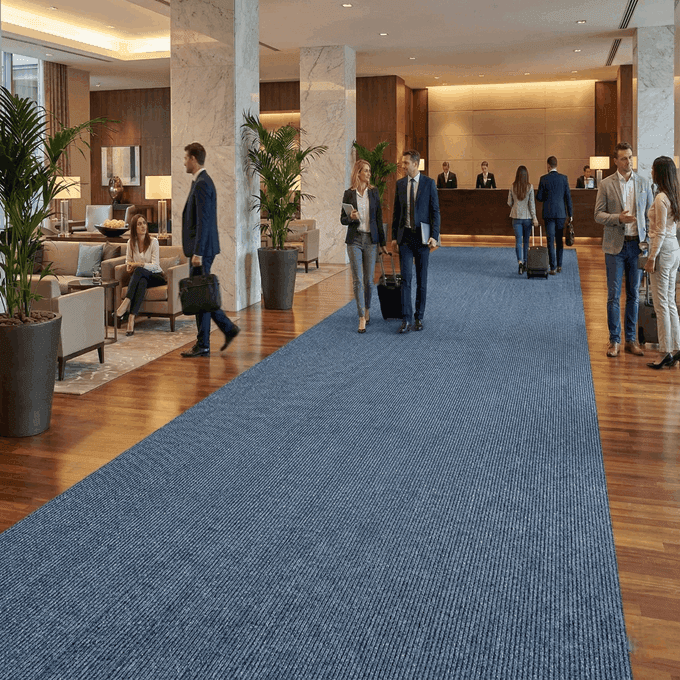
Best for: busy mudrooms, basements, covered porches, or garage walk paths where you want a thin, cut-to-fit runner style surface
Why it made our list
If you need a practical, low-pile surface for heavy foot traffic and messy shoes, this roll is designed to be trimmed to size and glued down, which can help reduce shifting. The trade-off is that it is more “utility floor covering” than cozy living-room carpet.
What to know before you buy
- Check color notes because the listing says the gray includes some blue fiber and can look bluer in bright light.
- Check your install plan because the product description recommends using glue, and you will want the right adhesive for your subfloor.
- Check room expectations because it’s thin (0.18 inch) and low pile, so it won’t feel like plush family-room carpeting.
- Check care instructions because the product info lists “hand wash only,” even though the description also talks about vacuuming for debris.
- Check returns because Amazon lists a 30-day refund or replacement window, which matters if creases or color are not what you expected.
Key features (verified)
- Size: 6 ft x 18 ft (108 sq ft coverage).
- Thickness: 0.18 inch (4.6 mm).
- Pile height: 0.17 inch (4.5 mm), listed as low pile.
- Materials: polyester fiber with thermoplastic rubber (TPR) backing.
- Weight: 23.3 lb (as listed on Amazon for this size).
- Return policy shown: 30-day refund or replacement on Amazon.
- Country of origin: China (as listed).
Pros
- Low pile and thin profile can be easier to vacuum and less likely to show deep footprints in a high-traffic walkway.
- Rubber (TPR) backing is a practical fit for moisture-prone areas where you want a more barrier-like base.
- Roll format makes it easier to cover odd shapes and long runs without seams, especially in entry paths or work areas.
- Cut-to-fit sizing helps when standard rug dimensions never quite match the space.
Cons
- Not a typical wall-to-wall option for a high-traffic family room if you want cushion and warmth.
- Color can read slightly blue depending on lighting, which can clash with “true gray” décor.
- Warranty details are referenced as “limited,” but the length and terms are not clear from the visible product info, so you’ll need to open the warranty link and confirm.
Who it’s best for
Choose this if your main problem is protecting a high-traffic route from grit, wet shoes, and scuffs, and you prefer a cuttable roll you can secure in place. It makes the most sense in utility spaces where easy upkeep matters more than plush comfort.
Who should skip it
Skip this if you are trying to replicate the look and feel of the best carpeting for high traffic areas inside main living spaces, especially if you want a thicker pad-and-carpet feel. Also pass if you are sensitive to color shifts and need a consistent, neutral gray without undertones.
One-sentence comparison
Compared with typical indoor high-traffic broadloom options (often thicker and denser), this is a thinner, low-pile polyester roll with rubber backing that suits practical, moisture-adjacent areas more than comfort-first rooms.
House, Home and More Rubber-Backed Indoor/Outdoor Marine Carpet
Best for: Busy entryways, mudrooms, covered patios, and basements where you want a low-pile surface that is easy to sweep clean

Why it made our list
According to the manufacturer, this is a UV-protected, ribbed indoor/outdoor carpet with a rubber marine backing and a low pile around 1/4 inch, which are all practical traits for high-traffic zones that see dirt and moisture.
The trade-off is comfort. It’s built more like functional flooring than a plush living-room carpet.
What to know before you buy
- Check the installation surface because rubber-backed carpet can trap moisture under it in damp areas, so it’s better for dry, well-ventilated spaces.
- Check the fiber content because listings are not always consistent, so confirm on the exact label/listing before deciding.
- Check whether you want bound edges because this style is sold with unbound edges meant for trimming, not a finished rug look.
- Check the texture because the ribbed design adds traction but can feel firmer underfoot than softer indoor piles.
- Check care expectations because it’s designed for sweep, vacuum, or hose-off style cleaning rather than deep pile shampooing.
Key features
- Polyester fiber indoor/outdoor carpet, per the manufacturer’s product description
- UV-protected for outdoor exposure, per product listing language
- Rubber marine backing (lightweight), designed to help it lie flat
- Low pile height about 1/4 inch with a ribbed texture for traction
- Unbound edges that the manufacturer says do not fray and can be trimmed to size
- Cleaning guidance includes sweeping, vacuuming, or hosing off and air drying
- Returns: the manufacturer site states a 30-day money-back guarantee (policies can differ by seller)
Pros
- Low, ribbed pile is practical for high-traffic paths and tends to hide day-to-day grit better than taller plush carpets.
- Rubber marine backing and trim-to-fit edges make it a flexible DIY option for odd-shaped spaces.
- UV-protection and indoor/outdoor positioning suit sunrooms, porches, and covered outdoor areas.
- Easy maintenance routine (sweep or vacuum) fits homes that do not want fussy cleaning.
Cons
- Not a cozy choice for barefoot lounging; the functional texture can feel firm compared with softer cut-pile carpets.
- Some listings show conflicting fiber info, so you must confirm the exact variant details on the listing.
- Unbound edges may look unfinished if you want a polished, indoor-area-rug aesthetic.
Who it’s best for
If your biggest problem is tracked-in dirt, wet shoes, or pet traffic turning carpet dingy fast, this is a practical, low-pile option that prioritizes cleanability. It’s especially useful in entry zones, basements, or covered patios where you want something closer to “best carpet for pets and high traffic” than plush comfort.
Who should skip it
Skip this if you are outfitting a high-traffic family room where softness and warmth are the priority, or if you want thick cushioning underfoot. Also pass if your space has persistent moisture underneath, since rubber-backed flooring can hold dampness unless the area stays dry and ventilated.
One-sentence comparison
Compared with typical plush indoor carpets often used for the best carpet for high traffic family room setups, this marine-style option leans harder into traction and easy cleanup, with less softness and a more utilitarian look.

Still deciding? Here’s how to choose the right carpet for high traffic areas
For high traffic carpet, the decision usually comes down to fiber durability, construction density, stain resistance, and maintenance effort. Get those right, and you reduce matting, visible “walk paths,” and the constant cycle of spot cleaning. Use the checks below to compare options beyond the roundup and match the carpet to your room, household, and cleaning habits.
The 5 checks that prevent wrong buys
- Check fiber type because the wrong material can flatten fast and show shiny traffic lanes.
- Check pile height and style because high, loose piles trap grit and wear down quicker in busy hallways and stairs.
- Check density and face weight because low-density carpet mats sooner and looks tired even if it is “new.”
- Check stain and soil protection because poor resistance leads to permanent spots and dingy shading in entryways and living rooms.
- Check warranty details because vague wear terms can leave you unprotected when matting shows up early.
Types/materials that matter for best carpet for high traffic areas
- Nylon: Best for heavy foot traffic and families / Watch out for needing solid stain protection and regular vacuuming to prevent grit wear.
- Triexta (often sold as “pet-friendly” fiber): Triexta (often sold as “pet-friendly” fiber): Best for stain-prone homes and softer feel / Watch out for comparing density closely since softness alone does not equal durability. If you are deciding between brands and fibers, a quick SmartStrand and nylon comparison can help set expectations.
- Solution-dyed polyester: Best for budget-friendly stain resistance / Watch out for faster crushing in stairs and busy paths if the construction is light.
- Wool: Best for natural feel and resilience in moderate traffic / Watch out for higher upkeep and sensitivity to certain spills, so check care instructions.
Maintenance & durability
- Choose a tighter, lower pile for hallways, stairs, and living rooms since it hides footprints and slows matting.
- Prioritize strong vacuuming performance over “softest sample” since trapped grit is a top cause of premature wear in high traffic areas, and look for equipment aligned with CRI Seal of Approval testing for cleaning performance.
- Look for easy spot-clean guidance on the label because some fibers and backings require specific cleaners to avoid discoloration.
- Compare construction notes (twist level, density cues, loop vs cut pile) to judge how well the carpet will bounce back after daily walking.
Safety/health notes
- Check the label/listing for low-odor or emissions information if you are sensitive to smells or installing in bedrooms, and consider carpet choices for allergy concerns if symptoms are part of your decision.
- Consider allergy and pet dander load since higher piles can hold more debris, making consistent cleaning more important.
- For stairs, confirm the recommended installation method on the listing to reduce edge lifting and trip risk.
Budget: what changes as you spend more
- Budget: Stain resistance can be good, but density is often lower, so traffic paths show sooner.
- Mid-range: Better density and twist typically improve appearance retention and reduce matting in busy rooms.
- Premium: Stronger wear warranties and more refined constructions can hold texture longer with the same cleaning routine.
How we chose the best carpet for high traffic areas
This list is research-based, built to match different rooms, traffic levels, and cleaning tolerance. We did not do hands-on testing or lab measurements, so we focused on what shoppers can verify and compare. Specs can vary by size or variant, so confirm details on the listing before you buy.
- Reviewed manufacturer specs, fiber materials, pile style, and feature lists, noting variant differences when stated.
- Looked for certifications or labels only when shown on official documentation or in the product listing.
- Analyzed verified customer review patterns, separating recurring wear, matting, and stain issues from one-off complaints.
- Compared suitability for common use cases like stairs, hallways, living rooms, and homes with pets or kids when relevant.
- Weighed overall value for money, including expected durability and maintenance effort, not just price.
- Checked warranty and return terms, plus availability of common sizes and colors where offered.
- Cross-checked details across multiple seller listings when helpful to spot inconsistencies.
Newer releases may have limited long-term feedback.

FAQs about the best carpet for high traffic areas
What pile height is best for a high-traffic hallway or entryway?
Lower pile usually holds up better because it resists crushing and does not trap as much grit. Look for a tight, dense surface rather than a tall, fluffy feel. Check the label/listing for pile height and density clues, since two “medium” piles can perform very differently.
Is loop pile or cut pile better for stairs and busy family rooms?
Low, tight loop styles and low cut piles can both work, but the key is density and how well the fibers spring back after pressure, so it helps to review loop pile versus cut pile details before choosing. Loops can hide wear well, while some cut piles feel softer but may show footprints more. If you have pets, check the label/listing for snag resistance and whether loops are described as “tight” or “low profile.”
Which carpet fiber is most durable for heavy foot traffic?
Nylon is often chosen for durability and resilience in high traffic areas, while triexta is commonly picked for stain-prone homes, so it helps to understand nylon compared with polyester when you are weighing value. Polyester can be a good value, but lighter constructions may flatten faster on stairs and walk paths. Always compare fiber type together with construction, since a strong fiber in a loose build can still wear quickly.
What should I look for in carpet padding for high-traffic areas?
A firm pad supports the carpet so it does not flex and break down as quickly, so it helps to compare firm carpet pad options before you buy. Too-thick or overly soft padding can make traffic lines show up sooner and may cause rippling. Check the label/listing for the recommended pad thickness and density, plus any stair-specific guidance.
How do I keep high-traffic carpet from looking matted or dingy?
Vacuum frequently with good suction to pull out grit before it grinds down fibers. Use entry mats and a no-shoes rule in the busiest zones if possible. For spills and stains, follow the maker’s cleaning instructions and check the label/listing for approved cleaners to avoid discoloration. If you are doing a deep clean, it also helps to know when to put furniture back after cleaning so you do not trap moisture.
Are “stain-proof” or “non-slip” claims always reliable?
Treat marketing terms as starting points, not guarantees. Performance depends on the fiber, the treatment used, and how the carpet is installed and maintained. Check the label/listing for specific stain protection details, backing type, and any testing or certification language that is actually documented.
Is low-VOC or low-odor carpet worth paying for?
If you are sensitive to smells or installing in a bedroom, it can be worth prioritizing. Labels and certifications generally suggest the product meets certain emissions criteria, but they do not guarantee zero odor for every home. Check the label/listing for emissions information and allow ventilation time after installation.
Conclusion
If you are here, you are probably trying to avoid the same mistake twice: a carpet that looks great at first, then quickly shows crushed “walk paths,” stains, and fuzz in the busiest spots. Choosing the best carpet for high traffic areas is really about picking the option that stays presentable with your daily reality, not a showroom feel.
Start with where it will live. Hallways, stairs, and entryways usually need a tighter, lower pile and strong density to resist matting and wear. Then weigh material trade-offs: some fibers bounce back better under constant footsteps, while others shine on stain resistance or softness. Be honest about maintenance tolerance, too. If you want an easy-clean carpet for busy homes, prioritize soil resistance, clear cleaning instructions, and a texture that hides footprints. For pet-friendly high traffic carpet, look for tight construction that is less likely to snag and easier to vacuum.
If you have kids and frequent spills, lean toward stronger stain protection and simple spot-cleaning guidance. If you hate vacuuming, choose a lower profile that releases grit more easily. If the budget is tight, focus on construction quality signals before extra features. Before you decide, check the label/listing for the exact size or variant specs, care rules, pad recommendations, and return or warranty details. You have enough information to choose calmly and move forward with confidence.