Disclosure: Classy Floor is reader-supported. As an Amazon Associate, we earn from qualifying purchases. We may also earn commissions from other affiliate programs, at no additional cost to you. Learn more →
Why does one “new” carpet look scuffed five minutes after you vacuum? In most homes, the answer is tracking: how a cut-pile surface reflects light, plus yarn twist and pile direction. That’s the real reason frieze vs textured carpet feels confusing at the store, even when both sit under “soft, durable” signs.
This article helps you pick the right style for stairs, pets, kids, and high-traffic hallways using facts you can verify. You’ll learn how frieze (high-twist cut pile) compares with textured Saxony (“trackless” textured cut pile) on footprints, matting, and daily upkeep, then how to read a spec card for turns per inch, pile height, face weight, and density. You’ll get a quick showroom test, a decision checklist, and guidance tied to warranty terms and recognized labels like CRI Green Label Plus and CRI Seal of Approval.
Frieze vs textured carpet: what’s the difference?
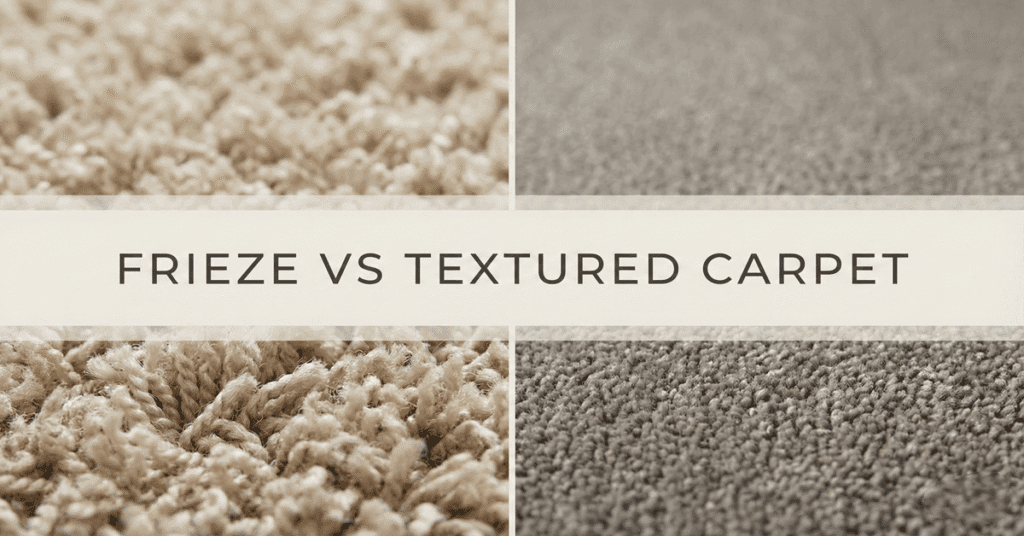
Frieze and textured carpet are both cut-pile carpets, yet they behave differently in real rooms due to yarn twist, pile height, and how the surface scatters light. Frieze uses tighter, higher-twist yarns that look a bit “ropy” and casual. Textured carpet usually means textured Saxony (often sold as “trackless”), where the surface gets a soft, uneven look from heat-setting and finish processes that break up light reflection.
Frieze tends to feel more relaxed and “lived-in,” so it blends foot traffic and everyday mess better in many households. Textured Saxony looks more tailored and smooth from a standing view, yet it still aims to reduce shading compared to a straight Saxony. Store labels can blur the line, so the spec card matters more than the display sign.
| Feature | Frieze (high-twist cut pile) | Textured carpet (textured Saxony / textured cut pile) |
| Surface look | Shaggy, casual “twist” texture | Soft, lightly mottled “trackless” texture |
| Yarn twist | Higher twist is common | Moderate to high twist varies by line |
| Footprints / vacuum marks | Often low to medium visibility | Often low visibility, depends on density |
| Best fit | Family rooms, basements, busy hallways | Living rooms, bedrooms, open areas |
| Stairs | Works best in denser, shorter-pile options | Works well in denser constructions |
| Cleaning feel | Debris can sit deeper in taller piles | Debris lifts easier in shorter piles |
| Common pitfalls | Too tall + low density can crush | Low density can matte and shade |
Is frieze carpet the same as textured carpet?
Frieze carpet is not the same category as “textured carpet” in most carpet showrooms, even though both can hide tracking better than smooth cut pile. Frieze points to twist construction first. “Textured carpet” points to surface finish and appearance first.
A quick check: frieze usually shows distinct twisted yarn tips and a looser, curlier surface. Textured Saxony usually looks more uniform from five feet away, with a soft, pebbled surface that breaks up light.
Textured Saxony vs frieze: where shoppers get confused
Textured Saxony and frieze can sit side by side in the same price bay, and both get pitched as “family-friendly.” The confusion grows when brands use marketing names like “trackless,” “soft textured,” or “twist,” even on similar constructions. If you’re also weighing comfort and the “smooth vs patterned” look, compare textured vs plush feel and upkeep.
If you compare two samples, keep your eyes on pile height and density. A dense, shorter frieze can outperform a taller, looser textured cut pile on stairs, even if the store tag suggests the opposite.
What “trackless” and “textured” mean in carpet stores
“Trackless” is a selling term, not a technical standard. It usually means the surface has enough texture to reduce footprints, shading, and vacuum lines under normal lighting. Density and twist still control how long that look lasts.
If a “trackless” sample shows strong marks under showroom spotlights, it will show marks at home too. Ask for the style’s texture retention warranty language, then match it to the rooms you use hardest.
Cut pile vs cut-and-loop: don’t mix these categories
Cut pile (frieze, Saxony, textured cut pile) has yarn tips cut at the top, so it feels soft and plush. If you’re still sorting carpet categories in general, start with loop pile vs cut pile basics. Cut-and-loop (often called patterned or sculpted) mixes looped yarns with cut yarns, which changes durability and snag risk.
If you shop with pets, cut-and-loop can snag more easily on claws in some patterns. For this article, the focus stays on cut pile choices, so the comparison stays clean.

Which hides footprints and vacuum marks better: frieze or textured?
For most homes, frieze and textured Saxony both reduce footprints and vacuum marks compared with smooth Saxony, yet they do it in different ways. Frieze relies on a higher twist and a more irregular surface. Textured carpet relies on subtle surface variation that spreads light reflection across many angles.
If your biggest annoyance is seeing “walking paths” after every vacuum pass, start by checking pile height and density, then test the sample under side lighting. A soft, tall pile can look cozy and still show traffic if the density is low. For a quick rule-of-thumb on performance and cleanup, review the high vs low pile trade-offs before you choose. Do you vacuum in straight stripes and want them invisible, or do you just want the room to look tidy from the doorway?
Why carpets show footprints (light + pile direction)
Footprints show up when the pile tips bend, and the surface reflects light in one direction. Cut pile acts like tiny brushes; brush them one way and the shade looks darker, brush them the other way and it looks lighter. That light shift reads as a “mark,” even on a clean carpet.
Lighting sets the stage. A window wall, floor lamp, or recessed cans at an angle make tracking easier to see, especially on mid-tone colors like beige, gray, or greige.
Frieze tracking performance in busy family rooms
Frieze often hides everyday tracking well in family rooms, mainly when the carpet has high twist and decent density. The twisted yarns stand up in many directions, so the surface looks less “combed.” That reduces the sharp dark-to-light change your eye catches after a kid runs through.
A caution: a very tall frieze can trap crumbs and pet hair deeper in the pile. If you want the casual look without the extra vacuum effort, look for a shorter pile with a tighter build.
Textured carpet tracking performance in hallways
Textured Saxony can be a strong choice for hallways since the texture softens footprints without looking shaggy. In many lines, the pile is shorter than the frieze, so vacuuming feels easier, and the surface resets faster after traffic.
Density still decides the long game. A hallway sees repeat traffic on a narrow path, so a low-density “trackless” style can flatten into a shinier lane over time.
Color and lighting effects that override pile choice
Color can beat construction. Very dark solids and very light solids show contrast more than mid-tones with flecking or heathered yarn blends. Multi-tone “tone-on-tone” carpets often hide both soil and tracking better, even in the same pile type.
Take your sample home and view it at the times you live in that room. Morning sun and evening lamps can make a carpet look like a different product.
When “hides footprints” claims are misleading
A display sign can’t tell you how a carpet will look in your space. If the sample is tiny, the pile has no room to show tracking, so the claim looks true. A larger cut from the same roll can show marks fast.
Use a quick test before you commit:
- Brush the pile with your hand in two directions, then step back.
- Press your heel into it, lift, and check for a shadow.
- Run a vacuum head across one strip and stop mid-pass.
- Tilt the sample toward a window or lamp to mimic side light.
Next up, tracking is only half the story; wear over time is where the right choice pays off.

Durability and matting: how frieze and textured carpet wear over time
Frieze and textured carpet durability depends less on the style name and more on density, twist level, fiber type (nylon, polyester, triexta, wool), and pile height. A dense, well-twisted carpet keeps its shape longer and resists matting and crushing in traffic lanes. A tall, loose carpet can look worn early, even with a premium fiber.
Think in two timelines: “daily looks” and “five-year shape.” A carpet can hide footprints today, yet still flatten over time if the construction is light. The easiest way to shop is to score matting risk with simple inputs you can read off a spec card.
Matting risk score (quick rubric):
Start at 0. Add +2 for high traffic (stairs, hallway). Add +2 for taller pile. Add +2 for lower density. Subtract –1 for higher twist. Subtract –1 for resilient fibers like premium nylon. Higher total means higher matting risk.
Is frieze carpet more durable than textured carpet?
Frieze can be very durable, yet only when it pairs high twist with solid density. The twisted yarn helps the tips resist bending and “laying over.” A low-density frieze with a tall pile can still crush and look stringy in traffic lanes.
Textured Saxony can match or beat frieze on wear if it has strong density and a shorter pile. Many shoppers assume frieze always wins, then choose a softer, taller build that trades durability for feel.
Crushing vs matting vs fuzzing: what each looks like
Crushing looks like flattened areas that do not bounce back after vacuuming. Matting looks like clumped fibers that tangle together into a smooth patch. Fuzzing looks like a light halo of loose fiber on the tips, often seen early on some cut piles.
These issues have different fixes. Crushing and matting point to construction and traffic. Fuzzing can come from normal break-in, vacuum settings, or aggressive brushing.
Pets and frieze: claws, snag risk, hair visibility
Frieze works well with pets in many homes since the twist texture helps hide minor mess and paw paths. Hair can still sit deep in a taller pile, so a strong vacuum and steady routine matter. Claws can snag any carpet, yet cut pile frieze usually snags less than many cut-and-loop patterns.
If you have a heavy shedder, ask the retailer for a larger sample and do a quick “lint roller test.” You will see fast if hair clings to the yarn shape and color blend.
Textured carpet and furniture dents: what to expect
Textured Saxony can show furniture dents, yet dense builds recover better and look more even after a reset. Dents matter most under heavy pieces like sectionals, dressers, and bed frames. A firmer pad and carpet protectors can reduce the depth of dents, though the pile still compresses under weight.
If you use a rolling desk chair, skip tall piles and focus on density. Add a chair mat or pick a hard surface in that work zone.
When to avoid frieze (pile length + cleaning realities)
Skip very tall frieze in homes that need quick cleanup, fast vacuum passes, or frequent spot cleaning. Taller piles can hold grit deeper, and grit acts like sandpaper on fibers over time. A shorter, denser frieze keeps the relaxed look with less upkeep.
In the next section of the article, the focus shifts from style labels to the spec-card signals that predict performance before you buy.
Carpet specs that matter more than “frieze” or “textured”
The most reliable way to choose carpet is to read the spec card, not the style name. Fiber type (nylon, polyester, triexta, wool), face weight, density, twist level (turns per inch), pile height, tuft bind, backing, stain system, and texture-retention warranty tell you how a cut-pile carpet will track, crush, and clean. If you’re deciding whether to go “natural” or not, compare synthetic vs natural carpet options. A “frieze” label often signals higher twist; a “textured” label often signals a more casual surface. The specs decide if that claim holds.
Start with fiber, then match it to the room. Nylon tends to rebound well in busy halls and stairs, polyester can feel soft for bedrooms, triexta often markets stain resistance, and wool brings natural resilience plus a higher price. If you’re choosing between the two most common synthetics, see nylon vs polyester performance. Next, look at pile height and density together. A tall pile can feel great in socks, yet a low-density tall pile can mat fast under traffic.
Twist level and turns per inch: what to look for
Twist level is your fast durability signal for cut pile. Higher turns per inch often means better texture retention, less fuzzing, and fewer “lay marks” in walk paths. Ask the retailer for the turns-per-inch number on the exact SKU, not the showroom sample.
Density vs face weight: which predicts wear better?
Face weight tells you how much yarn sits on the surface; density tells you how tightly that yarn is packed. Two carpets can share a face weight and still wear very differently if one has a looser construction. Use density as your tie-breaker when two options feel similar underfoot.
Best carpet fiber for frieze and textured (nylon vs polyester vs triexta)
Pick nylon for high-traffic family rooms and stairs. Pick polyester for low-traffic bedrooms where softness matters more than rebound. Pick triexta when stain resistance is a top concern, and you have a trusted brand line with clear warranty terms.
Backing and tuft bind basics (what to ask the retailer)
Backing and tuft bind affect snag resistance and seam strength. Ask for tuft bind results, the backing type, and whether the warranty has stair limits. Would you roll a desk chair on this carpet every day? If yes, ask the installer about chair mats and seam placement.
Warranties that matter: texture retention and stairs clauses
Texture-retention coverage matters more than stain coverage for frieze and textured cut pile. Read exclusions for stairs, vacuum type, and cleaning intervals, then keep the paperwork.
Spec-sheet checklist to screenshot in-store
- Fiber: nylon/polyester / triexta / wool
- Pile height (inches)
- Face weight (oz/yd²)
- Density rating
- Twist/turns per inch
- Tuft bind + backing type
- Texture-retention warranty terms
| Use case | Specs to target (simple rule) |
| Stairs + hall | Higher density, higher twist, shorter pile |
| Bedrooms | Medium density, softer hand, moderate pile |
| Family room | Nylon or wool, higher density, moderate pile |
| Pets | Higher twist, tighter construction, clear snag guidance |
Quick example (how to read two spec cards): If Carpet A has a taller pile and lower density than Carpet B, Carpet A can feel softer in the store, yet Carpet B often holds texture longer in a hallway. Take a photo of both cards, then compare twist, density, and warranty language side by side.
Best rooms for frieze vs textured carpet (stairs, bedrooms, living rooms)
Frieze (high-twist cut pile) and textured Saxony (“trackless” textured cut pile) can both work across a home, yet room use changes the best pick. Stairs and hallways reward higher density, tighter construction, and a pile that resists crushing. Bedrooms reward comfort and sound control, so you can lean more softly if traffic stays low.
Frieze vs textured carpet for stairs: which is safer and lasts longer?
For stairs, many shoppers like textured styles that feel steady underfoot and show fewer tracks. Frieze can work on stairs when the construction is tight, and the pile is not overly long. Ask the installer how they will wrap the nose and place seams, since stair wear shows fast at the edges.
Frieze vs textured carpet for bedrooms: softness vs tracking
Bedrooms often tolerate a softer carpet with a bit more pile height. If you hate seeing vacuum marks in morning light, textured cut pile often looks calmer day to day. If you like a casual, cozy look, frieze can hide small lint and pet hair break-up, yet it may need more careful vacuum settings.
Frieze vs textured carpet for living rooms and hallways
Living rooms sit in the middle: comfort matters, yet traffic can spike during guests and weekends. A dense textured cut pile often keeps a neat look with less daily fuss. Frieze can shine in a relaxed family room, especially with kids and pets, as long as the yarn twist and density support the traffic.
Basements and moisture: when neither is ideal
Basements bring moisture risk from slab floors and seasonal humidity. If moisture is a pattern in your home, consider a different flooring type or a low-pile solution with strong backing and cleanable surfaces. Do you run a dehumidifier most days? That clue matters more than “frieze” on the tag.
Allergies and indoor air quality: what to prioritize
Look for low-emission labels such as CRI Green Label Plus and follow the maker’s cleaning guidance. For fiber and construction picks that tend to work better in allergy-sensitive homes, see the best carpet choices for allergies. A dense carpet with the right pad can hold dust until you vacuum, which helps some homes. Vacuum quality and filter type often change results more than pile style.
| Room | Best fit | Why it fits |
| Stairs | Dense textured cut pile, or short-pile frieze | Better footing + texture retention |
| Bedroom | Textured cut pile or softer frieze | Comfort + sound control |
| Hallway | Dense textured cut pile | Less tracking, strong wear |
| Family room | Either, spec-led | Balance comfort + cleanup |
Mini case: A two-story home with a dog and busy stairs often does well with a dense textured cut pile on stairs/halls, then a softer option in bedrooms. The spec card picks the winner, not the display label.

Frieze vs textured carpet cost, lifespan, and value
Cost and value come from fiber, construction, padding, and labor time, not the words “frieze” or “textured.” In the U.S., many cost guides place installed carpet in a broad band ranging from $2–$11+ per square foot, with differences tied to grade, stairs, removal, and prep work. Textured Saxony materials often show wide price ranges in consumer guides, and frieze pricing can rise with higher twist and better yarn systems.
Is frieze carpet more expensive than textured carpet?
Frieze can cost more when it uses higher-twist yarn, better nylon, and a higher-density build. Textured cut pile spans budget to premium, so price overlap is common. Ask for the full installed quote by SKU, pad, tear-out, transitions, and stairs line items.
How long does frieze vs textured carpet last?
Lifespan tracks traffic level and texture retention, plus vacuum habits and pad support. A dense, high-twist cut pile in nylon often holds up longer than a softer, lower-density option, even if both look similar on day one. If you see “texture retention” in the warranty, read the fine print for stairs and cleaning intervals.
When paying more is worth it (fiber + density upgrades)
Pay more for higher density, better nylon, stronger backing, and a clear texture-retention warranty. Those upgrades often cut down on matting and the “worn path” look. Spend less on pile height and showroom softness; those traits can fade fast in busy lanes.
Padding cost and warranty interactions
Padding changes comfort, noise, and wear. Typical pad pricing ranges widely by material and density, from budget rebond to rubber or memory foam. Some warranties require a pad spec, so match the thickness and density to the carpet line, then keep your invoice.
| Value driver | What it changes | What to verify |
| Fiber (nylon vs polyester) | Rebound, wear | Spec card + warranty |
| Density + twist | Matting, tracking | Density rating + turns per inch |
| Padding | Comfort, support | Pad type, thickness, density |
| Stairs + layout | Labor time | Stair rate, seams, transitions |
Cost-per-year template: Take total installed price ÷ expected years in that room. Use your traffic reality, not a sales promise. Update your price bands quarterly if you publish them, and track non-branded queries in Google Search Console after edits so you can link ranking shifts to content changes and rollout windows.
How to choose between frieze and textured carpet in a showroom
A good showroom choice for frieze carpet vs textured Saxony (textured cut pile) comes from the spec card, a small sample, and two fast tests under real light. Focus on fiber (nylon, polyester, triexta), turns per inch (twist), pile height, face weight, and density, then confirm the texture retention warranty and any stairs clause before you fall for “trackless” tags.
What to ask: twist, density, fiber, stain system
Use this as your quick spec-card checklist, then take a photo next to the SKU. Ask for:
- Fiber type and brand line (nylon vs polyester vs triexta)
- Turns per inch (TPI) or twist level
- Pile height and pile weight (face weight)
- Density rating or density calculation details
- Stain system name and coverage limits
- Texture retention warranty length and exclusions
- Stairs language (wear, matting, installation rules)
The pinch test and bend test (quick quality checks)
Pinch the pile between two fingers and look for backing show-through; a dense carpet hides backing fast. Bend the sample into a “U” and check how firm the tufting feels. Does it spring back, or does it stay flat after your thumb presses it?
Common sales terms that don’t predict performance
“Trackless,” “family friendly,” and “pet proof” sound good, yet they skip the numbers that drive wear. A long, soft frieze can look great and still show matting if the density is low. A textured cut pile can hide footprints and still crush on stairs if the pile height is tall and the padding is too soft.
Installer notes: seams, stairs wrapping, and pile direction
Ask where seams will land, and ask the installer about pile direction in the main sightline. On stairs, confirm the wrap method and whether the style needs extra fastening to stay tight. A small plan on paper saves you from surprise shading lines later.
Mistakes to avoid when comparing samples
Compare samples at home in daylight and lamplight, then walk on them in socks. Do you like the look after a heel press and a vacuum pass?
How to clean and maintain frieze and textured carpet
Frieze and textured carpet stay cleaner when vacuum settings match the pile and when spills get fast, gentle care. Use a vacuum that fits the surface, follow the maker’s care sheet, and keep receipts for any professional cleaning tied to warranty terms.
Vacuuming frieze vs textured: settings that prevent fuzzing
Frieze needs the right balance of agitation and suction. Start with the brush roll on a higher setting, then adjust until the head glides without “grabbing” the yarn tips. Many shoppers do best with a vacuum listed under the CRI Seal of Approval, plus a HEPA bag or sealed bin if dust is a concern.
Spot cleaning frieze without matting the pile
Blot, do not rub. Use a white towel, lukewarm water, and a mild cleaner that matches the carpet’s stain system, then rinse and blot again. Set a fan on the spot so the backing dries fast and odors stay away.
Professional cleaning schedule and warranty compliance
Most makers prefer hot water extraction from a reputable firm, often aligned with IICRC methods. Keep invoices and record dates, especially in high-traffic homes with pets and kids. A simple routine protects texture retention claims and keeps lanes from turning dull.
Troubleshooting: sprouting, snags, ripples, and shading
Cut a sprout flush with scissors; never pull it. For ripples, call the installer; stretching may be needed. Shading and tracking can be normal for cut pile, so judge it under your usual lighting before you label it a defect.
If you have your two finalists picked, the next section’s FAQs clear up cost, padding, lifespan, and common buying errors.

Frequently Asked Questions
Is frieze carpet the same as textured Saxony?
No. Frieze carpet is a high-twist cut pile with a looser, curlier yarn look that helps scatter light and reduce tracking. Textured Saxony is a textured cut pile (often sold as “trackless”) with a more tailored surface. Store labels blur terms, so use the spec card: look for twist level, pile height, and density.
Which hides footprints better: frieze or textured carpet?
Frieze usually hides footprints and vacuum marks better since the twisted yarn tips break up light reflection. If you want a deeper breakdown of construction and appearance, see the Saxony vs frieze differences. Textured carpets can still show shading in side lighting, especially in darker colors or lower-density builds. Want a fast check? Rub the sample both directions, then view it from the doorway angle under the store lights.
Is frieze carpet good for stairs and landings?
Frieze can work on stairs, yet stair wear is brutal on any cut pile. Pick a dense product with a shorter pile height and strong texture retention wording in the warranty. Ask the installer about pile direction and seam placement on landings. A tight, well-made textured cut pile often looks neater on stair noses.
What’s better for pets: frieze or textured carpet?
For pets, start with fiber and density, then pick the surface style. A dense solution-dyed nylon or triexta resists staining and holds up to traffic; frieze can hide tracking and hair movement better. Long frieze yarn can trap dander and take more vacuum passes. Do you have shedding or muddy paws?
How much does frieze vs textured carpet cost per square foot?
Price swings mostly follow fiber, density, pad, and stair work, not the style name. Entry polyester often runs lower; high-density nylon or triexta costs more, plus better cushion and installation. Use cost-per-year thinking: a pricier, denser carpet that keeps texture longer can beat a cheaper one that mats fast.
What carpet padding works best with frieze or textured carpet?
Match cushion to traffic and carpet backing. For busy rooms and stairs, a firmer pad helps support the pile and reduce crushing; overly soft pad can make a cut pile feel “wavy” underfoot. Keep pad thickness and density inside the carpet warranty limits. Low-VOC pads pair well with CRI Green Label Plus carpets.
What are the most common mistakes when buying “trackless” carpet?
The big mistake is trusting “trackless” signage without checking specs. Buyers skip density and twist, choose a dark color under bright side lighting, or ignore stairs clauses in the warranty. Bring a larger sample home and view it morning and night. The conclusion pulls these choices into one clear ruleset.
Conclusion
Frieze and textured cut-pile carpets solve different problems, so the right pick comes from specs, room use, and how your home really looks day to day. When you focus on density, twist level, pile height, face weight, fiber type, and the texture retention warranty, store labels stop driving the decision. You can predict tracking, matting, and upkeep with a simple sample test under your own lighting.
You now have a practical way to compare two samples, not two marketing names. Use the showroom rub test, check the spec card, and match cushion firmness to traffic and stairs. Ask yourself one question: do you want the surface to look cleaner between vacuums, or feel smoother under bare feet?
Take one or two large samples home and judge them at morning and night angles before you commit to frieze vs textured carpet. If you want a second set of eyes on a spec card or warranty wording, share the details and I’ll help you interpret them.