Disclosure: Classy Floor is reader-supported. As an Amazon Associate, we earn from qualifying purchases. We may also earn commissions from other affiliate programs, at no additional cost to you. Learn more →
Is the 10 lb pad always the “better” buy? Not if the pad thickness, carpet style, and warranty rules do not match your room. This guide on 8 lb vs 10 lb carpet pad treats the pad like a system, rebond density (lb/ft³), 3/8″ vs 7/16″ thickness, and real support underfoot, so you get comfort without a carpet that wears out early.
Most people shop by feel in the store, then regret it after the first year in a hallway or on stairs. You are really trying to prevent flattening, wrinkles, and warranty headaches, especially with loop/Berber carpet or a busy family room. I’ll show a clear way to choose by room, explain how to read a spec sheet, and point to the guardrails used by groups like the Carpet Cushion Council and guidance such as HUD UM72a.
Next, we’ll start with the fastest room-by-room pick so you can decide in minutes.
8 lb vs 10 lb carpet pad: the fastest way to choose (room-by-room picks)
An 8 lb vs 10 lb carpet pad choice comes down to three entities you can check in under a minute: room traffic, carpet style (cut pile vs loop/Berber), and pad thickness (most often 3/8″ vs 7/16″). If you want to compare real-world options while you read, here are current listings for 8 lb rebond carpet pad and 10 lb rebond carpet pad.
In many homes, 8 lb rebond fits bedrooms and low-traffic spaces, and 10 lb rebond fits busy rooms and stairs when the carpet warranty allows it. If you’re also debating the entry-level option, see this 6 lb vs 8 lb pad breakdown before you choose.
Do you have stairs or a loop pile carpet? Start there, since those two areas punish a “too soft” pad fast. For those zones, it helps to compare 3/8″ high-density rebond options and rubber stair carpet cushion (firmer feel, better edge support).
If you’re unsure what category your carpet falls into, review the loop vs cut pile differences first.
Quick decision table (most readers stop here)
| Family room/kids room | Traffic level | Common carpet styles | Best starting pick | Thickness target | Why it works |
| Primary bedroom | Low | Plush, textured cut pile | 8 lb rebond | 7/16″ (or 3/8″ if firm feel) | Comfortable feel with solid support for light foot traffic |
| Guest room | Low | Most cut piles | 8 lb rebond | 7/16″ | Pad stays resilient without extra spend |
| Living room | Medium | Textured cut pile, frieze | 10 lb rebond | 7/16″ or 3/8″ | Better resistance to “traffic lane” flattening |
| Stairs/landings | High | Textured cut pile, frieze | 10 lb rebond | 3/8″–7/16″ (match warranty) | Holds up under constant use and furniture shifting |
| Hallways | High | Any | 10 lb rebond | 3/8″ | Less bounce, fewer ripples, cleaner wear pattern |
| Stairs / landings | High + edge stress | Any | 10 lb (often) or rubber | 3/8″ | Firm support reduces “mushy” stair wrap and early crushing |
| Home office | Medium | Cut pile | 8 lb or 10 lb | 3/8″–7/16″ | Chairs and desk legs call for support; density matters more than plushness |
| Dining room | Medium | Cut pile | 10 lb rebond | 3/8″–7/16″ | Chair movement compresses pad; higher density helps |
| Basement on concrete | Medium + moisture risk | Cut pile, low-profile | 10 lb + correct barrier choice | 3/8″ | Concrete changes comfort and moisture behavior; pick by slab conditions |
| Loop/Berber anywhere | Varies | Loop/Berber | Firmer pad (often 8–10 lb, thinner) | 3/8″ | Loop piles show wrinkles sooner on soft, thick cushions |
Quick notes that prevent regret
- If the carpet maker caps pad thickness, follow the warranty first. Many claims get denied on paperwork, not comfort.
- If the room has heavy rolling loads (office chair, walker, wheeled toy bins), higher density and a firmer feel usually age better than extra thickness.
Best-fit scenarios
8 lb is usually best when…
- The room stays quiet most days (bedrooms, guest rooms).
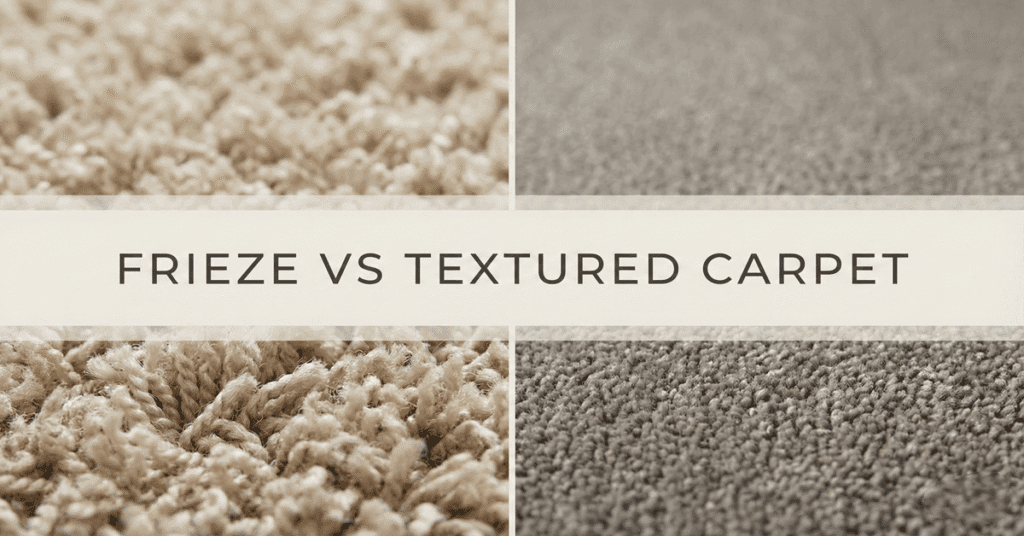
- You want a softer step under a standard cut-pile carpet. If you’re choosing between common cut-pile looks, this frieze vs plush performance guide can help you match pad feel to the style you actually live in.
- You need to control cost and still meet common warranty minimums.
10 lb is usually best when…
- The room gets steady foot traffic (hallways, family rooms, open-plan living).
- Furniture moves often or you see early “shine” and flattening in past installs.
- Stairs need firmer support, and your carpet warranty allows for the thickness. Your results also depend on how the carpet is wrapped on each tread. Use this stair wrap style guide to choose the method before you finalize pad thickness.
Choose something else when…
- A loop/Berber carpet needs stability. A thinner, firmer pad often keeps it smoother.
- Stairs feel spongy with rebond. A rubber cushion can feel steadier.
- Moisture is part of the job (basements, pets). A pad with the right moisture barrier and seam plan matters more than 8 vs 10 (see moisture-barrier carpet pad).
Common “wrong pick” outcomes (what users fear)
Picking the wrong pad often looks fine on day one, then shows up as small annoyances that grow. Watch for these patterns:
- Wrinkles or ripples in halls and near doorways after a few months.
- Wear paths that appear early, even when the carpet fiber looks decent elsewhere.
- A “mushy” feel that makes the carpet look loose, not plush.
- Stair treads flattening or feeling uneven under the nosing. If you’re still deciding what surface belongs on your steps, this carpeted vs wood stair pros and cons comparison helps you weigh traction, noise, and upkeep.
- A warranty issue when the installer notes “pad too thick” or “wrong cushion type.”
A simple next step: write down your room list, traffic level, and carpet style. Then we can translate pad labels the same way an installer reads them, density, thickness, and firmness.
Understand the specs: density vs thickness vs firmness (and why “lb” can mislead)
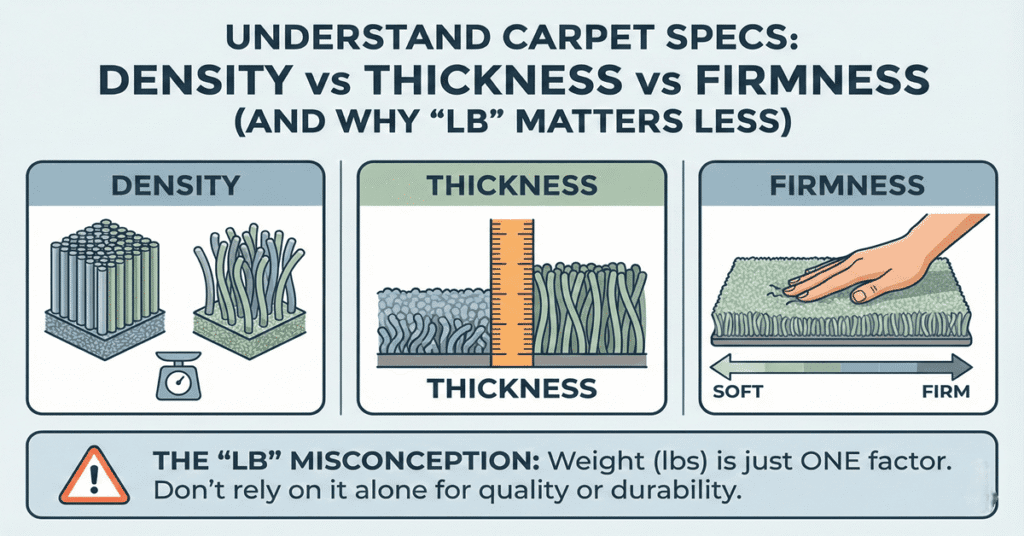
“8 lb” and “10 lb” on a carpet cushion label refer to density in pounds per cubic foot (lb/ft³), not the weight of the roll, and not the thickness. Density, thickness (3/8″, 7/16″), and firmness/response work as a system, and changing one can cancel out the benefit of the others. A dense pad that is too thick can still feel unstable, and a thinner pad with the right firmness can protect carpet better on stairs and loop pile.
What “8 lb” and “10 lb” actually mean
Density describes how much material sits inside a cubic foot of foam, so a 10 lb rebond packs more material than an 8 lb rebond. More material often means better resistance to long-term crushing in busy rooms. That does not mean every 10 lb pad feels hard or every 8 lb pad feels soft, since thickness and foam blend change the feel.
A common shopping trap is to compare a 7/16″ 8 lb pad against a 3/8″ 10 lb pad by touch alone. The thicker one can feel “better” in the aisle, yet the thinner, denser option can hold carpet tighter over time in hallways and on stairs.
The “support triangle” model (original framework)
Think of carpet cushion like a three-part support system. If you push one side too far, the floor can feel great at first and age poorly later.
Density (lb/ft³): durability potential
- Higher density often resists crushing and “pancaking,” mainly in traffic lanes.
Thickness (in.): comfort and risk
- Thicker pads add softness. They can raise risk of looseness, wrinkles, and stair bounce if the carpet system gets too tall.
Firmness/response: stability and appearance
- Some pads rebound fast and feel springy. Others feel firm and steady. That difference affects how the carpet face yarn sits and how seams and stairs behave.
Some manufacturers list IFD/ILD values (indentation force/load deflection) for foam feel, often tied to test methods like ASTM D3574 for flexible cellular materials. Many retail listings omit it, so you often infer firmness from the material type and thickness.
Spec-sheet checklist (what to look for on product pages)
Before you buy, scan the label or product page and collect these facts in one note:
- Material type: rebond (bonded urethane), prime urethane, rubber, fiber
- Density: 8 lb, 10 lb, or stated lb/ft³
- Thickness: 3/8″, 7/16″, or other
- Moisture barrier: yes/no, film type, seam tape notes
- Install method: stretch-in vs glue-down guidance
- Ratings: sound numbers (STC/IIC) or thermal value if listed
- Certifications/claims: low-VOC labels, indoor air notes
- Warranty fit: carpet brand’s required cushion class, density, and thickness cap
If one of these is missing, ask the seller for the spec sheet. A good pad line has consistent numbers, not just marketing names.
Next, we’ll use these specs to compare real outcomes, comfort, noise, and carpet life, so your room choice holds up past the first season.
Performance trade-offs that matter in real homes: comfort, durability, noise, and carpet life
A carpet pad choice changes four things you feel and see: underfoot comfort, how fast traffic lanes show up, how much footfall noise carries, and how long the carpet face yarn holds its look. For most homes, the real decision is not “8 lb vs 10 lb” alone; it is density + thickness + carpet style (cut pile vs loop/Berber) working together under your room’s traffic pattern.
A quick self-check helps. Is this a quiet bedroom where you want softness, or a hallway where you want the carpet to stay smooth? Is the carpet a loop pile that can “telegraph” movement if the cushion feels too springy?
Durability & appearance retention
Higher-density rebond can slow down the “crushed path” look in halls and family rooms, since the pad resists long-term compression better than a softer, lower-density option. You see the benefit most in traffic lanes, pivot points near doorways, and spots under a couch edge where the same footprint repeats.
Pad thickness still sets the boundary. A thick pad under a flexible carpet can let the carpet bend too much at each step, which can speed up surface wear and loosen the stretch-in fit. The goal is a stable base that lets the carpet fibers flex, not the whole carpet system.
A practical example: a busy upstairs hallway with kids and a dog often does better with a firmer feel (often 10 lb rebond at a controlled thickness) than a “pillowy” pad. The carpet tends to look flatter and cleaner over time when the base does not pump underfoot.
Comfort & “too firm” complaints
A 10 lb carpet pad can feel great under a plush nylon carpet in a living room, yet it can feel harsh in a low-traffic bedroom if the carpet pile is short. Comfort comes from the pad’s “give” at the surface, not just the density number on the label.
Many “too firm” complaints come from a mismatch: high density paired with a low-profile carpet, or a pad that runs thinner than the homeowner expects. On the flip side, “too soft” complaints often show up on stairs and near doors, where you need stable footing and a tight carpet wrap.
Ask one simple question: Do you want a soft step, or do you want the carpet to stay crisp and smooth in a high-use area? That answer usually points you toward 8 lb in softer zones or 10 lb in wear zones, with thickness kept in the safe range for your carpet.
Noise and warmth
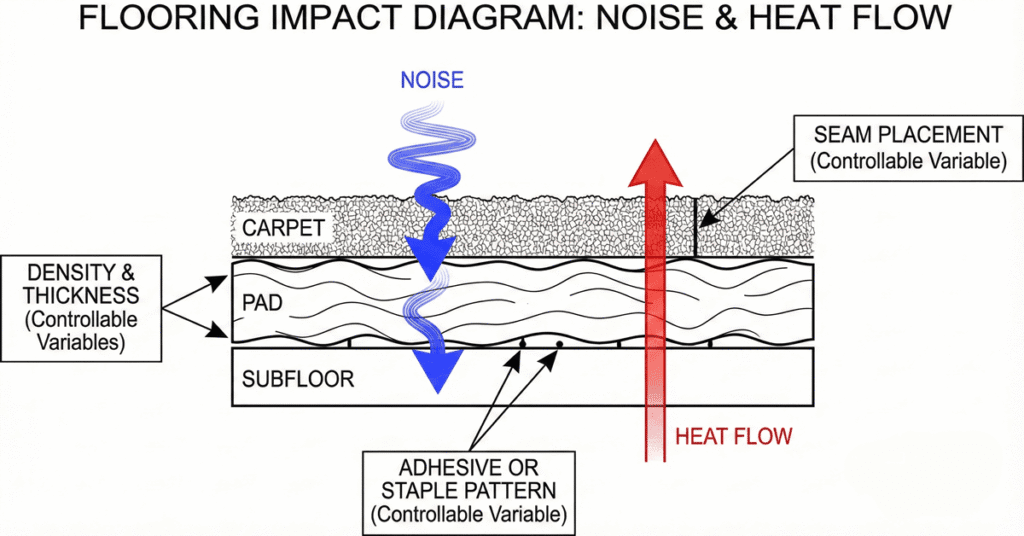
Carpet cushion can cut perceived footfall noise by adding a “spring layer” between shoe impact and the subfloor, and it can add a small insulation boost in cool rooms. If you’re trying to explain the comfort change, here’s why carpet feels warmer underfoot in plain terms.
Product pages often list sound and thermal specs like STC/IIC and R-value, yet those numbers vary by test method and the full floor assembly. Use the numbers as a comparison tool, not a promise. If you share walls or live over a hard-ceiling basement, look for a pad that publishes clear ratings and a stable thickness, then pair it with correct seam layout and perimeter fastening. If allergies are part of the decision, these allergy-friendly carpet tips will help you choose a setup that’s easier to keep clean.
Next, we’ll lock in the guardrails that keep your carpet warranty intact, since the “best-feeling” pad can still cause a claim denial if it breaks thickness or traffic-class limits.
Warranty and standards: how to avoid voiding your carpet warranty (and meet minimum guidelines)
Carpet warranties often hinge on two cushion details: pad type and maximum thickness for the installation method (usually stretch-in). Industry guidance from the Carpet Cushion Council (CCC) and the Carpet and Rug Institute (CRI 105) gives clear thickness limits and traffic classes, and many manufacturers align their warranty language with those limits.
The non-negotiables to confirm before buying
Start with the carpet warranty document, not the pad aisle. The warranty usually names a required cushion type (rebond, rubber, fiber), a thickness cap, and sometimes a minimum density or traffic class.
Use this simple workflow before you pay:
- Find your carpet’s warranty or spec sheet from the brand or retailer.
- Locate the cushion section and note pad type, thickness cap, and any density or class language.
- Match the pad label to those lines, then save the pad SKU and receipt with your carpet paperwork.
If you hire an installer, ask one direct question: “Will you install this carpet to the warranty cushion limits?” You want a clear yes tied to the exact pad SKU.
CCC/HUD guidance readers can reference (without getting lost)
CCC publishes minimum recommendations by traffic level (often called Class 1 and Class 2 in residential guidance), and it notes that HUD adopted CCC minimum recommendations under UM72a for FHA-financed housing.
CCC’s residential spec sheet lists a maximum cushion thickness of 0.5 inch for any product in that guideline set.
Class language matters in plain terms: Class 1 fits light-to-moderate rooms, and Class 2 targets heavier-use zones such as corridors and stair use in many summaries of the guidance.
Warranty-safe thickness guidance (practical)
CRI 105 gives a clear residential cushion limit: cushion thickness should not exceed 7/16 inch (11 mm), and it notes that no case should have a thickness exceeding 1/2 inch (13 mm).
That guidance matches what many retailers and installers treat as the “safe zone” for stretch-in carpet.
Thickness control matters most with loop/Berber and on stairs. A pad that feels “extra soft” in the store can let the carpet flex too much, which can lead to ripples, seam stress, and faster wear near turns and landings. A firm, controlled thickness often keeps the carpet looking tighter for longer.
Compliance checklist
Use this checklist before purchase and before installation:
- I have the carpet warranty/spec sheet saved as a PDF or photo.
- The pad label shows the material type (rebond/rubber/fiber) that matches the warranty.
- The pad label shows thickness, and it stays at or under the stated limit (commonly 7/16″ for residential guidance).
- The pad fits the room’s traffic class (bedrooms vs halls vs stairs) using CCC class guidance as a reference point.
- The installer will place pad seams offset from carpet seams and trim the pad flush to the tack strip line, per CRI 105 guidance.
- I will keep receipts, pad SKU, and install invoice in one folder for warranty claims.
Next up, we’ll turn those rules into a quick room-by-room pick so you can choose 8 lb or 10 lb with less guesswork.
Moisture, pets, basements, and subfloors: choosing 8 lb vs 10 lb when spills and concrete are involved
A wet-prone space changes the 8 lb vs 10 lb carpet pad choice fast: start with subfloor type (concrete slab vs wood) and moisture plan (barrier film, sealed seams, drying path), then pick density and thickness that fit the carpet. In basements and pet homes, pad material and moisture management often matter more than jumping from 8 lb/ft³ to 10 lb/ft³ rebond. The goal is simple: keep liquids out of the cushion, avoid trapped vapor under carpet, and protect the install from odor and mold.
Moisture barrier pad: when it helps vs when it can trap problems
A moisture barrier carpet pad can block spills from soaking into rebond foam, yet it can trap vapor against carpet backing if moisture rises from below. If spills/pets are your main worry, compare spill-shield carpet pad, pair it with carpet pad seam tape, and keep an enzyme cleaner for pet accidents on hand for same-day cleanup.
If you’re planning deep cleaning or dealing with damp conditions, read how to prevent mold after cleaning so the cushion doesn’t become the problem. It works best as a “top-down” spill shield, paired with tight seam tape and correct perimeter detailing. Do you need spill protection, vapor control, or both?
Table: Scenario → recommended barrier approach → installation notes
| Scenario | Recommended barrier approach | Installation notes |
| Kids, drinks, light spills on a dry wood subfloor | Pad with top film (spill shield) | Tape pad seams; keep film continuous; use approved seam tape for carpet |
| Pets with frequent accidents | Top film pad + fast cleanup plan | Treat accidents as urgent; clean and dry same day; keep documentation for warranty claims |
| Finished basement that stays dry year-round | Standard rebond or top film pad (case-by-case) | Check slab moisture history; dehumidifier use matters; keep pad thickness modest |
| Basement with musty smell or seasonal dampness | Skip film; consider closed-cell rubber or rethink carpet | Film can hold moisture; solve moisture first (drainage, sealing, humidity) |
| Concrete slab with known vapor movement | Treat as a vapor problem, not a spill problem | Look for flooring-rated vapor control systems; confirm carpet + adhesive approvals |
| Prior flood risk | Avoid carpet pad that holds water | Choose removable flooring or area rugs; carpet may be the wrong finish |
A film pad shines in family rooms where spills happen from above. A slab that pushes moisture up needs a different plan, often outside the “pad choice” conversation.
Subfloor-specific guidance
Subfloor drives the failure modes: a concrete slab brings vapor and cold, wood brings flex and air movement, and old resilient floors bring bonding and height issues. Density still matters, yet the wrong moisture setup can ruin a 10 lb pad faster than heavy traffic ever will.
Concrete slab
Concrete can move moisture through the slab, then into carpet backing and pad. In basements, the “upgrade” that often matters most is controlling humidity, checking small/medium room dehumidifiers, and a simple digital hygrometer so you’re not guessing.
When moisture risk is real, aim for a thinner, firmer cushion and a moisture strategy that matches the carpet install method (stretch-in vs glue-down). A dehumidifier and stable indoor humidity often change outcomes more than a pad upgrade.
A practical baseline many installers use in basements: 3/8″ thickness with a stable cushion, then step up to 10 lb only if traffic is high and the space stays dry. Skip “ultra plush” in a basement; it can hold dampness and feel cold after compression.
Plywood/OSB over a crawlspace
A crawlspace can add humidity and cool air, yet the floor still needs comfort. If the crawlspace has a vapor barrier and good ventilation, 8 lb rebond often works well in bedrooms and low-traffic rooms. For halls and family rooms, 10 lb rebond can slow crushing under foot and under furniture legs.
Watch the details: run pad seams tight, keep pad off the tack strip edge, and keep thickness aligned with doors and transitions. A pad that is too thick can cause loose carpet and ripples, even on a dry subfloor.
Over existing vinyl/tile (as permitted)
Some remodels keep vinyl or tile in place, then install tack strip and carpet over it. That surface is slick and hard, so a denser pad can feel better and hold shape longer, yet height gain becomes the main limit. Check door swing, baseboard clearance, and transition strips before picking 7/16″.
For this setup, many crews pick 3/8″ 10 lb (or a firm rubber option) to avoid a “trampoline” feel. Confirm the carpet warranty language before buying.
Table: Quick risk matrix (what is your biggest threat?)
| Your main risk | What to prioritize | What to avoid |
| Pet accidents | Top film + seam integrity + cleanup speed | Thick plush pad that soaks and stays wet |
| Seasonal damp basement | Moisture control in the room + stable cushion | Film that traps vapor under carpet |
| Cold slab comfort | Firm cushion + modest thickness + rugs | Over-thick pad that leads to loose carpet |
| High traffic + spills | Higher density + spill shield | Soft low-density pad that crushes fast |
Pet + odor reality check
Pet odor comes from liquid that reaches pad and subfloor, then dries slowly and leaves residue. A film-top pad can buy time, yet it does not replace fast cleanup and drying. If accidents have happened on the same spot before, plan for subfloor cleaning or sealing, not just a new cushion.
Ask one direct question before you choose: “Can I lift the carpet and dry this area fast if an accident happens?” If the answer is no, lean toward a firmer, thinner pad with a realistic spill plan, or rethink wall-to-wall carpet for that room.
Next up, we’ll talk money: when paying for 10 lb makes sense, and when 8 lb is the smarter buy.
Cost vs value: when 10 lb is worth paying for (and when 8 lb wins)
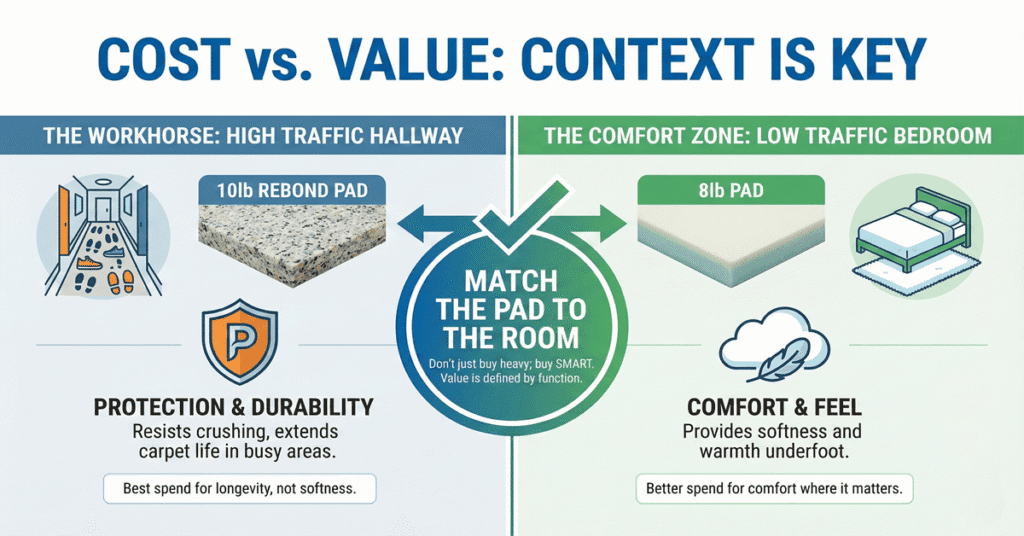
The value question is not “Which pad is best?” It is “Which pad gives the right feel and wear life for this room, at this carpet price, with this traffic?” A 10 lb rebond pad can protect a premium nylon carpet in a busy hall, yet an 8 lb pad can be the better spend in a low-traffic bedroom where comfort matters more than compression resistance.
Typical price drivers (what actually changes the price)
Carpet pad cost changes with material type, density, and add-ons like a moisture barrier film. Rebonds in 8 lb and 10 lb often sit near each other in price, yet rubber, memory foam, and higher-grade urethane can jump more. Roll size, local stock, and installer markup can matter as much as the label on the wrapper.
Look at the full ticket, not the per-square-foot line item. Labor, moving furniture, and time without the room raise the true cost of “redoing it later.”
Value rubric (original tool)
This rubric keeps the decision clean and ties price to outcomes you can feel and see. Score each line as Yes or No, then follow the pick.
If you answer “Yes” to 3 or more, 10 lb often earns its keep
- The room has daily traffic (hall, family room, stairs, entry path).
- The carpet is mid- to high-grade (nylon, wool, better PET) and you plan to keep it 7–10 years.
- Heavy furniture sits in place (sofa, bed, desk), and dents bother you.
- You want a firmer, more supportive feel under foot.
- The install uses a thickness that stays warranty-safe (often 3/8″ or 7/16″, based on the carpet spec).
If you answer “Yes” to 3 or more, 8 lb is usually the smarter buy
- The room is low traffic (guest room, formal living room, spare office).
- You plan to replace carpet in 3–5 years, or the carpet is builder-grade.
- You prefer a softer feel and the carpet style allows it.
- Height limits are tight (doors, transitions), so you need a stable 3/8″ pad.
- Moisture risk is low, so you do not need premium barrier systems.
A quick reality check: if you spend for a premium carpet and then cut the pad to the cheapest option, you often feel it first on stairs and in traffic lanes. If the carpet is budget grade, a costly pad rarely turns it into a long-life floor.
Next, we’ll cover the install details that decide whether an 8 lb or 10 lb pad performs the way it should, from seams and tack strip clearance to stairs.
Installation pitfalls that decide whether 8 lb or 10 lb performs well (pro checklist)
A carpet pad choice only pays off if the install matches the pad specs, the carpet style, and the subfloor. Most “8 lb vs 10 lb” complaints trace to preventable details: pad thickness at doorways, pad seams, pad contact with the tack strip, weak stretch-in tension, and stairs work that leaves a soft, wavy tread. Get these right and both 8 lb rebond and 10 lb rebond can feel solid, stay flat, and support good carpet appearance retention.
Step-by-step: pre-install checks (before the carpet arrives)
Before you buy or schedule a crew, run three quick checks using the pad label, the carpet warranty sheet, and a tape measure. This takes ten minutes and prevents the “mushy pad” problem that often shows up in halls, stairs, and tight door clearances.
- Confirm carpet warranty pad specs: Read the carpet warranty and look for pad limits on density (lb/ft³), material type (rebond, urethane, rubber), and maximum thickness. Many warranties flag thick, soft pads under loop/Berber or on stairs, even if the pad feels nice in a showroom.
- Verify thickness vs doors/thresholds: Measure the current clearance at doors, transitions, and baseboard heaters. A common safe pairing is 3/8 in. pad in tighter spots and on stairs, even when you pick a higher density like 10 lb for firmness.
- Plan seams and transitions: Sketch the room and mark where pad seams will land. Place seams away from traffic lanes and away from the top or bottom of stairs, where movement is highest.
Ask yourself one simple question before you pay: will this pad spec still work after the carpet gets stretched tight and the doors swing freely?
Install details that prevent wrinkles and premature wear
Good pad work looks boring when it is done right. Bad pad work shows up as ripples, loose carpet near doorways, and crushed stairs that feel “floaty” within months.
- Seams: tape them flat, keep them tight: Butt pad edges cleanly with no gaps and no overlaps. Use proper seam tape or adhesive meant for carpet cushion seams, and press the seam flat so it does not telegraph through the carpet.
- Do not cover the tack strip: Stop the pad short of the tack strip. When pad rides onto the strip, the carpet cannot grip well, and the edge can loosen over time.
- Staple pattern and direction matter: On wood subfloors, staples hold pad position so the carpet stretch stays stable. Space staples closer along seams, doorways, and edges where movement starts.
- Keep pad off heat sources and moving parts: Trim pad away from floor registers, radiator lines, and toilet flanges in adjacent bath entries. Heat and friction can break down foam and leave soft spots.
- Stretch-in basics: tension beats pad density: Even a high-density 10 lb pad will not save a carpet that is under-stretched. If the installer uses a knee kicker only in large rooms, ripples often follow.
Mistakes checklist (fast diagnostic):
- Pad overlaps at seams or along the tack strip
- Pad seam lands in a main walkway
- Carpet edge feels loose at the tack strip line
- Carpet “drums” or shifts near doorways
- Furniture dents appear fast in the same spots
What to photograph for warranty files (quick proof points):
- Pad label showing density and thickness
- Pad installed before carpet goes down (wide shot + seam close-up)
- Tack strip gap showing pad stopped short
- Stair treads before carpet is wrapped and stapled
- Transition strips and door clearance after install
Stairs: thin + dense rules of thumb
Stairs punish padding more than any other area in a home, so stability matters more than plush feel. A dense pad with a thinner profile often holds shape better on treads and reduces the “wavy stair” look that can follow a thick cushion.
Pick your stair setup based on the carpet style and the wrap method. Loop/Berber and low-profile carpets usually want a firmer, thinner cushion, since extra thickness can let the carpet shift and show rounded edges. If a stair feels soft after install, ask: does the pad feel thicker than 3/8 in., or did the wrap and staple pattern leave slack at the nose?
If you want the simplest next step, use the room-by-room decision table first, then bring this checklist to your installer so the pad you chose performs the way it should.

Frequently Asked Questions
Is a 10 lb carpet pad always better than an 8 lb pad?
No. A 10 lb rebond carpet cushion can resist crushing in halls and family rooms, yet the wrong thickness can make carpet feel “spongy,” cause loose fit, or clash with a carpet warranty. An 8 lb pad often fits bedrooms and low-traffic spaces well. Match density, thickness, and carpet style, not just the “lb” number.
What thickness should I pair with an 8 lb vs 10 lb pad (3/8″ vs 7/16″)?
Start with your carpet manufacturer’s pad limits, then pick thickness for stability. Many installs land around 3/8″ for stairs, loop pile, and tighter carpets, since it controls flex. 7/16″ can feel plusher in bedrooms with cut-pile carpet. Keep door clearance, transitions, and tack strip fit in mind.
What’s the best carpet pad for stairs: 8 lb or 10 lb?
Stairs favor a firmer, thinner cushion that supports the carpet on the nose and treads. A 10 lb pad at about 3/8″ often gives better hold and less flattening under foot traffic. An 8 lb pad can work if it is firm and kept thin, yet many stair issues start with pad that feels too soft.
How much more does 10 lb carpet pad cost per square foot (and is it worth it)?
10 lb rebond usually costs more per square foot than 8 lb, yet the gap varies by brand, moisture barrier film, and local supply. The value shows up in high-traffic lanes, stairs, and premium nylon or wool carpet, where wear and compression matter. Ask the retailer for the roll price and installed price to compare.
What are the most common mistakes when choosing carpet pad density?
People buy by “softness” in the showroom and miss the spec sheet. Big mistakes include choosing extra thickness over density, using plush pad under loop/Berber carpet, and skipping the carpet warranty minimums. Another common miss is ignoring stairs and doors, then ending up with rubbing doors, buckling, or loose carpet.
Which is better for pets and spills: 8 lb moisture barrier or 10 lb moisture barrier?
For pets, odor control and cleanup matter as much as density. A moisture barrier pad helps block liquid from reaching the subfloor, yet seams and edges still need tight sealing. Choose 10 lb for busy rooms with dogs, kids, and furniture load. Choose 8 lb for quieter rooms if the carpet warranty allows it.
For landlords or multifamily units, should I follow Class 1 vs Class 2 cushion guidance?
Yes, Class guidance gives a practical target for traffic level in rentals. Class 2 carpet cushion is often used for heavier traffic halls and living rooms, where compression and appearance retention matter. Class 1 can fit bedrooms and light-use areas. Check the carpet warranty and any property spec book, then document pad density and thickness on the invoice.
Conclusion
Carpet cushion choice comes down to matching pad density and thickness to your room, your carpet style, and the warranty rules that govern the install. When you read the spec sheet with those three pieces in mind, you avoid the two common regrets: a floor that feels great in the store but crushes fast in traffic lanes, or a pad that is so thick it makes the carpet unstable.
You can now choose with purpose instead of guesswork. Start by classifying the space (stairs, hallway, bedroom), then check how the carpet is built (cut pile vs loop/Berber), and confirm the pad limits before you pay. If you are standing in a showroom, ask one simple question: “What are the density and thickness numbers on this roll?”
When you follow that process, the 8 lb vs 10 lb carpet pad choice gets clear, and you can buy with confidence. If you want to price-check quickly, browse 8 lb rebond pads, 10 lb rebond pads, or (for pets/spills) moisture-barrier carpet pads.
If you want a quick next step, use the room-by-room pick and keep a photo of your warranty requirements on your phone for the checkout counter.